
Pierre Rosanvallon
Author of Counter-Democracy: Politics in an Age of Distrust
About the Author
Pierre Rosanvallon is Professor of History and Political Philosophy at the Ecole des Hautes Etudes en Science Sociales in Paris, where he is also Director of the Centre de Recherche Politique Raymond Aron.
Image credit: Pierre Rosanvallon en 2018
Works by Pierre Rosanvallon
Esprit (la passion du complot) 2 copies
Por uma Hist-ria do Pol'tico 2 copies
La cuestión social 1 copy
A Nova questão Social 1 copy
Le istituzioni invisibili 1 copy
Chaire d'histoire moderne et contemporaine du politique. Leçon inaugurale faite le jeudi 28 mars 2002 (2002) 1 copy
Parlamento dos Invisíveis 1 copy
Associated Works
Le Débat, n°111, 20 ans, 2e partie : L'Aventure des idées, chronologie, 1989-1999 (2000) — Contributor — 2 copies
Tagged
Common Knowledge
- Canonical name
- Rosanvallon , Pierre
- Legal name
- Rosanvallon , Pierre
- Other names
- Ranval, Pierre (Pseudonyme)
- Birthdate
- 1948
- Gender
- male
- Education
- Ecole des Hautes Etudes en Sciences Sociales, EHESS, Paris, France (Doctorat d'état, Histoire, Thèse 'Guizot et la formation de l'intelligence politique moderne', 19 85)
Ecole des Hautes Etudes en Sciences Sociales, EHESS, Paris, France (Dcotorat de 3e cycle, Histoire, Thèse 'La Formation du concept de marché au XVIIIème siècle', 19 79)
Ecole des hautes études commerciales, HEC (Diplôme, 19 69) - Occupations
- professor
- Organizations
- Collège de France (Professeur ∙ Chaire d’histoire moderne et contemporaine du politique , 20 01 | 20 15)
Ecole des Hautes Etudes en Sciences Sociales, EHESS, Paris, France (Maître de conférences, 19 83 | 19 89)
Université de Paris-Dauphine (Animateur du pôle sociologique du centre de recherches Travail et Société ∙ [1978] ∙ [1978, 1982])
Parti socialiste français (Membre)
Parti socialiste unifié, PSU (Membre)
Confédération française démocratique du travail, CFDT (Conseiller, 19 69 | 19 77) (show all 14)
Libération, Journal (Chroniqueur, 19 82 | 19 83)
Fondation Saint-Simon (Co-créateur, Animateur, 19 82 | 19 99)
Le Monde, Journal (Editorialiste associé, 20 01)
Bibliothèque nationale de France (Membre du conseil scientifique, 20 02)
Ecole Normale Supérieur, ENS (Membre du du conseil scientifique, 20 04 | 20 05)
Le Siècle, Think Tank (Membre)
La République des idées, Think Tank (Créateur, 20 02)
Editions du Seuil (Directeur de collection 'La République des idées') - Awards and honors
- Chevalier de la Légion d'honneur ( [1998])
Officier de la Légion d'honneur ( [2010]) - Relationships
- Lefort Claude (Directeur de thèse de 3e cycle et d'état)
Maire, Edmond (Responsable syndicaliste)
Furet, François (Collègue)
Rocard, Michel (Proche)
Castoriadis, Cornélius (Filiation intellectuelle)
Gauchet, Marcel (Filiation intellectuelle) (show all 7)
Nora, Pierre (Condisciple) - Nationality
- France
- Birthplace
- Blois, France
- Map Location
- France
- Associated Place (for map)
- Blois, France
Members
Reviews
Le Siècle du populisme - Histoire, théorie, critique (Les Livres du nouveau monde) (French Edition) by Pierre Rosanvallon
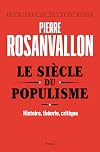
Pierre Rosanvallon déploie des trésors de rhétorique et d'abstraction pour faire rentrer La France Insoumise dans la même catégorie que le parti républicain de Trump et le mouvement Fidesz d'Orban.
Au prix d'omissions énormes et de raccourcis nombreux.
Ainsi, d'après lui, on ne peut désormais plus considérer en France qu'il existe de classes sociales. Fatalement, si l'on pense cela, tout parti qui considérerait qu'il existe une élite économique et politique, et une majorité qui show more n'y appartient pas, alors ce parti peut bien sûr être taxé de complotisme.
Parallèlement, notre économie n'aurait plus rien à voir avec celle du passé. Nous serions maintenant dans une économie de l'innovation - finies donc le travail à la chaîne et les classes laborieuses.
Forcément, pourquoi dans ce cas considérer que les travailleurs partagent une condition commune, et auraient intérêt à s'unir pour la faire progresser ?
Il sous-entend très lourdement que la constituante que la France Insoumise appelle de ses voeux est un prétexte pour concentrer les pouvoirs dans les mains de Jean-Luc Mélenchon, et pour liquider les garde-fous de la république française, comme le conseil constitutionnel.
Et, alors qu'il cite fréquemment Mélenchon, il ne cite jamais le programme "L'avenir en commun" de LFI pour la présidentielle de 2017, qui pourtant explique dans le détail comment se déroulerait le travail de cette constituante. Nulle part n'est mentionné le travail de Charlotte Girard, professeur de droit constitutionnel, pour formaliser les règles qui justement permettraient à la constituante d'éviter la concentration de pouvoir aux mains de quelques-uns.
Face à de tels préjugés, on s'interroge. Pierre Rosanvallon passe-t-il consciemment sous silence ce qu'il sait ? Est-il consciemment en train de défendre que LFI est un parti populiste, dangereux pour la démocratie, tandis qu'il n'y aurait rien à dire sur La république en marche ?
Ou alors a-t-il un blocage d'ordre psychologique, une difficulté à intégrer la domination sociale et les luttes qu'elle engendre ?
Au fond, Marx et Engels ont de très bonnes lignes pour décrire cette école de pensée :
"Les socialistes bourgeois veulent les conditions de vie de la société moderne sans les luttes et les dangers qui en découlent fatalement. Ils veulent la société actuelle, mais expurgée des éléments qui la révolutionnent et la dissolvent. Ils veulent la bourgeoisie sans le prolétariat. La bourgeoisie, comme de juste, se représente le monde où elle domine comme le meilleur des mondes."
170 après, il n'y a rien à ajouter. show less
Au prix d'omissions énormes et de raccourcis nombreux.
Ainsi, d'après lui, on ne peut désormais plus considérer en France qu'il existe de classes sociales. Fatalement, si l'on pense cela, tout parti qui considérerait qu'il existe une élite économique et politique, et une majorité qui show more n'y appartient pas, alors ce parti peut bien sûr être taxé de complotisme.
Parallèlement, notre économie n'aurait plus rien à voir avec celle du passé. Nous serions maintenant dans une économie de l'innovation - finies donc le travail à la chaîne et les classes laborieuses.
Forcément, pourquoi dans ce cas considérer que les travailleurs partagent une condition commune, et auraient intérêt à s'unir pour la faire progresser ?
Il sous-entend très lourdement que la constituante que la France Insoumise appelle de ses voeux est un prétexte pour concentrer les pouvoirs dans les mains de Jean-Luc Mélenchon, et pour liquider les garde-fous de la république française, comme le conseil constitutionnel.
Et, alors qu'il cite fréquemment Mélenchon, il ne cite jamais le programme "L'avenir en commun" de LFI pour la présidentielle de 2017, qui pourtant explique dans le détail comment se déroulerait le travail de cette constituante. Nulle part n'est mentionné le travail de Charlotte Girard, professeur de droit constitutionnel, pour formaliser les règles qui justement permettraient à la constituante d'éviter la concentration de pouvoir aux mains de quelques-uns.
Face à de tels préjugés, on s'interroge. Pierre Rosanvallon passe-t-il consciemment sous silence ce qu'il sait ? Est-il consciemment en train de défendre que LFI est un parti populiste, dangereux pour la démocratie, tandis qu'il n'y aurait rien à dire sur La république en marche ?
Ou alors a-t-il un blocage d'ordre psychologique, une difficulté à intégrer la domination sociale et les luttes qu'elle engendre ?
Au fond, Marx et Engels ont de très bonnes lignes pour décrire cette école de pensée :
"Les socialistes bourgeois veulent les conditions de vie de la société moderne sans les luttes et les dangers qui en découlent fatalement. Ils veulent la société actuelle, mais expurgée des éléments qui la révolutionnent et la dissolvent. Ils veulent la bourgeoisie sans le prolétariat. La bourgeoisie, comme de juste, se représente le monde où elle domine comme le meilleur des mondes."
170 après, il n'y a rien à ajouter. show less
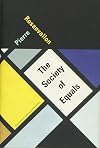
The contents page of Professor Pierre Rosanvallon’s “The Society of Equals” is admirable in the simplicity with which it presents the structure of the author’s argument. What it hides is the breadth and depth of the material Rosanvallon covers in the pages of his book. Professor Rosanvallon presents the history of equality, the reasons why people started seeking equality, and how the meaning of equality was changed over the centuries to suit the people who were calling for it.
In show more Chapter 1, The Invention of Equality, the reader is shown the attitudes of the aristocracy in the 18th Century and how members of the aristocracy were appalled at the idea of anyone intimating that they were in anyway related to the peasantry and poor people. Rosanvallon demonstrates that two races lived in the same land, the rich and the poor, and the gap between the two was vast.
While tracing the evolving meaning of equality from the start of the American and French revolutions to the present day, the author describes how, through various social shifts, the world progressed into the 20th Century with a general focus on redistribution of wealth through such mechanisms of as the welfare state. He then shows the changing situation in the 21st Century and demonstrates the trend towards closing the gap between the rich and the poor has been reversed and the gap is once again widening.
In his final chapter he proposes a definition of equality for the present day, a definition that means everyone is equal in their freedom to be different.
Along the way he explains how major political movements were established and set their formation in historical and economic context. Many of these movements have continued to the present day in the form of the main political parties in the United States and Europe.
He also explains how Socialism developed in Europe and not in the United States because the US did not have an established aristocracy based on hereditary and that the de-facto US aristocracy, i.e. the wealthy, were spared a reaction against them as racism raised its head after the elimination of slavery. This reminded me of a joke that appeared recently: A banker, a worker and an asylum seeker sit down at a table with ten cookies. The banker takes nine of the cookies and tells the worker, “Be careful. The asylum seeker is going to take your cookie.”
This is explanatory of much of what is happening in Europe at the present as many asylum seekers and refugees fleeing wars in Africa and the Middle East are flocking into Europe.
In talking about the concept of equality and its origins he explains how it was first mooted in a time when the term “commerce” was defined as exchange between individuals and at a time, prior to the Industrial Revolution, when the means of production meant that no individual could attain a level of wealth that was immensely greater than what others could attain through hard work and dedication. It was the context in which the concept of the self-made-man made sense in terms of anyone could work hard and build up their position in the world. He explains how the Industrial Revolution, through its mass production created a situation where an individual could become much richer than others and the ways of doing commerce took the “individual” out of commercial interactions: the impersonal organisation was established.
In relation to current times, Rosanvallon has noted the ways in which citizens are being deprived of their representation with decisions on local expenditure being given to non-elected bodies, such as regional development boards and private utility companies. The establishment of Irish Water is a perfect example of this approach whereby the local authorities which were governed by the elected councillors, are having their control of local resources handed over to a commercial company that has no elected representatives on its board or anywhere in its organisation.
He points to other signs that the world is heading back to the days of the 18th Century with increased segregation and unequal treatment of people on the increase. The increased number of gated-communities is a sign, the rise of right-wing propaganda against migrants, the increasing wealth gap between the haves and the have nots.
It is Rosanvallon’s desire that his ideas will prompt a debate on the meaning of equality in modern day society and will lead to policies and initiatives that will enable everyone to have a fair deal in life whereby they, as citizens, receive the respect owed to them as citizens and in which they live up to their obligations to the community in which they live and work.
In his final pages the professor gives his views on the steps necessary to re-introduce the individual into society and to establish meaningful and sustainable interactions that will make society much more egalitarian and rewarding for all.
This is a book I will be coming back to time and again. I cannot hope in only a few pages to do justice to this 376 page book but I hope I have given you a flavour for what it is about. show less
In show more Chapter 1, The Invention of Equality, the reader is shown the attitudes of the aristocracy in the 18th Century and how members of the aristocracy were appalled at the idea of anyone intimating that they were in anyway related to the peasantry and poor people. Rosanvallon demonstrates that two races lived in the same land, the rich and the poor, and the gap between the two was vast.
While tracing the evolving meaning of equality from the start of the American and French revolutions to the present day, the author describes how, through various social shifts, the world progressed into the 20th Century with a general focus on redistribution of wealth through such mechanisms of as the welfare state. He then shows the changing situation in the 21st Century and demonstrates the trend towards closing the gap between the rich and the poor has been reversed and the gap is once again widening.
In his final chapter he proposes a definition of equality for the present day, a definition that means everyone is equal in their freedom to be different.
Along the way he explains how major political movements were established and set their formation in historical and economic context. Many of these movements have continued to the present day in the form of the main political parties in the United States and Europe.
He also explains how Socialism developed in Europe and not in the United States because the US did not have an established aristocracy based on hereditary and that the de-facto US aristocracy, i.e. the wealthy, were spared a reaction against them as racism raised its head after the elimination of slavery. This reminded me of a joke that appeared recently: A banker, a worker and an asylum seeker sit down at a table with ten cookies. The banker takes nine of the cookies and tells the worker, “Be careful. The asylum seeker is going to take your cookie.”
This is explanatory of much of what is happening in Europe at the present as many asylum seekers and refugees fleeing wars in Africa and the Middle East are flocking into Europe.
In talking about the concept of equality and its origins he explains how it was first mooted in a time when the term “commerce” was defined as exchange between individuals and at a time, prior to the Industrial Revolution, when the means of production meant that no individual could attain a level of wealth that was immensely greater than what others could attain through hard work and dedication. It was the context in which the concept of the self-made-man made sense in terms of anyone could work hard and build up their position in the world. He explains how the Industrial Revolution, through its mass production created a situation where an individual could become much richer than others and the ways of doing commerce took the “individual” out of commercial interactions: the impersonal organisation was established.
In relation to current times, Rosanvallon has noted the ways in which citizens are being deprived of their representation with decisions on local expenditure being given to non-elected bodies, such as regional development boards and private utility companies. The establishment of Irish Water is a perfect example of this approach whereby the local authorities which were governed by the elected councillors, are having their control of local resources handed over to a commercial company that has no elected representatives on its board or anywhere in its organisation.
He points to other signs that the world is heading back to the days of the 18th Century with increased segregation and unequal treatment of people on the increase. The increased number of gated-communities is a sign, the rise of right-wing propaganda against migrants, the increasing wealth gap between the haves and the have nots.
It is Rosanvallon’s desire that his ideas will prompt a debate on the meaning of equality in modern day society and will lead to policies and initiatives that will enable everyone to have a fair deal in life whereby they, as citizens, receive the respect owed to them as citizens and in which they live up to their obligations to the community in which they live and work.
In his final pages the professor gives his views on the steps necessary to re-introduce the individual into society and to establish meaningful and sustainable interactions that will make society much more egalitarian and rewarding for all.
This is a book I will be coming back to time and again. I cannot hope in only a few pages to do justice to this 376 page book but I hope I have given you a flavour for what it is about. show less
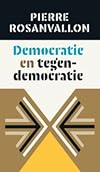
Ik was helaas niet onder de indruk. Ik ben dus ook maar tot de helft gekomen.
Het is duidelijk dat Pierre Rosanvallon verstandige dingen te zeggen heeft. Democratie is nooit af. Democratie is een moeilijke afweging tussen nabijheid (wie mij bestuurt heeft dezelfde belangen als ik) en geschiktheid (wie mij bestuurt heeft daar puike capaciteiten voor). Democratie heeft het probleem dat er geen volkswil bestaat, alleen individuen. En zo heeft hij nog een heel aantal verstandige dingen te zeggen. show more Helaas vind ik de taal die hij daarvoor gebruikt onnodig complex. Een klein voorbeeld: "Om het volk te begrijpen moeten we dus een stroboscopisch principe toepassen dat zijn opeenvolgende manifestaties vat.". Huh? We zijn toch geen roman aan het schrijven, waar we met gevatte woordspelingen een bepaalde sfeer willen scheppen? Wat hij volgens mij bedoelt heeft niks met een stroboscoop te maken. Wat hij volgens mij wil zeggen is dat we 'het volk' niet in één 'uh eh dinges' te vatten is. De vijf eigenschappen die hij daarvoor beschreven heeft, moeten dus allemaal in gedachten worden gehouden als we iets willen zeggen over 'het volk' dat ook nog waar is. Maar goed, nog een willekeurige zin om het af te sluiten en dan leg ik dit bloemlezingkje teleurgesteld terzijde: "De vierde bestaansvorm van het volk is de abstracte sociale algemeenheid, de reeksmatigheid. Dat is het volk bestaande uit 'willekeurige individuen', dat een volk van onduidelijke, maar ook van ongedifferientieerde individuen kan zijn."
Ik ben het maar weer eens met G.K. Chesterton eens. Ik parafraseer hier vreselijk, maar als ik het me goed herinner uit Orthodoxy, dan zeg Chesterton dat je pas echt wat zegt, als je het in een zin met woorden van maximaal twee lettergrepen kan uitdrukken. Hoe meer lettergrepen een woord heeft, hoe minder het zegt en hoe verder je van het echte probleem af kan blijven staan. Lekker klessebessen. Dus: "Het volk bestaat niet. Jij en ik wel."
Zo. Nu maar beginnen aan "The life and death of democracy". Hopelijk is dat een groter succes. show less
Het is duidelijk dat Pierre Rosanvallon verstandige dingen te zeggen heeft. Democratie is nooit af. Democratie is een moeilijke afweging tussen nabijheid (wie mij bestuurt heeft dezelfde belangen als ik) en geschiktheid (wie mij bestuurt heeft daar puike capaciteiten voor). Democratie heeft het probleem dat er geen volkswil bestaat, alleen individuen. En zo heeft hij nog een heel aantal verstandige dingen te zeggen. show more Helaas vind ik de taal die hij daarvoor gebruikt onnodig complex. Een klein voorbeeld: "Om het volk te begrijpen moeten we dus een stroboscopisch principe toepassen dat zijn opeenvolgende manifestaties vat.". Huh? We zijn toch geen roman aan het schrijven, waar we met gevatte woordspelingen een bepaalde sfeer willen scheppen? Wat hij volgens mij bedoelt heeft niks met een stroboscoop te maken. Wat hij volgens mij wil zeggen is dat we 'het volk' niet in één 'uh eh dinges' te vatten is. De vijf eigenschappen die hij daarvoor beschreven heeft, moeten dus allemaal in gedachten worden gehouden als we iets willen zeggen over 'het volk' dat ook nog waar is. Maar goed, nog een willekeurige zin om het af te sluiten en dan leg ik dit bloemlezingkje teleurgesteld terzijde: "De vierde bestaansvorm van het volk is de abstracte sociale algemeenheid, de reeksmatigheid. Dat is het volk bestaande uit 'willekeurige individuen', dat een volk van onduidelijke, maar ook van ongedifferientieerde individuen kan zijn."
Ik ben het maar weer eens met G.K. Chesterton eens. Ik parafraseer hier vreselijk, maar als ik het me goed herinner uit Orthodoxy, dan zeg Chesterton dat je pas echt wat zegt, als je het in een zin met woorden van maximaal twee lettergrepen kan uitdrukken. Hoe meer lettergrepen een woord heeft, hoe minder het zegt en hoe verder je van het echte probleem af kan blijven staan. Lekker klessebessen. Dus: "Het volk bestaat niet. Jij en ik wel."
Zo. Nu maar beginnen aan "The life and death of democracy". Hopelijk is dat een groter succes. show less

First I wasn't sure if I should blame my lack of comprehension on the Finnish translation or the original text. But the further I read, the more convinced I became that the author himself was to blame. His starting point is interesting enough: he sets out to show that opposition, resistance and surveillance by the people are fundamental characteristics of modern democracy, just like voting and representation. His intention is to provide a theoretical presentation of these forms of show more "counter-democracy". Interesting as this may sound, the author doesn't actually possess much capacity for theoretical argument. He does seem to know the history of French political thought inside and out. Many of his analyses employ a strictly historical method, explaining what late 18th and early 19th century French thinkers thought about the subject. But surely the theoretical questions of that age don't exhaust the contemporary ones.
There are some sections in this book where the author tries to build his own theoretical counterpoints and analyze modern politics, but I found them very unfulfilling. He introduces half a dozen new prefixes to the word "democracy", but fails to support these neologisms with enough thought and reason to give them any real meaning. The text comes across as vacuous ostentation and wordplay with little depth. In conclusion this book was useful to me only because it introduced me to many 18th and 19th century French thinkers I hadn't heard of before. The author's strength clearly lies in that subject area. show less
There are some sections in this book where the author tries to build his own theoretical counterpoints and analyze modern politics, but I found them very unfulfilling. He introduces half a dozen new prefixes to the word "democracy", but fails to support these neologisms with enough thought and reason to give them any real meaning. The text comes across as vacuous ostentation and wordplay with little depth. In conclusion this book was useful to me only because it introduced me to many 18th and 19th century French thinkers I hadn't heard of before. The author's strength clearly lies in that subject area. show less
Lists
Awards


You May Also Like


Associated Authors
Statistics
- Works
- 46
- Also by
- 3
- Members
- 576
- Popularity
- #43,501
- Rating
- 3.3
- Reviews
- 6
- ISBNs
- 131
- Languages
- 13
- Favorited
- 1

