

Suehiro Maruo
Author of The Strange Tale of Panorama Island
About the Author
Series
Works by Suehiro Maruo
Maruojigoku 2 copies
MARUOSCOPE (Limited 300) 1 copy
28 Scenes of Murder 1 copy
The Dancing Dwarf 1 copy
Maruograph EX - I 1 copy
Associated Works
ユリイカ 2019年09月臨時増刊号 総特集=遠藤ミチロウ ―1950-2019― — Contributor — 1 copy
Tagged
Common Knowledge
- Canonical name
- Maruo, Suehiro
- Legal name
- 丸尾 末広
- Birthdate
- 1956-01-28
- Gender
- male
- Occupations
- manga artist
- Nationality
- Japan
- Birthplace
- Nagasaki, Japan
- Map Location
- Japan
Members
Reviews
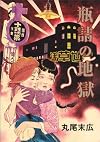
I never thought of a graphic novel as literary or anything more than an adult comic book until I read The Inferno in Bottles. IiB is a well known and highly regarded graphic novella by the Japenese artist / author Kyusaku Yumeni (1889 - 1936). It was originally published in 1928 by Ryoki Magazine and later as a book by Shunyodo. It is now considered a classic of its genre.
IiB presents a counterpoint to the Book of Genesis - perhaps a repudiation of sorts (?). In a dark and disturbing show more coming-of-age story, two children, an older brother and younger sister, are shipwrecked on a deserted, tropical island. Like Adam and Eve, these youngsters are brought to their world seemingly from nowhere. The author notes that their Eden meets all of their physical needs, and they grow healthily. However, each is a bottle with its own inferno. Where Genesis proposes original sin, IiB upstages Genesis easily. There is a true Original Sin in biology which is significantly worse than anything Biblical - relations between siblings which can wreak havoc upon the next generation (ironically, this sort of original sin is not at all original to humans when one sees how many species have evolved behavioral and biological means of avoiding it).
The story turns dark when puberty strikes. The island boundaries become a horrible prison, as the adolescents are imprisoned by their sense of shame and tortured by their hormones. Having a Bible among their shipwreck possessions, they know of the scriptural concept of OS, and they never transgress. Their sibling bond remains strong throughout, but it gets a distasteful patina that neither character can cope with.
The artistic illustration work provides rich symbolism. Most obviously, it is replete with serpents. On a more subtle level, we begin to see the young man increasingly covered in scars. It appears that he may do penance via self - inflicted wounds, which fall short of slashing his wrists. The illustrations tell the story well without the need of the accompanying text.
Written for adults, it is artistically graphic without being pornographic. Per the subject, it is exploding with sexual tension. The prudish, American reader might not want to leave it on a coffee table. Nevertheless, it enjoys a special status as a work of art. More importantly, it provides a naturalist interpretation of OS that is quite simply more sophisticated than Genesis. show less
IiB presents a counterpoint to the Book of Genesis - perhaps a repudiation of sorts (?). In a dark and disturbing show more coming-of-age story, two children, an older brother and younger sister, are shipwrecked on a deserted, tropical island. Like Adam and Eve, these youngsters are brought to their world seemingly from nowhere. The author notes that their Eden meets all of their physical needs, and they grow healthily. However, each is a bottle with its own inferno. Where Genesis proposes original sin, IiB upstages Genesis easily. There is a true Original Sin in biology which is significantly worse than anything Biblical - relations between siblings which can wreak havoc upon the next generation (ironically, this sort of original sin is not at all original to humans when one sees how many species have evolved behavioral and biological means of avoiding it).
The story turns dark when puberty strikes. The island boundaries become a horrible prison, as the adolescents are imprisoned by their sense of shame and tortured by their hormones. Having a Bible among their shipwreck possessions, they know of the scriptural concept of OS, and they never transgress. Their sibling bond remains strong throughout, but it gets a distasteful patina that neither character can cope with.
The artistic illustration work provides rich symbolism. Most obviously, it is replete with serpents. On a more subtle level, we begin to see the young man increasingly covered in scars. It appears that he may do penance via self - inflicted wounds, which fall short of slashing his wrists. The illustrations tell the story well without the need of the accompanying text.
Written for adults, it is artistically graphic without being pornographic. Per the subject, it is exploding with sexual tension. The prudish, American reader might not want to leave it on a coffee table. Nevertheless, it enjoys a special status as a work of art. More importantly, it provides a naturalist interpretation of OS that is quite simply more sophisticated than Genesis. show less

I have been looking forward to Suehiro Maruo's The Strange Tale of Panorama Island with great anticipation ever since the license was announced by Last Gasp in 2009. After years of delay, the manga was finally released in English in 2013 as a gorgeous, large-format hardcover. Maruo's The Strange Tale of Panorama Island was originally released in Japan in 2008. The manga is an adaptation of the renowned author Edogawa Ranpo's novella Strange Tale of Panorama Island which was initially show more serialized between 1926 and 1927. (Coincidentally, the novella was also released in English for the first time in 2013.) After reading Ranpo's Strange Tale of Panorama Island, I couldn't think of a more perfect artist to adapt his work than Maruo. I didn't think it was possible, but I was somehow even more excited for the release of Maruo's The Strange Tale of Panorama Island after reading the original.
As the Taishō Era draws to a close, failed novelist Hirosuke Hitomi finds himself behind in his rent and the prospect of his work being published slim. His latest novel, The Tale of RA, is a utopian fantasy which allows him to dream about what he would do if he had limitless riches. His editor encourages him to write about something closer to his real life instead. Months later Hitomi is confronted with an almost impossible opportunity that could be straight out of his novel. His former classmate Genzaburō Komoda, to whom he bears an uncanny resemblance, has unexpectedly died, leaving behind an immense fortune. Devising an outlandish scheme to take Komoda's place and take control of his wealth, Hitomi plans on devoting all of it to the creation of a hedonistic paradise, Panorama Island. The plan proceeds surprisingly well, but there is still one person who could reveal Hitomi as a fake--Komoda's wife.
I have been an admirer of Maruo's work ever since I first discovered it. At this point, only two other volumes of Maruo's manga have been published in English: Mr. Arashi's Amazing Freak Show and Ultra-Gash Inferno. As I have come to expect, Maruo's illustrations in The Strange Tale of Panorama Island are exquisite. With its sensuality, eroticism, and shades of the macabre and grotesque, Maruo's artwork is ideally suited to Ranpo's story. Even in all of its beauty, The Strange Tale of Panorama Island has an ominous and vaguely disconcerting atmosphere that is extraordinarily effective in setting the mood of the work. Hitomi's paranoia and madness is captured in ink for all to see. And then there's the island itself--Maruo's portrayal is breathtaking with stunning reveals, careful attention to detail, and beautiful design and perspective work. The art in The Strange Tale of Panorama Island is simply marvelous.
Maruo's The Strange Tale of Panorama Island is a superb adaptation and a spectacular work in its own right. The manga is not at all a slavishly executed interpretation. While staying true to Ranpo's original, Maruo allows himself to put his own touches and flourishes on the story. The ending is admittedly abrupt and somewhat disorienting (this was true of the novella as well), but what comes before more than makes up for this weakness. In part, Maruo's The Strange Tale of Panorama Island is about the end of one era and the beginning of the next, the start of a new life after the old has been discarded. Hitomi begins as a penniless author only to become intoxicated with his own ideas as he slips into a life of debauchery and excess. Maruo's vision of his descent is both captivating and unsettling, alluring and abhorrent. In the end, I am absolutely thrilled that The Strange Tale of Panorama Island is finally available in English.
Experiments in Manga show less
As the Taishō Era draws to a close, failed novelist Hirosuke Hitomi finds himself behind in his rent and the prospect of his work being published slim. His latest novel, The Tale of RA, is a utopian fantasy which allows him to dream about what he would do if he had limitless riches. His editor encourages him to write about something closer to his real life instead. Months later Hitomi is confronted with an almost impossible opportunity that could be straight out of his novel. His former classmate Genzaburō Komoda, to whom he bears an uncanny resemblance, has unexpectedly died, leaving behind an immense fortune. Devising an outlandish scheme to take Komoda's place and take control of his wealth, Hitomi plans on devoting all of it to the creation of a hedonistic paradise, Panorama Island. The plan proceeds surprisingly well, but there is still one person who could reveal Hitomi as a fake--Komoda's wife.
I have been an admirer of Maruo's work ever since I first discovered it. At this point, only two other volumes of Maruo's manga have been published in English: Mr. Arashi's Amazing Freak Show and Ultra-Gash Inferno. As I have come to expect, Maruo's illustrations in The Strange Tale of Panorama Island are exquisite. With its sensuality, eroticism, and shades of the macabre and grotesque, Maruo's artwork is ideally suited to Ranpo's story. Even in all of its beauty, The Strange Tale of Panorama Island has an ominous and vaguely disconcerting atmosphere that is extraordinarily effective in setting the mood of the work. Hitomi's paranoia and madness is captured in ink for all to see. And then there's the island itself--Maruo's portrayal is breathtaking with stunning reveals, careful attention to detail, and beautiful design and perspective work. The art in The Strange Tale of Panorama Island is simply marvelous.
Maruo's The Strange Tale of Panorama Island is a superb adaptation and a spectacular work in its own right. The manga is not at all a slavishly executed interpretation. While staying true to Ranpo's original, Maruo allows himself to put his own touches and flourishes on the story. The ending is admittedly abrupt and somewhat disorienting (this was true of the novella as well), but what comes before more than makes up for this weakness. In part, Maruo's The Strange Tale of Panorama Island is about the end of one era and the beginning of the next, the start of a new life after the old has been discarded. Hitomi begins as a penniless author only to become intoxicated with his own ideas as he slips into a life of debauchery and excess. Maruo's vision of his descent is both captivating and unsettling, alluring and abhorrent. In the end, I am absolutely thrilled that The Strange Tale of Panorama Island is finally available in English.
Experiments in Manga show less
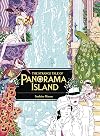
Series Info/Source: This is a stand alone book. I got this as a gift in hardback format.
Thoughts: This was okay. The premise starts out as interesting and then kind of degenerates into a series of lots of double-wide illustrations of very explicit continuous orgies. The drawing and detail are very well done. The story seems to be classic "lazy person comes up with a plot to be rich and live out their dreams only to find out life still sucks for them". I found the ending somewhat confusing show more and ended up going online to see what others had thought happened.
The story follows a man who is a somewhat lazy and failed writer. He is just getting some interest from his publisher in one of his stories when he finds out a rich man that he went to school with that looks identical to him, has died. He decides to steal this man's life by pretending to be him come out of a coma from the grave. The only person who really doubts him is the dead man's wife. He then uses all of the rich man's money to create a island paradise full of strange panorama, sculptures, delicacies, and lots and lots of naked people having sex constantly. Strangely (I am being sarcastic here) he finds out that he really isn't any happier, and he is constantly in fear of his duplicity being discovered.
The illustration is well done and very intricate. I liked some of the intriguing ideas about creating these illusionary panoramas from different parts of the island. I felt like the second half of the book was more about drawing as many orgies as physically possible than anything else. These are very detailed drawings with tons of female nudity and some male nudity. Even the fantasy elements of the island are plagued by this. For example, there are magical giant swans...with people having sex on top of them. Unlimited tables of food with people having sex on them. You get the point.
My Summary (3/5): Overall this was okay but somewhat disappointing. The premise is initially interesting, the ending is bizarre, and the middle is strangely boring for all the depravity that's shown. It is a kind of odd blend of horror, fantasy, and erotica themes. If that sounds intriguing to you, give it a try. It is incredibly well drawn and some of the ideas are intriguing (especially around how the panoramas are created) are intriguing. show less
Thoughts: This was okay. The premise starts out as interesting and then kind of degenerates into a series of lots of double-wide illustrations of very explicit continuous orgies. The drawing and detail are very well done. The story seems to be classic "lazy person comes up with a plot to be rich and live out their dreams only to find out life still sucks for them". I found the ending somewhat confusing show more and ended up going online to see what others had thought happened.
The story follows a man who is a somewhat lazy and failed writer. He is just getting some interest from his publisher in one of his stories when he finds out a rich man that he went to school with that looks identical to him, has died. He decides to steal this man's life by pretending to be him come out of a coma from the grave. The only person who really doubts him is the dead man's wife. He then uses all of the rich man's money to create a island paradise full of strange panorama, sculptures, delicacies, and lots and lots of naked people having sex constantly. Strangely (I am being sarcastic here) he finds out that he really isn't any happier, and he is constantly in fear of his duplicity being discovered.
The illustration is well done and very intricate. I liked some of the intriguing ideas about creating these illusionary panoramas from different parts of the island. I felt like the second half of the book was more about drawing as many orgies as physically possible than anything else. These are very detailed drawings with tons of female nudity and some male nudity. Even the fantasy elements of the island are plagued by this. For example, there are magical giant swans...with people having sex on top of them. Unlimited tables of food with people having sex on them. You get the point.
My Summary (3/5): Overall this was okay but somewhat disappointing. The premise is initially interesting, the ending is bizarre, and the middle is strangely boring for all the depravity that's shown. It is a kind of odd blend of horror, fantasy, and erotica themes. If that sounds intriguing to you, give it a try. It is incredibly well drawn and some of the ideas are intriguing (especially around how the panoramas are created) are intriguing. show less
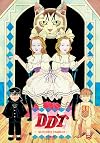
I don't even know what to rate this. It's one of the strangest, most disturbing things I've read, but it was interesting, the art was cool, tho kinda hard to look at in some parts.
Lists
Awards


You May Also Like


Associated Authors
Statistics
- Works
- 38
- Also by
- 4
- Members
- 619
- Popularity
- #40,645
- Rating
- 3.8
- Reviews
- 6
- ISBNs
- 93
- Languages
- 7
- Favorited
- 7