

Peter S. Onuf
Author of "Most Blessed of the Patriarchs": Thomas Jefferson and the Empire of the Imagination
About the Author
Peter L. Onuf, Thomas Jefferson Memorial Foundation Professor of History at the University of Virginia, is the editor of Jeffersonian Legacies.
Image credit: reading at the Gaithersburg Book Festival By Slowking4 - Own work, GFDL 1.2, https://commons.wikimedia.org/w/index.php?curid=48948502
Works by Peter S. Onuf
"Most Blessed of the Patriarchs": Thomas Jefferson and the Empire of the Imagination (2016) 333 copies, 3 reviews
The origins of the federal republic : jurisdictional controversies in the United States, 1775-1787 (1983) 32 copies
Declaring Independence: The Origin and Influence of America's Founding Document (2008) 28 copies, 1 review
Across the Continent: Jefferson, Lewis and Clark, and the Making of America (Thomas Jefferson Foundation Distinguished Lecture Series) (2005) — Editor — 16 copies
Federal Union, Modern World: The Law of Nations in an Age of Revolutions, 1776-1814 (1993) 11 copies
Jefferson and the Virginians: Democracy, Constitutions, and Empire (Walter Lynwood Fleming Lectures in Southern History) (2018) 10 copies
The Private Jefferson: Perspectives from the Collections of the Massachusetts Historical Society (2016) 9 copies
Associated Works
Negotiated Empires: Centers and Peripheries in the New World, 1500-1820 (2002) — Contributor — 40 copies
To Form a More Perfect Union: The Critical Ideas of the Constitution (Perspectives on the American Revolution) (1992) 25 copies
Congress and the Emergence of Sectionalism: From the Missouri Compromise to the Age of Jackson (2008) — Contributor — 15 copies
Recent Themes in Early American History: Historians in Conversation (2008) — Contributor — 8 copies, 1 review
The William and Mary Quarterly, July 1987: Constitution of the United States — Contributor — 2 copies
American Quarterly, Vol. 37, No. 4: Republicanism in the History and Historiography of the United States (1985) — Contributor — 2 copies
Tagged
Common Knowledge
- Gender
- male
Members
Reviews
"Most Blessed of the Patriarchs": Thomas Jefferson and the Empire of the Imagination by Annette Gordon-Reed
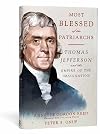
I’ll give it a three because the light it sheds on Jefferson’s character outweighs my dissatisfaction with it’s literary merit. The “Empire of the Imagination” of the subtitle seems to refer not only to the glorious republic that Jefferson imagined the new nation could become, but also to the self-image he cultivated, which was often at odds with reality. He extolled the virtues of home life, wherein, he thought were cultivated the spirit of fellowship and civility and moral values show more that would be the bedrock of the national comity. He often wrote about the central place that home played in his life. Yet he only spent a handful of years actually living in Monticello, and most of that time was in what he considered to be an illicit relationship with a slave. On that biggest question, that of slavery, he recognized its evil, yet came to an accommodation with it, thinking that he could ameliorate it with kindness, and wishfully thinking that his countrymen would quickly come to appreciate its corrosive effect on them and, thus, disavow it. He was a sensitive poet, who may have been out of place in politics, and I love him for his poetry, for his love and care for humanity, which has inspired us, but which, I suspect partly because of the excessive optimism he brought to bear on the practical matters of state, we have fallen short of. show less
"Most Blessed of the Patriarchs": Thomas Jefferson and the Empire of the Imagination by Annette Gordon-Reed
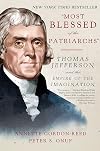
How did Jefferson understand himself and what he wanted, and what exactly did he have to ignore? This book focuses on Jefferson’s self-understanding and private life, which he kept insisting was distinct from his politics. I guess I’m more interested in his politics, though the ending observation was quite sharp: He didn’t free Sally Hemings in his will because to do so he would have had to put her name in a public document, and Virginia law at the time required an explanation of how a show more formerly enslaved person of her age would be supported, which he was unwilling to do. So instead she just left and people treated her as having been freed. show less
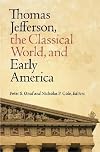
Thomas Jefferson, the Classical World, and Early America, edited by Peter S. Onuf and Nicholas P. Cole is a collection of essays from various classical scholars that attempts to flesh out the degree of influence classicism had on Jefferson, both personally and politically. This is no easy task, as the architect of Monticello, one of the most famous examples of neo-classical buildings in early America, and the scholar who was fluent in both Greek and Latin, in a letter to John Adams, show more “ridiculed Plato’s Republic; and in other correspondence, he dismissed the importance and refused to bemoan the loss of major portions of Aristotle’s Politics,” (56). Evidently, Thomas Jefferson’s views on the relevance and importance of classicism was at best conflicted.
This collection contains ten essays broken down into two parts: Jefferson’s Classical World and Classical Influences. By keeping the focus broad the editors have done an excellent job of allowing the authors to present a vivid picture of the intellectual world of the Revolutionary period. Because of this, we are able to place Jefferson’s worldview within the context of his peers, and what emerges is a Jefferson who is not inline with many of his contemporaries in terms of classical thought.
Giving a thoughtful review of a collection of essays which cover such a scope as this, which ranges from such topics as classical moral theory, to childrearing and education, to an analysis of George Washington as Cincinnatus, to Aristotle and King Alfred, and to Pericles in America is challenging to say the least. However, the editors have again done an excellent job at collating these diverse essays into an insightful whole, which generally paints a cohesive picture of a Jefferson who, while personally enamoured with classical language, writings and architecture, none the less views ancient political theory with suspicion. While the individual authors in this book may disagree about whether the classics were foundational or illustrative for Jefferson, the overall books allows for a more open-ended dualistic answer.
For the rest of this review check out my book blog ~http://stevebrady.tumblr.com/ show less
This collection contains ten essays broken down into two parts: Jefferson’s Classical World and Classical Influences. By keeping the focus broad the editors have done an excellent job of allowing the authors to present a vivid picture of the intellectual world of the Revolutionary period. Because of this, we are able to place Jefferson’s worldview within the context of his peers, and what emerges is a Jefferson who is not inline with many of his contemporaries in terms of classical thought.
Giving a thoughtful review of a collection of essays which cover such a scope as this, which ranges from such topics as classical moral theory, to childrearing and education, to an analysis of George Washington as Cincinnatus, to Aristotle and King Alfred, and to Pericles in America is challenging to say the least. However, the editors have again done an excellent job at collating these diverse essays into an insightful whole, which generally paints a cohesive picture of a Jefferson who, while personally enamoured with classical language, writings and architecture, none the less views ancient political theory with suspicion. While the individual authors in this book may disagree about whether the classics were foundational or illustrative for Jefferson, the overall books allows for a more open-ended dualistic answer.
For the rest of this review check out my book blog ~http://stevebrady.tumblr.com/ show less
"Most Blessed of the Patriarchs": Thomas Jefferson and the Empire of the Imagination by Annette Gordon-Reed
This biography focuses on Jefferson's personal life, his home, his family, and his attitudes about them. He was progressive in many ways, a man of the Enlightenment, but his beliefs about gender, race, and religion remained constrained by his times. The impression I'm left with from this book is that Jefferson sincerely meant well and did his best.
Lists
Awards


You May Also Like


Associated Authors
Statistics
- Works
- 38
- Also by
- 11
- Members
- 956
- Popularity
- #26,956
- Rating
- 3.6
- Reviews
- 5
- ISBNs
- 57