
Sjón
Author of The Blue Fox
About the Author
Image credit: Magnus Fröderberg, Nordbild, www.norden.org
Works by Sjón
The Dark Blue Winter Overcoat and Other Stories from the North (2017) — Editor — 47 copies, 3 reviews
Engill, pípuhattur og jarðarber 2 copies
De liefde wint 1 copy
nachtarbeit / næturverk 1 copy
Drengurinn með röntgenaugun 1 copy
Catalina's Yesterdays: A Glimpse into the Life of the Ancient Dwellers on the Magic Isle (1926) 1 copy
Myrkrar Fígúrur 1 copy
Астрономија на гладниот 1 copy
Associated Works
Don't Panic, I'm Islamic: Words and Pictures on How to Stop Worrying and Learn to Love the Alien Next Door (2017) — Contributor — 18 copies
Tagged
Common Knowledge
- Canonical name
- Sjón
- Legal name
- Sigurðsson, Sigurjón Birgir
- Birthdate
- 1962-08-27
- Gender
- male
- Short biography
- Sjón contributioned the unpublished manuscript for 2016 to the Future Library project, of ""As my brow brushes on the tunics of angels". See the Bookseller article.
- Nationality
- Iceland
- Birthplace
- Reykjavík, Iceland
- Places of residence
- Reykjavik, Iceland
- Associated Place (for map)
- Iceland
Members
Reviews
"Had we but another world and time
Our passionate embraces were no crime.”
This book felt like a fever dream. A hazy, wonderful, surreal, fever dream.
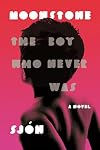
Moonstone: The Boy Who Never Was tells the story of 16-year-old Máni Steinn ("Moon Stone" in Icelandic), a working-class male prostitute in 1918 Reykjavík, Iceland. As the town is submerged into the plague of the Spanish Flu, Máni finds solace in something finally akin to what he feels—the picture shows, and a hellish stopping of his show more city. Housed by his great-grandmother's sister and enamored with the girl Sola G—. Máni's many male relations dot this hazy story of concealment, darkness, and surreality.
A central theme in this novel is of the objectification of Máni—so similar to the characters in the films he attends religiously and strengthening the idea that he "never was". As a doctor accuses the cinema of the fetishization of people, Máni is subjected to that humiliation in his trade, securing his money to go back to the movies in an uncomfortable cycle—mirroring another theme of the cycles of life. The objectification ebbs and flows to Máni's concious—in one phantasmagorial scene a man takes Máni's head from behind a painting to sleep with—the boy's headless body watching from the foot of the bed as he is metaphorically picked apart for consumption and pleasure. An uncomfortable reality is explored: people take only what they want from other people. As Sola G— saves Máni as he is transformed (beaten and boiled) into clothing, even the God-like girl is not immune to "sheathing" his nails and wiping his mustache away.
This Sola G— is freedom. She's a promise of freedom: from Reykjavik and from loneliness and even from his sexuality. The description of her sultry perfumes and form conjure a Máni wanting a woman, and just as people only take what they want from others, perhaps people only take what they can. Her sullen reds inspire the only other color than black in the novel, and the gifting of her red scarf ties the two together in more than one way. "Moonstones" are gems often associated with women; the ties to the cycles of the moon and the feminine are common threads in its understanding. Máni is a shining white gem in the body of a boy, tied to the phases and insanity of the moon, at odds with his sexual soul. Sola, a name meaning both sun and “to help, save, and rescue” in old Norse, is the shining goddess he wishes he could be, the metaphorical brightness and escape of everything her presence promises.
The theme of the cycles of life and of aging course the novel as well, with one of the most poignant scenes depicting Máni in bed with a man who can speak English. It is stark; the boy cannot even read in his own language, and yet the man, in the soft poetics of affection (undermined but not even giving Máni name) leaves this poem:
Spring turns to Autumn over night
In Flanders Field,
Before its time the corn is cut,
Your auburn hair,
A harvest meal by ravens pluck'd
Máni is only in youth for seasons, his body and auburn hair a meal for raven men until he is out of season. He is systematically harvested and at the mercy of time, and just as Máni witnesses his caretaker lose 60 years and melt into a young woman, the passage of time is uncomfortable and painfully physical, surreal as we ourselves become victims to it.
And so unsurprisingly, this novel is dark—both in subject manner and color. Streaked with blacks with touches of red, the lips of Sola, her scarf that is given to Máni, the bloodied beaches and frothing waves as the boy, in one scene, is confronting illness. Yellow flashes in the noir novel; tansy flowers surround Máni as he is semi-conscious on that beach, conjuring an idyllic image negated by the toxicity of the flowers. Blue drifts in plumes of cigarette smoke of the men and women in town is alluring and ultimately fatal. Pink is only watered down blood. None of the hints of color can evade the darkness of this novel, and black butterflies, velvet ribbons, wings inside a chest and turbans pervade. Even blood and his red hair are "dark". A solitary "light" blue novel with poppies on the front is none other than a copy of an early gay novel Mikaël—a touch of light amidst the oppressive dark (that Máni can't help but succumb to, for comfort or routine, I do not know)—left as even it's owner (a man Máni describes as the kindest he had known) perishes from the flu, disparate and unnatural to the darkness of Reykjavik.
In a way the boy "never was" for many reasons. A history born of leprosy, his sexuality a metaphor for the concealment he had to live under, and the new life and name he takes wiping the slate of his life clean—beyond the obvious third-wall slap that this is fiction. It's uncomfortable to think our lives will be so mutable and forgotten, the boy is even denied a name in the end to link him to anyone but himself. And yet it happens and will continue to. All that is certain is what we experience.
I want to reread this and formulate my thoughts on this for years. This book was gorgeous. It was a dream. As much as the novel suffers for not being grounded enough, so much of the books beauty lies in that un-groudedness. It's a feeling—it's characters and images and colors that are vehicles of human emotion, a Freudian look at sexuality and being in a concealed, hostile past. It's also a poem, a piece of prose poetry I can relook at a million times and find some new truth about living. I recommend this book a thousand times over, though I can't promise anything other than a melancholic, separate feeling being left with you—much like Máni must have felt. show less
Our passionate embraces were no crime.”
This book felt like a fever dream. A hazy, wonderful, surreal, fever dream.
Moonstone: The Boy Who Never Was tells the story of 16-year-old Máni Steinn ("Moon Stone" in Icelandic), a working-class male prostitute in 1918 Reykjavík, Iceland. As the town is submerged into the plague of the Spanish Flu, Máni finds solace in something finally akin to what he feels—the picture shows, and a hellish stopping of his show more city. Housed by his great-grandmother's sister and enamored with the girl Sola G—. Máni's many male relations dot this hazy story of concealment, darkness, and surreality.
A central theme in this novel is of the objectification of Máni—so similar to the characters in the films he attends religiously and strengthening the idea that he "never was". As a doctor accuses the cinema of the fetishization of people, Máni is subjected to that humiliation in his trade, securing his money to go back to the movies in an uncomfortable cycle—mirroring another theme of the cycles of life. The objectification ebbs and flows to Máni's concious—in one phantasmagorial scene a man takes Máni's head from behind a painting to sleep with—the boy's headless body watching from the foot of the bed as he is metaphorically picked apart for consumption and pleasure. An uncomfortable reality is explored: people take only what they want from other people. As Sola G— saves Máni as he is transformed (beaten and boiled) into clothing, even the God-like girl is not immune to "sheathing" his nails and wiping his mustache away.
This Sola G— is freedom. She's a promise of freedom: from Reykjavik and from loneliness and even from his sexuality. The description of her sultry perfumes and form conjure a Máni wanting a woman, and just as people only take what they want from others, perhaps people only take what they can. Her sullen reds inspire the only other color than black in the novel, and the gifting of her red scarf ties the two together in more than one way. "Moonstones" are gems often associated with women; the ties to the cycles of the moon and the feminine are common threads in its understanding. Máni is a shining white gem in the body of a boy, tied to the phases and insanity of the moon, at odds with his sexual soul. Sola, a name meaning both sun and “to help, save, and rescue” in old Norse, is the shining goddess he wishes he could be, the metaphorical brightness and escape of everything her presence promises.
The theme of the cycles of life and of aging course the novel as well, with one of the most poignant scenes depicting Máni in bed with a man who can speak English. It is stark; the boy cannot even read in his own language, and yet the man, in the soft poetics of affection (undermined but not even giving Máni name) leaves this poem:
Spring turns to Autumn over night
In Flanders Field,
Before its time the corn is cut,
Your auburn hair,
A harvest meal by ravens pluck'd
Máni is only in youth for seasons, his body and auburn hair a meal for raven men until he is out of season. He is systematically harvested and at the mercy of time, and just as Máni witnesses his caretaker lose 60 years and melt into a young woman, the passage of time is uncomfortable and painfully physical, surreal as we ourselves become victims to it.
And so unsurprisingly, this novel is dark—both in subject manner and color. Streaked with blacks with touches of red, the lips of Sola, her scarf that is given to Máni, the bloodied beaches and frothing waves as the boy, in one scene, is confronting illness. Yellow flashes in the noir novel; tansy flowers surround Máni as he is semi-conscious on that beach, conjuring an idyllic image negated by the toxicity of the flowers. Blue drifts in plumes of cigarette smoke of the men and women in town is alluring and ultimately fatal. Pink is only watered down blood. None of the hints of color can evade the darkness of this novel, and black butterflies, velvet ribbons, wings inside a chest and turbans pervade. Even blood and his red hair are "dark". A solitary "light" blue novel with poppies on the front is none other than a copy of an early gay novel Mikaël—a touch of light amidst the oppressive dark (that Máni can't help but succumb to, for comfort or routine, I do not know)—left as even it's owner (a man Máni describes as the kindest he had known) perishes from the flu, disparate and unnatural to the darkness of Reykjavik.
In a way the boy "never was" for many reasons. A history born of leprosy, his sexuality a metaphor for the concealment he had to live under, and the new life and name he takes wiping the slate of his life clean—beyond the obvious third-wall slap that this is fiction. It's uncomfortable to think our lives will be so mutable and forgotten, the boy is even denied a name in the end to link him to anyone but himself. And yet it happens and will continue to. All that is certain is what we experience.
I want to reread this and formulate my thoughts on this for years. This book was gorgeous. It was a dream. As much as the novel suffers for not being grounded enough, so much of the books beauty lies in that un-groudedness. It's a feeling—it's characters and images and colors that are vehicles of human emotion, a Freudian look at sexuality and being in a concealed, hostile past. It's also a poem, a piece of prose poetry I can relook at a million times and find some new truth about living. I recommend this book a thousand times over, though I can't promise anything other than a melancholic, separate feeling being left with you—much like Máni must have felt. show less
Real Rating: 4.75* of five
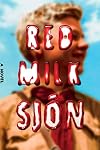
The Publisher Says: A timely and provocative novel about a mysterious Icelandic neo-Nazi and the enduring global allure of fascism.
In England in 1962, an Icelandic man is found dead on a train bound for Cheltenham Spa. In his possession, policemen find a map on which a swastika has been drawn with a red pen. Who was he, and where was he going?
In a novel that reads as both biography and mystery, the internationally celebrated novelist Sjón tells the story of Gunnar show more Kampen, the founder of Iceland's anti-Semitic nationalist party, with ties to a burgeoning network of neo-Nazi groups across the globe. Told in a series of scenes and letters spanning Kampen's lifetime—from his childhood in Reyjavík during the Second World War, in a household strongly opposed to Hitler and his views, through his education, political radicalization, and his final clandestine mission to England—Red Milk urges readers to confront the international legacy of twentieth-century fascism and the often unknowable forces that drive some people to extremism.
Based on one of the ringleaders of a little-known neo-Nazi group that operated in Reykjavík in the late 1950s and early 1960s, this taut and potent novel explores what shapes a young man and the enduring, disturbing allure of Nazi ideology.
I RECEIVED A DRC FROM THE PUBLISHER VIA EDELWEISS+. THANK YOU.
My Review: There is so much that goes into making a person's life. So many moments of seeming ordinariness, so many times unremembered but never forgotten.
Author Sjón absolutely understands this, relies on it, makes me aware of how unaware I am in my life. Living it day-to-day it's unremarkable. After it's over, as it's ending...those are the times reflection becomes available to the average person. Author Sjón takes that truth and makes it the structure of the novel.
We're reading the life of Gunnar after it's over, after it's been picked apart and examined...this book reads like an evidence box would, pick up this letter, what did this key open...and that lets us contextualize the story as the tragedy it really is.
I was gobsmacked to learn this is a based-in-fact story, this was a real person, the ending is factual. How Gunnar came to hold beliefs so horrible to me was all in the oblique and the sidewise and the interstitial parts of the text. Lest that sound Arty and pretentious, I hasten to say that there is no better way I evoke an honest emotional response than this. Author Sjón trusts you to Get It. He allows you not to know.
I'll take that sense of being allowed to find the truth in the fiction over being spoonfed any day.
What I hope you'll enjoy, resonate with, in this read is that quality of discovering the meat of the life Gunnar led, and placing the pieces in order for yourself. While you're never left in doubt about your position in time, you're not going to get everything there is simply by that means.
I think it was a real, living person that I found in this novel. Would I have "liked" him? I don't think so. But I wouldn't have known him the way I do because Author Sjón showed him to me in this simple, elegant piece-by-piece fashion. I like novel-Gunnar a little bit. He was so very empty. He found something to fill what a human can't live without having full. AND it was something awful. Something vile, foul...but it filled the void.
I understand the souls whose quest to be Whole leads them in dark, ugly, despicable places that one fraction better.
Thank you, Author Sjón. I can get better at being a good version of me after this read. show less
The Publisher Says: A timely and provocative novel about a mysterious Icelandic neo-Nazi and the enduring global allure of fascism.
In England in 1962, an Icelandic man is found dead on a train bound for Cheltenham Spa. In his possession, policemen find a map on which a swastika has been drawn with a red pen. Who was he, and where was he going?
In a novel that reads as both biography and mystery, the internationally celebrated novelist Sjón tells the story of Gunnar show more Kampen, the founder of Iceland's anti-Semitic nationalist party, with ties to a burgeoning network of neo-Nazi groups across the globe. Told in a series of scenes and letters spanning Kampen's lifetime—from his childhood in Reyjavík during the Second World War, in a household strongly opposed to Hitler and his views, through his education, political radicalization, and his final clandestine mission to England—Red Milk urges readers to confront the international legacy of twentieth-century fascism and the often unknowable forces that drive some people to extremism.
Based on one of the ringleaders of a little-known neo-Nazi group that operated in Reykjavík in the late 1950s and early 1960s, this taut and potent novel explores what shapes a young man and the enduring, disturbing allure of Nazi ideology.
I RECEIVED A DRC FROM THE PUBLISHER VIA EDELWEISS+. THANK YOU.
My Review: There is so much that goes into making a person's life. So many moments of seeming ordinariness, so many times unremembered but never forgotten.
Author Sjón absolutely understands this, relies on it, makes me aware of how unaware I am in my life. Living it day-to-day it's unremarkable. After it's over, as it's ending...those are the times reflection becomes available to the average person. Author Sjón takes that truth and makes it the structure of the novel.
We're reading the life of Gunnar after it's over, after it's been picked apart and examined...this book reads like an evidence box would, pick up this letter, what did this key open...and that lets us contextualize the story as the tragedy it really is.
I was gobsmacked to learn this is a based-in-fact story, this was a real person, the ending is factual. How Gunnar came to hold beliefs so horrible to me was all in the oblique and the sidewise and the interstitial parts of the text. Lest that sound Arty and pretentious, I hasten to say that there is no better way I evoke an honest emotional response than this. Author Sjón trusts you to Get It. He allows you not to know.
I'll take that sense of being allowed to find the truth in the fiction over being spoonfed any day.
What I hope you'll enjoy, resonate with, in this read is that quality of discovering the meat of the life Gunnar led, and placing the pieces in order for yourself. While you're never left in doubt about your position in time, you're not going to get everything there is simply by that means.
I think it was a real, living person that I found in this novel. Would I have "liked" him? I don't think so. But I wouldn't have known him the way I do because Author Sjón showed him to me in this simple, elegant piece-by-piece fashion. I like novel-Gunnar a little bit. He was so very empty. He found something to fill what a human can't live without having full. AND it was something awful. Something vile, foul...but it filled the void.
I understand the souls whose quest to be Whole leads them in dark, ugly, despicable places that one fraction better.
Thank you, Author Sjón. I can get better at being a good version of me after this read. show less
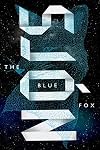
A small Icelandic... Well, I was going to say "novel," but at 115 pages, I think it might actually qualify as a novella. Whatever it is, it's an odd, odd book. We're introduced to a man hunting a blue fox, apparently with something vaguely supernatural going on. Then we jump back in time a few days to meet another man, a man who once took in a young woman with Down's syndrome, despite the fact that this is set during the 19th century, and he'd been exposed to some very ugly ideas about such show more people. Then it's back to the fox-hunter again, who experiences some very weird things. Through the entire thing I kept wondering why on Earth the author was showing me these things and what the connection was between them. In the end, we're given information that makes sense of it... sort of. It's never remotely clear exactly why what happens happens, or even entirely what it is that happens, which leaves me wondering whether the author was deliberately leaving most of it to our imagination (which would be kind of an interesting choice), or whether there's an allusion here to some Icelandic folklore I'm just not aware of.
The writing is odd, too, although I think mostly in a good way. There's a dreamlike quality to it that seems appropriate, and which did kind of pull me along.
But in the end, I'm left completely unsure how I feel about any of it, and can't even remotely decide whether I actually liked it or not.
Rating: Seriously, I don't know whether this was good or bad. I don't know whether I liked it or not. Um... 3.5/5? show less
The writing is odd, too, although I think mostly in a good way. There's a dreamlike quality to it that seems appropriate, and which did kind of pull me along.
But in the end, I'm left completely unsure how I feel about any of it, and can't even remotely decide whether I actually liked it or not.
Rating: Seriously, I don't know whether this was good or bad. I don't know whether I liked it or not. Um... 3.5/5? show less
Oooof. Reading the first part of this slim novel, it seemed to me I was reading a modernized animal fable. Told in poetic language we read about a blue fox, “the vixen”, being tracked through the winter Icelandic landscape of 1883 by a hunter, universalized as “the man”. And then the story explodes into something else, signified by two short lines:
The following sections of the novel gradually spool out a horrific and, show more alas, an all too human sort of story, told in more traditional though still lyrically heightened prose. I had not looked at reviews before reading this; if I had, I would have seen my Goodreads friend Meike’s review which points out the etymology of the Icelandic word skuggabaldur, the novel’s original title in Iceland, which according to Wiktionary has the meanings:
1. An Icelandic folktale creature, the offspring of a tomcat and a vixen (or dog)
2. An evil spirit
3. An evildoer who anonymously does their evil
Icelandic speakers, or people who read smart Goodreads reviews, would thus know right away that the name Baldur Skuggason bodes very ill. I got to find out more gradually. The Reverend Baldur Skuggason has done something hideously evil, unspeakable, and Sjón twines together that brutal story with the safer language of fable, where the moral is guaranteed its victory in the end.
There’s an interesting exchange between Reverend Baldur Skuggason and the vixen that suggestively takes place in a cave (underneath a glacier, being Iceland!). Skuggason challenges the vixen to a debate about electricity. He claims that God materially makes up the world, and that it is thus particles of God that are transmitted through electric wires. To treat God in such a way is a degradation of His nature. The vixen replies that if God causes the light to shine, and if God furthermore is light, then God is shining forth from every lamp, and shouldn’t the Church desire that? The Reverend cynically replies, “Do you really believe, Madam Vixen, that the radiance from these electric bulbs of yours can penetrate the human soul?” He then stabs the vixen through the heart with a knife he has grabbed while the vixen was composing her reply.
Digging out of the cave through the snow right after, the Reverend calls out:
I think there’s enough suggested in these few pages to power several theology classes. show less
She raises her head.
Reverend Baldur Skuggason pulls the trigger.
The following sections of the novel gradually spool out a horrific and, show more alas, an all too human sort of story, told in more traditional though still lyrically heightened prose. I had not looked at reviews before reading this; if I had, I would have seen my Goodreads friend Meike’s review which points out the etymology of the Icelandic word skuggabaldur, the novel’s original title in Iceland, which according to Wiktionary has the meanings:
1. An Icelandic folktale creature, the offspring of a tomcat and a vixen (or dog)
2. An evil spirit
3. An evildoer who anonymously does their evil
Icelandic speakers, or people who read smart Goodreads reviews, would thus know right away that the name Baldur Skuggason bodes very ill. I got to find out more gradually. The Reverend Baldur Skuggason has done something hideously evil, unspeakable, and Sjón twines together that brutal story with the safer language of fable, where the moral is guaranteed its victory in the end.
There’s an interesting exchange between Reverend Baldur Skuggason and the vixen that suggestively takes place in a cave (underneath a glacier, being Iceland!). Skuggason challenges the vixen to a debate about electricity. He claims that God materially makes up the world, and that it is thus particles of God that are transmitted through electric wires. To treat God in such a way is a degradation of His nature. The vixen replies that if God causes the light to shine, and if God furthermore is light, then God is shining forth from every lamp, and shouldn’t the Church desire that? The Reverend cynically replies, “Do you really believe, Madam Vixen, that the radiance from these electric bulbs of yours can penetrate the human soul?” He then stabs the vixen through the heart with a knife he has grabbed while the vixen was composing her reply.
Digging out of the cave through the snow right after, the Reverend calls out:
”Light, more light!”
But the closer the priest came to his goal, the less man there was in him, the more beast.
I think there’s enough suggested in these few pages to power several theology classes. show less
Lists
Tall tales (1)
Awards


You May Also Like


Associated Authors
Statistics
- Works
- 32
- Also by
- 6
- Members
- 2,628
- Popularity
- #9,769
- Rating
- 3.6
- Reviews
- 129
- ISBNs
- 143
- Languages
- 21
- Favorited
- 6
