
B. Traven (1882–1969)
Author of The Treasure of the Sierra Madre
About the Author
Image credit: Arthur Publishing Corp.
Series
Works by B. Traven
Der Schatz der Sierra Madre / Die Baumwollpflücker / Die Brücke im Dschungel. 3 Romane (1992) 5 copies
Land des Frühlings : erster Band 4 copies
Land des Frühlings, Bd. 2 4 copies
Anhang zu den Bänden 16 und 17, Land des Frühlings : Varianten der Erstausgabe von 1928 (1982) 3 copies
ich kenne das leben in mexiko. briefe an john schikowski 1925 bis 1032. mit einem essay von karl s. guthke. (1992) 2 copies
The night visitor, and other stories 2 copies
B. Traven An Interview With Himself 2 copies
Erzählungen Bd. 1 [...] 2 copies
Erzählungen 2 2 copies
Obras Escogidas Tomo II 2 copies
Aus dem Land des Frühlings 1 copy
Los pizcadores de algodón / 1 copy
B.Traven 1 copy
İsyan 1 copy
Trandafirul alb: Roman 1 copy
Ölüm Gemisi 1 copy
Obiralci bombaža 1 copy
A taliga regény 1 copy
Pochod do říše mahagonu 1 copy
DİNAMİT 1 copy
Akasztottak lázadása 1 copy
Poklad na Sierra Madre 1 copy
Akasztottak lázadása 1 copy
Les cueilleurs de coton 1 copy
Upor obešencev 1 copy
Vzbura vyvesencov : Román 1 copy
Midnight Call 1 copy
Bokpaket B. Traven - 6 delar 1 copy
The Actor and the King 1 copy
Mother Beleke 1 copy
In The Fog 1 copy
The Unknown Soldier 1 copy
Titles 1 copy
Deceivers 1 copy
Originality 1 copy
The Silk Scarf 1 copy
The Story Of a Nun 1 copy
The Art Of The Painter 1 copy
Urskog 1 copy
Flökkulíf: Saga frá Mexíkó 1 copy
Werkausgabe in Einzelbden [Abt. 2] 1 Erzlungen Die @Geschichte vom unbegrabenen Leichnam (1991) 1 copy
Caoba. Roman aus Mexiko 1 copy
Ausgewählte Werke. Erzählungen / [Hrsg., Nachw. u. Bibliographie: Werner Sellhorn]?Bd. 1 (1969) 1 copy
Effective Medicine 1 copy
Romane 1 copy
Conversion Of Some Indians 1 copy
Friendship 1 copy
A New God Was Born 1 copy
The Cattle Drive 1 copy
Assembly Line 1 copy
Tänukiri: jutustused 1 copy
Associated Works
Great tales of adventure: A selection of condensed novels and full-length short stories (1982) — Contributor — 2 copies
The White Rose [1961 film] — Original book — 1 copy
Tagged
Common Knowledge
- Canonical name
- Traven, B.
- Legal name
- Feige, Otto (disputed)
Feige, Herrmann Albert Otto Max (disputed) - Other names
- Marut, Ret (Pseudonym) (disputed)
Torsvan Croves, Traven (Pseudonym) (disputed)
Croves, Hal (Pseudonym) (disputed)
Maurhut, Richard (Pseudonym) (disputed) - Birthdate
- 1882/1890 ? (disputed)
- Date of death
- 1969-03-26 (disputed)
- Gender
- male
- Occupations
- novelist
- Agent
- Traven Torsvan
Hal Croves
Esperanza López Mateos
Josef Wieder - Relationships
- Luján, Rosa Elena (wife) (disputed)
- Short biography
- The author known as B. Traven lived under numerous pseudonyms. German of origin--under one of his names Ret Marut--he ran an illegal printing press and was associated with the Sparticists opposed to the Kaiser during World War 1 and associated also at least somewhat with the Weimar Republic that came after the German collapse in that conflict. When the Weimar itself collapses the story goes that Traven was arrested and sentenced to death by a military kangaroo court. He however managed to escape not only from Germany but from Europe finally settling in with the native population in Southern Mexico. His jungle novels are set in that region and portray the exploitation of the indigenous population. Traven lived under numerous pseudonyms as mentioned above. He believed himself to be under threat of assassination and acted accordingly. There is some reason to believe though that his past was the cause of much neurosis and/or paranoia on his part. Also used Traven Torsvan and Hal Croves.
- Nationality
- Germany (disputed)
- Birthplace
- Schwiebus, Brandenburg, Deutschland (disputed)
Świebodzin, Polen (disputed) - Places of residence
- Chicago, Illinois, USA (disputed)
Mexico City, Mexico (disputed) - Place of death
- Mexico City, Mexico (disputed)
- Burial location
- Chiapas, Mexico (disputed)
- Map Location
- Germany
Members
Reviews
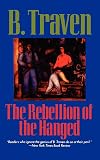
The four previous books in this series were bleak and hopeless, writhing around in the misery of the laborers and the disgusting opportunism of those who steal their surplus value. The initial hundred or so pages of this book are even worse. The excesses of indignity, the violence, the stupidity and the preposterously unjust Porfiriato ruling class culminate and are no longer able to wring any further coin from the bodies of the indigenous people who slave under them in the mahogany show more plantations.
From the beginning of the book we can see this situation cannot continue. The expectation to produce two tons of mahogany which already exceeds the capacity of the people performing the labor doubles, and the punishments for not meeting the quota get more severe. The laborers receiving the punishments numb to them, and then they fight back.
"There's no need to be a great prophet to be able to say that everything's on the verge of bursting. If the old President's throne shakes and falls, the whole of this republic will go up in flames. And, as for long years nobody has learned to think, because thinking is forbidden, things will go on burning until we have all been consumed."
"If they had been reasoning men they would never have rebelled. Uprisings, mutinies, revolutions, are always irrational in themselves because they come to disturb the agreeable somnolence that goes by the names of peace and order."
There seems to be some confusion as to whether the author believes the essentialized traits of the natives that he describes throughout the course of this series. Traven describes the manner in which the natives are seen by the Porfiriato, and the manner in which they come to see themselves as colonized and helpless people. They buck this essentialized nature first and foremost with their rebellion. And any Spaniard who attempts to rely on this passivity, stupidity, and humbleness to regain control of their subjects literally get their heads smashed in for believing the lies they tell themselves. show less
From the beginning of the book we can see this situation cannot continue. The expectation to produce two tons of mahogany which already exceeds the capacity of the people performing the labor doubles, and the punishments for not meeting the quota get more severe. The laborers receiving the punishments numb to them, and then they fight back.
"There's no need to be a great prophet to be able to say that everything's on the verge of bursting. If the old President's throne shakes and falls, the whole of this republic will go up in flames. And, as for long years nobody has learned to think, because thinking is forbidden, things will go on burning until we have all been consumed."
"If they had been reasoning men they would never have rebelled. Uprisings, mutinies, revolutions, are always irrational in themselves because they come to disturb the agreeable somnolence that goes by the names of peace and order."
There seems to be some confusion as to whether the author believes the essentialized traits of the natives that he describes throughout the course of this series. Traven describes the manner in which the natives are seen by the Porfiriato, and the manner in which they come to see themselves as colonized and helpless people. They buck this essentialized nature first and foremost with their rebellion. And any Spaniard who attempts to rely on this passivity, stupidity, and humbleness to regain control of their subjects literally get their heads smashed in for believing the lies they tell themselves. show less
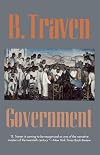
Don Gabriel is a politician, one among many of the same.
He does as much as he can to make as much money as he can in as little time as he can, with no regard for literally any other principle. There is nothing he does for anyone else at any point that doesn't make their lives worse and make him richer. Every despicable person he meets, he marvels at their ruthlessness and their ability to grift, and shortly afterwards absorbs their misanthropy and greed and finds new ways to wring money out show more of human misery of his own creation.
The book chronicles his ascent into full-on slave trader (though he justifies his monstrousness as not *slavery* slavery because that would be immoral! and more importantly illegal!). The humor in the book is so dry as to cause despair: his callous disregard for anyone or anything other than his own enrichment and his rationalization of the really awful things he is doing. Unfortunately, I think it is a pretty accurate allegory: the final ranted blood-soaked justification summarized in the last pages, the convoluted excuses for the brutality and human misery so that some can have luxury goods and others can claim their nation is important in world affairs.
It's unsettling stuff, and I'm glad I started the Jungle Books series at #2 (The Carreta) because this initial offering is a little too bleak. I'm not sure I would have picked up another in the series if I had started with this one. show less
He does as much as he can to make as much money as he can in as little time as he can, with no regard for literally any other principle. There is nothing he does for anyone else at any point that doesn't make their lives worse and make him richer. Every despicable person he meets, he marvels at their ruthlessness and their ability to grift, and shortly afterwards absorbs their misanthropy and greed and finds new ways to wring money out show more of human misery of his own creation.
The book chronicles his ascent into full-on slave trader (though he justifies his monstrousness as not *slavery* slavery because that would be immoral! and more importantly illegal!). The humor in the book is so dry as to cause despair: his callous disregard for anyone or anything other than his own enrichment and his rationalization of the really awful things he is doing. Unfortunately, I think it is a pretty accurate allegory: the final ranted blood-soaked justification summarized in the last pages, the convoluted excuses for the brutality and human misery so that some can have luxury goods and others can claim their nation is important in world affairs.
It's unsettling stuff, and I'm glad I started the Jungle Books series at #2 (The Carreta) because this initial offering is a little too bleak. I'm not sure I would have picked up another in the series if I had started with this one. show less

I first read this story in a high school Spanish class, and it stuck with me. I've since read it several times.
The story is a German folk tale transferred to the Mexican jungles, which is appropriate since Traven was a German who transferred himself to the same Mexican jungles - what we know of his story suggests that his life reflects some interesting facets of the twentieth century, but that's another story for another day.
In summary, Macario is a woodcutter, living in gruelling poverty, show more which is spelled out in few lines and great detail in the early part of the book. Macario's one fantasy is simply to have a meal, a roasted turkey, for himself, and to not have to share it with his starving children. One day, Macario's wife manages to bring this to pass, and she sends him to the woods to eat so he won't be tormented by his hungry children's faces.
From here, we enter into fairy tale territory: Macario is visited by God, the Devil, and Death, each of whom asks him to share his meal. The first two, he rejects, but with an amazingly practical logic he chooses to share with Death, who returns the favor in a manner familiar to those who have read the German folk canon. Macario, with Death's help, becomes a great doctor, and is able to rise in the world, until his inevitable undoing.
The story is a simple one, but Traven's unremittingly honest pen tells it impeccably, and without making it into propaganda, turns it into a fairy tale about rich and poor and the real word. A really remarkable little story altogether. show less
The story is a German folk tale transferred to the Mexican jungles, which is appropriate since Traven was a German who transferred himself to the same Mexican jungles - what we know of his story suggests that his life reflects some interesting facets of the twentieth century, but that's another story for another day.
In summary, Macario is a woodcutter, living in gruelling poverty, show more which is spelled out in few lines and great detail in the early part of the book. Macario's one fantasy is simply to have a meal, a roasted turkey, for himself, and to not have to share it with his starving children. One day, Macario's wife manages to bring this to pass, and she sends him to the woods to eat so he won't be tormented by his hungry children's faces.
From here, we enter into fairy tale territory: Macario is visited by God, the Devil, and Death, each of whom asks him to share his meal. The first two, he rejects, but with an amazingly practical logic he chooses to share with Death, who returns the favor in a manner familiar to those who have read the German folk canon. Macario, with Death's help, becomes a great doctor, and is able to rise in the world, until his inevitable undoing.
The story is a simple one, but Traven's unremittingly honest pen tells it impeccably, and without making it into propaganda, turns it into a fairy tale about rich and poor and the real word. A really remarkable little story altogether. show less
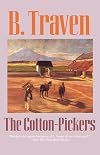
Ahh.. What a pleasure it is to give this bk a good review! The 1st bk I read of Traven's was probably "The Death Ship" - wch details the slow decay of a sailor's life as a result of facets of 'modern' life that the author & I abhor in common - like nationalistic borders & parasitic capitalism (is there any other kind?). I loved "The Death Ship" but it started out humorous & turned increasingly grim as the bk made its point clearer & clearer. Then I think I read 2 of the 6 "Jungle Novels" show more wch, according to a short description in the back of this bk, "describe the conditions of peonage and debt slavery under which the Indians suffered in Díaz's time." [ie: before the Mexican Revolution] These were extremely insightful political novels, as was "The Death Ship", & also GRIM - almost 'unbearable'. As such, even though I considered Traven to be a great political writer, I hesitated to read more - my mood is often too depressing as is.
SO, I read this anyway. & it was akin to "The Death Ship" in its sarcastic, philosophical, & subtle humour - BUT, the protaganist has a sortof 'easier' time of it & the Mexican Revolution is shown as being somewhat triumphant. It was a relief. I assume that it was historically accurate when it depicts greedy restaurant owners as being successfully forced into cooperation w/ unions BY THE POLICE! What a time that must've been!
Now, I've lumped this together w/ Tom Collins' great Australian cattle-driver novel "Such Is Life" by putting it on my "working-class-intellectuals" bookshelf. From me, that's an honor. Whether Traven's actual life trajectory deserves this or not I don't know. I've read sparse, & perhaps conflicting, bios about him. This bk's afterword claims:
"The mysterious B. Traven (1890-1969) was born in Chicago, spent his youth in Germany as an itinerant actor and revolutionary journalist, became a seaman on tramp steamers, settled in Mexico in the early 1920s, and began recording his experiences in novels and stories."
That rings 'true' - but then so do conflicting claims! Whatever the case, Traven writes like he's been there. Damn, he even makes reference to Baltimore row-homes! Making me wonder whether he'd ever been THERE. If he had, that perks my interest even more. To make Traven even more akin to Collins, there's even a cattle herding. It's all interesting, politically astute, sad, funny, & there's even some uplifting triumph for workers! &, unlike Collins, he wrote many bks! HOORAY FOR B. TRAVEN!
"The Cotton Pickers", by the by, was also called "DER WOBBLY", & was either Traven's 1st or 2nd novel. To make the plot even thicker, one supposedly unsubstantiated theory has it that Traven might've been Arthur Craven - the dadaist/boxer who's reputed to've disappeared off the coast of Mexico in a small boat. Wdn't THAT be a trip. show less
SO, I read this anyway. & it was akin to "The Death Ship" in its sarcastic, philosophical, & subtle humour - BUT, the protaganist has a sortof 'easier' time of it & the Mexican Revolution is shown as being somewhat triumphant. It was a relief. I assume that it was historically accurate when it depicts greedy restaurant owners as being successfully forced into cooperation w/ unions BY THE POLICE! What a time that must've been!
Now, I've lumped this together w/ Tom Collins' great Australian cattle-driver novel "Such Is Life" by putting it on my "working-class-intellectuals" bookshelf. From me, that's an honor. Whether Traven's actual life trajectory deserves this or not I don't know. I've read sparse, & perhaps conflicting, bios about him. This bk's afterword claims:
"The mysterious B. Traven (1890-1969) was born in Chicago, spent his youth in Germany as an itinerant actor and revolutionary journalist, became a seaman on tramp steamers, settled in Mexico in the early 1920s, and began recording his experiences in novels and stories."
That rings 'true' - but then so do conflicting claims! Whatever the case, Traven writes like he's been there. Damn, he even makes reference to Baltimore row-homes! Making me wonder whether he'd ever been THERE. If he had, that perks my interest even more. To make Traven even more akin to Collins, there's even a cattle herding. It's all interesting, politically astute, sad, funny, & there's even some uplifting triumph for workers! &, unlike Collins, he wrote many bks! HOORAY FOR B. TRAVEN!
"The Cotton Pickers", by the by, was also called "DER WOBBLY", & was either Traven's 1st or 2nd novel. To make the plot even thicker, one supposedly unsubstantiated theory has it that Traven might've been Arthur Craven - the dadaist/boxer who's reputed to've disappeared off the coast of Mexico in a small boat. Wdn't THAT be a trip. show less
Lists
Awards


You May Also Like


Associated Authors
Statistics
- Works
- 131
- Also by
- 11
- Members
- 4,306
- Popularity
- #5,827
- Rating
- 4.1
- Reviews
- 60
- ISBNs
- 385
- Languages
- 16
- Favorited
- 20