
Brigitte Schwaiger (1949–2010)
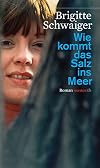
Author of Why Is There Salt in the Sea?
About the Author
Image credit: Brigitte Schwaiger
Works by Brigitte Schwaiger
Associated Works
Tagged
Common Knowledge
- Canonical name
- Schwaiger, Brigitte
- Birthdate
- 1949-04-06
- Date of death
- 2010-07-26
- Gender
- female
- Nationality
- Austria
- Birthplace
- Freistadt, Oberösterreich, Oostenrijk
- Place of death
- Wenen, Oostenrijk
- Burial location
- Zentralfriedhof, Wenen, Oostenrijk
- Associated Place (for map)
- Austria
Members
Reviews

A big bestseller in the seventies, this short novel takes apart (Austrian- ) bourgeois marriage from the sardonic, self-mocking point of view of a young woman who has allowed herself to be steered into the path of least resistance by parents and friends, and suddenly finds herself with a passport that has a new name in it and "housewife" as profession, but still living in the same small town, still under the constant supervision of friends and relatives who know what goes along with show more gutbürgerlich behaviour. Even when she tries her hand at adultery she finds herself following the predetermined lines of middle-class cliché, arranging secret meetings with a man who might be more interesting than her husband in bed, but in all other respects is interchangeable with him.
Very much of its time, when feminist ideas were only just beginning to penetrate into provincial life, but still funny, sad, and deadly accurate in its observation. show less
Very much of its time, when feminist ideas were only just beginning to penetrate into provincial life, but still funny, sad, and deadly accurate in its observation. show less

The short prose pieces, parodies, monologues (and a couple of poems) in this collection are all drawn from the author's childhood experiences as a doctor's daughter in the small community of Freistadt in Upper Austria, the "Spanish village" of the title. "It's a Spanish village to me" is a proverbial German expression for something puzzling and unintelligible, a variant of the more common "Bohemian village", which wouldn't fit very well here, Freistadt being on the Czech border. And it's show more also a personal joke, since Schwaiger lived in Spain for some years with her first husband before returning to Austria. However strange Spain may have been, when she looks back, the Austrian village where she grew up is stranger.
The book divides roughly into three equal parts: in the first part, the viewpoint is that of a naive young child, looking at the adult world with a critical and unprejudiced eye, and of course putting her finger on precisely the thing the adults don't want her to notice. She teases her parents for their snobbery and the nuns at school for their blinkered view of the world, conspires with domestic servants and causes trouble with the future bad-girl of the village. In the second part, the narrator is an adolescent confiding to her diary her secret (and sometimes embarrassingly-public) adoration for various boys who don't appear to be interested, whilst avoiding other boys who do. And in the third part the viewpoint switches around between all sorts of narrators: neighbours, dogs, members of the author's family, and occasionally the grown-up author herself, looking back. In one piece she even adopts the voice of her own ex-husband, answering criticism of her previous book.
There's a lot of fun with dialect and rustic comedy, but there's often a hard core of social criticism under the knockabout stuff: the legacies of the Nazi period and the war are still there in the village, of course, the place is full of men who haven't woken up to the sexual revolution, and there are new forms of hypocrisy and intolerance to deal with as well as the old ones. It's not exactly Elfriede Jelinek, but it's not without its bite, all the same. show less
The book divides roughly into three equal parts: in the first part, the viewpoint is that of a naive young child, looking at the adult world with a critical and unprejudiced eye, and of course putting her finger on precisely the thing the adults don't want her to notice. She teases her parents for their snobbery and the nuns at school for their blinkered view of the world, conspires with domestic servants and causes trouble with the future bad-girl of the village. In the second part, the narrator is an adolescent confiding to her diary her secret (and sometimes embarrassingly-public) adoration for various boys who don't appear to be interested, whilst avoiding other boys who do. And in the third part the viewpoint switches around between all sorts of narrators: neighbours, dogs, members of the author's family, and occasionally the grown-up author herself, looking back. In one piece she even adopts the voice of her own ex-husband, answering criticism of her previous book.
There's a lot of fun with dialect and rustic comedy, but there's often a hard core of social criticism under the knockabout stuff: the legacies of the Nazi period and the war are still there in the village, of course, the place is full of men who haven't woken up to the sexual revolution, and there are new forms of hypocrisy and intolerance to deal with as well as the old ones. It's not exactly Elfriede Jelinek, but it's not without its bite, all the same. show less
Content Note: abortion
Plot:
The narrator is a young woman from a bourgeois family. She isn’t particularly happy with her life or the expectations put to her. Both lead her straight to a marriage with Rolf, but that marriage doesn’t liberate her from the tight corset of her family’s expectations, but just brings her to a new cage. A cage she is ever more desperate to be free from.
Wie kommt das Salz ins Meer? was a big hit when it was first published at the end of the 70s, and then the show more novel and Schwaiger were pretty much forgotten – as is so often the case with female authors. It’s a damn shame. The novel is absolutely brilliant and still feels as timely as it must have at the time.
Read more on my blog: https://kalafudra.com/2023/01/18/wie-kommt-das-salz-ins-meer-why-is-there-salt-i... show less
Plot:
The narrator is a young woman from a bourgeois family. She isn’t particularly happy with her life or the expectations put to her. Both lead her straight to a marriage with Rolf, but that marriage doesn’t liberate her from the tight corset of her family’s expectations, but just brings her to a new cage. A cage she is ever more desperate to be free from.
Wie kommt das Salz ins Meer? was a big hit when it was first published at the end of the 70s, and then the show more novel and Schwaiger were pretty much forgotten – as is so often the case with female authors. It’s a damn shame. The novel is absolutely brilliant and still feels as timely as it must have at the time.
Read more on my blog: https://kalafudra.com/2023/01/18/wie-kommt-das-salz-ins-meer-why-is-there-salt-i... show less

Very moving, suspenseful, realistic life of a Jewish girl in Poland in WWII
Lists
Awards

You May Also Like


Associated Authors
Statistics
- Works
- 18
- Also by
- 3
- Members
- 203
- Popularity
- #108,638
- Rating
- 3.9
- Reviews
- 6
- ISBNs
- 50
- Languages
- 7