
Works by Jeff Hobbs
The Short and Tragic Life of Robert Peace: A Brilliant Young Man Who Left Newark for the Ivy League (2014) 943 copies, 44 reviews
Children of the State: Stories of Survival and Hope in the Juvenile Justice System (2023) 76 copies, 4 reviews
Seeking Shelter: A Working Mother, Her Children, and a Story of Homelessness in America (2025) 45 copies, 3 reviews
Show Them You're Good: A Portrait of Boys in the City of Angels the Year Before College (2020) 35 copies, 1 review
Tagged
Common Knowledge
- Birthdate
- 1980-04-08
- Gender
- male
- Education
- Yale University (BA - English Language and Literature)
- Occupations
- novelist
biographer - Nationality
- USA
- Places of residence
- New York, New York, USA
Tanzania
Los Angeles, California, USA - Associated Place (for map)
- USA
Members
Reviews
The Short and Tragic Life of Robert Peace: A Brilliant Young Man Who Left Newark for the Ivy League by Jeff Hobbs
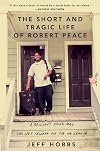
This biography is a terrific piece of narrative non-fiction that really highlights in so many ways what it means to be a human being. Robert Peace grew up the son of a hardworking single mother and an imprisoned father in Newark, NJ amidst urban blight. Highly intelligent, curious, and driven, he manages to thrive in a religious private school and ultimately is accepted and attends Yale, majoring in molecular biology. Unfortunately, he is never quite able to leave his roots behind, and he show more continuously deals drugs before, during, and after college. Ultimately, Robert "fails to launch" and is unable to truly extricate himself from his neighborhood and drugs.
The story is told powerfully by his college roommate, Jeff. What makes this book special is that it leaves the reader to draw their own conclusion. Is this a story of a man who just makes poor choices and squanders opportunities? Is this the story of a man whose early childhood was so fraught with trauma that it couldn't be overcome despite his intellect? Is this a story about the vagaries of luck and life decisions? Obviously, no one can really infer policy based on one person's story, but this book raises every societal question. It's truly heartbreaking, and I think the author did his best to leave judgement aside.
At the end of the book there is an interview with the author, and one thing he said really struck me. He noted how the children of the upper classes, those who have attended the best private schools and lived in expensive suburbs, really "get" that adult guidance is there for the taking and avail themselves of it frequently and without hesitation. Unfortunately, children in less fortunate circumstance, need these adults more and avail themselves of them less. In my experience, this is true, and I just wonder how those of us who have given every bit of guidance to our own children might extend ourselves further and proactively to children who truly need it. After reading this book, I intend to seek out that opportunity. show less
The story is told powerfully by his college roommate, Jeff. What makes this book special is that it leaves the reader to draw their own conclusion. Is this a story of a man who just makes poor choices and squanders opportunities? Is this the story of a man whose early childhood was so fraught with trauma that it couldn't be overcome despite his intellect? Is this a story about the vagaries of luck and life decisions? Obviously, no one can really infer policy based on one person's story, but this book raises every societal question. It's truly heartbreaking, and I think the author did his best to leave judgement aside.
At the end of the book there is an interview with the author, and one thing he said really struck me. He noted how the children of the upper classes, those who have attended the best private schools and lived in expensive suburbs, really "get" that adult guidance is there for the taking and avail themselves of it frequently and without hesitation. Unfortunately, children in less fortunate circumstance, need these adults more and avail themselves of them less. In my experience, this is true, and I just wonder how those of us who have given every bit of guidance to our own children might extend ourselves further and proactively to children who truly need it. After reading this book, I intend to seek out that opportunity. show less
The Short and Tragic Life of Robert Peace: A Brilliant Young Man Who Left Newark for the Ivy League by Jeff Hobbs
Robert Peace had *nothing* going for him. Born in a ghetto just outside of Newark, he was raised by a single mother while his father was imprisoned for a double murder. And yet, Robert had innate qualities inside -- drive, intelligence, curiosity, leadership -- that had him destined for something beyond the fate assigned to almost all others in his neighborhood. These qualities ulimately landed him a spot at Yale, with all expenses paid by a generous benefactor.
We know from the book's title show more that the story doesn't have a happy ending. Written by Peace's former Yale roommate, Jeff Hobbs, this book doesn't answer the "Why?" -- frankly, I don't think anyone will ever know. However, Hobbs paints a picture of a brilliant young man who can't find his way in life. He doesn't feel at ease in the rarified world of the elite, and while he wants to leave the ghetto he can't seem to find a way out. Thought provoking and devastating all at once. show less
We know from the book's title show more that the story doesn't have a happy ending. Written by Peace's former Yale roommate, Jeff Hobbs, this book doesn't answer the "Why?" -- frankly, I don't think anyone will ever know. However, Hobbs paints a picture of a brilliant young man who can't find his way in life. He doesn't feel at ease in the rarified world of the elite, and while he wants to leave the ghetto he can't seem to find a way out. Thought provoking and devastating all at once. show less
The Short and Tragic Life of Robert Peace: A Brilliant Young Man Who Left Newark for the Ivy League by Jeff Hobbs
The Short and Tragic Life of Robert Peace is a powerful and valuable contribution to our collective discussion about poverty, race, drug culture, and violence in our society.
It's all too easy to fall into the comforting fallacy that bad things only happen to bad people, that anyone involved in criminal acts must be a thug.
We want to believe that good people don't do bad things.
Robert Peace was a good man—kind, caring, devoted, smart and curious. The decisions he made over the course of his show more 30 year life were driven by good motives. But still he made some bad decisions that brought him to a bad end.
What The Short and Tragic Life of Robert Peace reveals that things aren't as simple as good or bad. This man's life can't be reduced to any sort of pat dichotomy.
Too often when we talk about issues of poverty, race, drug culture, and violence in our society, we forget that real and complicated people lie at the heart of these problems. We argue about these issues in the abstract and don't stop to think about the actual people who choose to do these things, the day-to-day reality of those who have live and cope in the midst of these dangers.
All of these social problems have human faces. They're the consequence of decisions and actions undertaken by individuals within a community. Real people live and die, prosper or fail as a result.
The Short and Tragic Life of Robert Peace is important precisely because it's a human story—the author doesn't allow it to generalize into the worn tropes of standard public debate. It's a story that can't be summed up with easy explanations or obvious answers. This is the story of one person, complex and contradictory and flawed like the rest of us. This is the story of the decisions he made, with the best of intentions but for complex and contradictory and flawed reasons. Ultimately, this is the story of the consequences of those decisions.
His decisions, like anyone else's, were embedded in a time and place that was powerfully influenced by larger cultural, economic, and political forces. But his story reminds us that these forces matter because of how they affect real people in their daily lives.
These are complicated issues—as complicated as humanity itself—and there are no simple explanations for them. It does everyone a disservice when we forget that.
The story of Robert Peace reminds us. show less
It's all too easy to fall into the comforting fallacy that bad things only happen to bad people, that anyone involved in criminal acts must be a thug.
We want to believe that good people don't do bad things.
Robert Peace was a good man—kind, caring, devoted, smart and curious. The decisions he made over the course of his show more 30 year life were driven by good motives. But still he made some bad decisions that brought him to a bad end.
What The Short and Tragic Life of Robert Peace reveals that things aren't as simple as good or bad. This man's life can't be reduced to any sort of pat dichotomy.
Too often when we talk about issues of poverty, race, drug culture, and violence in our society, we forget that real and complicated people lie at the heart of these problems. We argue about these issues in the abstract and don't stop to think about the actual people who choose to do these things, the day-to-day reality of those who have live and cope in the midst of these dangers.
All of these social problems have human faces. They're the consequence of decisions and actions undertaken by individuals within a community. Real people live and die, prosper or fail as a result.
The Short and Tragic Life of Robert Peace is important precisely because it's a human story—the author doesn't allow it to generalize into the worn tropes of standard public debate. It's a story that can't be summed up with easy explanations or obvious answers. This is the story of one person, complex and contradictory and flawed like the rest of us. This is the story of the decisions he made, with the best of intentions but for complex and contradictory and flawed reasons. Ultimately, this is the story of the consequences of those decisions.
His decisions, like anyone else's, were embedded in a time and place that was powerfully influenced by larger cultural, economic, and political forces. But his story reminds us that these forces matter because of how they affect real people in their daily lives.
These are complicated issues—as complicated as humanity itself—and there are no simple explanations for them. It does everyone a disservice when we forget that.
The story of Robert Peace reminds us. show less
The Short and Tragic Life of Robert Peace: A Brilliant Young Man Who Left Newark for the Ivy League by Jeff Hobbs
You know the ending of the book i.e. that Robert Peace will die, and the denouement clearly leads to that but when it comes, it still catches you by surprise. Because it is so sudden, his death. After all that Peace has gone through, surely he is not going to die in this manner? However, his luck runs out. I like that Jeff Hobbs didn't try to be moralistic and influence how readers may judge Peace. He simply told a story and leaves you to ponder how things went wrong for Peace, whether he show more could have lived his life any other way, and leaving you to draw out the lessons for yourself, if any. show less
Lists
Awards


You May Also Like


Statistics
- Works
- 7
- Members
- 1,156
- Popularity
- #22,230
- Rating
- 4.0
- Reviews
- 55
- ISBNs
- 31
- Favorited
- 1