
William R. Burkett, Jr.
Author of Sleeping Planet
About the Author
Series
Works by William R. Burkett, Jr.
Associated Works
Tagged
Common Knowledge
- Canonical name
- Burkett, William R., Jr.
- Birthdate
- 1943
- Gender
- male
- Occupations
- military service
- Nationality
- USA
- Associated Place (for map)
- USA
Members
Reviews
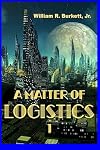
Published as recently as 2013 as a novel, this has an old-fashioned feel to it - perhaps because it is the extension of a novella submitted to John W. Campbell for Analog back in 1968. Campbell suggested it be turned into a novel. Years later, here it is.
Apparently this is only the first volume of two although it stands alone. I am going to admit that I struggled to review this initially because it is an odd mixture of the obscure, the well written, the hackneyed and the highly show more imaginative.
Most science fiction novels of a certain generation start with something mundane that draws the ordinary reader in and then will spend most of the rest of the book in increasingly unrealistic space opera, fantasy and bug-eyed monsterdom. Burkett is better than this.
He does the opposite. He takes us to a completely alien environment, starting with a 'twon' hunt that is an adaptation of the earthly duck hunting much loved by the author, before spending the bulk of the book in what amounts to an earth-bound espionage novel.
Even his alien world and culture is made to be something we can relate to as the story proceeds, with parallels, if more technologically advanced, to human emotions and thought patterns. The aliens are presented, in fact, as types of 'human'. They are not us but they are very like us.
Again, unlike so many scifi authors, Burkett gives us his back story of galactic competition between super powers with alien agents contesting for the destiny of Earth (or Dirt as it is translated in the main protagonist's language) in only a few paragraphs.
This saves time and boredom, to be honest. Burkett gets straight down to business by presenting the competing espionage agents and their ideologies as operating in the field on lines that show the story's origin deep within the ambience of the Cold War of the 1960s.
It is a story of dedication, paranoia, suspicion and interrogation in which all the tropes of the 1960s espionage novel (but more Le Carre than Bond) are re-interpreted to fit within a science fiction framework. Even an apparent absurdity involving Star Trek is presented as a rational tactic.
Burkett apparently drew on his own experience as a military policeman in Germany during that period for local colour (the sequel looks as if it will take us into the 1970s) and what we have here is a surprisingly plausible and grounded hybrid of the espionage and space opera genres.
He also does not take the easy way out by making his aliens villains. They have a sense of ethics and of the value of life as well as respect for the Dirtlings. But it also turns out that the ultimate policy of the apparently 'good' side could be pretty evil for earth.
The side our protagonist contests wants to develop Dirt towards a space warrior future as free ally within a federation of planetary cultures whereas 'our side' (from where we sit reading the novel) would strategically blow up the Earth to deny them that possibility.
The opposition (Slattery) comes from a culture of space-faring authoritarians defeated in a revolt of its planet-bound evolutionary cousins. Our protagonist ('Michael') contests their attempt at re-conquest through defensive measures that could mean the death of us all on Dirt.
Cleverly, the average (certainly American) reader will ideologically tend to be on side with Michael for all his alien ways only to find that the logic of his ideological position would mean his own destruction in the cause of a freedom to which he would himself aspire if he had the choice.
It is a lesson in perspective because the interest of us Dirtlings is almost certainly to allow the manipulative 'other side' to help us to get to the stars - at least if your way of seeing is that of the average pro-space exploration American sci fi fan.
So why do I not give this a higher rating since I acknowledge that Burkett mostly writes and micro-plots well, is good at characterisation and ambience and holds the attention with his narrative of secret services with countervailing telepathic and high empathic skills?
Everything stacks up for a higher rating and yet I can't give it. The reason is because I have to care about how things hangs together, how consistent the book is in its plausibility and how clear it is in its exposition of the more difficult alien aspects of the story.
Periodically the book fails in just those aspects, in the glue, if you like, that holds everything together. Several times the transition from novella to novel fails because the author has not made the pieces quite fit - as literature. He is reminiscing through genre and his mind wanders.
Burkett adapts what might be scenes from his own life into his science fiction fantasy. He can plot a cold war espionage novel as well as evoke alien-ness that is not so alien as to eliminate our empathy and understanding but these things just do not seem to have been tied together well.
This is a shame because I wanted the book to succeed for its many virtues. I am harsh in my critique but I would not want to discourage anyone from reading it. Take its components and wonder at the periodic imaginative brilliance of the author. Enjoy it for what it is. show less
Apparently this is only the first volume of two although it stands alone. I am going to admit that I struggled to review this initially because it is an odd mixture of the obscure, the well written, the hackneyed and the highly show more imaginative.
Most science fiction novels of a certain generation start with something mundane that draws the ordinary reader in and then will spend most of the rest of the book in increasingly unrealistic space opera, fantasy and bug-eyed monsterdom. Burkett is better than this.
He does the opposite. He takes us to a completely alien environment, starting with a 'twon' hunt that is an adaptation of the earthly duck hunting much loved by the author, before spending the bulk of the book in what amounts to an earth-bound espionage novel.
Even his alien world and culture is made to be something we can relate to as the story proceeds, with parallels, if more technologically advanced, to human emotions and thought patterns. The aliens are presented, in fact, as types of 'human'. They are not us but they are very like us.
Again, unlike so many scifi authors, Burkett gives us his back story of galactic competition between super powers with alien agents contesting for the destiny of Earth (or Dirt as it is translated in the main protagonist's language) in only a few paragraphs.
This saves time and boredom, to be honest. Burkett gets straight down to business by presenting the competing espionage agents and their ideologies as operating in the field on lines that show the story's origin deep within the ambience of the Cold War of the 1960s.
It is a story of dedication, paranoia, suspicion and interrogation in which all the tropes of the 1960s espionage novel (but more Le Carre than Bond) are re-interpreted to fit within a science fiction framework. Even an apparent absurdity involving Star Trek is presented as a rational tactic.
Burkett apparently drew on his own experience as a military policeman in Germany during that period for local colour (the sequel looks as if it will take us into the 1970s) and what we have here is a surprisingly plausible and grounded hybrid of the espionage and space opera genres.
He also does not take the easy way out by making his aliens villains. They have a sense of ethics and of the value of life as well as respect for the Dirtlings. But it also turns out that the ultimate policy of the apparently 'good' side could be pretty evil for earth.
The side our protagonist contests wants to develop Dirt towards a space warrior future as free ally within a federation of planetary cultures whereas 'our side' (from where we sit reading the novel) would strategically blow up the Earth to deny them that possibility.
The opposition (Slattery) comes from a culture of space-faring authoritarians defeated in a revolt of its planet-bound evolutionary cousins. Our protagonist ('Michael') contests their attempt at re-conquest through defensive measures that could mean the death of us all on Dirt.
Cleverly, the average (certainly American) reader will ideologically tend to be on side with Michael for all his alien ways only to find that the logic of his ideological position would mean his own destruction in the cause of a freedom to which he would himself aspire if he had the choice.
It is a lesson in perspective because the interest of us Dirtlings is almost certainly to allow the manipulative 'other side' to help us to get to the stars - at least if your way of seeing is that of the average pro-space exploration American sci fi fan.
So why do I not give this a higher rating since I acknowledge that Burkett mostly writes and micro-plots well, is good at characterisation and ambience and holds the attention with his narrative of secret services with countervailing telepathic and high empathic skills?
Everything stacks up for a higher rating and yet I can't give it. The reason is because I have to care about how things hangs together, how consistent the book is in its plausibility and how clear it is in its exposition of the more difficult alien aspects of the story.
Periodically the book fails in just those aspects, in the glue, if you like, that holds everything together. Several times the transition from novella to novel fails because the author has not made the pieces quite fit - as literature. He is reminiscing through genre and his mind wanders.
Burkett adapts what might be scenes from his own life into his science fiction fantasy. He can plot a cold war espionage novel as well as evoke alien-ness that is not so alien as to eliminate our empathy and understanding but these things just do not seem to have been tied together well.
This is a shame because I wanted the book to succeed for its many virtues. I am harsh in my critique but I would not want to discourage anyone from reading it. Take its components and wonder at the periodic imaginative brilliance of the author. Enjoy it for what it is. show less
This was a very good book.
easy to read and get into.
There was info I would like to research.
easy to read and get into.
There was info I would like to research.

I first read this book long ago, perhaps at the end of the 1960s, and remembered it long enough that I was pleased to find a second-hand paperback copy in 1990. In 2023, I bought the Kindle version and reread it.
It’s basically a corny old sf story in the style of the 1950s, very like one of Eric Frank Russell’s stories, in which hostile but not very intelligent aliens are outwitted by humans. However, I really enjoyed rereading it, because it’s an above-average tale of its kind. show more Burkett turns out to be a good storyteller.
Being a corny old sf story sets it back a bit, and I don’t think it’s quite good enough for four stars, but this is a three-plus. I don’t think I’ll reread it often, but I can reread it occasionally with pleasure.
It may be worth noting that all the active characters are male, although the existence of women (and female aliens) is occasionally mentioned. This is quite common in old sf stories, especially those with a military orientation. show less
It’s basically a corny old sf story in the style of the 1950s, very like one of Eric Frank Russell’s stories, in which hostile but not very intelligent aliens are outwitted by humans. However, I really enjoyed rereading it, because it’s an above-average tale of its kind. show more Burkett turns out to be a good storyteller.
Being a corny old sf story sets it back a bit, and I don’t think it’s quite good enough for four stars, but this is a three-plus. I don’t think I’ll reread it often, but I can reread it occasionally with pleasure.
It may be worth noting that all the active characters are male, although the existence of women (and female aliens) is occasionally mentioned. This is quite common in old sf stories, especially those with a military orientation. show less
Dec 17, 2024 (Edited)English (UK)
You May Also Like


Associated Authors
Statistics
- Works
- 7
- Also by
- 1
- Members
- 240
- Popularity
- #94,568
- Rating
- 3.2
- Reviews
- 3
- ISBNs
- 9
- Languages
- 1
- Favorited
- 1