
John Reed (2) (1969–)
Author of All the World's a Grave
For other authors named John Reed, see the disambiguation page.
About the Author
Image credit: By David Shankbone - David Shankbone, CC BY-SA 3.0, https://commons.wikimedia.org/w/index.php?curid=2766967
Works by John Reed
Tagged
Common Knowledge
- Birthdate
- 1969-02-07
- Gender
- male
- Education
- Columbia University (MA, Creative Writing)
Hampshire College
Parsons School of Design - Occupations
- novelist
editor - Organizations
- New School
- Nationality
- USA
- Birthplace
- Tribeca, New York, New York, USA
- Associated Place (for map)
- New York, USA
Members
Reviews
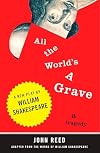
I truly enjoyed this Shakespeare mash-up (a "new play by Shakespeare"). The afterword from the author was especially thought provoking (Down with the Canon!, Reed argues). The way Reed fit pieces of the original plots together was fascinating and resourceful (for example, Hamlet's love interest is Juliet, whose father is Lear, etc.). At times it was clearly overkill, packing so many great leading characters into one play, but it was always very interesting.
But best of all, his lightly show more edited/updated treatment of Shakespeare's language brought the work to life for me in a way I haven't enjoyed much since school, when I had great teachers to help me appreciate the texts. Check out the endnotes.
I would love to see this play performed! It deserves a lot more attention and discussion. show less
But best of all, his lightly show more edited/updated treatment of Shakespeare's language brought the work to life for me in a way I haven't enjoyed much since school, when I had great teachers to help me appreciate the texts. Check out the endnotes.
I would love to see this play performed! It deserves a lot more attention and discussion. show less
‘All the World’s a Grave’ is a mashup of five Shakespearean tragedies, Hamlet, Othello, Macbeth, King Lear, Romeo and Juliet, with some incidental offcuts from Henry V. The principal characters are Hamlet, Prince of Bohemia and Juliet, her father, King Lear of Aquitaine, Romeo, Macbeth and his Queen, the mother of Prince Hamlet. Rosenkranz and Guildenstern frolic in supporting roles. In a substantial Afterword, ‘Outro: Gist and Gybe’, John Reed justifies his travesty. Elizabethan show more dramatists were unconstrained by copyright: their inventions and innovations alternated with the cut and paste of old stock. ‘Shakespeare’s plays were monsters assembled from other monsters [so] that a fresh monstrosity can be assembled from Shakespeare. And, because of Shakespeare’s use of stock players and storylines, a new Shakespearian narrative is equally possible.’
Shakespeare’s texts constrain Reed's newly created monstrosity. He constructs his mashup by rearrangement and reattribution of the original texts. Apart from necessary name changes, altered pronouns, minor grammatical adjustments and occasional impudent asides Reed adds nothing to the texts. Prince Hamlet fights a war with Lear, captures Juliet as his bride and on his return to Bohemia discovers that his mother has murdered his father and married Macbeth. His father’s Ghost commands him to take vengeance on Macbeth but Hamlet is distracted by his groundless apprehension, stoked by Iago, that Juliet is playing false to him with Romeo. Hamlet goes mad. Everyone ends up dying, either murdered or by their own hand. The play ends when Lear, mourning his daughter Juliet, stabs himself – ‘O happy dagger! There is no evil lost. This is thy sheath’. Lear’s last words here are of course Juliet’s own quietus in the original.
What’s the point of reading ‘All the World’s a Grave?’ I found stimulation and enjoyment in the way familiar lines take on renewed intensity and psychedelic colour when transplanted to this new plot in the Shakespearean terrain. Hamlet compounded with Othello, believing himself twice betrayed, is an even more formidable madman: ‘How stand I that have a father killed, A mother stained, and a harlot for a wife? What sense had I of her stolen hours of lust? I saw it not…’ Hamlet's madness has its apotheosis in the brutal horror of his last command to Romeo, uttered in the false belief that Romeo has seduced Juliet, Hamlet's wife. Romeo says, ‘Sir, what you will command me will I do. Hamlet: ‘Romeo, kill Juliet; kill her dead’. [Romeo reaches for his sword]. Romeo: ‘What I can do, I will’. Hamlet: ‘Do it not by the sword; strangle her’ [he does so] Hamlet: ‘Good; good: the justice of it pleases’.
It’s not serious of course. It’s an exercise in travesty and enjoyable As such. Hamlet meets his own end at the hands of his old school-fellow, who also accounts for Iago. Hamlet's last words To his murderer are transposed, with felicitous impudence from another tragedy: ‘Et tu, Guildenstern?’
The reconstructed play is seriously disorienting. I would advise anyone taking it on to read the afterword, which contains the ’Gist’ of the play, first. Otherwise the magnetic pull of one’s existing knowledge of the characters and plots of the original plays will impede understanding of what’s going on. The Kindle version would be preferable to the printed version for its ready internet access to the originals but for a maddening defect. The electronic Kindle version takes no account of line lengths in the original verse with a consequent loss of fluent sense in reading the play. show less
Shakespeare’s texts constrain Reed's newly created monstrosity. He constructs his mashup by rearrangement and reattribution of the original texts. Apart from necessary name changes, altered pronouns, minor grammatical adjustments and occasional impudent asides Reed adds nothing to the texts. Prince Hamlet fights a war with Lear, captures Juliet as his bride and on his return to Bohemia discovers that his mother has murdered his father and married Macbeth. His father’s Ghost commands him to take vengeance on Macbeth but Hamlet is distracted by his groundless apprehension, stoked by Iago, that Juliet is playing false to him with Romeo. Hamlet goes mad. Everyone ends up dying, either murdered or by their own hand. The play ends when Lear, mourning his daughter Juliet, stabs himself – ‘O happy dagger! There is no evil lost. This is thy sheath’. Lear’s last words here are of course Juliet’s own quietus in the original.
What’s the point of reading ‘All the World’s a Grave?’ I found stimulation and enjoyment in the way familiar lines take on renewed intensity and psychedelic colour when transplanted to this new plot in the Shakespearean terrain. Hamlet compounded with Othello, believing himself twice betrayed, is an even more formidable madman: ‘How stand I that have a father killed, A mother stained, and a harlot for a wife? What sense had I of her stolen hours of lust? I saw it not…’ Hamlet's madness has its apotheosis in the brutal horror of his last command to Romeo, uttered in the false belief that Romeo has seduced Juliet, Hamlet's wife. Romeo says, ‘Sir, what you will command me will I do. Hamlet: ‘Romeo, kill Juliet; kill her dead’. [Romeo reaches for his sword]. Romeo: ‘What I can do, I will’. Hamlet: ‘Do it not by the sword; strangle her’ [he does so] Hamlet: ‘Good; good: the justice of it pleases’.
It’s not serious of course. It’s an exercise in travesty and enjoyable As such. Hamlet meets his own end at the hands of his old school-fellow, who also accounts for Iago. Hamlet's last words To his murderer are transposed, with felicitous impudence from another tragedy: ‘Et tu, Guildenstern?’
The reconstructed play is seriously disorienting. I would advise anyone taking it on to read the afterword, which contains the ’Gist’ of the play, first. Otherwise the magnetic pull of one’s existing knowledge of the characters and plots of the original plays will impede understanding of what’s going on. The Kindle version would be preferable to the printed version for its ready internet access to the originals but for a maddening defect. The electronic Kindle version takes no account of line lengths in the original verse with a consequent loss of fluent sense in reading the play. show less
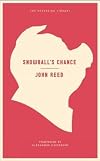
The author's interpretation of "Animal Farm" for the 9/11 era is brilliant. While the writing style is more detailed and storylike, it retains the biting criticism and allegory, if to a more deliberate level. This work explores the events, attitudes, and misinformation that led up to one of the most symbolic events in recent history.
Just as Orwell's "Animal Farm" explored the evils of Communism/Stalinism, Reed's "Snowball's Chance" explores the evils of Democracy. As soon as Snowball returns show more to the Farm, he champions many policies that create great change. The farm moves from the commandment of "All animals are equal, but some are more equal than others", to "All animals are born equal - what they become is their own affair". Issues of industrialization, consumerism, litigiousness, debt, citizenship/voting rights/immigration, taxation, nepotism/cronyism, oil dependence, civil rights, fear/stereotyping, police brutality, and religious extremism become prevalent. The allegory itself shifts from the relationship between the USSR and Nazi Germany/Allies to the relationship between the USA and the Native Americans/immigrants/Middle East.
Some of the characters from "Animal Farm" reappear in "Snowball's Chance", but there are many new characters as well. The number of years between the books is not explicitly stated, but it is long enough that most of the original animals from the previous book have died. Ones who remain are Benjamin the donkey, Moses the crow, Minimum the pig (Napoleon's food taster, now the farm's Leader), Brutus the dog, and Snowball. Existing characters remember those who have died, including Boxer the horse, but (as in "Animal Farm") those memories are corrupted by the propaganda of those in power. New characters include beavers, squirrels, porcupines, badgers, and hedgehogs -all from the Woodlands area beyond of the Farm, and the farm animals from Foxwood and Pinchfield - the two adjacent farms in Orwell's book.
The Woodland creatures play a very significant role in the events of the book, led by Diso the beaver. They live a conservative life, dictated by a set of rules called The Beaver Code, and seek to gain entrance to what Moses the Crow calls "The Sugarcandy Lodestar", instead of "The Sugarcandy Mountain" from Orwell's book. The Woodland creatures watch as the Animal Farm adds another windmill to its existing one, and refer to them as "The Twin Mills". Diso explains that the Twin Mills are a symbol of the evils of the Animal Farm. Diso encourages his followers to build explosive devices, and train diligently in using them to accomplish their goals. They are told that, if they perform their duties to glorify The Beaver Code and sacrifice themselves for it, they will reach The Sugarcandy Lodestar and be rewarded with 1600 virgin birch saplings.
As some of the Woodland creatures become disillusioned with The Beaver Code, as Diso is interpreting it, and they leave to join the Animal Farm. Because of the influx of creatures, the animals are segregated in their jobs and living arrangements. The most recent immigrants are given the most menial and physically demanding jobs, and are given the lowest amount of pay. Although their situation is not ideal, the other animals remind them that they are in a much better situation than they were in before. Meanwhile, the pigs and dogs (as well as those who have been voted/appointed into powerful positions) enjoy the spoils of power and wealth, indulging in foods and leisure activities not available to the lower classes of animal.
With the industrialism brought about through the Twin Mills, there is little need for agriculture. The animals reinvent the farm and re-brand it as Animal Fair, offering both human and animal visitors many recreational activities and food stalls on which to spend their money. Animals who misbehave or are otherwise deemed to be criminals are forced to perform as sideshow acts in the Fair. All of this comes to a violent end when a very 9/11-esque plan is carried out by the Woodland Creatures, forever altering the relationship between them and the farm animals.
Written shortly after the events of September 11th, 2001, "Snowball's Chance" offers a perspective that was (and still is, to a large extent) unpopular and subverted by many in the West. However, it is important to remember that history doesn't happen in a vacuum. Fifteen years later, we are still learning this lesson. show less
Just as Orwell's "Animal Farm" explored the evils of Communism/Stalinism, Reed's "Snowball's Chance" explores the evils of Democracy. As soon as Snowball returns show more to the Farm, he champions many policies that create great change. The farm moves from the commandment of "All animals are equal, but some are more equal than others", to "All animals are born equal - what they become is their own affair". Issues of industrialization, consumerism, litigiousness, debt, citizenship/voting rights/immigration, taxation, nepotism/cronyism, oil dependence, civil rights, fear/stereotyping, police brutality, and religious extremism become prevalent. The allegory itself shifts from the relationship between the USSR and Nazi Germany/Allies to the relationship between the USA and the Native Americans/immigrants/Middle East.
Some of the characters from "Animal Farm" reappear in "Snowball's Chance", but there are many new characters as well. The number of years between the books is not explicitly stated, but it is long enough that most of the original animals from the previous book have died. Ones who remain are Benjamin the donkey, Moses the crow, Minimum the pig (Napoleon's food taster, now the farm's Leader), Brutus the dog, and Snowball. Existing characters remember those who have died, including Boxer the horse, but (as in "Animal Farm") those memories are corrupted by the propaganda of those in power. New characters include beavers, squirrels, porcupines, badgers, and hedgehogs -all from the Woodlands area beyond of the Farm, and the farm animals from Foxwood and Pinchfield - the two adjacent farms in Orwell's book.
The Woodland creatures play a very significant role in the events of the book, led by Diso the beaver. They live a conservative life, dictated by a set of rules called The Beaver Code, and seek to gain entrance to what Moses the Crow calls "The Sugarcandy Lodestar", instead of "The Sugarcandy Mountain" from Orwell's book. The Woodland creatures watch as the Animal Farm adds another windmill to its existing one, and refer to them as "The Twin Mills". Diso explains that the Twin Mills are a symbol of the evils of the Animal Farm. Diso encourages his followers to build explosive devices, and train diligently in using them to accomplish their goals. They are told that, if they perform their duties to glorify The Beaver Code and sacrifice themselves for it, they will reach The Sugarcandy Lodestar and be rewarded with 1600 virgin birch saplings.
As some of the Woodland creatures become disillusioned with The Beaver Code, as Diso is interpreting it, and they leave to join the Animal Farm. Because of the influx of creatures, the animals are segregated in their jobs and living arrangements. The most recent immigrants are given the most menial and physically demanding jobs, and are given the lowest amount of pay. Although their situation is not ideal, the other animals remind them that they are in a much better situation than they were in before. Meanwhile, the pigs and dogs (as well as those who have been voted/appointed into powerful positions) enjoy the spoils of power and wealth, indulging in foods and leisure activities not available to the lower classes of animal.
With the industrialism brought about through the Twin Mills, there is little need for agriculture. The animals reinvent the farm and re-brand it as Animal Fair, offering both human and animal visitors many recreational activities and food stalls on which to spend their money. Animals who misbehave or are otherwise deemed to be criminals are forced to perform as sideshow acts in the Fair. All of this comes to a violent end when a very 9/11-esque plan is carried out by the Woodland Creatures, forever altering the relationship between them and the farm animals.
Written shortly after the events of September 11th, 2001, "Snowball's Chance" offers a perspective that was (and still is, to a large extent) unpopular and subverted by many in the West. However, it is important to remember that history doesn't happen in a vacuum. Fifteen years later, we are still learning this lesson. show less
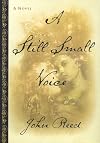
I really had high expectations...I loved the time period and the setting. Alma was a sweet likeable character from the very beginning. Highly descriptive and attention to small historical details, it started out very charming. Midway it became very slow and there was little to look forward to with what seemed this "puppy love" relationship Alma finds herself in. I would have loved more about the Cleveland estate or perhaps it jumping forward a bit faster for a more mature Alma and her show more relationships. The small sketches are so delightful and I had to smile when I scanned through the book when I first picked it up. show less
You May Also Like


Statistics
- Works
- 6
- Members
- 271
- Popularity
- #85,375
- Rating
- 3.2
- Reviews
- 28
- ISBNs
- 325
- Languages
- 17


