

Allan Gurganus
Author of Oldest Living Confederate Widow Tells All
About the Author
In 1966, as a conscientious objector faced with possible charges of draft evasion during the Vietnam War, Allan Gurganus found himself on a four-year tour as a message decoder on an aircraft carrier. While at sea, Gurganus, who had studied to be a painter, developed the idea for his first show more successful novel, Oldest Living Confederate Widow Tells All (1989) after reading an article that described how Confederate veterans were granted pensions in the 1880s, making them prime marital candidates for much younger women. The novel features Lucy Marsden, a feisty ninety-nine-year-old North Carolina widow, and spans the 1850s to the 1980s. Gurganus's subsequent books include Blessed Assurance: A Moral Tale (1989), The Practical Heart (1993), and Plays Well With Others (1997). He has written a number of short stories that have appeared in periodicals such as Granta, The New York Times, The New Yorker, Harper's, and Paris Review, and in books such as The Faber Book of Short Gay Fiction (1991). Eleven of his short stories are collected in The White People (1991). Gurganus was born in Rocky Mount, North Carolina, in 1947 and graduated from Sarah Lawrence College (B.A., 1972) and the University of Iowa Writers' Workshop (M.F.A., 1974). He has taught fiction writing at University of Iowa, Stanford University, Duke University, Sarah Lawrence College and the University of Iowa Writers' Workshop, and has had his paintings displayed in many private and public collections. (Bowker Author Biography) Allan Gurganus lives in a small town in North Carolina. The title novella of this book won the National Magazine Prize, & his other honors include the Los Angeles Times Book Prize, the Southern Book Prize, & the Sue Kaufman Prize from the American Academy of Arts & Letters. (Publisher Provided) show less
Image credit: Copyright Eye On Books.
Works by Allan Gurganus
Associated Works
The Vintage Book of Contemporary American Short Stories (1994) — Contributor — 544 copies, 2 reviews
Boys Like Us: Gay Writers Tell Their Coming Out Stories (1996) — Contributor — 426 copies, 2 reviews
You've Got to Read This: Contemporary American Writers Introduce Stories that Held Them in Awe (1994) — Introduction — 413 copies, 3 reviews
The Workshop: Seven Decades of the Iowa Writers Workshop - 43 Stories, Recollections, & Essays on Iowa's Place in Twentieth-Century American Literature (1999) — Contributor — 197 copies, 1 review
In Another Part of the Forest: An Anthology of Gay Short Fiction (1994) — Contributor — 192 copies, 2 reviews
An American Album: One Hundred and Fifty Years of Harper's Magazine (2000) — Contributor — 145 copies, 1 review
Who's Writing This? Notations on the Authorial I, with Self-Portraits {not Antæus} (1995) — Contributor — 75 copies
The Second Gates of Paradise: The Anthology of Erotic Short Fiction (1997) — Contributor — 38 copies
Antaeus No. 73/74, Spring 1994 - Who’s Writing This: Notations on the Authorial I {magazine} (1994) — Contributor — 5 copies
Tagged
Common Knowledge
- Birthdate
- 1947-06-11
- Gender
- male
- Education
- Sarah Lawrence College
- Occupations
- writer
- Organizations
- American Academy of Arts and Letters (Literature, 2007)
Fellowship of Southern Writers - Awards and honors
- Guggenheim Fellowship (2006)
- Nationality
- USA
- Birthplace
- Rocky Mount, North Carolina, USA
- Places of residence
- Hillsborough, North Carolina, USA
- Associated Place (for map)
- North Carolina, USA
Members
Reviews
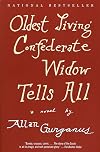
Do not be intimidated by the length of this book. Miss Lucille Marsden will keep you entertained through every single page. Even when she is telling you about the horrors of war, she will keep you riveted every paragraph. Even when the story is not from her point of view, she will have you glued to the sentences. Within Lucy's monologue Gurganus lays out the entire southern society from before the Civil War up to the mid-1980s when Lucy is almost one hundred years old. History breathes in show more and out with every colorful sentence; from the recognition of Baby Africa and every aspect of owning another human being to life in a nursing home.
Lucy herself is a treat. Married at a mere fifteen years old, she saw the world with a sensitivity and sweetness. She cared about where people came from (Castalia from Africa) or how displaced a foreigner can feel (Wong Chow from China). Even though her husband was in his fifties when they married, Lucy became a baby factory having nine children in eleven years. Her marriage was painful as her husband could be very abusive. Sleeping with a hatchet was not out of the question for Lucy. But I digress. Take your time with Oldest Living Confederate Widow Tells All. Know that every character serves a purpose at the moment of introduction but may not need remembering a hundred pages later. show less
Lucy herself is a treat. Married at a mere fifteen years old, she saw the world with a sensitivity and sweetness. She cared about where people came from (Castalia from Africa) or how displaced a foreigner can feel (Wong Chow from China). Even though her husband was in his fifties when they married, Lucy became a baby factory having nine children in eleven years. Her marriage was painful as her husband could be very abusive. Sleeping with a hatchet was not out of the question for Lucy. But I digress. Take your time with Oldest Living Confederate Widow Tells All. Know that every character serves a purpose at the moment of introduction but may not need remembering a hundred pages later. show less

Long, rambling, sardonic and extravagant — a kind of Gone with the wind for the 1980s. Gurganus worked out that if a young woman had married a man much older than herself around 1900, and if that man had fought as a boy-soldier in the American Civil War, that woman could theoretically still be alive at the time of writing and tell us about the war, slavery, and the history of her own small bit of North Carolina from first- or second-hand experience. Like many older people, 99-year-old show more narrator Lucille goes on at great length and is easily deflected from one topic to another, but unlike most she is also utterly uninhibited, telling her visitor-with-a-tape-recorder some surprisingly intimate and sensitive things out of her own memories, those of her late husband, Confederate veteran “Captain” Marsden (he never actually rose above the rank of private), and those of her Black friend Cassie, formerly a slave in Marsden’s mother’s household.
As well as showing us the horrors of war and slavery as seen by those on the receiving end, and the way those things get distorted through the nostalgia and hindsight of people who never experienced them into something supposedly dignified and noble, Gurganus pokes fun at everything from the position of women in society and American gun-obsessions to the petty jealousy of Baptist ministers. It being the eighties, there is plenty of sex, and even a considerable number of titillating hints at same-sex passion (when it looks to be getting somewhere, however, the participants are invariably interrupted at the critical moment).
Vastly entertaining, but probably too scattershot to make any real serious points. Some of the dozens of anecdotes that make up the story are very moving and I’m sure some will stay with me, but too many are just silly. And of course, if it had been written thirty years later we might have had some hard questions about how appropriate it is for a white man to imagine in some detail how a Black woman might reinforce her self-worth by recreating a narrative of her journey from Africa into slavery, which she experienced at too young an age to have clear first-hand memories herself. show less
As well as showing us the horrors of war and slavery as seen by those on the receiving end, and the way those things get distorted through the nostalgia and hindsight of people who never experienced them into something supposedly dignified and noble, Gurganus pokes fun at everything from the position of women in society and American gun-obsessions to the petty jealousy of Baptist ministers. It being the eighties, there is plenty of sex, and even a considerable number of titillating hints at same-sex passion (when it looks to be getting somewhere, however, the participants are invariably interrupted at the critical moment).
Vastly entertaining, but probably too scattershot to make any real serious points. Some of the dozens of anecdotes that make up the story are very moving and I’m sure some will stay with me, but too many are just silly. And of course, if it had been written thirty years later we might have had some hard questions about how appropriate it is for a white man to imagine in some detail how a Black woman might reinforce her self-worth by recreating a narrative of her journey from Africa into slavery, which she experienced at too young an age to have clear first-hand memories herself. show less
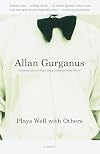
Vibrant and artful, this is one of those novels that thrives off the voice of the narrator, and moves quickly from page one on. More based in anecdotes of lives than in a straightforward history, the book pieces together the New York based lives of three friends, all artists in a world that is just getting accustomed to the presence of AIDS. While I might have wished for more knowledge of the friends' lives before they moved to New York, the book lives in the present place, and perhaps show more that's the point--their lives really began in New York.
This is a long book, but Gurganus' wonderful humor and writing, and his fabulous characters, all bring the novel to life in such a way that it rarely flags. And, simply, the book is a heartfelt pleasure, well worth the time. Truly entertaining. show less
This is a long book, but Gurganus' wonderful humor and writing, and his fabulous characters, all bring the novel to life in such a way that it rarely flags. And, simply, the book is a heartfelt pleasure, well worth the time. Truly entertaining. show less
(43) Yikes. This was quite a long book and took me forever to read. As one who loves literature from the Civil War period and who calls central North Carolina home; even knows some of the same people the author does - by all accounts, I should have loved this. But it was just so incredibly rambling. Lucy Marsden married a 55 year old veteran of the Civil War (he joined as a 13 year old bugle boy) when she was 14 - and now at almost 100 years old she carries her husband's eyewitness accounts show more of the War with her - in all its absurdities and tragedies. She and her husband are from a Mayberry type of small town peopled with characters, including her best friend Castalia Marsden, a former slave of the family. Castalia remembers Africa and her crossing on a slave ship, and Sherman's march through the Marsden's plantation burning all.
Over 700 pages of small print of detailed stories from Lucy, Cap Marsden, and Castalia's lives - all in a frame of the 100 year old Lucy in a nursing home telling some young author. The chronology jumps around and many stories become - well - tedious. Lucy is a fascinating and hilarious character - evoking pathos and admiration, and she is indeed a good story-teller. At times, I will say, I loved the book and certain images haunt - Ned shot from the tree; Lady Marsden playing with the slave children in The Lilacs; Baby Archie's story. But Gawd - some things just dragged - the Africa part, the Shirley interlude, the last weird War story with the Lieutenant that preened in the mirror - WTF.
I have such mixed feelings - I feel that 3 stars is both a stingy and a generous rating for this novel depending on which part I reflect on. Unlike some other books that have been a big time investment where I haven't felt rewarded, (I am thinking of Helprin's 'A Winter's Tale,' and 'Ulysses' to name a few. . .) I am glad I read this and don't begrudge the time. But I really do feel that at times, you can have too much of a good thing. show less
Over 700 pages of small print of detailed stories from Lucy, Cap Marsden, and Castalia's lives - all in a frame of the 100 year old Lucy in a nursing home telling some young author. The chronology jumps around and many stories become - well - tedious. Lucy is a fascinating and hilarious character - evoking pathos and admiration, and she is indeed a good story-teller. At times, I will say, I loved the book and certain images haunt - Ned shot from the tree; Lady Marsden playing with the slave children in The Lilacs; Baby Archie's story. But Gawd - some things just dragged - the Africa part, the Shirley interlude, the last weird War story with the Lieutenant that preened in the mirror - WTF.
I have such mixed feelings - I feel that 3 stars is both a stingy and a generous rating for this novel depending on which part I reflect on. Unlike some other books that have been a big time investment where I haven't felt rewarded, (I am thinking of Helprin's 'A Winter's Tale,' and 'Ulysses' to name a few. . .) I am glad I read this and don't begrudge the time. But I really do feel that at times, you can have too much of a good thing. show less
Lists
Awards


You May Also Like


Associated Authors
Statistics
- Works
- 30
- Also by
- 32
- Members
- 2,953
- Popularity
- #8,644
- Rating
- 3.7
- Reviews
- 40
- ISBNs
- 84
- Languages
- 5
- Favorited
- 7