
Peter Martin (3) (1940–)
Author of Samuel Johnson: a biography
For other authors named Peter Martin, see the disambiguation page.
About the Author
Peter Martin lectures at Principia College, Illinois.
Image credit: Peter Martin
Works by Peter Martin
Tagged
Common Knowledge
- Birthdate
- 1940
- Gender
- male
- Education
- University of Illinois, Urbana-Champaign
Syracuse University - Occupations
- scholar of English literature
university professor - Relationships
- Mack, Maynard (teacher)
- Nationality
- USA
- Birthplace
- Buenos Aires, Argentina
- Places of residence
- USA
Bury, West Sussex, UK
Members
Reviews
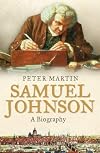
(I began to write this review five months ago; no need to say that trying to complete it now and to include particulars I had noticed by dog-earing interesting pages will be a difficult task.)
Johnson once said that ‘The French are a gross, ill-bred, untaught people’. Hence my hesitation—being French myself—to embark on reviewing this biography. Even untaught, I knew at least Samuel Johnson’s name—the reciprocal being probably untrue. (For the majority of my fellow citizens, his show more name sounds more like an American president’s or a Canadian sprinter’s.) I even own a facsimile copy of the first Folio edition of his Dictionary, which proves my good education. I feel therefore entitled to give here my opinion. He also said: ‘What I gained by being in France was, learning to be better satisfied with my own country’. Why, the same is true for me, Sir, when I go abroad, nay, to your country. Score: England 1-France 1.
I read this biography during my holidays in Corsica, having bought the book long in advance and having kept it preciously to be sipped in the shade of a maritime pine, to the sound of cicadas. Needless to say that it reads much quicker than Boswell’s Life of Johnson, the two volumes of which I rather painfully absorbed two years ago. Peter Martin’s biography is lively, extremely lively, even if I was sometimes vexed by a couple of chapters I found too scholar.
Even when he was a boy, Johnson had an inclination for words and definitions. He says that ‘one day, when in anger she [his mother] called me a puppy, I asked her if she knew what they called a puppy’s mother.’ I had the curiosity to look up in the Dictionary how he defined puppy. But apart from progeny of a bitch and a name of contemptuous reproach to a man, he does not say much more. I wonder if writing this entry made him remember his genitor. Another story from his early life as a married man—about his quarrels with Tetty—is told by Mrs Thrale: ‘I asked him once whether he ever disputed with his wife (I knew he adored her). Oh yes, perpetually my dear says he; she was extremely neat in her disposition, and always fretful that I made the house so dirty—a clean floor is so comfortable she would say by way of twitting; till at last I told her, I thought we had had talk enough about the floor, we would now have a touch at the ceiling.’ Typically Johnsonian.
One whole chapter in the middle of the book is dedicated to the making of the Dictionary. This is something into which I was most interested in, although I personally find 18 pages are really too few on the subject. Johnson very roughly treated the books he used to spot quotations, as tools, not as precious items of collections. People were reluctant to lend them to him, except the ones who were fool enough to consider as a curiosity books defaced by heavy marks with black lead pencils. I felt that what Garrick composed on the Dictionary (‘And Johnson, well-arm’d like a hero of yore,/Has beat forty French, and will beat forty more’) is not readily understandable by an English audience. Should it be added that the ‘forty French’ are the forty members of the French Académie française who struggled for several decades to produce their Dictionnaire in the late 17th century? Among the many opinionated, facetious or malicious definitions, I noted this one, dedicated to our fellow LT member Foxhunter: foxhunter: ‘a man whose chief ambition is to show his bravery in hunting foxes’.
Frances Reynolds, the great portraitist’s wife, was another keen observer of Johnson’s habits. Once they had taken Johnson on a trip to Reynolds’s native Devonshire and had stopped near Dorchester to visit a castle, Johnson became bored by the owner’s explanations and ‘began to exhibit his antics, stretching out his legs alternately as far as he could possibly stretch; at the same time pressing his foot on the floor as heavily as he could possibly press, as if endeavouring to smooth the carpet, or rather perhaps to rumple it, and every now and then collecting all his force, apparently to affect a concussion of the floor’. ‘Dr Johnson, I believe the floor is very firm’, the guide remarked, which made him stop. In another place they visited, Johnson amazed his hostess by drinking seventeen cups of tea in one sitting. (She had counted them.) When he asked for one more, she cried out, ‘What! Another, Dr Johnson?’, to which he replied, ‘Madam, you are rude.’
I remember having contemplated a long time, in Peter Martin’s book, the reproduction of a painting by Zoffany entitled Mr & Mrs Garrick Taking Tea Upon the Lawn of Their Villa at Hampton, with a man who could be Johnson sitting on the left of the scene. The lawn is so well-kept, down to the river, and the tea table is so neatly dressed that I understand how ‘the leaving of such places makes a death-bed terrible’. show less
Johnson once said that ‘The French are a gross, ill-bred, untaught people’. Hence my hesitation—being French myself—to embark on reviewing this biography. Even untaught, I knew at least Samuel Johnson’s name—the reciprocal being probably untrue. (For the majority of my fellow citizens, his show more name sounds more like an American president’s or a Canadian sprinter’s.) I even own a facsimile copy of the first Folio edition of his Dictionary, which proves my good education. I feel therefore entitled to give here my opinion. He also said: ‘What I gained by being in France was, learning to be better satisfied with my own country’. Why, the same is true for me, Sir, when I go abroad, nay, to your country. Score: England 1-France 1.
I read this biography during my holidays in Corsica, having bought the book long in advance and having kept it preciously to be sipped in the shade of a maritime pine, to the sound of cicadas. Needless to say that it reads much quicker than Boswell’s Life of Johnson, the two volumes of which I rather painfully absorbed two years ago. Peter Martin’s biography is lively, extremely lively, even if I was sometimes vexed by a couple of chapters I found too scholar.
Even when he was a boy, Johnson had an inclination for words and definitions. He says that ‘one day, when in anger she [his mother] called me a puppy, I asked her if she knew what they called a puppy’s mother.’ I had the curiosity to look up in the Dictionary how he defined puppy. But apart from progeny of a bitch and a name of contemptuous reproach to a man, he does not say much more. I wonder if writing this entry made him remember his genitor. Another story from his early life as a married man—about his quarrels with Tetty—is told by Mrs Thrale: ‘I asked him once whether he ever disputed with his wife (I knew he adored her). Oh yes, perpetually my dear says he; she was extremely neat in her disposition, and always fretful that I made the house so dirty—a clean floor is so comfortable she would say by way of twitting; till at last I told her, I thought we had had talk enough about the floor, we would now have a touch at the ceiling.’ Typically Johnsonian.
One whole chapter in the middle of the book is dedicated to the making of the Dictionary. This is something into which I was most interested in, although I personally find 18 pages are really too few on the subject. Johnson very roughly treated the books he used to spot quotations, as tools, not as precious items of collections. People were reluctant to lend them to him, except the ones who were fool enough to consider as a curiosity books defaced by heavy marks with black lead pencils. I felt that what Garrick composed on the Dictionary (‘And Johnson, well-arm’d like a hero of yore,/Has beat forty French, and will beat forty more’) is not readily understandable by an English audience. Should it be added that the ‘forty French’ are the forty members of the French Académie française who struggled for several decades to produce their Dictionnaire in the late 17th century? Among the many opinionated, facetious or malicious definitions, I noted this one, dedicated to our fellow LT member Foxhunter: foxhunter: ‘a man whose chief ambition is to show his bravery in hunting foxes’.
Frances Reynolds, the great portraitist’s wife, was another keen observer of Johnson’s habits. Once they had taken Johnson on a trip to Reynolds’s native Devonshire and had stopped near Dorchester to visit a castle, Johnson became bored by the owner’s explanations and ‘began to exhibit his antics, stretching out his legs alternately as far as he could possibly stretch; at the same time pressing his foot on the floor as heavily as he could possibly press, as if endeavouring to smooth the carpet, or rather perhaps to rumple it, and every now and then collecting all his force, apparently to affect a concussion of the floor’. ‘Dr Johnson, I believe the floor is very firm’, the guide remarked, which made him stop. In another place they visited, Johnson amazed his hostess by drinking seventeen cups of tea in one sitting. (She had counted them.) When he asked for one more, she cried out, ‘What! Another, Dr Johnson?’, to which he replied, ‘Madam, you are rude.’
I remember having contemplated a long time, in Peter Martin’s book, the reproduction of a painting by Zoffany entitled Mr & Mrs Garrick Taking Tea Upon the Lawn of Their Villa at Hampton, with a man who could be Johnson sitting on the left of the scene. The lawn is so well-kept, down to the river, and the tea table is so neatly dressed that I understand how ‘the leaving of such places makes a death-bed terrible’. show less
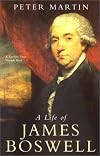
We think of Boswell as one of the renowned biographers in the English language, so a biographer OF him faces a high hurdle. Peter Martin does a fine job, primarily because Boswell left such a plethora of rich primary material for a biographer to mine. Beginning as a young man, Boswell kept a detailed journal, most of it surviving, and, like most gentry of his time, he was a prolific letter writer, and much of the correspondence also survives. Martin plumbs those sources, as well as the show more letters and other writings of Boswell's contemporaries, particularly, of course, Dr. Johnson.
The man who emerges from these writings is a failure in almost everything he attempts, but for his majestic "The Life of Samuel Johnson", its precursor, "The Journal of a Tour to the Hebrides" and various other journals, published long after his death.
He was of Scottish nobility, but yearned for London life and was bored in Edinburgh and his family estate in southern Scotland. He reluctantly trained as a lawyer (like his father), but he did not like law practice and never earned much of a living from it. When he inherited the family estate late in life, with its many tenants and thousands of acres, he could not earn enough from it to pay the bills, and he was constantly plagued by debt.
He strove for a public position, but his obsequious inquiries of powerful men to that end produced nothing. His attempt at an elected position uttterly failed. He had a wife and five children, whom he loved, but his philandering with "strumpets" never stopped, and his eighteen gonorrheal infections are duly recorded in his journals. His daughters either died early, lived a spinster life or married unwisely. His sons fared somewhat better, but the heir of the family estate died in debt, and a second son, an accomplished Shakespeare scholar, also died in debt.
But we are fascinated by Boswell, and learn to love him, because of the candor and perceptivity of his journals as they chronicle a life desperate to succeed. Along the way Boswell meets almost every person of note in English and Scottish eighteenth century intellectual and political life, as well as other luminaries such as Rousseau, Voltaire and Benjamin Franklin. And, of course, the tale of his friendship with Dr. Johnson thrust biography in a new direction and is still a joy to read. show less
The man who emerges from these writings is a failure in almost everything he attempts, but for his majestic "The Life of Samuel Johnson", its precursor, "The Journal of a Tour to the Hebrides" and various other journals, published long after his death.
He was of Scottish nobility, but yearned for London life and was bored in Edinburgh and his family estate in southern Scotland. He reluctantly trained as a lawyer (like his father), but he did not like law practice and never earned much of a living from it. When he inherited the family estate late in life, with its many tenants and thousands of acres, he could not earn enough from it to pay the bills, and he was constantly plagued by debt.
He strove for a public position, but his obsequious inquiries of powerful men to that end produced nothing. His attempt at an elected position uttterly failed. He had a wife and five children, whom he loved, but his philandering with "strumpets" never stopped, and his eighteen gonorrheal infections are duly recorded in his journals. His daughters either died early, lived a spinster life or married unwisely. His sons fared somewhat better, but the heir of the family estate died in debt, and a second son, an accomplished Shakespeare scholar, also died in debt.
But we are fascinated by Boswell, and learn to love him, because of the candor and perceptivity of his journals as they chronicle a life desperate to succeed. Along the way Boswell meets almost every person of note in English and Scottish eighteenth century intellectual and political life, as well as other luminaries such as Rousseau, Voltaire and Benjamin Franklin. And, of course, the tale of his friendship with Dr. Johnson thrust biography in a new direction and is still a joy to read. show less
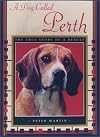
I liked this book, and I didn't. It's about a young couple who bought a beagle puppy in their first year of marriage, and tells of their life with it for twenty-one more years. They couldn't bear to restrain their dog's free spirit, so Perth was allowed to roam at will. Kind of like the guy from Merle's Door did with his dog. Only Perth was not Merle. She had a nasty habit of biting people in the face and her owner constantly came up with excuses why this was the victim's fault. He had the show more most ridiculous ideas sometimes of why the dog was behaving in certain ways, ascribing human emotions, moods and thoughts I'm sure no dog really has. The dog has many narrow escapes, accidents, gets lost for six months and very luckily found again, and moves with the family numerous times between America and England. The dog also gets left behind several times for months when the author had to travel for work- with people who are not told about her biting history. I was appalled he left her in a summer girls' camp when she'd never been around children before. I was curious to read about what it was like placing their dog in quarantine when they moved to England, I knew about those strictures before but never read a full description of the process. Well- long story short it's obvious this family loved their dog very very much, really adored her, but it's also obvious they fell short at managing her behavior, teaching her, keeping other people safe from her- not responsible at all.
I'm not alone in that opinion. Lots of people on amzn decry this book, one person outright destroyed her copy rather than give it to another reader. And yet- I kind of like the way it's written. I enjoyed the descriptions of the English countryside and the small village the family eventually settled in. I just felt really bad for the dog, and outraged at many points in the story how her schooling was deliberately neglected.
from the Dogear Diary show less
I'm not alone in that opinion. Lots of people on amzn decry this book, one person outright destroyed her copy rather than give it to another reader. And yet- I kind of like the way it's written. I enjoyed the descriptions of the English countryside and the small village the family eventually settled in. I just felt really bad for the dog, and outraged at many points in the story how her schooling was deliberately neglected.
from the Dogear Diary show less
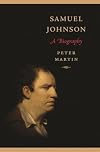
Interesting enough to get me to check out Johnson's own writing. Vivid -- and a nice corrective to Boswell. Particularly noteworthy is his sympathy towards Mrs. Thrale, especially noting how she was trying to keep things together and was nearly constantly pregnant.
Awards

You May Also Like


Statistics
- Works
- 6
- Members
- 476
- Popularity
- #51,803
- Rating
- 3.7
- Reviews
- 8
- ISBNs
- 112
- Languages
- 3