
Lee Harris (2)
Author of Civilization and Its Enemies: The Next Stage of History
For other authors named Lee Harris, see the disambiguation page.
About the Author
Lee Harris is the author of the critically acclaimed The Suicide of Reason and Civilization and Its Enemies. A frequent contributor to Policy Review, The Weekly Standard, The New Atlantis, and The Wall Street Journal, he has become one of the most sought-after commentators on the post-9/11 epoch. show more He lives in Stone Mountain, Georgia. show less
Works by Lee Harris
The Next American Civil War: The Populist Revolt against the Liberal Elite (2010) 21 copies, 1 review
Associated Works
Tagged
Common Knowledge
- Gender
- male
- Short biography
- Lee Harris entered Emory University at age fourteen and graduated summa cum laude. After years spent pursuing diverse interests, including a stint at divinity school, several years writing mystery novels, and a career as a glazier, he began writing philosophical articles that captured the imagination of readers all over the world. The author of three of the most controversial and widely shared pieces in the history of Policy Review, Harris has emerged as one of the most talked-about writers of recent times. He lives in Stone Mountain, Georgia.
- Nationality
- USA
- Associated Place (for map)
- USA
Members
Reviews
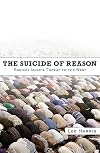
Lee Harris sounded the alarm about the threat of radical Islam (or as I like to call it, Islamania) in 2007 with his book, The Suicide of Reason. In it, he identifies the two great threats to modern liberal West as (1) its exaggerated confidence in the power of reason and (2) its “profound underestimation of the forces of fanaticism”. Harris asserts that since the Enlightenment in the 18th century, we in the West have come to think of all men as born rational actors. Not so, he argues. show more History shows that modern liberal Western society is an exception, an anomaly. The vast majority of pre-Enlightenment societies were intolerant and tribal, viewing non-members of the tribe as enemies. And the Islamic world has yet to experience an Enlightenment. Contact with the West has “not only failed to modernize the bulk of the Muslim population, it [has] actually made them more fanatically intolerant of Western ways than they had been before.”
The danger to the West comes primarily through the Islamaniacal concept of jihad. Khaled Abou El Fadl, a professor of law at UCLA has argued that the concept of jihad means only to strive hard for a just cause and does not include a notion of holy war against all infidels. Ah, if only he could sell that concept to the Muslims! Harris, on the other hand, sides with Andrew Bostom, the author of The Legacy of Jihad. After exhaustive scholarly research, Bostom demonstrated that jihad was a “collective and violent struggle by the entire Muslim community against ... outsiders who were not Muslims.” As an institution, jihad has been the agent by which Islamic culture has come to dominate a large expanse of the planet. Bostom concludes that he wishes his children may “thrive in a world where the devastating institution of jihad has been acknowledged, renounced, dismantled, and relegated forever to the dustbin of history by Muslims themselves.”
Harris offers scant hope that Bostom’s wish will be granted. Can the Muslim’s be converted to a more enlightened view of humanity? Harris thinks not. He asserts, “Muslims are, from and early age, indoctrinated into a shaming code that demands a fanatical rejection of anything that threatens to subvert the supremacy of Islam.” As he says, “We are proud if our sons get into a good college; they are proud if their sons die as martyrs.” In fact, he predicts that “the spread of democracy in Muslim countries will end by empowering those who are most opposed to the very modernization that the West wishes to bring about in Islamic culture.”
Harris contends that the West must develop a “militant liberalism that refuses to extend toleration to those who are unwilling to tolerate others.” Enlightened Westerners must understand the nature of their adversary. He concludes, “to tolerate those who refuse to play by the rules of reason is nothing else but the suicide of reason--and with the suicide of reason, mankind will face the dismal prospect of a return to the brutal law of the jungle that has governed human communities for the vast bulk of both our history and our prehistory, and from which certain lucky cultures have miraculously managed to escape--and, even then, only by the skin of their teeth.”
Is Harris an alarmist? Maybe, even probably. His way of thinking justifies water-boarding and Guantanamo. Nevertheless, some of his predictions seem to have come true in Egypt. In any event, it important not to be naive about Islamania. I recommend this book to all Americans, especially the most tolerant among us.
(JAB) show less
The danger to the West comes primarily through the Islamaniacal concept of jihad. Khaled Abou El Fadl, a professor of law at UCLA has argued that the concept of jihad means only to strive hard for a just cause and does not include a notion of holy war against all infidels. Ah, if only he could sell that concept to the Muslims! Harris, on the other hand, sides with Andrew Bostom, the author of The Legacy of Jihad. After exhaustive scholarly research, Bostom demonstrated that jihad was a “collective and violent struggle by the entire Muslim community against ... outsiders who were not Muslims.” As an institution, jihad has been the agent by which Islamic culture has come to dominate a large expanse of the planet. Bostom concludes that he wishes his children may “thrive in a world where the devastating institution of jihad has been acknowledged, renounced, dismantled, and relegated forever to the dustbin of history by Muslims themselves.”
Harris offers scant hope that Bostom’s wish will be granted. Can the Muslim’s be converted to a more enlightened view of humanity? Harris thinks not. He asserts, “Muslims are, from and early age, indoctrinated into a shaming code that demands a fanatical rejection of anything that threatens to subvert the supremacy of Islam.” As he says, “We are proud if our sons get into a good college; they are proud if their sons die as martyrs.” In fact, he predicts that “the spread of democracy in Muslim countries will end by empowering those who are most opposed to the very modernization that the West wishes to bring about in Islamic culture.”
Harris contends that the West must develop a “militant liberalism that refuses to extend toleration to those who are unwilling to tolerate others.” Enlightened Westerners must understand the nature of their adversary. He concludes, “to tolerate those who refuse to play by the rules of reason is nothing else but the suicide of reason--and with the suicide of reason, mankind will face the dismal prospect of a return to the brutal law of the jungle that has governed human communities for the vast bulk of both our history and our prehistory, and from which certain lucky cultures have miraculously managed to escape--and, even then, only by the skin of their teeth.”
Is Harris an alarmist? Maybe, even probably. His way of thinking justifies water-boarding and Guantanamo. Nevertheless, some of his predictions seem to have come true in Egypt. In any event, it important not to be naive about Islamania. I recommend this book to all Americans, especially the most tolerant among us.
(JAB) show less

Unlike those who see the terrorist attacks of 9/11 as the outbreak of a new war between radical Muslims and modern Americans, Harris views those attacks as the decisive reemergence of an ancient cultural conflict stretching back to Sparta and Rome. Elaborating on three controversial articles originally appearing in Policy Review, Harris argues that terrorists struck against the U.S. not so much to wage war as to act out the histrionic script of a fantasy ideology in which religious zealotry show more enforces the kind of cruel tribal conformity that daring Greek and Roman thinkers long ago challenged. Though this ideology is astonishingly disconnected from economic and political realities, Harris warns that it holds real-world peril for the residents of a cosmopolitan civilization premised on freedom and tolerance. Indeed, Harris perceives profound peril for sophisticated intellectuals addicted to their own fantasies incubated not in religious fervor but rather in amnesiac utopianism. Many may complain that Harris demonizes foes he has not fully understood, but others will welcome his vigorous if contentious voice in a critically important policy debate. - ALA Booklist show less

his author is a CONSERVATIVE who gives no quarter to naive liberals. Also, it ran 9 hours, 35 minutes; he could have gotten his point across in 35 minutes (or less). I tend to agree with his thesis, that the USA is the next stage of civilization because it's a multicultural society that is able to get along without the traditional violence or without a tyrant in charge. But...the story draaaaggs ooonnn. Read the first chapter and throw away the rest.
I learned a lot and it helped me understand the world better. I don't agree with where the author takes his reasoning in the end.
You May Also Like


Associated Authors
Statistics
- Works
- 4
- Also by
- 1
- Members
- 275
- Popularity
- #84,338
- Rating
- 3.7
- Reviews
- 10
- ISBNs
- 96
- Languages
- 2
