

Stephen Graham (2) (1884–1975)
Author of The Gentle Art of Tramping
For other authors named Stephen Graham, see the disambiguation page.
Works by Stephen Graham
Russia and the World: A Study of the War and a Statement of the World-Problems That Now Confront Russia and Great Britain (1915) 8 copies
New York nights 6 copies
The Challenge of the Dead: An Impression of the Battlefields of France and Flanders Just After the War (2014) 6 copies
Summing up on Russia 3 copies
Russia in division 1 copy
Europe-Whither Bound? - Being Letters of Travel from the Capitals of Europe in the Year 1921 (2010) 1 copy
Balkan monastery, a novel 1 copy
Priest of the ideal 1 copy
Associated Works
The Sweet-Scented Name, and Other Fairy Tales, Fables, and Stories (Classics of Russian Literature) (1977) — Editor, some editions — 14 copies
Turandina — Translator, some editions — 2 copies
Tagged
Common Knowledge
- Birthdate
- 1884-03-16
- Date of death
- 1975-03-15
- Gender
- male
- Nationality
- UK
- Birthplace
- Edinburgh, Scotland, UK
- Place of death
- London, England, UK
- Associated Place (for map)
- UK
Members
Reviews
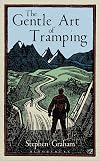
Lange war Wandern eine Freizeitbeschäftigung für alte Leute, doch in den letzten Jahren haben immer mehr jüngere Menschen ihre Freude daran gefunden. Für all Jene, aber auch für diejenigen, die dem Wandern (noch) nichts abgewinnen können, ist dieses Büchlein ein Genuss.
Stephen Graham (1884 - 1975) war im wahrsten Sinne des Wortes ein Globetrotter, nur hieß das damals noch nicht so. Die Welt sehen war seine große Passion - und das am Besten zu Fuß und mit Humor. Ihm ging es nicht show more darum, möglichst riesige Entfernungen zurückzulegen, ganz im Gegenteil. Er plädiert für das langsame, für das achtsame Gehen, ohne jedoch diesen heute so modernen Begriff zu benutzen: "Mit schmerzhaftem Widerwillen höre ich mir die Berichte von Leuten an, die sich damit brüsten, 40 oder 50 Meilen pro Tag gelaufen zu sein. Eine Freude dagegen ist es, die Bekanntschaft dessen zu machen, der die Kunst des langsamen Gehens beherrscht .... Das Leben wird nicht etwa von Stunde zu Stunde, Tag zu Tag, Jahr zu Jahr immer großartiger - sein Wert steckt im Augenblick, nicht im Langstreckenlauf."
In 26 Kapiteln gibt er Ratschläge und auch praktische Tipps, wie man das Wandern am Besten genießen kann. Wobei Manches sich eher zum Schmunzeln als zur tatsächlichen Umsetzung eignet - immerhin wurde dieses Büchlein bereits vor fast 100 Jahren geschrieben. "Man sollte zwar in einer Tasche des Rucksacks Schlips und Kragen aufbewahren, die man notgedrungen anlegen kann, falls man gezwungen ist, eine Post, eine Bank, einen Geistlichen oder die Polizei aufzusuchen." Doch Vieles ist völlig zeitlos und hat heute noch genauso Gültigkeit wie damals. Seine Gedanken über Fremde, über Müßiggang, über mögliche Gefährten, über Lieder, Landkarten und mitzunehmende Bücher. Man liest und liest und ist sich immer sicherer: "Beim Wandern verdient man sich keinen Lebensunterhalt, sondern das Glück."
Worauf also warten? Nichts wie auf zur nächsten Wanderung - und dieses Büchlein nicht vergessen, das auch optisch ein Genuss ist und mit einem sympathisch liebenswürdigen Vorwort sowie vielen ergänzenden interessanten Anmerkungen versehen. show less
Stephen Graham (1884 - 1975) war im wahrsten Sinne des Wortes ein Globetrotter, nur hieß das damals noch nicht so. Die Welt sehen war seine große Passion - und das am Besten zu Fuß und mit Humor. Ihm ging es nicht show more darum, möglichst riesige Entfernungen zurückzulegen, ganz im Gegenteil. Er plädiert für das langsame, für das achtsame Gehen, ohne jedoch diesen heute so modernen Begriff zu benutzen: "Mit schmerzhaftem Widerwillen höre ich mir die Berichte von Leuten an, die sich damit brüsten, 40 oder 50 Meilen pro Tag gelaufen zu sein. Eine Freude dagegen ist es, die Bekanntschaft dessen zu machen, der die Kunst des langsamen Gehens beherrscht .... Das Leben wird nicht etwa von Stunde zu Stunde, Tag zu Tag, Jahr zu Jahr immer großartiger - sein Wert steckt im Augenblick, nicht im Langstreckenlauf."
In 26 Kapiteln gibt er Ratschläge und auch praktische Tipps, wie man das Wandern am Besten genießen kann. Wobei Manches sich eher zum Schmunzeln als zur tatsächlichen Umsetzung eignet - immerhin wurde dieses Büchlein bereits vor fast 100 Jahren geschrieben. "Man sollte zwar in einer Tasche des Rucksacks Schlips und Kragen aufbewahren, die man notgedrungen anlegen kann, falls man gezwungen ist, eine Post, eine Bank, einen Geistlichen oder die Polizei aufzusuchen." Doch Vieles ist völlig zeitlos und hat heute noch genauso Gültigkeit wie damals. Seine Gedanken über Fremde, über Müßiggang, über mögliche Gefährten, über Lieder, Landkarten und mitzunehmende Bücher. Man liest und liest und ist sich immer sicherer: "Beim Wandern verdient man sich keinen Lebensunterhalt, sondern das Glück."
Worauf also warten? Nichts wie auf zur nächsten Wanderung - und dieses Büchlein nicht vergessen, das auch optisch ein Genuss ist und mit einem sympathisch liebenswürdigen Vorwort sowie vielen ergänzenden interessanten Anmerkungen versehen. show less
America has its hobos, and the UK has always had its tramps; men who walked the lanes and roads of our country. Graham sees these as vagabonds and outlaws. What he considers as tramping is a gentle and meditative style of walking that you take as much time as you need to enjoy the walk and you are friend of society, a seeker of the unexpected and someone who travels light.
Know how to meet your fellow wanderer, how to be passive to the beauty of nature and to be active to its wildness and its show more rigour. Tramping brings one to reality
If you are considering taking to the lanes of the UK, then Graham has lots of advice for you. There are chapters on what boots to wear, carrying money, lighting a fire, drying off after rain, what to carry in a knapsack, the tobacco to take and that the book to take when walking should be one that you are just on the cusp of making your own.
From day to day you keep your log, your day-book of the soul and you may think at first that it is a mere record of travel and facts; but something else will be entering into it, poetry, the new poetry of your life
It is a book very much of its time, but then it was first published in 1927. Some of the advice isn’t relevant now, but as you read it you can find gems that still are relevant to walking and enjoying the outside world today. Things like, enjoy the time taken and not concern yourself with the distance covered, tramping is about earning happiness not money and the less you spend the more you will experience. I thought it was a charming little book and I really love the endpapers too which are reproductions of his notebooks. Mostly it is a reminder that it is often the journey that matters more than the destination. show less
Know how to meet your fellow wanderer, how to be passive to the beauty of nature and to be active to its wildness and its show more rigour. Tramping brings one to reality
If you are considering taking to the lanes of the UK, then Graham has lots of advice for you. There are chapters on what boots to wear, carrying money, lighting a fire, drying off after rain, what to carry in a knapsack, the tobacco to take and that the book to take when walking should be one that you are just on the cusp of making your own.
From day to day you keep your log, your day-book of the soul and you may think at first that it is a mere record of travel and facts; but something else will be entering into it, poetry, the new poetry of your life
It is a book very much of its time, but then it was first published in 1927. Some of the advice isn’t relevant now, but as you read it you can find gems that still are relevant to walking and enjoying the outside world today. Things like, enjoy the time taken and not concern yourself with the distance covered, tramping is about earning happiness not money and the less you spend the more you will experience. I thought it was a charming little book and I really love the endpapers too which are reproductions of his notebooks. Mostly it is a reminder that it is often the journey that matters more than the destination. show less
Written in 1926, it's part manual, and part manifesto for tramping. He's defining tramping as something like hiking, but less goal-oriented, but not poverty-driven either. In other words, leisurely hiking for sight-seeing purposes over a period of days or weeks. I'm reading it because I wrote down a quote in an article and I wanted to see where it came from: "As you sit on the hillside, or lie prone under the trees of the forest, or sprawl wet-legged on the shingly beach of a mountain show more stream, the great door, that does not look like a door, opens." It sounded vaguely Lovecraftian, and I just wanted to understand the context. Long story short, he just means you'll have a lot of animal encounters if you live in the woods. Fair enough! show less
This must be the most eloquently written book about tramping I’ve encountered. It was first published in 1927.
The author begins by stating: “Know how to tramp and you know how to live.” “Manners makyth man, and tramping makyth manners.”
The tramp is a friend of society, he pays his way if he can.
It is important to have the right boots – you should have leather-lined boots with substantial soles. Graham tells us that it is difficult to better a new pair of army boots, but not show more army boots already worn by other men.
One should wear thick woollen socks, or even two pairs of socks at once.
The most delightful is to tramp in the mountains, the most trying is along great highways.
It is a good plan on a long tramp to carry a duplicate pair of boots with you.
There’s a chapter about what to take with you in the knapsack. One valuable extra to take is a few yards of mosquito netting.
Do not take a cap or a straw hat; a tweed hat is best.
He advises carrying a blanket, or a couple of blankets.
You will need a coffee pot, an enamel mug, a knife and spoon; you do not need a fork.
Graham tells us that though it may be good to have a companion on the tramp, we all know that prolonged companionship may be trying.
It is a test of friendship to tramp with a companion. If you do not quarrel “irreparably” you will probably find your friendship greatly increased.
“You have naturally long conversations. You comment on Nature around you, and on tramping experiences. You talk of books and pictures, of poems, of people. But above all, almost inevitably, of yourself.”
The slower walker should set the pace. Some can do forty miles a day, many can hardly manage fifteen.
Graham says we should carry a notebook or volume of poems.
He has vagabonded throughout the world, in London and New York, and for thousands of miles in Russia.
In America, the roads are killing. The noontide is too hot, there is too much dust. “Cross-country tramping is much happier and provides more adventures.
The Grand Canyon can afford at least a week’s walking. If you go in August, you should visit the Hopi Indians and see the Smoke Dance.
In Europe he found the language difficulty the chief drawback.
In Spain it is not wise to wear tweeds. All respectable beggars wear black. In Spain it is much colder than people think, Northern Spain being exposed to bitter winds in the spring.
There are chapters on the fire, the bed, the dip, drying after rain, scrounging, seeking shelter, books and much more.
Graham tells us about the “zigzag” walking he invented: first turn to the left, then the first to the right, then the first to the left again and so on. He did this in both New York, Paris and also London.
The book contains many literary references and quotes.
It is very readable, in fact entertaining, and the writing is of a high quality; it contains much practical information for those who themselves want to tramp. Highly recommended! show less
The author begins by stating: “Know how to tramp and you know how to live.” “Manners makyth man, and tramping makyth manners.”
The tramp is a friend of society, he pays his way if he can.
It is important to have the right boots – you should have leather-lined boots with substantial soles. Graham tells us that it is difficult to better a new pair of army boots, but not show more army boots already worn by other men.
One should wear thick woollen socks, or even two pairs of socks at once.
The most delightful is to tramp in the mountains, the most trying is along great highways.
It is a good plan on a long tramp to carry a duplicate pair of boots with you.
There’s a chapter about what to take with you in the knapsack. One valuable extra to take is a few yards of mosquito netting.
Do not take a cap or a straw hat; a tweed hat is best.
He advises carrying a blanket, or a couple of blankets.
You will need a coffee pot, an enamel mug, a knife and spoon; you do not need a fork.
Graham tells us that though it may be good to have a companion on the tramp, we all know that prolonged companionship may be trying.
It is a test of friendship to tramp with a companion. If you do not quarrel “irreparably” you will probably find your friendship greatly increased.
“You have naturally long conversations. You comment on Nature around you, and on tramping experiences. You talk of books and pictures, of poems, of people. But above all, almost inevitably, of yourself.”
The slower walker should set the pace. Some can do forty miles a day, many can hardly manage fifteen.
Graham says we should carry a notebook or volume of poems.
He has vagabonded throughout the world, in London and New York, and for thousands of miles in Russia.
In America, the roads are killing. The noontide is too hot, there is too much dust. “Cross-country tramping is much happier and provides more adventures.
The Grand Canyon can afford at least a week’s walking. If you go in August, you should visit the Hopi Indians and see the Smoke Dance.
In Europe he found the language difficulty the chief drawback.
In Spain it is not wise to wear tweeds. All respectable beggars wear black. In Spain it is much colder than people think, Northern Spain being exposed to bitter winds in the spring.
There are chapters on the fire, the bed, the dip, drying after rain, scrounging, seeking shelter, books and much more.
Graham tells us about the “zigzag” walking he invented: first turn to the left, then the first to the right, then the first to the left again and so on. He did this in both New York, Paris and also London.
The book contains many literary references and quotes.
It is very readable, in fact entertaining, and the writing is of a high quality; it contains much practical information for those who themselves want to tramp. Highly recommended! show less
Lists
You May Also Like


Associated Authors
Statistics
- Works
- 31
- Also by
- 4
- Members
- 275
- Popularity
- #84,338
- Rating
- 3.7
- Reviews
- 7
- ISBNs
- 100
- Languages
- 8