
Robert Neumann (1) (1897–1975)
Author of The Pictorial History of the Third Reich
For other authors named Robert Neumann, see the disambiguation page.
Works by Robert Neumann
Zaharoff the armaments king / by Robert Neumann, translated [from the German] by R.T. Clark (2011) 12 copies, 2 reviews
Unter falscher Flagge 3 copies
Flood 2 copies
Eine Frau hat geschrien... Roman 2 copies
Karriere 2 copies
Die Parodien: Mit fremden Federn. Unter falscher Flagge. Theatralisches Panoptikum. Zur Ästhetik der Parodie Gesamtausgabe 1 copy, 1 review
Das Schiff "Espérance" 1 copy
Blind man's buff 1 copy
Tagged
Common Knowledge
- Birthdate
- 1897-05-22
- Date of death
- 1975-01-03
- Gender
- male
- Occupations
- writer
satirist
playwright
autobiographer
novelist
screenwriter (show all 8)
poet
literary critic - Organizations
- Deutsche Akademie für Sprache und Dichtung
Austrian PEN - Relationships
- Linke, Lilo (friend)
- Short biography
- Robert Neumann was born in Vienna, Austria, to a family of Jewish ancestry. He studied chemistry and literature in Vienna, and obtained a Ph.D. with a thesis on Heinrich Heine. After losing money in the post-World War I Depression, he worked at various jobs, including seaman. In 1919, he married Stefanie Grünwald, with whom he had a son. He published some early poetry in 1919 and 1923, and established his literary reputation with the satire collection Mit fremden Federn (With Borrowed Plumes) in 1927. He quickly published other works, including the anti-Nazi novels Sintflut (1929) and Die Macht (Mammon, 1932), and another book of parodies, Unter falscher Flagge (Under False Flag, 1932). In addition, he lectured and worked as a literary critic for German-language periodicals. His books were banned and burned by the German Nazi regime in 1933 and that year he left Austria for exile in the UK. In 1936 he wrote the screenplay for the British film Abdul the Damned. After the Anschluss (annexation) of Austria by Germany in 1938, he organized the Free Austrian PEN Club in London to help writers threatened by the Nazis to leave their country. After the start of World War II, he was interned for a few months as an "enemy alien." Beginning with Scene in Passing in 1942, he published three novels in his adopted language of English. As an editor and part owner of a publishing house, he published translations that introduced the British public to German writers in exile such as Arnold Zweig and Heinrich Mann. In 1947, he was named honorary president of the revived Austrian PEN Club. After divorce from his first wife, he remarried to Lore Franziska Stern (Rolly Becker), a German writer and translator, and then to Evelyn Hengerer, a dancer known as Mathilde Walewska, with whom he had another son. After 1958, he lived in Switzerland, where he continued to work as a novelist, political journalist and literary critic, producing several works on the Holocaust. In 1960, he married his fourth wife, Helga Heller. He wrote an autobiography, Mein altes Haus in Kent, published in 1957.
- Nationality
- Österreich-Ungarn (Geburt)
Großbritannien (ab 1947) - Birthplace
- Vienna, Austria
- Places of residence
- London, England, UK
Locarno, Switzerland - Place of death
- Munich, Germany
- Burial location
- Haidhausener Friedhof, München, Germany
Members
Reviews

Zaharoff is one of the least discussed figures of the 20th century, in relation to their impact. Did they orchestrate the Great War simply for their own profit? Maybe not, but they were certainly prepared to go that far, if they could. On plenty of smaller occasions they did just that.
Zaharoff was famously secretive during his life and remained little known afterwards. This was written in 1935, a year before his death. So many secrets were still unknown at the time. It's a vague book, show more drifting across Zaharoff's life with so very little to nail down to solid fact. But that's the territory. Certainly an interesting read and it does cover a few of the areas, like his tactics against Maxim and his involvement with Monte Carlo, that aren't widely known.
Anyone interested in Zaharoff should read this, as much for the contemporary insight into how he was starting to be unmasked in his twilight years as for a complete biography. But don't expect many answers, and often the book gives several possible answers to the same question. show less
Zaharoff was famously secretive during his life and remained little known afterwards. This was written in 1935, a year before his death. So many secrets were still unknown at the time. It's a vague book, show more drifting across Zaharoff's life with so very little to nail down to solid fact. But that's the territory. Certainly an interesting read and it does cover a few of the areas, like his tactics against Maxim and his involvement with Monte Carlo, that aren't widely known.
Anyone interested in Zaharoff should read this, as much for the contemporary insight into how he was starting to be unmasked in his twilight years as for a complete biography. But don't expect many answers, and often the book gives several possible answers to the same question. show less

Comprado no Sebo Travessa da Praia, em maio/2022
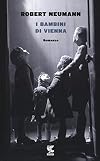
Uno sguardo straziante alla realtà vissuta dai piccoli protagonisti in una Vienna martoriata dalla guerra e dall'intolleranza nazista. Riga dopo riga, il cuore si aggrappa alla speranza di un "eroe" che potrebbe salvarli e per mesi la nostra affettività resta incollata ad ogni sussurro, pianto, fame, paura e desiderio di quelli che saranno, per sempre, "i nostri bambini".
Jan 18, 2017Italian
Die Parodien: Mit fremden Federn. Unter falscher Flagge. Theatralisches Panoptikum. Zur Ästhetik der Parodie Gesamtausgabe by Robert Neumann

Leider kenne ich nur einen Bruchteil der Autorinnen und Autoren, die er parodiert. Manche (Nataly von Eschstruth z.B.) habe ich überhaupt erst durch ihn kennengelernt. Im Original - der geneigte Leser wird es schon erraten haben - nicht halb so gut wie in Neumanns Version.
Highlights sind auf jeden Fall Thomas Mann und stefan george, aber auch die parodierten Texte uns heute nicht mehr bekannter Autoren können Lachtränen hervorrufen. Bei mir jedenfalls.
Heilo-haleilo!
Highlights sind auf jeden Fall Thomas Mann und stefan george, aber auch die parodierten Texte uns heute nicht mehr bekannter Autoren können Lachtränen hervorrufen. Bei mir jedenfalls.
Heilo-haleilo!
Jun 24, 2015German
You May Also Like


Associated Authors
Statistics
- Works
- 33
- Members
- 241
- Popularity
- #94,247
- Rating
- 3.7
- Reviews
- 5
- ISBNs
- 45
- Languages
- 4