
John Osborne (1) (1929–1994)
Author of Look Back in Anger
For other authors named John Osborne, see the disambiguation page.
About the Author
John Osborne was born on December 12, 1929 in London, England. He was educated at Belmont College, Devon but was expelled after attacking the headmaster. He became involved in theatre, as a stage manager and then as an actor. He started writing plays and two of them, The Devil Inside Her and show more Personal Enemy, were staged in regional theatres before he submitted Look Back in Anger to the newly formed English Stage Company at London's Royal Court Theatre. The company chose the play as the third production to enter repertory. The play became a commercial success, transferring to the West End and to Broadway, and was later filmed with Richard Burton in the leading role. His other plays included The Entertainer, Luther, Inadmissible Evidence, A Patriot for Me, A Hotel in Amsterdam, A Sense of Detachment, and Deja Vu. He also wrote a number of screenplays, mainly adaptations of his own works. He won an Oscar for his 1963 adaptation of Tom Jones. He acted in a few films including Get Carter, Tomorrow Never Comes, and Flash Gordon. He also wrote two autobiographies entitled A Better Class of Person and Almost a Gentleman. He died from complications brought on from his diabetes on December 24, 1994 at the age of 65. (Bowker Author Biography) show less
Series
Works by John Osborne
John Osborne Plays 1: Look Back in Anger/Epitaph for George Dillon/The World of Paul Slickey/Dejavu (1994) 24 copies
Teatro 20 copies
John Osborne Plays Three: Luther, a Patriot for Me, and Inadmissible Evidence (Faber Contemporary Classics) (v. 3) (1998) 14 copies
Plays for England: The Blood of the Bambergs: Under Plain Cover: The World of Paul Slickey (1966) 4 copies
The Picture of Dorian Gray [BBC Play of the Month 1976] — Playwright (adaptation) — 3 copies
Prova inammissibile 2 copies
Osborne John 1 copy
L'istrione (in Teatro) 1 copy
Associated Works
The Tony winners: A collection of ten exceptional plays, winners of the Tony Award for the most distinguished play of the year (1977) — Contributor — 6 copies
Die englische Literatur 10 in Text und Darstellung. 20. Jahrhundert 2. (2001) — Contributor — 6 copies
William Shakespeare: Coriolanus [theatre programme] — Contributor — 1 copy
Tagged
Common Knowledge
- Legal name
- Osborne, John James
- Birthdate
- 1929-12-12
- Date of death
- 1994-12-24
- Gender
- male
- Occupations
- playwright
- Relationships
- Gilliatt, Penelope (wife | divorced)
- Nationality
- UK
- Birthplace
- Fulham, London, England, UK
- Place of death
- Clun, Shropshire, England, UK
- Associated Place (for map)
- England, UK
Members
Reviews

Squalid, sketchy, melodramatic, charmless, misanthropic, abrasive, abusive, self-pitying… all but undeserving, frankly, of a proper review. Look Back in Anger has a place in history as the play that injected a bit of vinegar into a stale British theatre scene, but it's so acidic it quickly eats itself up. I can see how it would have seemed daring and scandalous back in the day, but now? It's a bit too Jeremy Kyle. It's a shell so brittle it's long since been reduced to powder.
It's a story show more of a petty, malicious man-child, convinced of his own stunted greatness, who cajoles two dim females into abusive, co-dependent relationships with him. I say 'story', but in truth it's poor theatre: it's just an unreflective, obnoxious rant with no dynamic stage movement, plot, theme or character development. Its successful existence alongside the genuine American playwrights who emerged in the immediate post-war era (Arthur Miller, Tennessee Williams) is shaming to British culture.
It's immensely mean-spirited, without any redeeming qualities. It's natural for any reader of this review to assume my negative reaction derives from the sickening, abusive nature of the relationships represented within the play's pages, but once I began to accept this and swallow it (reluctantly), I was surprised at the lack of actual artistry or dramatic competence. I find it hilarious that around the same time John Osborne was inflicting this vindictive, misogynistic trash on the British theatre scene, Shelagh Delaney was putting him to shame with her better-constructed, meritorious kitchen-sink play A Taste of Honey.
Look Back in Anger leaves a sour taste; not sour like daring theatre, but sour like toxic drain cleaner. Jimmy, the protagonist, and his two female co-dependents (they're not victims) deserve all they get. I believe people have much more agency in these situations than they claim, and while those readers who tend to keep their heads in the clouds will be reluctant to accept that some people actually behave like this, a quick glance at Osborne's bitter, acidic biography shows it's true. Such a perusal provides an inadvertent benefit to an otherwise valueless play: it's well to remember that men and women like this do really exist in the world. I don't want to read about them in a play, though, particularly one that takes their side. On the contrary, I'd like to give them the widest berth possible. show less
It's a story show more of a petty, malicious man-child, convinced of his own stunted greatness, who cajoles two dim females into abusive, co-dependent relationships with him. I say 'story', but in truth it's poor theatre: it's just an unreflective, obnoxious rant with no dynamic stage movement, plot, theme or character development. Its successful existence alongside the genuine American playwrights who emerged in the immediate post-war era (Arthur Miller, Tennessee Williams) is shaming to British culture.
It's immensely mean-spirited, without any redeeming qualities. It's natural for any reader of this review to assume my negative reaction derives from the sickening, abusive nature of the relationships represented within the play's pages, but once I began to accept this and swallow it (reluctantly), I was surprised at the lack of actual artistry or dramatic competence. I find it hilarious that around the same time John Osborne was inflicting this vindictive, misogynistic trash on the British theatre scene, Shelagh Delaney was putting him to shame with her better-constructed, meritorious kitchen-sink play A Taste of Honey.
Look Back in Anger leaves a sour taste; not sour like daring theatre, but sour like toxic drain cleaner. Jimmy, the protagonist, and his two female co-dependents (they're not victims) deserve all they get. I believe people have much more agency in these situations than they claim, and while those readers who tend to keep their heads in the clouds will be reluctant to accept that some people actually behave like this, a quick glance at Osborne's bitter, acidic biography shows it's true. Such a perusal provides an inadvertent benefit to an otherwise valueless play: it's well to remember that men and women like this do really exist in the world. I don't want to read about them in a play, though, particularly one that takes their side. On the contrary, I'd like to give them the widest berth possible. show less

Meet Bill Maitland, protagonist of John Osborne's massive play Inadmissible Evidence. Bill, a 39-year-old lawyer, is not that likable a guy but seems to have his pick of the ladies. The pursuit of women has become a lifestyle for Bill, who has a wife and several mistresses both short and long-term, as well as opportunistic encounters. But this certainly isn't a sex comedy. It is more of an indictment. Bill is to be tried and found guilty -- though less for his sexual appetites than for his show more utter disregard of every single other's personhood.
John Osborne turned British theater on its head in the 1950s with his brilliant play Look Back in Anger, featuring the definitive "angry young man" character Jimmy Porter. Osborne early in his career wrote among the most punishingly large male roles in the entire world dramatic literature -- Porter, Archie Rice in The Entertainer, Luther in an eponymous play. With Maitland, Osborne pushes this line of inquiry as far as it will go; Inadmissible Evidence takes three to four hours to perform, the lead actor is onstage continuously, and is given any number of three, four, and five page speeches to execute. On top of all that, the actor is playing a self-justifying creep who has barely a single appealing moment and whose last big monologue is a cruel and incestuously tinged rejection of his teenage daughter. One critic of the play's premiere production in 1964 noted that the play has "no plot, no action, no interesting situations, no climaxes and no comedy...not even a clever set to look at." I know this all sounds horrible, and yet, such is the nature of the challenge Osborne set himself, to write a masterpiece (it has to be a masterpiece or nothing) within those boundaries. He pulls it off.
In reading and viewing Osborne, a book I am finding very helpful is Luc Gilleman's John Osborne -- Vituperative Artist. Gilleman states that "in many ways, Inadmissible Evidence is a bad play," but I would say that if so, it falls into the category of "bad great play" that Kenneth Tynan proposed for Camus's Caligula. (One might say that Stanley Kubrick's The Shining is a bad great film -- you get the idea.) One "badness" of the play is that it probably relies too heavily on a great central performer to really work up there on stage. Osborne was terribly lucky to have the incomparable Nicol Williamson as Maitland in that first production, and many times subsequently; Williamson played Maitland in a total of five separate productions in London and New York, and in a little-seen 1968 film version. This was a signature role for him, and he was by all accounts mesmerizing in it; one gets a little of the flavor in the photographs that accompany the 1965 Grove Press printing of the play. Gilleman writes:
In playing Maitland, Williamson in fact seemed to die on the stage every night and was not adverse to berating the audience when it proved unworthy of such a sacrifice. Once he stopped the performance...starting again only when fidgety spectators had been cowed into silence. In another instance, he staggered off stage with chest pains, and the curtain lowered, until, sixteen minutes later, his understudy took over. After the interval, Williamson returned to complete the play and in a curtain speech offered the audience their money back, explaining the role was "terribly, terribly difficult," and, since he had been suspected of sustaining a heart attack, quite literally "killing."
Of such incidents are theatrical legends made -- and the performing history of Osborne's theatrical oeuvre offers a number of others of like kind. Still, actors love the challenge. As Osborne himself noted:
[My work] requires very proficient actors. That is why they are very difficult to cast. They require a great deal of pure acting skill of a very special kind, I think...[The actors] must have an extraordinary technique as far as using the dense text, because it always is very dense. Also, they must have a wide intellectual grasp and tremendous pure verbal facility and a great ear and stamina and a lot of power and feeling.
Nothing much to ask for! show less
John Osborne turned British theater on its head in the 1950s with his brilliant play Look Back in Anger, featuring the definitive "angry young man" character Jimmy Porter. Osborne early in his career wrote among the most punishingly large male roles in the entire world dramatic literature -- Porter, Archie Rice in The Entertainer, Luther in an eponymous play. With Maitland, Osborne pushes this line of inquiry as far as it will go; Inadmissible Evidence takes three to four hours to perform, the lead actor is onstage continuously, and is given any number of three, four, and five page speeches to execute. On top of all that, the actor is playing a self-justifying creep who has barely a single appealing moment and whose last big monologue is a cruel and incestuously tinged rejection of his teenage daughter. One critic of the play's premiere production in 1964 noted that the play has "no plot, no action, no interesting situations, no climaxes and no comedy...not even a clever set to look at." I know this all sounds horrible, and yet, such is the nature of the challenge Osborne set himself, to write a masterpiece (it has to be a masterpiece or nothing) within those boundaries. He pulls it off.
In reading and viewing Osborne, a book I am finding very helpful is Luc Gilleman's John Osborne -- Vituperative Artist. Gilleman states that "in many ways, Inadmissible Evidence is a bad play," but I would say that if so, it falls into the category of "bad great play" that Kenneth Tynan proposed for Camus's Caligula. (One might say that Stanley Kubrick's The Shining is a bad great film -- you get the idea.) One "badness" of the play is that it probably relies too heavily on a great central performer to really work up there on stage. Osborne was terribly lucky to have the incomparable Nicol Williamson as Maitland in that first production, and many times subsequently; Williamson played Maitland in a total of five separate productions in London and New York, and in a little-seen 1968 film version. This was a signature role for him, and he was by all accounts mesmerizing in it; one gets a little of the flavor in the photographs that accompany the 1965 Grove Press printing of the play. Gilleman writes:
In playing Maitland, Williamson in fact seemed to die on the stage every night and was not adverse to berating the audience when it proved unworthy of such a sacrifice. Once he stopped the performance...starting again only when fidgety spectators had been cowed into silence. In another instance, he staggered off stage with chest pains, and the curtain lowered, until, sixteen minutes later, his understudy took over. After the interval, Williamson returned to complete the play and in a curtain speech offered the audience their money back, explaining the role was "terribly, terribly difficult," and, since he had been suspected of sustaining a heart attack, quite literally "killing."
Of such incidents are theatrical legends made -- and the performing history of Osborne's theatrical oeuvre offers a number of others of like kind. Still, actors love the challenge. As Osborne himself noted:
[My work] requires very proficient actors. That is why they are very difficult to cast. They require a great deal of pure acting skill of a very special kind, I think...[The actors] must have an extraordinary technique as far as using the dense text, because it always is very dense. Also, they must have a wide intellectual grasp and tremendous pure verbal facility and a great ear and stamina and a lot of power and feeling.
Nothing much to ask for! show less
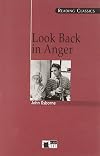
Eu ia escrever alguma coisa sobre essa peça só hoje à noite quando assistir o filme do Richardson, mas vou escrever algo agora para não esquecer: aqui o embate entre homem e mulher espelha a luta de classes, o que é algo que muitas de nós feministas temos cantado há algum tempo, mas ao contrário do que um homem poderia escrever, a classe subalterna sempre foi a mulher. É uma luta de classes sim, da mulher enquanto classe sendo vilipendiada pelo homem, quem deveria "Look back in show more anger" é a esposa, ela deveria representar a classe trabalhadora e o homem ser o Império britânico em decadência. Osborne deveria ter conhecido a Silvia Federici, né.
Não ajuda o fato do Osborne escrever isso como comédia e todo mundo achar que é drama. Reza a lenda de quem leu a autobiografia do Osborne que ele é de fato misógino e o aspecto da misoginia em seus escritos não é estilo narrativo e sim projeção mesmo, como já explícito ele dizer que escreveu toda aquela misoginia como comédia.
Ia tentar ler a continuação dos anos 90, Déjà-vu, mas nem sei se quero mais. Enfim, estaria mais feliz lendo a Shelagh Delaney.
Plus: Recomendo muito a edição com introdução e notas da Margaret Rose, são muito bem vindas para o entendimento da leitura.
Sobre o filme: My ★★★★ review of Look Back in Anger on Letterboxd https://boxd.it/6zoR2F show less
Não ajuda o fato do Osborne escrever isso como comédia e todo mundo achar que é drama. Reza a lenda de quem leu a autobiografia do Osborne que ele é de fato misógino e o aspecto da misoginia em seus escritos não é estilo narrativo e sim projeção mesmo, como já explícito ele dizer que escreveu toda aquela misoginia como comédia.
Ia tentar ler a continuação dos anos 90, Déjà-vu, mas nem sei se quero mais. Enfim, estaria mais feliz lendo a Shelagh Delaney.
Plus: Recomendo muito a edição com introdução e notas da Margaret Rose, são muito bem vindas para o entendimento da leitura.
Sobre o filme: My ★★★★ review of Look Back in Anger on Letterboxd https://boxd.it/6zoR2F show less

"Why don't we have a little game? Let's pretend that we're human beings, and that we're actually alive."
The setting for 'Look Back in Anger' is an attic flat in a large Midland town in the mid-1950's, the home of Jimmy Porter and his wife Alison. Jimmy and Alison share their flat with Cliff Lewis, a young working-class man who as well as being Jimmy's best friend is also in business with him, running a sweet stall. Cliff and Jimmy both come from working-class backgrounds, though Jimmy has show more had more education than Cliff whilst Alison comes from a more prominent family, a fact that Jimmy clearly resents.
'Look Back in Anger' is regarded by many as saving British theatre as it brought a realism to it, the first of what today is classed as a 'kitchen drama' it also introduced the concept of 'angry young men' struggling in dark post-War Britain.
Jimmy is egotistical, a dreamer but he mainly a pretty dislikeable character. Osborne uses him as a vehicle to shine a light on many of the societal issues of the day; Religion, class, the rise and fall of the British Empire and in particular the loss of childhood. Jimmy lost his father at a young age and wants the others around him to share in his pain.
The play may be a little dated today but this is still a powerful piece of writing making this book well worth a read and at roughly 100 pages long its also a quick one. show less
The setting for 'Look Back in Anger' is an attic flat in a large Midland town in the mid-1950's, the home of Jimmy Porter and his wife Alison. Jimmy and Alison share their flat with Cliff Lewis, a young working-class man who as well as being Jimmy's best friend is also in business with him, running a sweet stall. Cliff and Jimmy both come from working-class backgrounds, though Jimmy has show more had more education than Cliff whilst Alison comes from a more prominent family, a fact that Jimmy clearly resents.
'Look Back in Anger' is regarded by many as saving British theatre as it brought a realism to it, the first of what today is classed as a 'kitchen drama' it also introduced the concept of 'angry young men' struggling in dark post-War Britain.
Jimmy is egotistical, a dreamer but he mainly a pretty dislikeable character. Osborne uses him as a vehicle to shine a light on many of the societal issues of the day; Religion, class, the rise and fall of the British Empire and in particular the loss of childhood. Jimmy lost his father at a young age and wants the others around him to share in his pain.
The play may be a little dated today but this is still a powerful piece of writing making this book well worth a read and at roughly 100 pages long its also a quick one. show less
Lists
Awards


You May Also Like


Associated Authors
Statistics
- Works
- 56
- Also by
- 8
- Members
- 2,919
- Popularity
- #8,772
- Rating
- 3.5
- Reviews
- 43
- ISBNs
- 226
- Languages
- 9
- Favorited
- 2