
Alexander Rose (1) (1971–)
Author of Washington's Spies: The Story of America's First Spy Ring
For other authors named Alexander Rose, see the disambiguation page.
About the Author
Alexander Rose is an American author and historian. He was born in the United States in 1971, and raised in Australia and Britain. He was educated at Cambridge University, where he was awarded a doctorate for his thesis, Radar Strategy: The Air Dilemma and British Politics, 1932-1937. As a show more journalist, Rose's writing has appeared in, among other places, The Wall Street Journal, The New York Times, The Washington Post, and the CIA journal Studies in Intelligence. He is a member of the United States Commission on Military History, the Society for Military History, and the Royal Historical Society. He has authored several historical works, including Washington's Spies (which is the basis for AMC series Turn) American Rifle and Kings in the North. (Bowker Author Biography) show less
Works by Alexander Rose
Empires of the Sky: Zeppelins, Airplanes, and Two Men's Epic Duel to Rule the World (2020) 121 copies, 4 reviews
Men of War: The American Soldier in Combat at Bunker Hill, Gettysburg, and Iwo Jima (2015) 90 copies, 1 review
The Lion And The Fox: Two Rival Spies and the Secret Plot to Build a Confederate Navy (2022) 58 copies, 1 review
Associated Works
MHQ: The Quarterly Journal of Military History — Summer 2012 (2012) — Author "Clearing the Fog of War" — 3 copies
Tagged
Common Knowledge
- Birthdate
- 1971
- Gender
- male
- Education
- University of Cambridge
- Organizations
- Royal Society of the Arts (Fellow)
United States Commission on Military History
Historical Society
Royal Historical Society
Society of Military History - Birthplace
- USA
- Places of residence
- Australia
UK - Map Location
- United Kingdom
Members
Reviews
Empires of the Sky: Zeppelins, Airplanes, and Two Men's Epic Duel to Rule the World by Alexander Rose
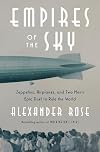
Sir Sydney Camm, the great British aircraft designer, famously noted that "all modern aircraft have four dimensions: span, length, height and politics" in regards to the failed TSR.2 strike aircraft, but he could have just as easily been speaking of the great rigid airships, which were never viable without extensive government support. Keeping that in mind, this is the real foundation of this book, as Rose examines how his three main human subjects, Count Zeppelin, Hugo Eckener (Zeppelin's show more professional heir) and Juan Terry Trippe of Pan-Am Airlines notoriety (arguably Eckener's main business rival), had to constantly court officialdom to realize their visions of trans-oceanic air travel. I know that I'm very impressed with how the author juggles capturing personalities, explaining technical realities, and dissecting business models, and combining it all into a coherent narrative package.
If I were going to nitpick, the "duel" of the subtitle is a little overstated, though Tripp was not above looking for ways to impede, if not out and out sabotage, Eckener's business strategy. Also, while I appreciate the wit that the author displays, there are a few moments where Rose spreads the "wise guy" shtick on a little too thick, such was referring to the ill-fated British airship R.101 as a combined "white elephant," "giant albatross," and "fat turkey." Still, this is history for the general reader at its best. show less
If I were going to nitpick, the "duel" of the subtitle is a little overstated, though Tripp was not above looking for ways to impede, if not out and out sabotage, Eckener's business strategy. Also, while I appreciate the wit that the author displays, there are a few moments where Rose spreads the "wise guy" shtick on a little too thick, such was referring to the ill-fated British airship R.101 as a combined "white elephant," "giant albatross," and "fat turkey." Still, this is history for the general reader at its best. show less
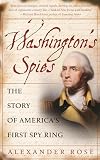
Fascinating and well written look at the "behind the scenes" spy activities of mainly the American Revolutionary forces, but also of the British efforts, (including the shameful case of Major Andre, and Benedict Arnold!) Oddly, the book begins with a chapter or two about the doomed Nathan Hale, early patriot turned captured spy, who is quickly hung, and then there is no more about him. The main portion of the book then shifts to the development & usefulness of the "Culpepper Ring", Gen. show more Washington's ultra secret group of civilian rebels who risked their very lives for several years to bring Washington and his military leaders current status of the British troops, ships, deployment of supplies, etc. in the New York/New Jersey area. Their military handler, Benjamin Tallmadge, definitely emerges as a hero, both in his military actions and his careful dedication to his spy ring, with Townsend and Woodhull being two of the key civilian spies we follow. Luckily for those of us who always wonder, "What happened to them after all the fighting ended?" the author includes a lengthy "Epilogue", providing details of each man and woman's post war careers, family life, illnesses and ultimate fates.
While enjoying the dramatic moments of danger and interaction between Loyalists and Rebels, and the "background story" on so many key figures of the Revolutionary period, this account definitely reads as a history more than an episodic story, often interspersed with letter excerpts, geographical references, political asides, etc.
However, apparently the 2014 AMC television series "TURN" is based off of this book, so I am very interested now in watching an episode or two of that show, just to see how the producers took the historical account and created a story.
Not for the casual reader, but definitely a good addition for those interested in the Revolutionary War era. show less
While enjoying the dramatic moments of danger and interaction between Loyalists and Rebels, and the "background story" on so many key figures of the Revolutionary period, this account definitely reads as a history more than an episodic story, often interspersed with letter excerpts, geographical references, political asides, etc.
However, apparently the 2014 AMC television series "TURN" is based off of this book, so I am very interested now in watching an episode or two of that show, just to see how the producers took the historical account and created a story.
Not for the casual reader, but definitely a good addition for those interested in the Revolutionary War era. show less
Men of War: The American Soldier in Combat at Bunker Hill, Gettysburg, and Iwo Jima by Alexander Rose
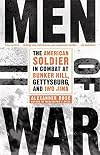
From a purely intellectual standpoint, I think it would be fascinating to see something like a massive earthquake, a raging tornado, or a nuclear bomb explosion. I've seen some pretty amazing jets at airshows and it would be cool to see them in real action - dropping bombs or shooting down enemy fighters - basically doing what they were made to do. The unfortunate reality, however, is the very real danger in such situations and the probability of death and destruction.
Likewise, I enjoy show more reading military histories, notwithstanding the fact that they're all about death and destruction. But most focus more on the actions of generals and movements of armies; while they might give you some taste of the unpleasantness of war, they're still more often than not, rather sanitized. But that's where this excellent book is different; not only does it tell you about the battles - Bunker Hill (American Revolution), Gettysburg (American Civil War), and Iwo Jima (WWII) - but it gives you a feeling for what real war was like. The focus for each battle is methodic but slightly different: "... for Bunker Hill, we [can] deduce a militiaman's experience of combat depending on his location (redoubt, beach, rail fence) and for Gettysburg we [can] do the same by deconstructing the era's formal templates (artillery bombardment, attack, defense), [and] for Iwo Jima [we] mostly examine combat method -- that is, how Marines first confronted obstacles and then surmounted them by watching, doing, adapting, and learning." (from pg 217 of the advance copy)
It's true, there's plenty of blood and guts in the writing, but it's told with a professional detachment that satisfies my weird curiosity but still leaves room for a healthy appreciation for the personal sacrifices. Yes, I squirmed while reading about the effects of cannonballs and bullets on the human body or the frightening descriptions of grenades and flame throwers in battle, but it's not all gore. It's interesting to read how the battles progressed from a soldier's perspective and how each differed, as well as why modern-day combat would be different still. It's also loaded with many of the individual observations from people involved in the fighting, the kind of quotes that don't always make it into the regular histories. One interesting note is how progressively "work-like" war had become by WWII, and how few reports of PTSD-like cases there were at Bunker Hill. Another was the psychological effects of things like bombardments and bayonettes.
It might not be the ideal book for someone with a weak stomach, but I found it so engrossing and well-written that it never really bothered me (and I read most of it while eating lunch). It's scholarly-like in its thoroughness and approach, but not difficult to read by any measure. I know a man who fought at Iwo Jima and he's criticized most books on the battle, but I suspect he might be more approving of this one. It certainly gave me a greater appreciation for his experience. show less
Likewise, I enjoy show more reading military histories, notwithstanding the fact that they're all about death and destruction. But most focus more on the actions of generals and movements of armies; while they might give you some taste of the unpleasantness of war, they're still more often than not, rather sanitized. But that's where this excellent book is different; not only does it tell you about the battles - Bunker Hill (American Revolution), Gettysburg (American Civil War), and Iwo Jima (WWII) - but it gives you a feeling for what real war was like. The focus for each battle is methodic but slightly different: "... for Bunker Hill, we [can] deduce a militiaman's experience of combat depending on his location (redoubt, beach, rail fence) and for Gettysburg we [can] do the same by deconstructing the era's formal templates (artillery bombardment, attack, defense), [and] for Iwo Jima [we] mostly examine combat method -- that is, how Marines first confronted obstacles and then surmounted them by watching, doing, adapting, and learning." (from pg 217 of the advance copy)
It's true, there's plenty of blood and guts in the writing, but it's told with a professional detachment that satisfies my weird curiosity but still leaves room for a healthy appreciation for the personal sacrifices. Yes, I squirmed while reading about the effects of cannonballs and bullets on the human body or the frightening descriptions of grenades and flame throwers in battle, but it's not all gore. It's interesting to read how the battles progressed from a soldier's perspective and how each differed, as well as why modern-day combat would be different still. It's also loaded with many of the individual observations from people involved in the fighting, the kind of quotes that don't always make it into the regular histories. One interesting note is how progressively "work-like" war had become by WWII, and how few reports of PTSD-like cases there were at Bunker Hill. Another was the psychological effects of things like bombardments and bayonettes.
It might not be the ideal book for someone with a weak stomach, but I found it so engrossing and well-written that it never really bothered me (and I read most of it while eating lunch). It's scholarly-like in its thoroughness and approach, but not difficult to read by any measure. I know a man who fought at Iwo Jima and he's criticized most books on the battle, but I suspect he might be more approving of this one. It certainly gave me a greater appreciation for his experience. show less
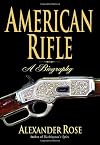
As much as this is a history of the development of military small arms, it's also a history of the debate between individual and collective, on the battle field, in government procurement, and in manufacturing research. I expected a sometimes dry history of the evolution of rifle technology. Instead, Alexander Rose provides an always interesting series of stories oriented around the men who developed and used the rifle. The advent of rifling and its use on the American frontier resulted in a show more new class of soldier. Unlike the traditional use of masses of soldiers with muskets firing together in formation, the riflemen were more effective at longer range through well-placed individual shots. Since then, the dominant strategy has shifted back and forth between accuracy and awe. Proponents of the former recognize the importance of individualism, character, and economy. Proponents of the latter cite the effectiveness and sometimes necessity of overwhelming firepower, but many hold an underlying belief that it is the job of most men to be led rather than to think.
American Rifle is well-written, informative, and insightful. It's a thoughtful analysis of much more than the Kentucky rifle or the M1 Carbine. show less
American Rifle is well-written, informative, and insightful. It's a thoughtful analysis of much more than the Kentucky rifle or the M1 Carbine. show less
 This review was written for LibraryThing Early Reviewers.
You May Also Like


Associated Authors
Statistics
- Works
- 9
- Also by
- 1
- Members
- 1,488
- Popularity
- #17,262
- Rating
- 3.9
- Reviews
- 38
- ISBNs
- 33

