
Anne Chambers (1)
Author of Ireland's Pirate Queen: The True Story of Grace O'Malley
For other authors named Anne Chambers, see the disambiguation page.
About the Author
Anne Chambers is a best-selling biographer.
Works by Anne Chambers
Tagged
Common Knowledge
- Birthdate
- 20th century
- Gender
- female
- Education
- National University of Ireland (MA | History)
- Occupations
- banking executive
biographer
author - Organizations
- Irish Writers Union
Irish Playwrights and Screenwriters Guild - Nationality
- Ireland
- Places of residence
- Dublin, Ireland
- Associated Place (for map)
- Dublin, Ireland
Members
Reviews
http://nwhyte.livejournal.com/1799690.html
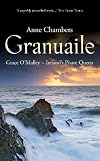
A fascinating account of a shadowy historical figure of varying spellings, an exact contemporary of Elizabeth I, who appears to have used her own resources to prey on shipping along the Atlantic seaboard of Ireland; it's difficult to be sure what is fact and what is fiction - did she really give birth on board one of her own ships, and then a few hours later struggle to the deck to take pot-shots at Algerian raiders? did she really kidnap the son of show more the Earl of Howth in retribution for a failure of hospitality? - but it adds up to some interesting material, and Chambers is frank about the gaps in her knowledge, as well as giving us some of the primary documents in an appendix.
The first edition of the book was published in 1979, a very different time for stories of Irish feminist heroes who threaten to divorce their husbands and then take handsome young lovers. For me, though, the most interesting point was the ability of Granuaile to appeal over the head of the local English administrators to the royal court, and her straight-faced ability to portray herself as a loyal subject beset by venal officials (and the paranoid and counterproductive reaction of those officials to her approaches). Chambers writes Granuaile into a traditional English v Irish political paradigm, but there is more going on here. I wish I knew more about the access of male Irish chieftains to the court; I feel I don't have enough information to know how unusual Granuaile's treatment was.
Anyway, an interesting read. show less
A fascinating account of a shadowy historical figure of varying spellings, an exact contemporary of Elizabeth I, who appears to have used her own resources to prey on shipping along the Atlantic seaboard of Ireland; it's difficult to be sure what is fact and what is fiction - did she really give birth on board one of her own ships, and then a few hours later struggle to the deck to take pot-shots at Algerian raiders? did she really kidnap the son of show more the Earl of Howth in retribution for a failure of hospitality? - but it adds up to some interesting material, and Chambers is frank about the gaps in her knowledge, as well as giving us some of the primary documents in an appendix.
The first edition of the book was published in 1979, a very different time for stories of Irish feminist heroes who threaten to divorce their husbands and then take handsome young lovers. For me, though, the most interesting point was the ability of Granuaile to appeal over the head of the local English administrators to the royal court, and her straight-faced ability to portray herself as a loyal subject beset by venal officials (and the paranoid and counterproductive reaction of those officials to her approaches). Chambers writes Granuaile into a traditional English v Irish political paradigm, but there is more going on here. I wish I knew more about the access of male Irish chieftains to the court; I feel I don't have enough information to know how unusual Granuaile's treatment was.
Anyway, an interesting read. show less

https://nwhyte.livejournal.com/3612554.html
I cannot say that I knew Ken Whitaker well, but he and my grandfather were close colleagues and he was an occasional presence at extended family parties in Dublin from my childhood. The last time I spoke to him, I cannot remember when, but he was already very old, he told me that in the late 1930s he had shared an office with my grandfather, who at the time was dating my future grandmother, also a civil servant. “He spoke to her on the phone in show more German so that I wouldn’t understand - but he didn’t realise that I spoke German too!”
Anne Chambers, the author of this book, did know Whitaker well; I’ve read a couple of her other biographies, of Eleanor, Countess of Desmond and the pirate queen Granuaile, who both lived in the sixteenth century. This is much better than the other two, based on primary documentation and conversations with the subject and others who knew him.
A study of any senior official in the new Irish government as it underwent the generational shift in the decades after independence would be interesting enough. But of course Whitaker was much more important to Irish history than as a mere senior administrator. Three years into his tenure at the top of the Department of Finance, the government published what in the UK would be called a White Paper, with Whitaker's name on it, with the title "Economic Development", making a powerful case for the Irish state to raise its game in terms of public spending and fiscal planning, and encouraging foreign investment. The adoption of the plan gave Ireland a much needed boost, not just of wealth but of confidence, after almost four decades of what we would now call austerity. For once, Ireland was doing economics, rather than having economics done to it.
Chambers is very good on the detail of how Whitaker's career progressed, and how he managed to acquire the necessary political capital to successfully get major policy initiatives through a very conservative system. It's no big mystery; he just happened to possess a powerful combination of colossal intelligence combined with immense personal charm and modesty. (These are not of course assets that everyone has, even senior civil servants.) The book is disappointing though on Whitaker's intellectual journey. As a recruit direct from high school, he had had no third-level education when he became a civil servant and invested much time in distant learning through the University of London. It would have been really interesting to know what Whitaker actually learned, and to trace the roots of his economic theory, especially since it turned out to be so successful in practice.
The personal glimpses are very interesting. Whitaker was born in Rostrevor, though moved to Drogheda in the 1920s. His Northern links remained very strong, and he personally brokered the first Lemass / O'Neill meeting in 1965. He continued to send sensible advice on Northern Ireland to successive Irish governments until the end of the century. I cannot think of another person operating at that level of politics in the Republic who genuinely took the same level of interest in Northern Ireland over a period of decades. I cannot think of any equivalent level of long-term engagement with and commitment to Northern Ireland from any senior English, Scottish or Welsh political figure at all.
I can't say that this book would have huge interest outside Ireland, but it's very interesting for anyone wanting to understand the trajectory of the Irish state in the third quarter of the twentieth century. show less
I cannot say that I knew Ken Whitaker well, but he and my grandfather were close colleagues and he was an occasional presence at extended family parties in Dublin from my childhood. The last time I spoke to him, I cannot remember when, but he was already very old, he told me that in the late 1930s he had shared an office with my grandfather, who at the time was dating my future grandmother, also a civil servant. “He spoke to her on the phone in show more German so that I wouldn’t understand - but he didn’t realise that I spoke German too!”
Anne Chambers, the author of this book, did know Whitaker well; I’ve read a couple of her other biographies, of Eleanor, Countess of Desmond and the pirate queen Granuaile, who both lived in the sixteenth century. This is much better than the other two, based on primary documentation and conversations with the subject and others who knew him.
A study of any senior official in the new Irish government as it underwent the generational shift in the decades after independence would be interesting enough. But of course Whitaker was much more important to Irish history than as a mere senior administrator. Three years into his tenure at the top of the Department of Finance, the government published what in the UK would be called a White Paper, with Whitaker's name on it, with the title "Economic Development", making a powerful case for the Irish state to raise its game in terms of public spending and fiscal planning, and encouraging foreign investment. The adoption of the plan gave Ireland a much needed boost, not just of wealth but of confidence, after almost four decades of what we would now call austerity. For once, Ireland was doing economics, rather than having economics done to it.
Chambers is very good on the detail of how Whitaker's career progressed, and how he managed to acquire the necessary political capital to successfully get major policy initiatives through a very conservative system. It's no big mystery; he just happened to possess a powerful combination of colossal intelligence combined with immense personal charm and modesty. (These are not of course assets that everyone has, even senior civil servants.) The book is disappointing though on Whitaker's intellectual journey. As a recruit direct from high school, he had had no third-level education when he became a civil servant and invested much time in distant learning through the University of London. It would have been really interesting to know what Whitaker actually learned, and to trace the roots of his economic theory, especially since it turned out to be so successful in practice.
The personal glimpses are very interesting. Whitaker was born in Rostrevor, though moved to Drogheda in the 1920s. His Northern links remained very strong, and he personally brokered the first Lemass / O'Neill meeting in 1965. He continued to send sensible advice on Northern Ireland to successive Irish governments until the end of the century. I cannot think of another person operating at that level of politics in the Republic who genuinely took the same level of interest in Northern Ireland over a period of decades. I cannot think of any equivalent level of long-term engagement with and commitment to Northern Ireland from any senior English, Scottish or Welsh political figure at all.
I can't say that this book would have huge interest outside Ireland, but it's very interesting for anyone wanting to understand the trajectory of the Irish state in the third quarter of the twentieth century. show less
I was looking forward to reading this autobiography for sometime and it did not disappoint. At the time of its original publication (2014) I was personally involved in writing a chapter in the first biography of Frank Aiken: Nationalist & Internationalist (2014) and attempted without success through various means to interview T.K. Whitaker at his house or somewhere in Dublin for my chapter. As we discussed at the time among fellow authors he was saving his ammunition for his own show more autobiography and so it proved!
As I expected he writes very favourably of Aiken who he attributes as his mentor and who encouraged him to engage in further personal research while at work in Finance. Two Northernmen working together and I feel this possibly helped shape his views on the North and his desire to achieve unity through consent and his support for power-sharing also. Furthermore as Aiken had considerable well-noted and published personal distaste for Haughey the clashes between Whitaker and Haughey are obvious here. Unwritten here though an obvious parallel is the fact that Aiken withdrew from politics over Haughey but also because of lingering unhappiness with Lynch. Whitaker a key advisor to Lynch was never supported by Haughey nor he by him.
This is an area historians and indeed political scientists need to devote much further study to. The impact on Aiken's departure from Fianna Fáil on its future direction and what unwritten advice was passed or communicated onto to close confidantes such as Whitaker for example together with Colley and to a lesser extent Lynch.
Personally speaking the great length of scholarship and intricate nature of the mind of Whitaker in the area of Irish policy development is extraordinary even when a retired public servant. Accordingly his own political allegiance is not disclosed and the fact that he was admired by so many is a testament to his own uniqueness of character and equity of ideas.
Had he lead the state as a technocrat what would have happened in how the country developed? show less
As I expected he writes very favourably of Aiken who he attributes as his mentor and who encouraged him to engage in further personal research while at work in Finance. Two Northernmen working together and I feel this possibly helped shape his views on the North and his desire to achieve unity through consent and his support for power-sharing also. Furthermore as Aiken had considerable well-noted and published personal distaste for Haughey the clashes between Whitaker and Haughey are obvious here. Unwritten here though an obvious parallel is the fact that Aiken withdrew from politics over Haughey but also because of lingering unhappiness with Lynch. Whitaker a key advisor to Lynch was never supported by Haughey nor he by him.
This is an area historians and indeed political scientists need to devote much further study to. The impact on Aiken's departure from Fianna Fáil on its future direction and what unwritten advice was passed or communicated onto to close confidantes such as Whitaker for example together with Colley and to a lesser extent Lynch.
Personally speaking the great length of scholarship and intricate nature of the mind of Whitaker in the area of Irish policy development is extraordinary even when a retired public servant. Accordingly his own political allegiance is not disclosed and the fact that he was admired by so many is a testament to his own uniqueness of character and equity of ideas.
Had he lead the state as a technocrat what would have happened in how the country developed? show less
Excellent little history of the great pirate queen of Irish myth and legend. Even in grubby old reality she is a formidable and exciting figure, cutting an impressive swathe through the turmoil of the decline of the old Irish and the rise of the new order, fighting and scheming and maneuvering to protect her rights and her family while carrying on a bit of plundering and piracy up and down the coasts.
Lists
Awards

You May Also Like


Associated Authors
Statistics
- Works
- 10
- Members
- 656
- Popularity
- #38,460
- Rating
- 3.3
- Reviews
- 16
- ISBNs
- 46
- Languages
- 3