
Gillian Rose (1) (1947–1995)
Author of Love's Work
For other authors named Gillian Rose, see the disambiguation page.
About the Author
Gillian Rose (1947-1995) was Professor of Social and Political Thought at the University of Warwick
Works by Gillian Rose
The Melancholy Science: An Introduction to the Thought of Theodor W. Adorno (1978) 128 copies, 1 review
Associated Works
Tagged
Common Knowledge
- Canonical name
- Rose, Gillian
- Legal name
- Rose, Gillian Rosemary
- Other names
- Stone, Gillian Rosemary (birth name)
- Birthdate
- 1947-09-20
- Date of death
- 1995-12-09
- Gender
- female
- Education
- University of Oxford (D.Phil)
Columbia University
Free University of Berlin
Ealing Grammar School - Occupations
- philosopher
professor (Social and Political Thought) - Organizations
- University of Warwick
University of Sussex - Relationships
- Rose, Jacqueline (sister)
- Short biography
- She was Lecturer / Reader in Sociology, Sussex University (1974-89), and subsequently Professor of Social and Political Thought, in the Sociology Department of Warwick University (1989-95).
Her major works include: The Melancholy Science, Hegel contra Sociology, Dialectic of Nihilism, The Broken Middle: Out of Our Ancient Society, Judaism & Modernity, Love’s Work, Mourning becomes the Law and Paradiso. - Cause of death
- ovarian cancer
- Nationality
- UK
- Birthplace
- London, England, UK
- Places of residence
- London, England, UK
New York, New York, USA
Berlin, Germany - Place of death
- Coventry, Warwickshire, England, UK
- Burial location
- St John-at-Hampstead Churchyard, Hampstead, London Borough of Camden, Greater London, England, UK
- Associated Place (for map)
- England, UK
Members
Reviews
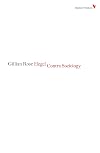
This is a great book, I'm tempted to give it 5 stars but for the fact that what I found to be the most interesting parts--the critiques of Weberian and Durkheimian sociology, and of Marx/Marxism from a Hegelian perspective--were underdeveloped. The title of the book is, in fact, a bit misleading, since the bulk of the book is devoted to a defense and exposition of Hegel's thought, with particular focus on some of the early and unpublished (by Hegel) lectures/writings, on the Phenomenology, show more and the greater Logic.
As a commentary on these texts, Rose is very capable, often intervening in debates of Hegel interpretation without making it explicit that that is what she's doing. This is certainly not a book for those who are reading Hegel for the first time, and presumes a familiarity not just with Hegel, but also with Kant, Fichte, Marx, and a basic familiarity with the Durkheim/Weber strands of sociology.
The concluding chapter dealing with Marx, and taking him to task for vacillating between a Hegelian and pre-Hegelian standpoint, is contentious but I found it pretty persuasive. Rose may not be entirely fair to the nuance of Marx's thought, but I think she is basically right. show less
As a commentary on these texts, Rose is very capable, often intervening in debates of Hegel interpretation without making it explicit that that is what she's doing. This is certainly not a book for those who are reading Hegel for the first time, and presumes a familiarity not just with Hegel, but also with Kant, Fichte, Marx, and a basic familiarity with the Durkheim/Weber strands of sociology.
The concluding chapter dealing with Marx, and taking him to task for vacillating between a Hegelian and pre-Hegelian standpoint, is contentious but I found it pretty persuasive. Rose may not be entirely fair to the nuance of Marx's thought, but I think she is basically right. show less
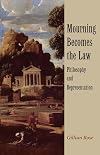
This collection of posthumously published lectures by the brilliant scholar Gillian Rose examines the political and philosophical paradoxes which emerge in the separation of metaphysics from ethics. Rationalism, or enlightenment reason, is long considered by many modern thinkers as the ground from which domination and oppression emerge, Nazi Germany representing the apotheosis of instrumental reason through the systematized murder of millions (see review on Negative Dialectics). In response, show more post-modernism seeks to "renunciate" reason, truth and self-identity, emphasizing fragmentation and cultural pluralism. It problematizes the notion of representation (political as well as artistic) and the status of a singular, free-thinking subject whose (self) knowledge affords it power and therefore the ability to dominate and control. Rose argues that post-modernism's insistence on plurality, fragmentation, and the 'ineffable' as well as any attempt to re-establish a "new ethics" (dependent on a substitution of the 'other' for the 'self', as in the case of Emmanuel Levinas) thwarts the possibility of an informed politics as well as any notion of 'community'. What post-modernism's anti-foundationalist stance prevents us from understanding are the mechanisms which give rise to regimes of domination, power, and authority in the first place. In no longer recognizing universals in the sphere of politics, philosophy, and art, we become blind to seeing those things which have the potential to control, deceive, and mislead our understanding of the world and ourselves. To me, there really isn't such a concept as 'post-modernity'(comment if you like and bring it), and even if it did exist, riddled with paradoxes, aporias, and logical impasses, it always made me feel ill at ease precisely because of this question of ethics and the de-enstatement of the subject. Post-modernity was simply an "odd logic" of modernity. That said, I liked Rose's definition of post-modernism as 'despairing rationalism without reason'. Post-Kant, post-Hegel, even post-Heidegger, she means to "reinvigorate" reason so as to envision an ethics not grounded in metaphysical "truth" or a shaky ontology, but politics and theology. She calls this revisioning the "Third City" between Athens (reason, power, the State) and Jerusalem (ethics) in the clearest, most engaging chapter in the book "Athens and Jerusalem: A Tale of Three Cities". This re-assessment of reason she calls "mourning" (following somewhat from Derrida) using a painting by Poussin and the Tragedy of Antigone as artistic representations. She discusses the painting in depth in chapter one (it's the cover of the book, too), which made me feel confident that I could understand what she would develop in the following chapters. "Mourning" is not accepting or resigning oneself to the authority of the state or any locus of power, nor is it compromising the status of a metaphysical subject for an elusive, often abysmal, ontological Being. it is something else altogether, something committed to a political activity which re-posits and re-assesses itself as an on-going dialogue. Gillian Rose was a rare and remarkable intellect who died far too young from cancer several years ago. This slim volume of 150 pages or so is dense reading for the most part, but as a series of lectures, there are many lucid passages expressed in an even, pedagogical tone. If I could describe Rose's scholarship in two words, they would be 'thorough' and 'enlightening'. Mourning Becomes the Law is not for everyone, just like this confusing review isn't. Thanks for reading, by the way. I admired the depth of Rose's thinking as well as her efforts to divulge the sometimes overlooked problems inherent in postmodern thought. What inspired me most was her commitment to the importance of political activity and the subject's role in furthering politics for the "general good", and not simply for individual, and often divisive, self-interests. show less
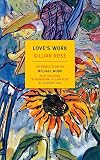
This book was originally released back in 1995 and has gotten many glowing reviews since then. Gillian Rose was a noted philosopher from Britain who had decided to write a philosophical memoir of her life and her approaching death from cancer. She focuses on the power of love during many different and trying times in her life. It was understandably quite moving at times, but mostly I didn’t feel that I was connecting with her writing. Her sections about philosophy seemed rather distanced show more and cold. While the more personal parts about cancer and her medical treatments—other than a few very intense pages—also seemed distanced. Maybe I was expecting too much from an older book, as these types of nearing-death memoirs are much more common nowadays, but this book seemed to be something she was reporting on, and not as much of something she was personally feeling.
In the end, she died before the book was published. There are some seriously gory details about her surgeries, where she had much of her intestines removed, as well as a hysterectomy, and a number of other serious surgeries. I have read a number of these nearing-death memoirs, and they are obviously one of the hardest kinds of books in which to achieve the right tone, but Love’s Work seemed to be something that Rose wanted to keep some distance from. Because I think about death so much, I can imagine writing such a book myself, but actually doing it still seems a staggering achievement. Gillian Rose was incredibly brave to write this book and I’m a fool to be critical of her, but I’m just writing what I felt as I was reading her words. show less
In the end, she died before the book was published. There are some seriously gory details about her surgeries, where she had much of her intestines removed, as well as a hysterectomy, and a number of other serious surgeries. I have read a number of these nearing-death memoirs, and they are obviously one of the hardest kinds of books in which to achieve the right tone, but Love’s Work seemed to be something that Rose wanted to keep some distance from. Because I think about death so much, I can imagine writing such a book myself, but actually doing it still seems a staggering achievement. Gillian Rose was incredibly brave to write this book and I’m a fool to be critical of her, but I’m just writing what I felt as I was reading her words. show less
The Melancholy Science: An Introduction to the Thought of Theodor W. Adorno (European Perspectives) by Gillian Rose

One of the better standard books on Adorno, though also one of the books that contributes to the general misunderstanding of Adorno. At least Rose doesn't turn him into a French-style post-structuralist.
Lists
Awards


You May Also Like


Associated Authors
Statistics
- Works
- 12
- Also by
- 1
- Members
- 1,108
- Popularity
- #23,191
- Rating
- 3.7
- Reviews
- 8
- ISBNs
- 82
- Languages
- 5
- Favorited
- 5
