
Tim Page (1) (1954–)
Author of The Glenn Gould Reader
For other authors named Tim Page, see the disambiguation page.
About the Author
Tim Page is the author of "Dawn Powell: A Biography" & editor of "Dawn Powell at Her Best" & "The Diaries of Dawn Powell." Formerly the chief music critic for "The Washington Post," he is now the artistic advisor & creative chair for the St. Louis Symphony Orchestra. (Publisher Provided) Tim Page show more was born in San Diego, California on October 11, 1954. In 1967, he was the subject of a short documentary entitled A Day with Timmy Page that chronicled his early interest in filmmaking. He graduated from Columbia University in 1979 and was already writing for the arts magazine Soho News and other publications. He later worked in radio, was a music writer and culture reporter for The New York Times, a chief music critic for Newsday, and a chief classical music critic for The Washington Post. He received the Pulitzer Prize in 1997 for his writings about music in The Washington Post. He is a professor of journalism and music at the University of Southern California. In 1991, he became interested in the life and work of American author Dawn Powell and played an essential role in her revival. He has written several books including The Glenn Gould Reader, Selected Letters of Virgil Thomson, William Kapell: A Documentary Life History of the American Pianist, Dawn Powell: A Biography, and Parallel Play: Growing up with Undiagnosed Asperger's. (Bowker Author Biography) show less
Image credit: from wikipedia
Works by Tim Page
Associated Works
What's God Got to Do with It? Robert Ingersoll on Free Thought, Honest Talk, and the Separation of Church and State (2005) — Editor — 134 copies, 1 review
Tagged
Common Knowledge
- Other names
- Page, Ellis Batten, Jr.
- Birthdate
- 1954-10-11
- Gender
- male
- Education
- Columbia University (BA, 1979)
- Occupations
- biographer
music critic
journalist
music producer
journalism professor, University of Southern California - Awards and honors
- Pulitzer Prize (Criticism, 1997)
- Nationality
- USA
- Birthplace
- San Diego, California, USA
- Places of residence
- Storrs, Connecticut, USA
New York, New York, USA
Washington, D.C., USA
Los Angeles, California, USA
Willimantic, Connecticut, USA
San Diego, California, USA - Map Location
- USA
Members
Reviews

Tim Page's story is certainly well told; which is not surprising, since he makes his living as an award-winning (the Pulitzer Prize, no less) writer, and was a long-time music critic for the Washington Post. While I didn't find his story quite as interesting as John Elder Robison's LOOK ME IN THE EYE, it was certainly better than the two Temple Grandin books I've read in the past few years. But that is probably not a fair comparison, since Grandin's autism was much more pronounced and severe show more than either that of Page or Robison, both of whom would probably be classified as very high functioning Asperger's Syndrome. Indeed, Page, who mentions Robison's book, said he had even taught himself by an early age to look people in the eye; his father insisted that he do it. Probably the biggest difference between the Page and Robison books was that Page remained quite reticent about his personal life once he'd reached adulthood. His marriages are only briefly mentioned and his three sons were quite obviously out of bounds, as far as this book was concerned.
But there is one particular passage, found on the last page of his story which caught me - convinced me that I would like Tim Page should I ever meet him, eye contact or not. Here it is:
"I have a mistrust of happy endings. Still, today - this hour - I am satisfied. Soon I will return to a house full of books, most of which I've read and some of which I've created - a youthful dream fulfilled."
Me too, Tim. Be happy. show less
But there is one particular passage, found on the last page of his story which caught me - convinced me that I would like Tim Page should I ever meet him, eye contact or not. Here it is:
"I have a mistrust of happy endings. Still, today - this hour - I am satisfied. Soon I will return to a house full of books, most of which I've read and some of which I've created - a youthful dream fulfilled."
Me too, Tim. Be happy. show less
I read Tim Page's account of growing up with Asperger's at the request of my son (now 38) who had a "parallel" childhood sharing many similar experiences with Page. It is only within the last 6 months that both my son and I realize that he is somewhere in the Autism spectrum although not quite an Asperger's syndrome condition. Muscially gifted like Page, my son spent years painfullly trying to be "normal," and has achieved a "normal" life of graduating college, marrying, have two small sons, show more holding down a good job and all the time dealiing with the anxiety of his condition working to prevent all of this. He has been treated by several psychiatrists with medication (not one of them even mentioning the word Autism in their treatment) but is always searching for a way to express his experiences with someone who can give him insight or at least commiserate. So he was delighted when he discovered Page's book and so was I. I think we are on the cusp of discovering a great deal more about this condition and I believe Mr. Page's book is a great impetus toward that discovery. If I could meet him, I would thank him for sharing his life's struggle with the condition and that his story has given comfort and inspiration to my son to continue dealing with his life in a constructive way. show less
The bare facts of Tim Page’s professional life show that not only has he been tremendously successful, he’s very decidedly followed his own path. His lifelong love of music led to employment as a radio show host, a platform that allowed him to interview many of his living heroes in the arts world. He won a Pulitzer Prize writing as the Washington Post’s classical music critic, a job title he’d coveted since the age of three or four. When he discovered Dawn Powell, then a mainly show more forgotten author he found he loved, Page got most of her works back in print, edited books of her diaries and letters, and wrote a critically acclaimed biography. Page is now is a music and arts journalism professor at the University of Southern California, an especially impressive accomplishment since he dropped out of high school because it bored him so much he could not force himself pay attention, even when he stuck himself with pins in a futile effort to stay alert.
While high school couldn’t hold his interest, Page has had passions that have brought him attention since he was very young. His fascination with silent movies kept him busy writing, producing and filming his own shaky, black and white versions, using the neighborhood kids as his cast. “A Day with Timmy Page”, a documentary about Page’s movie making, shows Page as a talented, somewhat tyrannical, very young looking 13-year-old charging around shouting stage directions to his friends and yelling “Lights, action, camera!”
While turning the neighborhood kids into movie stars and chasing his passions into adulthood have caused people to admire Page for “thinking outside the box.”, Page confesses early in his newly released memoir Parallel Play that he has never had more than a shadowy, uneasy sense of what those “boxes” are. The boundaries of the boxes are invisible to him, he can’t make out why other people think they are significant, and he’s uncertain how to steer his life around or through them—leaving him with what he describes as an anxious, melancholy feeling that his entire life has been spent in “parallel play”, next to but irrevocably separate from everyone else. At the age of 45 he was finally given a name for his condition—Asperger’s syndrome.
Aspperger’s syndrome is an autism spectrum disorder, though Asperger’s differs from conventional autism in that language and cognitive skills are not much compromised. People with Asperger’s can be brilliant in their chosen fields, and if they are lucky their talents line up with skills that are considered valuable. Some of the traits “Aspies” can have include an abhorrence of changes in routine, the tendency to be easily over stimulated, a knack for being uncoordinated, the inability to effortlessly understand social cues like body language and tone of voice, and an inclination to develop obsessions they become extremely knowledgeable about that are often shared in long winded, one-sided conversations.
Neurodiversity is a relatively new word for the idea that atypical neurological development is a normal human variation. Advocates make the case that neurodiversity is as important for the vitality of human society as biodiversity is for the health of the planet. Neurodiverse Aspies enrich our lives with singular creations and penetrating insights into their fascinations of choice. A Googled list of famous people who may have been Aspies includes Thomas Edison, Albert Einstein, Emily Dickinson, Henry David Thoreau, and Ludwig van Beethoven.
But while many Aspies have made wonderful contributions to the world, it is not always a lot of fun to be one or live with one. Page says that as a child his “memory was so acute and his outlook so bleak” that he was sometimes described as a genius, even though he had difficulty telling left from right, and he continued to absentmindedly wet his pants into adolescence. His peculiar understandings and creative abilities may have been celebrated by the adults in his life, but he was also given any number of medical tests, psychiatric screenings, exercise regimes and medications, all with the goal of curing him.
Reading Parallel Play is eye-opening, and learning what life with Asperger’s is like is really only a small part of it. Page vividly remembers things people with more ordinary brains have long forgotten, and his descriptions of what it feels like to be a child are so fully realized they can reawaken that sense in the reader, even bringing back to life personal memories long hidden in some dusty neural crevice. Parallel Play is also packed with entertaining details of the sex, drugs and rock ‘n roll mentality rampant in the 60s and 70s, the era when an idealistic girl Page knew was determined to turn her naturally carnivorous dog into a vegetarian, and when hippies could be pro “free love”, but clueless about or even hostile towards gay rights. Page relates the history of the time and his own stumblings toward adulthood with compassion and humor.
Parallel Play began as an August 2007 New Yorker article, and though it has been greatly expanded it still maintains the deeply moving quality of the original. Asperger’s and Autism memoirs are fascinating reads and are almost numerous enough now to have their own genre, but this one has the advantage of being written by someone who is a close observer of culture and a professional writer, so it’s beautifully composed. Page is both insightful and unwaveringly honest, and while the book can be painfully sad it is more often hilariously funny. show less
While high school couldn’t hold his interest, Page has had passions that have brought him attention since he was very young. His fascination with silent movies kept him busy writing, producing and filming his own shaky, black and white versions, using the neighborhood kids as his cast. “A Day with Timmy Page”, a documentary about Page’s movie making, shows Page as a talented, somewhat tyrannical, very young looking 13-year-old charging around shouting stage directions to his friends and yelling “Lights, action, camera!”
While turning the neighborhood kids into movie stars and chasing his passions into adulthood have caused people to admire Page for “thinking outside the box.”, Page confesses early in his newly released memoir Parallel Play that he has never had more than a shadowy, uneasy sense of what those “boxes” are. The boundaries of the boxes are invisible to him, he can’t make out why other people think they are significant, and he’s uncertain how to steer his life around or through them—leaving him with what he describes as an anxious, melancholy feeling that his entire life has been spent in “parallel play”, next to but irrevocably separate from everyone else. At the age of 45 he was finally given a name for his condition—Asperger’s syndrome.
Aspperger’s syndrome is an autism spectrum disorder, though Asperger’s differs from conventional autism in that language and cognitive skills are not much compromised. People with Asperger’s can be brilliant in their chosen fields, and if they are lucky their talents line up with skills that are considered valuable. Some of the traits “Aspies” can have include an abhorrence of changes in routine, the tendency to be easily over stimulated, a knack for being uncoordinated, the inability to effortlessly understand social cues like body language and tone of voice, and an inclination to develop obsessions they become extremely knowledgeable about that are often shared in long winded, one-sided conversations.
Neurodiversity is a relatively new word for the idea that atypical neurological development is a normal human variation. Advocates make the case that neurodiversity is as important for the vitality of human society as biodiversity is for the health of the planet. Neurodiverse Aspies enrich our lives with singular creations and penetrating insights into their fascinations of choice. A Googled list of famous people who may have been Aspies includes Thomas Edison, Albert Einstein, Emily Dickinson, Henry David Thoreau, and Ludwig van Beethoven.
But while many Aspies have made wonderful contributions to the world, it is not always a lot of fun to be one or live with one. Page says that as a child his “memory was so acute and his outlook so bleak” that he was sometimes described as a genius, even though he had difficulty telling left from right, and he continued to absentmindedly wet his pants into adolescence. His peculiar understandings and creative abilities may have been celebrated by the adults in his life, but he was also given any number of medical tests, psychiatric screenings, exercise regimes and medications, all with the goal of curing him.
Reading Parallel Play is eye-opening, and learning what life with Asperger’s is like is really only a small part of it. Page vividly remembers things people with more ordinary brains have long forgotten, and his descriptions of what it feels like to be a child are so fully realized they can reawaken that sense in the reader, even bringing back to life personal memories long hidden in some dusty neural crevice. Parallel Play is also packed with entertaining details of the sex, drugs and rock ‘n roll mentality rampant in the 60s and 70s, the era when an idealistic girl Page knew was determined to turn her naturally carnivorous dog into a vegetarian, and when hippies could be pro “free love”, but clueless about or even hostile towards gay rights. Page relates the history of the time and his own stumblings toward adulthood with compassion and humor.
Parallel Play began as an August 2007 New Yorker article, and though it has been greatly expanded it still maintains the deeply moving quality of the original. Asperger’s and Autism memoirs are fascinating reads and are almost numerous enough now to have their own genre, but this one has the advantage of being written by someone who is a close observer of culture and a professional writer, so it’s beautifully composed. Page is both insightful and unwaveringly honest, and while the book can be painfully sad it is more often hilariously funny. show less
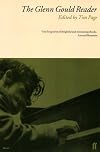
What made Glenn Gould a brilliant musician was his openness to high differentiation in music, which created the ecstatic intensity of his playing.
Glenn Gould died in October 1982. Twenty years on, he remains a spectre to aspirant pianists: revered by most, even the few who dislike his playing concede that Gould's interpretations are always fascinating and instructive. It is fortunate that he bequeathed such a large recording output, a result of his renunciation of the concert hall in 1964 show more and his subsequent devotion to the recording studio. "At live concerts," he said, "I feel demeaned, like a vaudevillian." He loathed the showpiece element of the concert hall: its artificiality, time constraints and the elevation of the individual above his craft -- a Romantic legacy as uninteresting to Gould as music that was not contrapuntal.
His performances displayed both remarkable virtuosity and peculiar adornment--"humming, gesticulating, untoward grimacing and conducting as he played," writes Said, a Columbia University professor and author of Reflections on Exile and Other Essays. Gould eschewed the romantic repertory of Chopin, Liszt, and Rachmaninoff that propelled contemporaries such as Van Cliburn and Vladimir Ashkenazy to superstardom, and then famously deserted the public stage in 1964 to devote himself to a cloistered recording career restricted almost entirely to the works of Johann Sebastian Bach. Since his death (from a stroke), Gould has been the subject of a host of articles and books, as well as a 1993 documentary, Thirty-two Short Films about Glenn Gould.
Gould He preferred the stricter Bach-playing of Rosalyn Tureck to the freer approach of Wanda Landowska and Casals. He disliked the "tyrant" conductors such as Toscanini, Georg Szell and Fritz Reiner but got on well with Herbert von Karajan, with whom he shared an obsession with the technical aspects of recording. He thought Hindemith's Das Marienleben was the greatest song-cycle ever written, an eccentric opinion if ever there was one.
A child prodigy as a pianist, Gould soon became famous as much for his eccentricities as for his artistry. He sat unusually low at the piano in a chair made for him by his father which he continued to use even when it was falling to bits (its squeaks can be heard on some of his recordings). His face was almost on top of the keyboard, his knees were higher than his bottom and he appeared to be hugging the instrument. He often wore a cloth cap and a thick coat because he was terrified of catching cold, and he was notorious for cancelling recitals for a variety of trivial reasons.
There can be no doubt though, as recordings prove, that he was a great pianist in spite of the idiosyncrasy of his interpretations. If he played a work in a conventional way it was, Bazzana suggests, because he happened to agree with the convention after having considered other options. He had immense success in Berlin and in Moscow, where he was the first pianist from North America to appear in the post-Stalin era, but he was too "way out" for London. show less
Glenn Gould died in October 1982. Twenty years on, he remains a spectre to aspirant pianists: revered by most, even the few who dislike his playing concede that Gould's interpretations are always fascinating and instructive. It is fortunate that he bequeathed such a large recording output, a result of his renunciation of the concert hall in 1964 show more and his subsequent devotion to the recording studio. "At live concerts," he said, "I feel demeaned, like a vaudevillian." He loathed the showpiece element of the concert hall: its artificiality, time constraints and the elevation of the individual above his craft -- a Romantic legacy as uninteresting to Gould as music that was not contrapuntal.
His performances displayed both remarkable virtuosity and peculiar adornment--"humming, gesticulating, untoward grimacing and conducting as he played," writes Said, a Columbia University professor and author of Reflections on Exile and Other Essays. Gould eschewed the romantic repertory of Chopin, Liszt, and Rachmaninoff that propelled contemporaries such as Van Cliburn and Vladimir Ashkenazy to superstardom, and then famously deserted the public stage in 1964 to devote himself to a cloistered recording career restricted almost entirely to the works of Johann Sebastian Bach. Since his death (from a stroke), Gould has been the subject of a host of articles and books, as well as a 1993 documentary, Thirty-two Short Films about Glenn Gould.
Gould He preferred the stricter Bach-playing of Rosalyn Tureck to the freer approach of Wanda Landowska and Casals. He disliked the "tyrant" conductors such as Toscanini, Georg Szell and Fritz Reiner but got on well with Herbert von Karajan, with whom he shared an obsession with the technical aspects of recording. He thought Hindemith's Das Marienleben was the greatest song-cycle ever written, an eccentric opinion if ever there was one.
A child prodigy as a pianist, Gould soon became famous as much for his eccentricities as for his artistry. He sat unusually low at the piano in a chair made for him by his father which he continued to use even when it was falling to bits (its squeaks can be heard on some of his recordings). His face was almost on top of the keyboard, his knees were higher than his bottom and he appeared to be hugging the instrument. He often wore a cloth cap and a thick coat because he was terrified of catching cold, and he was notorious for cancelling recitals for a variety of trivial reasons.
There can be no doubt though, as recordings prove, that he was a great pianist in spite of the idiosyncrasy of his interpretations. If he played a work in a conventional way it was, Bazzana suggests, because he happened to agree with the convention after having considered other options. He had immense success in Berlin and in Moscow, where he was the first pianist from North America to appear in the post-Stalin era, but he was too "way out" for London. show less
Awards

You May Also Like


Associated Authors
Statistics
- Works
- 8
- Also by
- 5
- Members
- 527
- Popularity
- #47,212
- Rating
- 4.0
- Reviews
- 10
- ISBNs
- 66
- Languages
- 8