
Shelley Jackson (1) (1963–)
Author of Half Life
For other authors named Shelley Jackson, see the disambiguation page.
About the Author
Shelley Jackson studied at Brown University and now lives in New York City.
Image credit: Author Shelley Jackson at the 2018 Texas Book Festival in Austin, Texas, United States. By Larry D. Moore, CC BY-SA 4.0, https://commons.wikimedia.org/w/index.php?curid=74426030
Works by Shelley Jackson
Riddance: Or: The Sybil Joines Vocational School for Ghost Speakers & Hearing-Mouth Children (2018) 81 copies, 2 reviews
Angel 1 copy
Husband 1 copy
Here Is the Church 1 copy
Vitriol (short work) 1 copy
Associated Works
Magic for Beginners (2002) — Cover artist, some editions; Illustrator, some editions — 2,570 copies, 107 reviews
My Mother She Killed Me, My Father He Ate Me: Forty New Fairy Tales (2010) — Contributor — 1,099 copies, 26 reviews
The Thackery T. Lambshead Pocket Guide to Eccentric and Discredited Diseases (2003) — Contributor — 808 copies, 20 reviews
The Year's Best Fantasy and Horror: Seventeenth Annual Collection (2004) — Contributor — 242 copies, 9 reviews
The Year's Best Fantasy and Horror: Eighteenth Annual Collection (2005) — Contributor — 232 copies, 5 reviews
ParaSpheres: Extending Beyond the Spheres of Literary and Genre Fiction: Fabulist and New Wave Fabulist Stories (2006) — Contributor — 65 copies
Significant Objects: 100 Extraordinary Stories about Ordinary Things (2012) — Contributor — 63 copies, 1 review
The Dictionary of Failed Relationships: 26 Tales of Love Gone Wrong (2003) — Contributor — 61 copies
Wreckage of Reason: An Anthology of Contemporary Xxperimental Prose by Women Writers (2008) — Contributor — 8 copies
Tagged
Common Knowledge
- Birthdate
- 1963
- Gender
- female
- Education
- Stanford University (BA art)
Brown University (MFA creative writing) - Occupations
- writer
artist - Relationships
- Lethem, Jonathan (husband|divorced)
- Nationality
- USA
- Birthplace
- Philippines
- Places of residence
- Philippines (born)
Berkeley, California, USA - Associated Place (for map)
- California, USA
Members
Reviews
Riddance: Or the Sybil Joines Vocational School for Ghost Speakers & Hearing-Mouth Children by Shelley Jackson

Riddance revolves around a strange school in which children with stutters are trained to become spirit mediums. (Stutterers are particularly suited for the task, as their difficulty speaking in their own voices provides space for the dead to speak through them.) In particular, it recounts the life stories of Sybil Joines, a white woman who founded the school in the late 1800s and serves as its headmistress, and Jane Grandison, a mixed-race student who becomes the Headmistress's amanuensis show more and aspires to one day succeed her in running the school. Along the way, it provides lengthy disquisitions on the nature and purpose of language.
In theory, it seems that the Headmistress and Grandison are supposed to share the role of protagonist. In practice, it is much more Sybil's story than Grandison's -- even if their life stories are given equal page time (I didn't count), the inclusion of Sybil's correspondence and transcripts of her journeys through the Land of the Dead give her more focus. She also seems a more central figure, narratively, than Grandison. In particular, it is established through a frame narrative by a modern scholar researching the school that every successive headmistress is Sybil; that is, their job is to channel Sybil so that she may continue running the school after her death. Thus, Grandison's ambition (which she does, ultimately, achieve) is to abnegate her own identity to become a vessel for Sybil.
In Grandison's narrative, she explicitly raises several questions about race in the context of spirit-channeling that the novel then immediately drops and never returns to. Why, she asks, are all the spirits channeled by Sybil and her students white people who are fluent English-speakers? The reader will never know, as the issue is not explored -- simply mentioned and then forgotten. What, she wonders briefly, does it mean for her as a mixed-race person to become the headmistress and allow a white woman to speak through her? Is the opportunity for a position of authority worth that cost? This issue, too, is never mentioned again, and the reader is not privy to the thought processes that lead her to go through with it in the end.
In addition, for a novel that purports to be about language, it seems to have very little understanding of linguistics. Of course, it is possible to talk about language in a literary sense without delving into linguistics, but the problem is that the novel does attempt to get into topics such as grammars and writing systems, and when it does, the lack of research is evident. For example, the Headmistress at one point creates a writing system for English based on drawings of the mouth and tongue positions required to make a given sound. This is described as resulting in twenty-six characters, one for each letter of the alphabet. The problem is that sounds (or, in linguistics terms, phonemes) in English don't correspond neatly to the alphabet at all -- standard American English has thirty-eight to forty different phonemes. And I'm sorry, but if you don't know the difference between a phoneme and a grapheme, I am not interested in anything you have to say about writing systems. This is basic stuff.
Ultimately, despite an intriguing concept, Riddance fell flat on several counts, and I felt its halfhearted attempts to address racial issues were almost worse than not mentioning them at all. show less
In theory, it seems that the Headmistress and Grandison are supposed to share the role of protagonist. In practice, it is much more Sybil's story than Grandison's -- even if their life stories are given equal page time (I didn't count), the inclusion of Sybil's correspondence and transcripts of her journeys through the Land of the Dead give her more focus. She also seems a more central figure, narratively, than Grandison. In particular, it is established through a frame narrative by a modern scholar researching the school that every successive headmistress is Sybil; that is, their job is to channel Sybil so that she may continue running the school after her death. Thus, Grandison's ambition (which she does, ultimately, achieve) is to abnegate her own identity to become a vessel for Sybil.
In Grandison's narrative, she explicitly raises several questions about race in the context of spirit-channeling that the novel then immediately drops and never returns to. Why, she asks, are all the spirits channeled by Sybil and her students white people who are fluent English-speakers? The reader will never know, as the issue is not explored -- simply mentioned and then forgotten. What, she wonders briefly, does it mean for her as a mixed-race person to become the headmistress and allow a white woman to speak through her? Is the opportunity for a position of authority worth that cost? This issue, too, is never mentioned again, and the reader is not privy to the thought processes that lead her to go through with it in the end.
In addition, for a novel that purports to be about language, it seems to have very little understanding of linguistics. Of course, it is possible to talk about language in a literary sense without delving into linguistics, but the problem is that the novel does attempt to get into topics such as grammars and writing systems, and when it does, the lack of research is evident. For example, the Headmistress at one point creates a writing system for English based on drawings of the mouth and tongue positions required to make a given sound. This is described as resulting in twenty-six characters, one for each letter of the alphabet. The problem is that sounds (or, in linguistics terms, phonemes) in English don't correspond neatly to the alphabet at all -- standard American English has thirty-eight to forty different phonemes. And I'm sorry, but if you don't know the difference between a phoneme and a grapheme, I am not interested in anything you have to say about writing systems. This is basic stuff.
Ultimately, despite an intriguing concept, Riddance fell flat on several counts, and I felt its halfhearted attempts to address racial issues were almost worse than not mentioning them at all. show less
Riddance: Or: The Sybil Joines Vocational School for Ghost Speakers & Hearing-Mouth Children by Shelley Jackson
This is a very hard one to review, which in itself is a compliment. I'm not sure what its frame of reference should be.
First, this is not a book to own on Kindle. The illustration and design are masterful, and complement the writing very well. You'd lose something from having one without the other. Plus, there's copious footnoting throughout out the book. Not only does a hardcopy feel good in hand, it'd be difficult and exasperating in digital format, I'd think. Also--bonus--I'm pretty sure show more Zachary Thomas Dodson also did Bats of the Republic? This - like that - is unconventional in storytelling and format.
The story is a murder mystery, involving ghosts. It takes place in the Sybil Joines Vocational School for Ghost Speakers & Hearing Mouth Children in which children who stutter or have other speech impairments are taught by headmistresses to channel the voices of the dead.
The writing is superb, as is the detail. The vocabulary is rich with words that are not and never will be in daily use, but are amazing and wonderful. Some of the sentences and paragraphs I found myself reading over and over, just to absorb and bask in their crafting.
This is not an action packed book, by any stretch. The reading cadence is a slow, languorous ooze and it took me awhile to finish, not because it was bad, but because there wasn't anything compelling me to turn pages more rapidly.
The sepia colors of this book capture its tone perfectly. It's not bright and colorful, nor is it black and dark. It's like a vintage photograph that retains some mysteriousness. I think if you read this more than once, you'd pick up something different each time.
If you like books and authors that are unconventional, unpredictable, small press/indie, and a bit experimental in form or structure, this is definitely one you should try. show less
First, this is not a book to own on Kindle. The illustration and design are masterful, and complement the writing very well. You'd lose something from having one without the other. Plus, there's copious footnoting throughout out the book. Not only does a hardcopy feel good in hand, it'd be difficult and exasperating in digital format, I'd think. Also--bonus--I'm pretty sure show more Zachary Thomas Dodson also did Bats of the Republic? This - like that - is unconventional in storytelling and format.
The story is a murder mystery, involving ghosts. It takes place in the Sybil Joines Vocational School for Ghost Speakers & Hearing Mouth Children in which children who stutter or have other speech impairments are taught by headmistresses to channel the voices of the dead.
The writing is superb, as is the detail. The vocabulary is rich with words that are not and never will be in daily use, but are amazing and wonderful. Some of the sentences and paragraphs I found myself reading over and over, just to absorb and bask in their crafting.
This is not an action packed book, by any stretch. The reading cadence is a slow, languorous ooze and it took me awhile to finish, not because it was bad, but because there wasn't anything compelling me to turn pages more rapidly.
The sepia colors of this book capture its tone perfectly. It's not bright and colorful, nor is it black and dark. It's like a vintage photograph that retains some mysteriousness. I think if you read this more than once, you'd pick up something different each time.
If you like books and authors that are unconventional, unpredictable, small press/indie, and a bit experimental in form or structure, this is definitely one you should try. show less
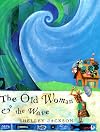
What an incredible book! These are some of my favorite illustrations! And it is all done by the same person (Shelley Jackson)! I like the fact that there is no author's note, because the interpretation of this story could take a reader into several directions, depending on the his/her lenses or circumstances. An old woman lives under a wave her entire life. She scolds the wave, and is always prepared for the wave to fall down on her; however, that does not happen. As a matter of fact, the show more wave loves the woman, takes care of her, and wants to help her. One day, the woman meets a traveler who makes her to acknowledge her curiosity of the world away from her little house for the first time. Only when the lady loses her dog in the wave and goes up to get it back that she realizes how wrong she was her entire life. She finally sees the beauty of the world from atop and it transforms her. The woman and the dog allow the water bring them further and further towards the mountains and the unknown, they are gone forever. This story is written beautifully, it is a true pleasure to read and to look at. It is a masterpiece about being afraid of taking chances, not going for your dreams, or just surviving instead of living. I had to stop and study the illustrations, that is how different, meaningful and beautiful they are. Pictures are combined with words and symbols, what an interesting collage of hidden messages and ideas! Will definitely reread several times! show less
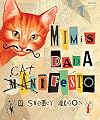
Brilliant. ?áOf course it's an homage to Duchamp, but there's also a lot of Archy & Mehitabel here, too. ?áEnough mention is made of Cubism, Futurism, and Expressionism that bright readers will be motivated to look them up. ?áAnd then there are 'sound poems' and Mimi's shoe collection (earned by singing in alleys under windows at night) and an homage to Williams' Plums and the cockroaches vs. the artists vs. the bourgeoisie and ... ?áand I'm sure there are plenty of references that show more I'm not getting, too, but wish I were....
This would be a terrific book in a classroom for cross-curricular studies. ?áNot only is it about the history of modern art (so to speak) and not only does it introduce some interesting poets but it's interactive: Mimi offers the writer several creative prompts for fun exercises we can try. ?áIn fact, it's more fun than anything else. ?áAnd don't underestimate children - it may seem advanced, but I think that any child, 4 to 104, would get something out of this, and probably something new every time they lose themselves in it. ?áDon't miss the author's note (as I almost did), the endpapers, the details in the background... spend at least 1/2 hour enjoying this. show less
This would be a terrific book in a classroom for cross-curricular studies. ?áNot only is it about the history of modern art (so to speak) and not only does it introduce some interesting poets but it's interactive: Mimi offers the writer several creative prompts for fun exercises we can try. ?áIn fact, it's more fun than anything else. ?áAnd don't underestimate children - it may seem advanced, but I think that any child, 4 to 104, would get something out of this, and probably something new every time they lose themselves in it. ?áDon't miss the author's note (as I almost did), the endpapers, the details in the background... spend at least 1/2 hour enjoying this. show less
Lists
Awards


You May Also Like


Associated Authors
Statistics
- Works
- 15
- Also by
- 27
- Members
- 778
- Popularity
- #32,713
- Rating
- 3.7
- Reviews
- 24
- ISBNs
- 21
- Languages
- 2
- Favorited
- 5
