
John Treadwell Nichols (1) (1940–2023)
Author of The Milagro Beanfield War
For other authors named John Treadwell Nichols, see the disambiguation page.
Works by John Treadwell Nichols
Associated Works
Coyota in the Kitchen: A Memoir of New and Old Mexico (Querencias Series) (2016) — Foreword — 9 copies, 1 review
Tagged
Common Knowledge
- Legal name
- Nichols, John Treadwell
- Birthdate
- 1940-07-23
- Date of death
- 2023-11-27
- Gender
- male
- Education
- Hamilton College, Clinton, New York, USA
- Occupations
- novelist
- Relationships
- grandson of ichthyologist John Treadwell Nichols
- Cause of death
- heart failure
- Nationality
- USA
- Birthplace
- Berkeley, California, USA
- Places of residence
- Berkeley, California, USA
Taos, New Mexico, USA - Place of death
- Taos, New Mexico, USA
- Associated Place (for map)
- New Mexico, USA
Members
Reviews

Towards the close of The Milagro Beanfield War, the one-armed Onofre Martinez, drunkenly reflecting upon the flawed sort of angels that must protect the small town of Milagro, observes: "This place just reeks of crippled glory.” There could be no better epithet for this brilliant novel.
A sprawling work, full of humor and pathos, and peopled with an unforgettable set of characters, whose human weaknesses and error are only occasionally punctuated by moments of greatness, it reads almost show more like a folk-epic, piecemeal in its construction, and yet somehow organically whole in its totality. Composed of endless vignettes, each of which offers a small gem of a short story, it is also an entirely coherent and satisfactory whole.
Whether writing of the seemingly immortal old man, Amarante Cordova; of the comic-tragic Seferino Pacheco, the cultured illiterate forever chasing after his runaway pig; or of Joe Mondragon, the "pint-sized" troublemaker whose decision to illegally irrigate his beanfield would lead to such trouble; Nichols has a keen eye for the absurd, and a profound understanding of the complicated negotiations that occur between people and cultures.
As he weaves his collection of tales together, Nichols returns again and again to some of the same themes. Among which are: the long-term effects of colonialism; the inequitable distribution of resources and resultant human misery; the difficulties of communicating, whether across racial, cultural, and gender lines - or at all; and the ways in which our better human impulses are so frequently derailed by weakness, of intellect or emotion.
I will confess that I have a long history with The Milagro Beanfield War, which I first read at the age of twelve, and which remains, to this day, one of the few books that has ever made me laugh out loud. As someone who grew up surrounded by left-wing activists of one stripe or another; people who were prone to speaking, as Nichols himself does in the Epilogue to the Anniversary Edition, of "THE movement;" I do not think that Nichols overreaches in an effort to create "quirky" characters. The "truth" of some of his depictions was startling, even to my twelve-year-old self, and I felt as if I knew some of these people, fictional or no.
Their cruelty, to each other and to the world around them, occasionally horrified me; just as their willful or unconscious inability to expand their narrow view of themselves, and of others, sometimes infuriated me. This holds true both for the "villains" and "heroes," none of whom are, as another reviewer here has pointed out, terribly likable. But intermixed with the many moments of human pettiness are instances of generosity and compassion. These fallible humans may not be transformed by the end, but they have had moments of transcendence. show less
A sprawling work, full of humor and pathos, and peopled with an unforgettable set of characters, whose human weaknesses and error are only occasionally punctuated by moments of greatness, it reads almost show more like a folk-epic, piecemeal in its construction, and yet somehow organically whole in its totality. Composed of endless vignettes, each of which offers a small gem of a short story, it is also an entirely coherent and satisfactory whole.
Whether writing of the seemingly immortal old man, Amarante Cordova; of the comic-tragic Seferino Pacheco, the cultured illiterate forever chasing after his runaway pig; or of Joe Mondragon, the "pint-sized" troublemaker whose decision to illegally irrigate his beanfield would lead to such trouble; Nichols has a keen eye for the absurd, and a profound understanding of the complicated negotiations that occur between people and cultures.
As he weaves his collection of tales together, Nichols returns again and again to some of the same themes. Among which are: the long-term effects of colonialism; the inequitable distribution of resources and resultant human misery; the difficulties of communicating, whether across racial, cultural, and gender lines - or at all; and the ways in which our better human impulses are so frequently derailed by weakness, of intellect or emotion.
I will confess that I have a long history with The Milagro Beanfield War, which I first read at the age of twelve, and which remains, to this day, one of the few books that has ever made me laugh out loud. As someone who grew up surrounded by left-wing activists of one stripe or another; people who were prone to speaking, as Nichols himself does in the Epilogue to the Anniversary Edition, of "THE movement;" I do not think that Nichols overreaches in an effort to create "quirky" characters. The "truth" of some of his depictions was startling, even to my twelve-year-old self, and I felt as if I knew some of these people, fictional or no.
Their cruelty, to each other and to the world around them, occasionally horrified me; just as their willful or unconscious inability to expand their narrow view of themselves, and of others, sometimes infuriated me. This holds true both for the "villains" and "heroes," none of whom are, as another reviewer here has pointed out, terribly likable. But intermixed with the many moments of human pettiness are instances of generosity and compassion. These fallible humans may not be transformed by the end, but they have had moments of transcendence. show less
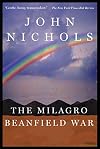
In a New Mexico valley the power is held by one man and his company. Over the years Ladd Devine’s family has manipulated the indigenous peasant farmers, securing the majority of water rights for his proposed golf course / spa retreat while leaving the original residents with arid land, unsuitable for farming, or even grazing. So he’s been able to buy out the poor farmers securing more and more land and leaving less water for those that remain. Until one day Joe Mondragon decides to cut a show more break in the wall and divert water onto his late father’s field, so he can plant some beans.
I've had this book on my TBR "radar" for a bajillion years and I don't know why I waited so long to read it. I really liked it a lot! The quirky characters, the message, the humor, the pathos, and the landscape all made this an especially moving book for me. I could not help but think of my grandparents - we always referred to their property as a "dirt farm" - dirt being their most reliable crop. They were on their ranch / farm well into their 80s ... even after my grandfather had two strokes. He just got up and kept caring for the animals, tending the orchards, repairing the truck, doing whatever it took to keep on living.
So thank you, PBT Trim the TBR for finally giving me the "push" I needed to get to this gem of a novel. I can hardly wait to read it again!
If I have any complaint about the book, it’s about this edition’s AFTERWARD, where the author begins with: Actually, I’ve sort of had it with THE MILAGRO BEANFIELD WAR. and goes on to explain how distressed he is that this is the only book people seem to remember him for rather all his other works, some of which he believes are superior. But my disappointment with his little tantrum doesn’t diminish my enjoyment of the book itself. show less
I've had this book on my TBR "radar" for a bajillion years and I don't know why I waited so long to read it. I really liked it a lot! The quirky characters, the message, the humor, the pathos, and the landscape all made this an especially moving book for me. I could not help but think of my grandparents - we always referred to their property as a "dirt farm" - dirt being their most reliable crop. They were on their ranch / farm well into their 80s ... even after my grandfather had two strokes. He just got up and kept caring for the animals, tending the orchards, repairing the truck, doing whatever it took to keep on living.
So thank you, PBT Trim the TBR for finally giving me the "push" I needed to get to this gem of a novel. I can hardly wait to read it again!
If I have any complaint about the book, it’s about this edition’s AFTERWARD, where the author begins with: Actually, I’ve sort of had it with THE MILAGRO BEANFIELD WAR. and goes on to explain how distressed he is that this is the only book people seem to remember him for rather all his other works, some of which he believes are superior. But my disappointment with his little tantrum doesn’t diminish my enjoyment of the book itself. show less
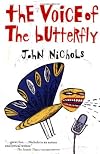
"The Voice of the Butterfly shows that Nichols has not lost his taste for satire nor his anger at the continuing destruction of the Earth. While the New Mexico trilogy had flights of craziness, Butterfly finds Nichols in full-on Tom Robbins mode, spewing forth sentences of breathtaking insanity and wordplay. You have to have a love of over-the-top writing to fully appreciate this novel, but if you are thus equipped, you are in for one hell of a treat. A bizarre, hilarious, profane, and show more tremendously entertaining rant, The Voice of the Butterfly is a raging voice in the wilderness, crying out for common sense and decency over money interests and rampant consumerism."
Read the full review here. show less
Read the full review here. show less
In the tiny, poverty-stricken town of Milagro, New Mexico, the residents have been hanging on to whatever means of survival they can find for generations. They've managed to survive the harsh landscape and climate, but they may not be able to survive the coming of "civilization." The Devine Corporation and the government have already cheated the people out of the right to irrigate their land with local water and are now well on the way to creating a Water Conservancy District that would show more raise the locals' taxes so high that they would all lose their land, which would in turn pave the way for Devine to buy up all the land for a fraction of its value and build a golf course and luxury resort. In the middle of all this one of the locals, Joe Mondragon, decides, for no reason whatsoever, to illegaly irrigate his family's land to grow beans. Joe's beanfield becomes a symbol for the townspeople to rally around as they decide to fight against the powers that have dominated their lives for so long.
I love this book. The characters and Nichols' narrative style are absolutely hilarious. It's worth reading for the parking meter silliness alone. In addition to the humor, there's also a poignant story that draws you in like the characters are drawn to Joe's beanfield. show less
I love this book. The characters and Nichols' narrative style are absolutely hilarious. It's worth reading for the parking meter silliness alone. In addition to the humor, there's also a poignant story that draws you in like the characters are drawn to Joe's beanfield. show less
Lists
Awards


You May Also Like


Associated Authors
Statistics
- Works
- 24
- Also by
- 3
- Members
- 2,854
- Popularity
- #8,986
- Rating
- 3.9
- Reviews
- 34
- ISBNs
- 118
- Languages
- 8
- Favorited
- 2