
Geoffrey Wolff
Author of Black Sun: The Brief Transit and Violent Eclipse of Harry Crosby
About the Author
Geoffrey Wolff (born 1937) is an American author and professor emeritus of English at the University of California, Irvine, where he directed the university's M.F.A creative writing program until 2006.
Image credit: Tony Rollo
Works by Geoffrey Wolff
Don't 1 copy
Associated Works
For the Love of Books: 115 Celebrated Writers on the Books They Love Most (1999) — Contributor — 478 copies, 4 reviews
Tagged
Common Knowledge
- Canonical name
- Wolff, Geoffrey
- Birthdate
- 1937
- Gender
- male
- Education
- Choate School
Princeton University
University of Cambridge - Occupations
- novelist
essayist
biographer
travel writer - Organizations
- University of California, Irvine
Princeton University
Robert College - Awards and honors
- American Academy of Arts and Letters Academy Award (Literature, 1994)
- Relationships
- Wolff, Tobias (brother)
- Nationality
- USA
- Birthplace
- Hollywood, California, USA
- Places of residence
- Bath, Maine, USA
- Associated Place (for map)
- USA
Members
Reviews
Black Sun: The Brief Transit and Violent Eclipse of Harry Crosby (New York Review Books Classics) by Geoffrey Wolff
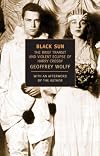
“If there was one thing Harry learned to love more than the sacred, it was the sacred in ruins.”
I’m not usually one for biographies. They’ve got to be about someone who did something on such a grand scale or led such a grand life or exemplified a life so perfectly lived for me to bother with slogging through the whos and hows and wherefores of that mortal arc. You know, like Thomas Becket or Yukio Mishima or Lawrence of Arabia or Muhammad butterfly-dazzling Beelzebub-stinging Ali. show more So why Harry Crosby? This same question was asked of the biographer and nearly thirty years later he answered this in an afterword to the 2003 edition: “He was a phenomenon, not exemplary. Cancer might be regarded as exemplary, while a lightning strike is phenomenal. Crosby was like a lightning strike, and he interested me.” Which echoes an earlier sentiment: “It’s interesting—things that are interesting interest me.” Well, then . . . it’s hard to argue with that.
Harry Crosby was interesting, but more in that push/pull kind of way that only a great villain in fiction can evoke. Or that villain in reality? And was Crosby a villain? He was a magnet for the Lost Generation, a WW1 ambulance driver, awarded the Croix de guerre, instrumental in creating the Black Sun Press which published works by Hemingway and Lawrence and Eliot and Pound and Joyce (!) . . . breathe . . . breathe . . . breathe. And this magnificent passage about J.J the purblind poetic pirate himself had me enamored:
“When the final revisions had been made, and Roger Lescaret was setting the book in type, he discovered to his horror that the last page contained only two lines, a printer’s botch. He came to Caresse and asked whether Joyce might be prevailed upon to add eight or so lines, and she laughed in outrage, explaining that the greatest literary master of his age did not add words to fill to space like some hack newspaper reporter, and there was nothing to be done. Lescaret sadly pedaled away on his bike, but next day Caresse found him buoyant; eight lines had been found. Caresse asked him indignantly 𝘸𝘩𝘦𝘳𝘦 they had been found, and Lescaret confessed that he had himself gone to Joyce and begged for them, and that Joyce, without a second thought, had added them.”
Fucking Joyce. I knew I loved that dude.
Harry Crosby, to balance the scales, was also a rampant philanderer, a mediocre poet, a spendthrift, moralized pedophilia, worshipped the sun while masturbating, gambled thousands on whims and wrote home to his wealthy parents for more. So, kind of a dick; not the kind of guy I’d usually read a biography about. Not so much grand as grandly disastrous and looking grand while doing it. I don’t know, who am I to say? I don’t even think Geoffrey Wolff liked him that much. More of a long-distance admiration, surely—why else the bio? Yet, still, villains and their villainy and the brightly patterned linings to their butterfly wings. Float like a . . . sting like a . . . Sonny Liston listening to the sunny black side of the canvas.
Someone should write a biography of Mr. Wolff. 𝘚𝘵𝘦𝘱𝘱𝘦𝘴 𝘪𝘯𝘵𝘰 𝘵𝘩𝘦 𝘓𝘦𝘴𝘴𝘦𝘳 𝘒𝘯𝘰𝘸𝘯 maybe? I’d read it. Maybe I’d be bored with his life because, quite frankly, most writers, like most creators, can be kind of dull—guess it comes from all that living-in-your-own-head kind of shit. Nonetheless, if that future, fictional would-be biographer wrote a biography about this great biographer and it was equal to this biographer’s biography of a man that history had felt better left to the dust and ashes of memory, I can only say . . . wait, where was I? Oh, yeah.
Joyce. Fucking Joyce.
“But as he ripened, so did he spoil, quickly and luxuriously.” show less
I’m not usually one for biographies. They’ve got to be about someone who did something on such a grand scale or led such a grand life or exemplified a life so perfectly lived for me to bother with slogging through the whos and hows and wherefores of that mortal arc. You know, like Thomas Becket or Yukio Mishima or Lawrence of Arabia or Muhammad butterfly-dazzling Beelzebub-stinging Ali. show more So why Harry Crosby? This same question was asked of the biographer and nearly thirty years later he answered this in an afterword to the 2003 edition: “He was a phenomenon, not exemplary. Cancer might be regarded as exemplary, while a lightning strike is phenomenal. Crosby was like a lightning strike, and he interested me.” Which echoes an earlier sentiment: “It’s interesting—things that are interesting interest me.” Well, then . . . it’s hard to argue with that.
Harry Crosby was interesting, but more in that push/pull kind of way that only a great villain in fiction can evoke. Or that villain in reality? And was Crosby a villain? He was a magnet for the Lost Generation, a WW1 ambulance driver, awarded the Croix de guerre, instrumental in creating the Black Sun Press which published works by Hemingway and Lawrence and Eliot and Pound and Joyce (!) . . . breathe . . . breathe . . . breathe. And this magnificent passage about J.J the purblind poetic pirate himself had me enamored:
“When the final revisions had been made, and Roger Lescaret was setting the book in type, he discovered to his horror that the last page contained only two lines, a printer’s botch. He came to Caresse and asked whether Joyce might be prevailed upon to add eight or so lines, and she laughed in outrage, explaining that the greatest literary master of his age did not add words to fill to space like some hack newspaper reporter, and there was nothing to be done. Lescaret sadly pedaled away on his bike, but next day Caresse found him buoyant; eight lines had been found. Caresse asked him indignantly 𝘸𝘩𝘦𝘳𝘦 they had been found, and Lescaret confessed that he had himself gone to Joyce and begged for them, and that Joyce, without a second thought, had added them.”
Fucking Joyce. I knew I loved that dude.
Harry Crosby, to balance the scales, was also a rampant philanderer, a mediocre poet, a spendthrift, moralized pedophilia, worshipped the sun while masturbating, gambled thousands on whims and wrote home to his wealthy parents for more. So, kind of a dick; not the kind of guy I’d usually read a biography about. Not so much grand as grandly disastrous and looking grand while doing it. I don’t know, who am I to say? I don’t even think Geoffrey Wolff liked him that much. More of a long-distance admiration, surely—why else the bio? Yet, still, villains and their villainy and the brightly patterned linings to their butterfly wings. Float like a . . . sting like a . . . Sonny Liston listening to the sunny black side of the canvas.
Someone should write a biography of Mr. Wolff. 𝘚𝘵𝘦𝘱𝘱𝘦𝘴 𝘪𝘯𝘵𝘰 𝘵𝘩𝘦 𝘓𝘦𝘴𝘴𝘦𝘳 𝘒𝘯𝘰𝘸𝘯 maybe? I’d read it. Maybe I’d be bored with his life because, quite frankly, most writers, like most creators, can be kind of dull—guess it comes from all that living-in-your-own-head kind of shit. Nonetheless, if that future, fictional would-be biographer wrote a biography about this great biographer and it was equal to this biographer’s biography of a man that history had felt better left to the dust and ashes of memory, I can only say . . . wait, where was I? Oh, yeah.
Joyce. Fucking Joyce.
“But as he ripened, so did he spoil, quickly and luxuriously.” show less
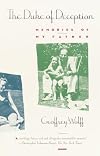
June is the month for celebrating fathers. I don't think celebrating is what Wolff had in mind when he wrote the Duke of Deception. Instead I think the writing was cathartic for him and a way to exorcize demons that have haunted him since childhood. If it possible to have the perfect balance of a love/hate relationship with a family member Wolff accomplished it. Throughout the entire tale Wolff is matter of fact to the point of being downright cold and yet, you can tell he loved and show more worshiped his father. He just didn't completely understand him. Geoffrey Wolff is a son who couldn't wait to be far enough away but was never close enough. Probably the most astounding aspect of "Duke" Wolf was his ability to exploit and swindle people at every chance he got. Lying, cheating, stealing became second nature to him. My mind reeled every time Duke Wolff uprooted his family to dodge a debt. show less
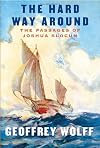
To read Joshua Slocum's Sailing Alone Around the World, his pleasurable, meandering, and lyrical account of 46,000 miles and 3 years at sea, and truly understand the wonder of it, the reader should also read this slim biography of the man by Geoffrey Wolff. Slocum's placid tale overlays an extraordinary life, filled with ambition, love, fame, violence, murder, litigation, heroics, and both epic and mutinous adventure. Slocum was a man who, in William James' words, answered all of life's show more calls for effort with a resounding "Yes, I will even have it so!". He could make the effort that would transform him into a hero, but his timing was never quite right - he was an anachronism.
Whether intended or not, this biography has a mimetic quality - Wolff seems to be always beating to the windward, tacking obliquely toward his subject, and taking the "hard way round". Even his prose seems frequently to be chopped up, with clauses welling up turbulently and awkwardly in mid-sentence. In contrast to Slocum's book, and more in keeping with Slocum's life, there is no sailing large in this account. In reading Wolff's book, however, and in subsequently re-reading Sailing Alone, the reader will be even more astounded by Slocum the man, his feat, and his book. show less
Whether intended or not, this biography has a mimetic quality - Wolff seems to be always beating to the windward, tacking obliquely toward his subject, and taking the "hard way round". Even his prose seems frequently to be chopped up, with clauses welling up turbulently and awkwardly in mid-sentence. In contrast to Slocum's book, and more in keeping with Slocum's life, there is no sailing large in this account. In reading Wolff's book, however, and in subsequently re-reading Sailing Alone, the reader will be even more astounded by Slocum the man, his feat, and his book. show less
This book grabbed me from page one and kept me. Having grown up with a very careful and frugal father who lived through the Depression and taught my siblings and me the necessity and advantages of saving, working and earning our keep, it was hard for me to imagine a father like Geoffrey Wolff had, who so flaunted the rules and laws of society - and for many years got away with it. I mean this guy, Arthur Wolff, was like the Great Imposter and the Wizard of Oz. He knew how to work the system show more and lived the good life - at least part of the time. It took his older son a while to figure out what his father was, but even when he finally had, he couldn't completely hate him. There is such a see-saw of emotions and material circumstances and living conditions displayed here that, frankly, I can't understand how the author survived his childhood and became a respected writer and teacher. But he did, and I salute him. I'd read a few of his little brother's books, but this is the first book by Geoffrey Wolff I had read. I will have to look for his other books now. This is simply darn good writing. I was sorry to see the story end, and particularly sad at how it ended. Wolff's father may have lived large, but he died alone and unnoticed. And in spite of everything, Geoffrey Wolff still thinks of his dad - and misses him. Good book. show less
Lists
Awards


You May Also Like


Associated Authors
Statistics
- Works
- 15
- Also by
- 8
- Members
- 1,468
- Popularity
- #17,498
- Rating
- 3.6
- Reviews
- 17
- ISBNs
- 57
- Languages
- 3
- Favorited
- 3