
Matthew Sharpe (1) (1962–)
Author of The Sleeping Father
For other authors named Matthew Sharpe, see the disambiguation page.
Works by Matthew Sharpe
Associated Works
Significant Objects: 100 Extraordinary Stories about Ordinary Things (2012) — Contributor — 64 copies, 1 review
Tagged
Common Knowledge
Members
Reviews
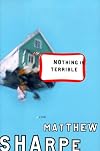
Her name is Mary White, though she prefers to be called Paul, the name of her ill-fated twin brother. Bright, pragmatic, irreverent, and orphaned, she is being raised by her clueless aunt and uncle and fears she may be about to drown in dull suburban torpor-until she falls in love with her new sixth-grade teacher, Miss Skip Hartman. Devoted teacher and pupil run off to live in New York City, where Mary receives a very unconventional education (art dealers, drug dealers, boyfriends, epic show more piercings) and discovers redemptive power in even the most unorthodox kind of love, all of which she relates in the most Brontëan gentle-reader tone. In Nothing Is Terrible, Matthew Sharpe takes the bildungsroman and turns it upside down and inside out. Like a breakneck sprint through a Manhattan house of mirrors, it offers readers a giddily literate tour of the resourceful mind of a singular young woman. show less
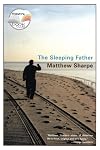
Single father, Bernie Schwartz, accidentally mixes two incompatible antidepressants and falls into a coma. His 17 year old son, Chris, and 16 year old daughter, Cathy, are left to cope with life with Dad in the hospital and Mom living at the other end of the country. Chris seems to say whatever he thinks, which lands him in trouble with the school bully, his best friend and his father's doctor. Cathy who is exploring leaving Judaism for Catholicism -- and spirituality more generally -- is show more also struggling with her feelings for Chris's best friend. This all sounds like a dark time and heavy themes, but the family is so quirky, it is actually pretty light reading. But, every so often, something so honest and real breaks through -- it makes the book worth reading. Loved the ending. show less
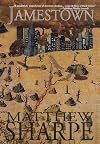
(Reprinted from the Chicago Center for Literature and Photography [cclapcenter.com]. IMPORTANT DISCLOSURE: I am personal friends with a number of staff members of Soft Skull Press, publishers of Jamestown, even to the extent of sometimes staying on their couches during past trips to New York. It should be kept in mind while reading this review.)
Is it just me, or has there been just a whole slew of high-profile, so-called "high literature" novels about the Apocalypse published in the last show more year? There's Michel Houellebecq's The Possibility of an Island, for example (which I've reviewed here in the past); Tatyana Tolstaya's Russia-based The Slynx (which I've also reviewed); Jim Crace's The Pesthouse (which I've kinda reviewed, or at least explained why I found it too awful to actually finish); not to mention Cormac McCarthy's The Road (which I haven't read...yet), plus any others that I'm forgetting or haven't heard of in the first place.
Whew! And now onto this pile you can add the insanely great Jamestown by Matthew Sharpe, which very easily is the best of them all, because it is in fact a whole bunch of different things at once: not just a political comment on the Bush administration and 9/11 that many of the others are, but also a new examination of a historical event from the point of view of what we traditionally have considered the "enemy," not to mention a slick and mentally dazzling tone poem at times that combines sophisticated rhyme and meter with the throwaway language of our modern instant-messengering times. And did I mention that it's slapstick-funny at points? And also dirty and sometimes fiercely politically incorrect? Yeah, it's that too.
So with all these things going on in one book, where do we even start? Well, probably with the most well-known thing about it, the gimmick that got it all its original press when it first came out -- that the novel is a literal re-telling of the Jamestown myth, the 1600s story of the very first permanent English settlement in North America, which has been embellished so much over the centuries that no one's quite sure what to believe anymore; but in this case under the setting of a post-apocalyptic America, one where a Road Warrior type group of stragglers have managed to take over a large chunk of Manhattan and form their own twisted combination of gang and corporation, who are just now starting to send exploratory groups into the radioactive wilds of Virginia, to start collecting such needed supplies as oil, trees, and uncontaminated food (if any can be found).
And let's just be honest, that this is simply brilliant to begin with, for Sharpe to directly compare 1600s frontier life to survival in a post-apocalyptic world; because under his masterful touch as a storyteller, we can see just how close to radioactive anarchy the wilds of America really were to the pampered British when first arriving, and how the brutality of it all (not to mention the brutality of the people who would be attracted to such an environment) would be and was a world completely different than our civilized own. After all, in the harrowing world of Sharpe's Jamestown, a physically capable young male with no political connections in New York has basically one of two choices for survival -- either battle the chaos and anarchy of a post-apocalyptic Manhattan on their own (and good luck with that, by the way), or join up with the relative safety of The Manhattan Corporation (led by the corpulent and possibly insane James Stuart -- get it?), and do whatever the bosses there tell you to do, for example like piling into a fortified schoolbus and rambling down into unknown rural Virginia, in search of riches and glory and very possibly a disgusting and prolonged death.
And so do our ragtag team arrive -- including the pampered, weaseley manager in charge, John Ratcliffe; the smooth-talking, politically savvy Jack Smith; former slam poet, office temp, and now post-apocalyptic Communications Officer Johnny Rolfe; and more, of course, a virtual recreation of all the real characters from the actual founding of Colonial-era Jamestown. And just like the real team, Sharpe's team is basically a bunch of spoiled morons, who pick pretty much the absolute worst spot of the entire region to settle, a permanent swamp surrounded by contaminated water, that they think is a good strategic location militarily but actually makes them sitting ducks to the local Indians all around. Oh, and did I mention there are Indians all around? Not "Native Americans," mind you; in Sharpe's post-apocalyptic world, we never learn the actual race of the "Indians" living in the woods of Virginia, only that they are the people who have decided that the way the world was being run before the Apocalypse obviously wasn't working, and so have decided to emulate the old Native Americans by living in the woods and worshipping what little nature is left, smearing their bodies with a red-hued super-strong suntan oil to protect themselves from the radioactive sky and acid rain.
It's within such a realm where Sharpe plays out the contested events from the Jamestown fable -- of the Indian princess Pocahontas, for example, supposedly throwing her body across Smith's to save him from death by her tribe (or was she simply participating in a "welcome to the tribe" symbolic ritual that Smith misinterpreted?); of Pocahontas' eventual romance with Rolfe (or was it that Rolfe simply took pity on her for being an ugly little native, later romanticized by Victorian-era writers?). This after all is one of the most fascinating things about the Jamestown legend, is that almost none of the accounts left behind can be trusted -- we've now learned for example that Smith was an exaggerator and liar in his various autobiographies, that Pocahontas never learned to read nor write in the first place, that barely any official records from that time period still exist. In our modern times, and especially this year which is the 400th anniversary of the Jamestown founding, historians are having to painfully go back into that period and extract whatever they can, relying on third-party testimonials and obscure half-eroded documents to glean various schools of thought about what happened at Jamestown, theories that are sometimes hotly contested in the academic world; and Sharpe ends up having a lot of gleeful fun with this in his Jamestown, making the inconsistencies and self-legendizing a central part of the book's entire plot.
But like I said, Jamestown is not only a clever postmodern retelling of a historical event, but also a sly and devastating way to politically comment on the events -- and by setting it in a "day after tomorrow" context, also a chance to politically comment on our modern times. Because really, when all is said and done, it's hard to deny that one of Sharpe's main points is this -- that ignorant white males with big giant guns have been screwing things up all over the planet for centuries now, and that something like Bush invading Iraq is no better or more enlightened than Smith and company slaughtering all the Native Americans who saved their asses from dying in the first place. Yes, I know, it's the same message told in such ham-fisted politically correct messes like the truly awful Dances With Wolves; but make no mistake, Sharpe here gets his point across not in a cloying leftist way, but rather through deliciously dark and violent means, precisely by recounting the exact way the original Jamestown colonists really did act. In Sharpe's world, the Indians are a lot smarter than our Caucasian-written histories have ever let on -- they all know English, for example, deliberately hide it from the settlers just to screw with them, deliberately feed the settlers contaminated water as to keep them perpetually sick, and in a weaker position during eventual trade negotiations. Too bad for the Indians, then, that they never realized the true problem with the White Man until it was too late -- that it's never the first wave of earnest idiots that are the real threat anyway, but rather the million violent idiots who come after them, grabbing whatever they want and simply shooting people in the face who try to get in the way.
And also like I said, this isn't the end of the pleasures to be had from Jamestown either; because on top of everything else, Sharpe is an experienced master of language too, and crafts a personal writing style here that can be simply stunning at points, if not admittedly calling needless attention to itself just a little too much at points too. And this ultimately is what separates something like Jamestown from the aforementioned The Pesthouse, another highly stylized post-apocalyptic novel which in that case I couldn't f---ing stand; because in Jamestown, the stylization is a natural result of the situations and characters Sharpe has created, not simply a showy vernacular tacked onto the top of the plot to demonstrate that This Is A Grand Important American Novel About Grand Important American Ideas. In Jamestown, we are let loose at points with pre-apocalyptic urban poets and smartass overeducated teenage girls (among others), natural American archetypes that lend themselves naturally to smart, witty use of both the English language and American slang; in The Pesthouse, though, I felt the entire time like I was simply reading some snotty British academe's idea of "how Americans are supposed to sound," which I found a lot more insulting than I ever did clever or entertaining.
I think it's safe to say that Jamestown will be making my top-ten list at the end of the year; for sure, it is at this point the best novel I've read since CCLaP opened a month and a half ago, and out of the twelve novels I've now read in those six weeks. It is a perfect choice, in fact, for the typical fan of this site; ostensibly a genre project, with enough sex and action to satisfy even the most hardcore CHUD.com fan, but a legitimate intellectual stretch as well, a manuscript that giddily celebrates the complexity of language and the infinite transgressions of historical provenance. For any of you sci-fi fans who need convincing why you should take on the "hoity-toity" books of the world sometimes as well, this is the novel for you; and for all you intellectuals who are confused as to why a smart person would like science-fiction in the first place, you might want to pay attention too.
Out of 10:
Story: 10
Characters: 9.5
Style: 9.7
Overall: 9.8 show less
Is it just me, or has there been just a whole slew of high-profile, so-called "high literature" novels about the Apocalypse published in the last show more year? There's Michel Houellebecq's The Possibility of an Island, for example (which I've reviewed here in the past); Tatyana Tolstaya's Russia-based The Slynx (which I've also reviewed); Jim Crace's The Pesthouse (which I've kinda reviewed, or at least explained why I found it too awful to actually finish); not to mention Cormac McCarthy's The Road (which I haven't read...yet), plus any others that I'm forgetting or haven't heard of in the first place.
Whew! And now onto this pile you can add the insanely great Jamestown by Matthew Sharpe, which very easily is the best of them all, because it is in fact a whole bunch of different things at once: not just a political comment on the Bush administration and 9/11 that many of the others are, but also a new examination of a historical event from the point of view of what we traditionally have considered the "enemy," not to mention a slick and mentally dazzling tone poem at times that combines sophisticated rhyme and meter with the throwaway language of our modern instant-messengering times. And did I mention that it's slapstick-funny at points? And also dirty and sometimes fiercely politically incorrect? Yeah, it's that too.
So with all these things going on in one book, where do we even start? Well, probably with the most well-known thing about it, the gimmick that got it all its original press when it first came out -- that the novel is a literal re-telling of the Jamestown myth, the 1600s story of the very first permanent English settlement in North America, which has been embellished so much over the centuries that no one's quite sure what to believe anymore; but in this case under the setting of a post-apocalyptic America, one where a Road Warrior type group of stragglers have managed to take over a large chunk of Manhattan and form their own twisted combination of gang and corporation, who are just now starting to send exploratory groups into the radioactive wilds of Virginia, to start collecting such needed supplies as oil, trees, and uncontaminated food (if any can be found).
And let's just be honest, that this is simply brilliant to begin with, for Sharpe to directly compare 1600s frontier life to survival in a post-apocalyptic world; because under his masterful touch as a storyteller, we can see just how close to radioactive anarchy the wilds of America really were to the pampered British when first arriving, and how the brutality of it all (not to mention the brutality of the people who would be attracted to such an environment) would be and was a world completely different than our civilized own. After all, in the harrowing world of Sharpe's Jamestown, a physically capable young male with no political connections in New York has basically one of two choices for survival -- either battle the chaos and anarchy of a post-apocalyptic Manhattan on their own (and good luck with that, by the way), or join up with the relative safety of The Manhattan Corporation (led by the corpulent and possibly insane James Stuart -- get it?), and do whatever the bosses there tell you to do, for example like piling into a fortified schoolbus and rambling down into unknown rural Virginia, in search of riches and glory and very possibly a disgusting and prolonged death.
And so do our ragtag team arrive -- including the pampered, weaseley manager in charge, John Ratcliffe; the smooth-talking, politically savvy Jack Smith; former slam poet, office temp, and now post-apocalyptic Communications Officer Johnny Rolfe; and more, of course, a virtual recreation of all the real characters from the actual founding of Colonial-era Jamestown. And just like the real team, Sharpe's team is basically a bunch of spoiled morons, who pick pretty much the absolute worst spot of the entire region to settle, a permanent swamp surrounded by contaminated water, that they think is a good strategic location militarily but actually makes them sitting ducks to the local Indians all around. Oh, and did I mention there are Indians all around? Not "Native Americans," mind you; in Sharpe's post-apocalyptic world, we never learn the actual race of the "Indians" living in the woods of Virginia, only that they are the people who have decided that the way the world was being run before the Apocalypse obviously wasn't working, and so have decided to emulate the old Native Americans by living in the woods and worshipping what little nature is left, smearing their bodies with a red-hued super-strong suntan oil to protect themselves from the radioactive sky and acid rain.
It's within such a realm where Sharpe plays out the contested events from the Jamestown fable -- of the Indian princess Pocahontas, for example, supposedly throwing her body across Smith's to save him from death by her tribe (or was she simply participating in a "welcome to the tribe" symbolic ritual that Smith misinterpreted?); of Pocahontas' eventual romance with Rolfe (or was it that Rolfe simply took pity on her for being an ugly little native, later romanticized by Victorian-era writers?). This after all is one of the most fascinating things about the Jamestown legend, is that almost none of the accounts left behind can be trusted -- we've now learned for example that Smith was an exaggerator and liar in his various autobiographies, that Pocahontas never learned to read nor write in the first place, that barely any official records from that time period still exist. In our modern times, and especially this year which is the 400th anniversary of the Jamestown founding, historians are having to painfully go back into that period and extract whatever they can, relying on third-party testimonials and obscure half-eroded documents to glean various schools of thought about what happened at Jamestown, theories that are sometimes hotly contested in the academic world; and Sharpe ends up having a lot of gleeful fun with this in his Jamestown, making the inconsistencies and self-legendizing a central part of the book's entire plot.
But like I said, Jamestown is not only a clever postmodern retelling of a historical event, but also a sly and devastating way to politically comment on the events -- and by setting it in a "day after tomorrow" context, also a chance to politically comment on our modern times. Because really, when all is said and done, it's hard to deny that one of Sharpe's main points is this -- that ignorant white males with big giant guns have been screwing things up all over the planet for centuries now, and that something like Bush invading Iraq is no better or more enlightened than Smith and company slaughtering all the Native Americans who saved their asses from dying in the first place. Yes, I know, it's the same message told in such ham-fisted politically correct messes like the truly awful Dances With Wolves; but make no mistake, Sharpe here gets his point across not in a cloying leftist way, but rather through deliciously dark and violent means, precisely by recounting the exact way the original Jamestown colonists really did act. In Sharpe's world, the Indians are a lot smarter than our Caucasian-written histories have ever let on -- they all know English, for example, deliberately hide it from the settlers just to screw with them, deliberately feed the settlers contaminated water as to keep them perpetually sick, and in a weaker position during eventual trade negotiations. Too bad for the Indians, then, that they never realized the true problem with the White Man until it was too late -- that it's never the first wave of earnest idiots that are the real threat anyway, but rather the million violent idiots who come after them, grabbing whatever they want and simply shooting people in the face who try to get in the way.
And also like I said, this isn't the end of the pleasures to be had from Jamestown either; because on top of everything else, Sharpe is an experienced master of language too, and crafts a personal writing style here that can be simply stunning at points, if not admittedly calling needless attention to itself just a little too much at points too. And this ultimately is what separates something like Jamestown from the aforementioned The Pesthouse, another highly stylized post-apocalyptic novel which in that case I couldn't f---ing stand; because in Jamestown, the stylization is a natural result of the situations and characters Sharpe has created, not simply a showy vernacular tacked onto the top of the plot to demonstrate that This Is A Grand Important American Novel About Grand Important American Ideas. In Jamestown, we are let loose at points with pre-apocalyptic urban poets and smartass overeducated teenage girls (among others), natural American archetypes that lend themselves naturally to smart, witty use of both the English language and American slang; in The Pesthouse, though, I felt the entire time like I was simply reading some snotty British academe's idea of "how Americans are supposed to sound," which I found a lot more insulting than I ever did clever or entertaining.
I think it's safe to say that Jamestown will be making my top-ten list at the end of the year; for sure, it is at this point the best novel I've read since CCLaP opened a month and a half ago, and out of the twelve novels I've now read in those six weeks. It is a perfect choice, in fact, for the typical fan of this site; ostensibly a genre project, with enough sex and action to satisfy even the most hardcore CHUD.com fan, but a legitimate intellectual stretch as well, a manuscript that giddily celebrates the complexity of language and the infinite transgressions of historical provenance. For any of you sci-fi fans who need convincing why you should take on the "hoity-toity" books of the world sometimes as well, this is the novel for you; and for all you intellectuals who are confused as to why a smart person would like science-fiction in the first place, you might want to pay attention too.
Out of 10:
Story: 10
Characters: 9.5
Style: 9.7
Overall: 9.8 show less
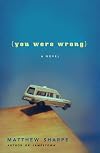
Karl Floor, math teacher, is beaten by twins from his math class for reasons we only find out much later. But that is only the first of his seemingly endless humiliations. Further humiliations occur at the hands of Sylvia Vetch and her sociopathic lover Stony Stonington and stepfather Larchmont Jones. I think you can tell by the names we are in the world of comic satire here and when taken on that level this sort novel moves along at a brisk surrealistic pace. No one other than our antihero show more Karl can be trusted as he struggles to untangle this unhealthy web of family relationships. Sharpe gives the term dysfunctional family a new comic twist. show less
 This review was written for LibraryThing Early Reviewers.
Awards


You May Also Like


Associated Authors
Statistics
- Works
- 6
- Also by
- 6
- Members
- 586
- Popularity
- #42,791
- Rating
- 3.3
- Reviews
- 37
- ISBNs
- 46
- Languages
- 5
