
Ruth Klüger (1931–2020)
Author of Still Alive: A Holocaust Girlhood Remembered
Ruth Klüger is Ruth Kluger (1). For other authors named Ruth Kluger, see the disambiguation page.
Works by Ruth Klüger
Associated Works
How I Learned to Cook and Other Writings on Complex Mother-Daughter Relationships (2004) — Contributor — 62 copies
Ich stamme aus Wien : Kindheit und Jugend von der Wiener Moderne bis 1938 (2008) — Contributor — 1 copy
Tagged
Common Knowledge
- Legal name
- Kluger, Ruth Susan
- Birthdate
- 1931-10-30
- Date of death
- 2020-10-06
- Gender
- female
- Education
- University of California, Berkeley (MA - English, PhD - German Literature)
- Occupations
- professor emerita (German Studies)
German literature scholar
Holocaust survivor
autobiographer
essayist
literary critic (show all 7)
poet - Organizations
- Case Western Reserve University
University of Kansas
University of Cincinnati
University of Virginia
Princeton University
University of California, Irvine - Awards and honors
- Thomas-Mann-Preis (1999)
- Short biography
- Ruth Klüger was born to a Jewish family in Vienna, Austria. Her parents were Alma (Hirschel) and Viktor Klüger. In 1938, following Nazi Germany's Anschluss (annexation) of Austria, six-year-old Ruth "suddenly became a disadvantaged child," she later wrote. She had to change schools frequently and finally stopped going altogether. Her father, a pediatrician and gynecologist, lost his license to practice medicine and was later sent to prison. In 1942, at age 10, Ruth was deported with her mother to the Terezín (Theresienstadt) concentration camp in Czechoslovakia. Her father fled to France, but was deported to the Baltics by the Nazis and murdered. Her half-brother Georg was deported to Riga, Latvia, where he was murdered. Ruth and Alma were sent to the death camp at Auschwitz, then to Christianstadt, a slave labor subcamp of Gross-Rosen. After escaping a death march in February 1945, Ruth and her mother joined the flow of refugees into Germany, where they stayed until being allowed to emigrate to the USA in 1947. Ruth studied English literature at Hunter College in New York City, got married after graduation, and had two sons. In the 1960s, she divorced and moved to California to earn M.A. and PhD degrees in German literature at the University of California, Berkeley. She had a successful career in academe as a professor of German literature in Cleveland, Kansas, and Virginia, and at Princeton and UC Irvine. Prof. Klüger became a recognized authority on German literature, especially of the 18th and 19th centuries. Her published works included scholarly articles, essays, poetry, and literary criticism. In 1992, she published her autobiography, Weiter leben: Eine Jugend, about her life before, during, and after the Holocaust. It became an instant hit and earned her numerous international prizes. It also established her as an important public intellectual in Germany and Austria. The book was translated into several languages and adapted for the stage. In 2001, it was published in English as Still Alive: A Holocaust Girlhood Remembered. In 2008, Prof. Klüger published Unterwegs verloren, Wien: Zsolnay (Lost on the Way), a sequel that provided further insights into her life in the USA and Europe.
- Cause of death
- cancer (bladder)
- Nationality
- USA
Austria (birth) - Birthplace
- Vienna, Austria
- Places of residence
- Theresienstadt concentration camp
Straubing, Germany
Regensburg, Germany
Göttingen, Germany
New York, New York, USA
Irvine, California, USA - Place of death
- Irvine, California, USA
- Burial location
- Mount Sinai Memorial Park Cemetery, Los Angeles, California, USA
Members
Reviews
Still Alive: A Holocaust Girlhood Remembered (The Helen Rose Scheuer Jewish Women's Series) by Ruth Klüger
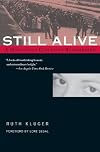
Like no other Holocaust memoir I've read before. The difference being Kluger does not suffer fools. She relates her experiences growing up in Austria and in the concentration camps, and after the war very directly. At times reading Still Alive felt like Kluger was observing and reporting on what had occurred to other people not to her.
But her bluntness and distance serve to do the opposite; highlight her pain and loss. A significant part of this memoir describes difficult relationships with show more her father and especially with her mother. In the adult Kluger there still lingers a bewildered and hurt aura of a little girl who loved her parents but felt her emotions were misunderstood and usually unreturned. She felt she could never totally trust her mother which resulted in her lifelong distrust and scepticism of people.
Smart, opinionated and starkly honest she survived with G-d directing her mother and other prisoners to help her. (I doubt Kluger would appreciate my bringing G-d into this because she is philosophically more humanistic in her belief that people alone are responsible for their lives.) Life taught her to be strong, resilient, and to move forward with her plans even if it meant disappointing others.
At first I was surprised by Kluger's brash writing. Continuing to read I came to appreciate and recognize her unique brand of frankness. Many Holocaust memoirs I've read are often restrained or toned-down but Kluger was having none of that. I'm sure some readers would feel her writing is unkind, discourteous, and harsh by her "saying" that not all Jews, including some of her relatives, were especially good, kind and sweet even prior to life becoming difficult for Jews, and certainly not during the war and the Holocaust. As a matter of fact, Kluger admits to being stunned when she receives aid from other prisoners.
This is Kluger's life and she wrote it according to her experiences, reactions and personality.
A strong, exceptional reading experience. show less
But her bluntness and distance serve to do the opposite; highlight her pain and loss. A significant part of this memoir describes difficult relationships with show more her father and especially with her mother. In the adult Kluger there still lingers a bewildered and hurt aura of a little girl who loved her parents but felt her emotions were misunderstood and usually unreturned. She felt she could never totally trust her mother which resulted in her lifelong distrust and scepticism of people.
Smart, opinionated and starkly honest she survived with G-d directing her mother and other prisoners to help her. (I doubt Kluger would appreciate my bringing G-d into this because she is philosophically more humanistic in her belief that people alone are responsible for their lives.) Life taught her to be strong, resilient, and to move forward with her plans even if it meant disappointing others.
At first I was surprised by Kluger's brash writing. Continuing to read I came to appreciate and recognize her unique brand of frankness. Many Holocaust memoirs I've read are often restrained or toned-down but Kluger was having none of that. I'm sure some readers would feel her writing is unkind, discourteous, and harsh by her "saying" that not all Jews, including some of her relatives, were especially good, kind and sweet even prior to life becoming difficult for Jews, and certainly not during the war and the Holocaust. As a matter of fact, Kluger admits to being stunned when she receives aid from other prisoners.
This is Kluger's life and she wrote it according to her experiences, reactions and personality.
A strong, exceptional reading experience. show less
A very different kind of Holocaust memoir. What I liked were Kluger's explorations and musings on memory, the structure, which doesn't follow a strict chronology, and the absolute honesty. What I didn't like were the boring fourth section set in New York (seemed tacked-on), and occasionally the tone. A lot of my students complained about how negative Kluger's tone is, and I see where they are coming from. She does tend to berate readers, visitors to concentration camp sites, politicians, and show more members of society for their sentimentalized visions of the Holocaust, a sentimentality without depth or understanding (there is something to be said for this, and I think it's probably most common in movies). But occasionally she crossed a line for me--I have visited Holocaust memorial sites to honor my family. It's not always about making ourselves feel better/superior. Still on the whole I did admire the book and would recommend it. show less
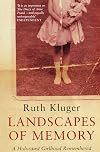
Wow! This is such a profound, sensitive and in-the-face testimony of the holocaust that all other personal testimonies of camp life seem to pale in its wake.

The essays 'Frauen lesen anders' and 'Gegenströmung: Schreibende Frauen' are very interesting essays about women and their place in the literary world. I'm sure most of the other essays have good things to say, too, but they are not very accessible to those who haven't read the authors they are about recently.
Lists
Awards


You May Also Like


Associated Authors
Statistics
- Works
- 14
- Also by
- 3
- Members
- 604
- Popularity
- #41,610
- Rating
- 4.1
- Reviews
- 15
- ISBNs
- 59
- Languages
- 9
- Favorited
- 3


