
Peter Nicholls (1) (1939–2018)
Author of The Encyclopedia of Science Fiction
For other authors named Peter Nicholls, see the disambiguation page.
Works by Peter Nicholls
Associated Works
Science Fiction Writers: Critical Studies of the Major Authors From the Early Nineteenth Century to the Present Day (1982) — Contributor — 33 copies
Tagged
Common Knowledge
- Canonical name
- Nicholls, Peter
- Legal name
- Nicholls, Peter Douglas
- Birthdate
- 1939-03-08
- Date of death
- 2018-03-06
- Gender
- male
- Occupations
- literary critic
author - Awards and honors
- SFRA Pilgrim Award (1980)
Harkness Fellowship - Relationships
- Cunningham, Sophie (daughter)
- Nationality
- Australia
- Birthplace
- Melbourne, Victoria, Australia
- Places of residence
- Surrey Hills, Victoria, Australia
UK
USA - Place of death
- Melbourne, Victoria, Australia
- Associated Place (for map)
- Victoria, Australia
Members
Reviews

I was shocked, on picking up this book, to see that it dates from 1982 - in other words, it has sat on my shelf, unread, for nearly forty years! With that in mind, I started to read, interested to see how much of the book was out of date.
The answer was - quite a lot. Indeed, I had thought to make this review a tabulation of the areas where we now knew better, but by the time I was a third of the way into the book, I realised that such an approach would be a) extensive, and b) a bit petty. show more There is little that is laugh-out-loud wrong; mostly, the areas where the book fails is in statements like "Researchers hope that X might be possible within 50 years" and in my response along the lines of "Yes, I've got one just like it in my kitchen."
The only time I rang up a 100% cast-iron WRONG! was in a segment talking about computing, which described 1946's ENIAC as "the world's first functional electronic computer". But none of the writers could have known about the British World War 2 codebreaking computer COLOSSUS, because at that time, its existence remained the UK's best-kept secret, even though Churchill ordered its destruction and purging from the records at the wars end.
There are ten chapters covering the major themes of sf; then a chapter on 'mysteries' (flying saucers, ancient astronauts, vanished civilizations and so on); and finally a chapter on where sf got it wrong. Much of the book is actually perfectly serviceable; little of the science has been entirely superseded by the developments of the last forty years, though it spends time discussing the coming Ice Age and hopes that anthropogenic environmental warming might help offset some of that. Perhaps the things that date the book the most are the examples: many of the sf writers cited are Golden Age authors, Star Trek only consisted of the three seasons of the original show, Star Wars had a sequel but had not yet become a global phenomenon, and global terrorism barely merits a mention as a possible future horror. Perhaps the thing about the book that dates it the worst are the graphic design and the choice of illustrations.
The whole thing is quite readable, and the book is worth acquiring if you see a copy on sale. But the reader should keep an open internet connection (itself something suggested in this book) and a large notepad to jot down the areas where we have advanced since 1982. There will be plenty of them. show less
The answer was - quite a lot. Indeed, I had thought to make this review a tabulation of the areas where we now knew better, but by the time I was a third of the way into the book, I realised that such an approach would be a) extensive, and b) a bit petty. show more There is little that is laugh-out-loud wrong; mostly, the areas where the book fails is in statements like "Researchers hope that X might be possible within 50 years" and in my response along the lines of "Yes, I've got one just like it in my kitchen."
The only time I rang up a 100% cast-iron WRONG! was in a segment talking about computing, which described 1946's ENIAC as "the world's first functional electronic computer". But none of the writers could have known about the British World War 2 codebreaking computer COLOSSUS, because at that time, its existence remained the UK's best-kept secret, even though Churchill ordered its destruction and purging from the records at the wars end.
There are ten chapters covering the major themes of sf; then a chapter on 'mysteries' (flying saucers, ancient astronauts, vanished civilizations and so on); and finally a chapter on where sf got it wrong. Much of the book is actually perfectly serviceable; little of the science has been entirely superseded by the developments of the last forty years, though it spends time discussing the coming Ice Age and hopes that anthropogenic environmental warming might help offset some of that. Perhaps the things that date the book the most are the examples: many of the sf writers cited are Golden Age authors, Star Trek only consisted of the three seasons of the original show, Star Wars had a sequel but had not yet become a global phenomenon, and global terrorism barely merits a mention as a possible future horror. Perhaps the thing about the book that dates it the worst are the graphic design and the choice of illustrations.
The whole thing is quite readable, and the book is worth acquiring if you see a copy on sale. But the reader should keep an open internet connection (itself something suggested in this book) and a large notepad to jot down the areas where we have advanced since 1982. There will be plenty of them. show less

The hardback second edition dates from 1993; the third edition is only available online, (http://www.sf-encyclopedia.com/). The second edition had over 6,500 entries and 1.3 million words; the third edition has just passed 18,000 entries and 5.9 million words. So you will understand which is the more comprehensive version.
Yet if I want to quickly look up some writer, or obscure old film, and I've shut my devices down for the night, I'll still reach for the second edition. The extent to which show more the gilt printing on the dust jacket of my copy has worn shows how often it has been on and off the shelf! And for idle browsing, it's still invaluable. If you see one second-hand and the asking price is within your pocket, go for it. show less
Yet if I want to quickly look up some writer, or obscure old film, and I've shut my devices down for the night, I'll still reach for the second edition. The extent to which show more the gilt printing on the dust jacket of my copy has worn shows how often it has been on and off the shelf! And for idle browsing, it's still invaluable. If you see one second-hand and the asking price is within your pocket, go for it. show less

Fine collection of essays adapted from a series of lectures by a range of (mostly sci-fi) writers and thinkers, including Ursula K. Le Guin, John Brunner, and Philip K. Dick. Insightfully edited by Peter Nicholls, this book is likely to appeal to anyone interested in the possibilities of SF and speculative fiction.
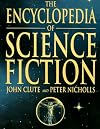
A great resource, of course it must be interesting having to write an entry about yourself. Orbit, in theory will be publishing an updated online version, which should have 50% more material at launch. Clute is still working on this according to his website.
Awards


You May Also Like


Associated Authors
Statistics
- Works
- 14
- Also by
- 4
- Members
- 1,140
- Popularity
- #22,523
- Rating
- 4.2
- Reviews
- 16
- ISBNs
- 46
- Languages
- 4