
Paul Martin (1) (1925–)
Author of Counting Sheep: The Science and Pleasures of Sleep and Dreams
For other authors named Paul Martin, see the disambiguation page.
About the Author
Dr Paul Martin former Harkness Fellow in the Department of Psychiatry and Behavioral Sciences at Stanford University, he has lectured and researched in Behavioral Biology at Cambridge, and was a Fellow of Wolfson College, Cambridge Professor Sir Patrick Bateson is a Fellow of the Royal Society, a show more former President of the Associadon for the Study of Animal Behaviour, Knight Bachelor, and current President of the Zoological Society of London show less
Works by Paul Martin
The Healing Mind: The Vital Links Between Brain and Behavior, Immunity and Disease (1998) 26 copies, 1 review
Making Happy People: The Nature of Happiness and Its Origins in Childhood (2005) 25 copies, 1 review
Tagged
Common Knowledge
- Birthdate
- 1925
- Gender
- male
- Education
- University of Cambridge (BA, PhD | Behavioural Biology)
Stanford University - Occupations
- lecturer, behavioural biology, University of Cambridge
faculty, Imperial College London
Director of security, UK Parliament - Nationality
- UK
- Map Location
- UK
Members
Reviews
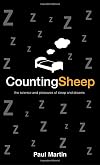
Sleep doesn't get much respect in today's fast-paced, productivity-obsessed society. It's just wasted time, a maintenance task forced on us by our biology. If we could hire someone else to do it for us, or engineer our bodies to require less of it, we surely would. We're so busy that we're now sleeping less per night than ever, and we're neglecting the consequences. Most of us are living in a continual state of sleep-deprivation, and it's making us sick, accident-prone, less intelligent and show more even less productive than we think.
Paul Martin thinks we're a "sleep-sick society," and that it's time we gave sleep the attention it deserves in science, medicine, education and social policy. That thesis is at the heart of Martin's book, which is also an engaging tour of of the art in sleep science. We learn that sleep is more than just a lack of consciousness -- there's as much happening in our brains when we're asleep as when we’re awake. The purpose of all that activity is still somewhat mysterious, though, as sleep science is an immature field compared to our wakeful-mind sciences.
The book is filled with information that ranges from basic to esoteric. What's behind circadian rhythms and sleep stages? Why is sleeping while sitting up never as restful as sleeping while horizontal? Is there a real difference between early- and late-risers or are some of us just lazy? How long can you go without sleep before it kills you? Why is "sleeping on it" a sound learning strategy? How do some animals manage to sleep with only half of their brain at a time?
Martin catalogs not only the mechanisms and benefits of sleep, which are not just biological, but also the consequences of too little sleep. Sleep deprivation manifests itself much like drunkenness does, and Martin argues that we should begin to take it just as seriously:
"Those who stumble through life on only five or six hours of poor-quality sleep a night are admired for their stamina, in the way that people were once admired for their capacity to drive cars while drunk. When it comes to sleep, we are still doing the equivalent of encouraging boozed-up drivers to have one more for the road."
Sleep deprivation impairs our immune system and is also a contributing factor to many of our modern maladies, including ADHD, obesity, learning disorders, and depression. Perhaps most startling is the extent of sleep deprivation among children, on whose growing brains and bodies the ill effects are amplified. According to a 2006 survey by the National Sleep Foundation, 45% of adolescents don't get enough sleep, and that figure rises to 75% by the 12th grade.
What can we do about this situation? Learn to appreciate sleep and foster education about its value and the risks of sleep deprivation. Participate in events like the National Sleep Foundation's "Sleep Awareness Week" (which took place in March). Promote shorter work hours and even napping at work. Today's more enlightened employers provide free gym memberships, healthy cafeteria food, and alternative health benefits, but neglect altogether the importance of good sleep habits for health. The rise of "slow" movements around the world is encouraging and could tie in with a new sleep awareness movement. (Carl Honoré's book, In Praise of Slowness, makes a good companion read on that topic.)
Even if you don't need convincing about the undervaluation of sleep in our society, you'll find Counting Sheep an engaging and entertaining read. What elevates the book above being just another good popular science book is the prose -- light, quick, and laced with dry humor -- and the wealth of literary asides and references. Martin's perspective is refreshingly broad for a science writer, and his book deserves recognition as a literary work, and not just a science text. Read it before bed and you'll wake up wiser.
(Reviewed for bookslut.com: http://www.bookslut.com/nonfiction/2006_05_008737.php) show less
Paul Martin thinks we're a "sleep-sick society," and that it's time we gave sleep the attention it deserves in science, medicine, education and social policy. That thesis is at the heart of Martin's book, which is also an engaging tour of of the art in sleep science. We learn that sleep is more than just a lack of consciousness -- there's as much happening in our brains when we're asleep as when we’re awake. The purpose of all that activity is still somewhat mysterious, though, as sleep science is an immature field compared to our wakeful-mind sciences.
The book is filled with information that ranges from basic to esoteric. What's behind circadian rhythms and sleep stages? Why is sleeping while sitting up never as restful as sleeping while horizontal? Is there a real difference between early- and late-risers or are some of us just lazy? How long can you go without sleep before it kills you? Why is "sleeping on it" a sound learning strategy? How do some animals manage to sleep with only half of their brain at a time?
Martin catalogs not only the mechanisms and benefits of sleep, which are not just biological, but also the consequences of too little sleep. Sleep deprivation manifests itself much like drunkenness does, and Martin argues that we should begin to take it just as seriously:
"Those who stumble through life on only five or six hours of poor-quality sleep a night are admired for their stamina, in the way that people were once admired for their capacity to drive cars while drunk. When it comes to sleep, we are still doing the equivalent of encouraging boozed-up drivers to have one more for the road."
Sleep deprivation impairs our immune system and is also a contributing factor to many of our modern maladies, including ADHD, obesity, learning disorders, and depression. Perhaps most startling is the extent of sleep deprivation among children, on whose growing brains and bodies the ill effects are amplified. According to a 2006 survey by the National Sleep Foundation, 45% of adolescents don't get enough sleep, and that figure rises to 75% by the 12th grade.
What can we do about this situation? Learn to appreciate sleep and foster education about its value and the risks of sleep deprivation. Participate in events like the National Sleep Foundation's "Sleep Awareness Week" (which took place in March). Promote shorter work hours and even napping at work. Today's more enlightened employers provide free gym memberships, healthy cafeteria food, and alternative health benefits, but neglect altogether the importance of good sleep habits for health. The rise of "slow" movements around the world is encouraging and could tie in with a new sleep awareness movement. (Carl Honoré's book, In Praise of Slowness, makes a good companion read on that topic.)
Even if you don't need convincing about the undervaluation of sleep in our society, you'll find Counting Sheep an engaging and entertaining read. What elevates the book above being just another good popular science book is the prose -- light, quick, and laced with dry humor -- and the wealth of literary asides and references. Martin's perspective is refreshingly broad for a science writer, and his book deserves recognition as a literary work, and not just a science text. Read it before bed and you'll wake up wiser.
(Reviewed for bookslut.com: http://www.bookslut.com/nonfiction/2006_05_008737.php) show less
'The Sickening Mind' is a book of popularisation (of a discipline named here as 'psychoneuroimmunology') but also a polemic designed to establish a thesis to be as close to fact as possible. It is also going to be nearly thirty years out of date this year (2025).
Nevertheless, it is worth noting as a stepping stone towards a better social understanding of the relationship between mind and body. It provides voluminous evidence of this as far as it was understood by the mid-1990s and so may be show more considered a base line for our understanding today.
In essence, Martin is taking a 'third way' between the extremes of insisting that all illness is entirely without mental relationships and the counter position that many illnesses are products solely of the stresses and strains of the human mind, psychosomatic in the jargon.
This 'third way' emphasises the role of stress and personality type (and the relationship between these two) primarily in relation to the functioning of the immune system with the immune system's behaviour rationally explained in material terms within evolutionary theory.
Certain types of illness are thus rationally explained as material but under conditions where mental phenomena are also rationally explained as ultimately material with a strong genetic underpinning. The general message is one of complexity to be teased out by scientific method.
The result is a book that stands up methodologically but is work in progress where the precise balance of effects and causes remains for the book's future but that base line is useful. It owes something to medical observation of the big immunological issue of that period, the progress of AIDS.
I would not take this book as the final word by any means since scientific method since its publication will probably have shifted much of the story along somewhat. It should not necessarily be a guide to mood or behaviours.
There is one intriguing suggestion that should be noted if perhaps taken up with caution. This is that unpleasant low level immunological reactions may have their purpose in natural healing and that too easy a use of simple popular drugs may ease symptoms but weaken the ability to become well.
We cannot judge whether this intuition has survived the passage of time - we see no sign of it in popular medical culture today. The general position now seems to be that inflammation in itself is problematic and is best discouraged by any rational means available.
There are other positions on good and bad stress and cautious commentary on the 'science' of personality types. These raise as many doubts as certainties so that, as of the mid-1990s, there is a sense of this being very much work in progress.
The book ends with its scientific materialism (not in the Marxist sense) and entrancement with evolutionary explanations made explicit. This will not be to everyone's taste. There is also dabbling earlier in medical sociology. Altogether a dated interim framework. show less
Nevertheless, it is worth noting as a stepping stone towards a better social understanding of the relationship between mind and body. It provides voluminous evidence of this as far as it was understood by the mid-1990s and so may be show more considered a base line for our understanding today.
In essence, Martin is taking a 'third way' between the extremes of insisting that all illness is entirely without mental relationships and the counter position that many illnesses are products solely of the stresses and strains of the human mind, psychosomatic in the jargon.
This 'third way' emphasises the role of stress and personality type (and the relationship between these two) primarily in relation to the functioning of the immune system with the immune system's behaviour rationally explained in material terms within evolutionary theory.
Certain types of illness are thus rationally explained as material but under conditions where mental phenomena are also rationally explained as ultimately material with a strong genetic underpinning. The general message is one of complexity to be teased out by scientific method.
The result is a book that stands up methodologically but is work in progress where the precise balance of effects and causes remains for the book's future but that base line is useful. It owes something to medical observation of the big immunological issue of that period, the progress of AIDS.
I would not take this book as the final word by any means since scientific method since its publication will probably have shifted much of the story along somewhat. It should not necessarily be a guide to mood or behaviours.
There is one intriguing suggestion that should be noted if perhaps taken up with caution. This is that unpleasant low level immunological reactions may have their purpose in natural healing and that too easy a use of simple popular drugs may ease symptoms but weaken the ability to become well.
We cannot judge whether this intuition has survived the passage of time - we see no sign of it in popular medical culture today. The general position now seems to be that inflammation in itself is problematic and is best discouraged by any rational means available.
There are other positions on good and bad stress and cautious commentary on the 'science' of personality types. These raise as many doubts as certainties so that, as of the mid-1990s, there is a sense of this being very much work in progress.
The book ends with its scientific materialism (not in the Marxist sense) and entrancement with evolutionary explanations made explicit. This will not be to everyone's taste. There is also dabbling earlier in medical sociology. Altogether a dated interim framework. show less
Martin is up front that this is not a self-help book. Instead he shows that there is a relationship between mental state and physical health. The part that struck me is that one's mental state when exposed to a virus influences the chance of getting sick, and one's mental state for the time before getting sick influences how sick one gets.
Throughout the book various ways of getting sick are covered. Roughly following the Table of Contents (Not his chapter headings)
1. Examples from fiction
2. show more Death, disaster, voodoo, trouble, strife and sickness, and life events, the mind and the common cold
3. The perception of sickness; mind over immune matter;
4. Mind and immunity
5. Stress
6 Other people
7. Work
8. Sick at heart (Type A, B)
9. Type C
10. Encumbered with remedies
11. Mind body - dualism
12. Perhaps sickness is useful
In Chapter 11, Martin describes two philosophies: Monoism and dualism. Monoism is that there is just the body - period. Dualism says there is a body and then there is a spirit. Martin laments that dualism is still around after centuries of trying to quench it.
A few lines that caught my eye.
"Yet assessing the stressfulness of a situation is not as straightforward as it may seem. People can become more upset, both psychologically and physiologically, about apparently trivial things than they do about serious problems." (Page 121)
"A traditional panacea that does seem to work is simply getting things off your chest - or self disclosure ... Since the dawn of civilization, humans have found that unburdening their woes, anxieties, or traumas to a sympathetic listener usually makes them feel better. ... Talking to a skilled listener is, of course, the basis of most types of counseling and a central element in psychotherapy." (Page 255)
Martin makes it quite clear that there is a linkage between the mind and the body. The mind can make us get sick or sicker. The mind can also make us less succeptible to illness, and reduce the severity of illness. This truth provides an opening for lots of hucksters. (Chapter 10).
How will I behave differently because of having read this book?
Being made more aware of the tightness of the link, I will emphasize those habits that improve mental and physical health. show less
Throughout the book various ways of getting sick are covered. Roughly following the Table of Contents (Not his chapter headings)
1. Examples from fiction
2. show more Death, disaster, voodoo, trouble, strife and sickness, and life events, the mind and the common cold
3. The perception of sickness; mind over immune matter;
4. Mind and immunity
5. Stress
6 Other people
7. Work
8. Sick at heart (Type A, B)
9. Type C
10. Encumbered with remedies
11. Mind body - dualism
12. Perhaps sickness is useful
In Chapter 11, Martin describes two philosophies: Monoism and dualism. Monoism is that there is just the body - period. Dualism says there is a body and then there is a spirit. Martin laments that dualism is still around after centuries of trying to quench it.
A few lines that caught my eye.
"Yet assessing the stressfulness of a situation is not as straightforward as it may seem. People can become more upset, both psychologically and physiologically, about apparently trivial things than they do about serious problems." (Page 121)
"A traditional panacea that does seem to work is simply getting things off your chest - or self disclosure ... Since the dawn of civilization, humans have found that unburdening their woes, anxieties, or traumas to a sympathetic listener usually makes them feel better. ... Talking to a skilled listener is, of course, the basis of most types of counseling and a central element in psychotherapy." (Page 255)
Martin makes it quite clear that there is a linkage between the mind and the body. The mind can make us get sick or sicker. The mind can also make us less succeptible to illness, and reduce the severity of illness. This truth provides an opening for lots of hucksters. (Chapter 10).
How will I behave differently because of having read this book?
Being made more aware of the tightness of the link, I will emphasize those habits that improve mental and physical health. show less
How is it possible for each of 6 billion human beings to be unique? How does each of us grow up to be the person we are? How do behavior and personality develop?
In this wonderfully readable book, two distinguished scientists explain how biology and psychology join to shape the behavior of individual human beings. They counter the mistaken notion that science has discovered individual genes that determine certain personality traits; instead, they explain what roles genes actually play in the show more formation of personality. The authors show how change is a vital component of human behavior, restoring the concept of free will to its central place in human psychology. In tracing human development from a fertilized egg to an adult, they explain the important roles that nature and nurture play.
Design for a Life is an eloquent, lucid description of behavioral development, the science that explains how personality emerges. In place of the conventional opposition of nature (genes) and nurture (environment), Bateson and Martin offer a fresh synthesis. Design for a Life brings biology and psychology together by using the metaphor of cooking to show how both the raw ingredients and the cooking process must be successfully combined to produce a meal.
Written in a clear and enjoyable style, Design for a Life helps us to understand the science behind some of today's controversies in fields as diverse as parenting, education, sexuality, social policy, and medicine. The authors brilliantly blend scientific examples and literary anecdotes to illustrate the concepts they describe. Anyone interested in behavioral development and the emergence of personality will find this book indispensable, both entertaining and profound. show less
In this wonderfully readable book, two distinguished scientists explain how biology and psychology join to shape the behavior of individual human beings. They counter the mistaken notion that science has discovered individual genes that determine certain personality traits; instead, they explain what roles genes actually play in the show more formation of personality. The authors show how change is a vital component of human behavior, restoring the concept of free will to its central place in human psychology. In tracing human development from a fertilized egg to an adult, they explain the important roles that nature and nurture play.
Design for a Life is an eloquent, lucid description of behavioral development, the science that explains how personality emerges. In place of the conventional opposition of nature (genes) and nurture (environment), Bateson and Martin offer a fresh synthesis. Design for a Life brings biology and psychology together by using the metaphor of cooking to show how both the raw ingredients and the cooking process must be successfully combined to produce a meal.
Written in a clear and enjoyable style, Design for a Life helps us to understand the science behind some of today's controversies in fields as diverse as parenting, education, sexuality, social policy, and medicine. The authors brilliantly blend scientific examples and literary anecdotes to illustrate the concepts they describe. Anyone interested in behavioral development and the emergence of personality will find this book indispensable, both entertaining and profound. show less
Lists
You May Also Like


Associated Authors
Statistics
- Works
- 10
- Members
- 468
- Popularity
- #52,558
- Rating
- 3.8
- Reviews
- 8
- ISBNs
- 223
- Languages
- 10