
Michael Shea (1) (1946–2014)
Author of Nifft the Lean
For other authors named Michael Shea, see the disambiguation page.
About the Author
Image credit: Michael Shea (2008)
Photo: F.R.R. Mallory
Photo: F.R.R. Mallory
Series
Works by Michael Shea
The Recruiter — Author — 6 copies
The Growlimb 4 copies
Dapple Hew The Tint Master 3 copies
The Rebuke 1 copy
Nemo Me Impune Lacessit 1 copy
Occultation 1 copy
Dagoniad 1 copy
The Battery 1 copy
The Pool 1 copy
The Angel Of Death 1 copy
The Fishing Of The Demon-sea 1 copy
The Goddess In Glass 1 copy
Associated Works
The Year's Best Fantasy and Horror: First Annual Collection (1986) — Contributor — 332 copies, 6 reviews
The Agonizing Resurrection of Victor Frankenstein: And Other Gothic Tales (1994) — Introduction, some editions — 148 copies, 1 review
The Best Horror Stories from The Magazine of Fantasy & Science Fiction (1988) — Contributor — 52 copies, 1 review
The Best Horror Stories from the Magazine of Fantasy & Science Fiction, Vol. II (1990) — Contributor — 20 copies
The Magazine of Fantasy and Science Fiction August 1982, Vol. 63, No. 2 (1982) — Contributor; Contributor — 15 copies
The Magazine of Fantasy and Science Fiction December 1980, Vol. 59, No. 6 (1980) — Author — 14 copies
The Magazine of Fantasy and Science Fiction 68. Mythen der nahen Zukunft. (1984) — Contributor — 7 copies
The Autopsy [2022 Guillermo del Toro's Cabinet of Curiosities TV episode] — Original story — 1 copy
Tagged
Common Knowledge
- Legal name
- Shea, Michael
- Birthdate
- 1946-07-03
- Date of death
- 2014-02-16
- Gender
- male
- Occupations
- carpenter
house painter
English teacher
writer
poet - Agent
- Spectrum Literary
- Relationships
- Cesar, Lynn (spouse)
- Nationality
- USA
- Birthplace
- Los Angeles, California, USA
- Places of residence
- California, USA
- Place of death
- San Francisco, California, USA
- Associated Place (for map)
- California, USA
Members
Discussions
THE DEEP ONES: "The Horror on the #33" by Michael Shea in The Weird Tradition (December 2021)
Reviews

An (eventual) trio of professorial men (and woman) of action take on the forces left behind beneath a lake in Shea's sequal to Lovecraft's "The Colour out of Space." The remnants of that story have been gestating beneath the lake for decades, slowly becoming something both subtle and physically powerful that is now ready to openly reach out to...feed upon all life on earth? I guess? Their main opposition besides this creature? Forest rangers and late '70s/early '80s vacationing dads? Perhaps show more also their own alcoholism, as I can't remember the last time I've read a story in which anyone drinks as much and as continuously as these characters do (breakfast to bed, I kid you not). Its the equivalent of people chainsmoking in pre-1980s cinema.
I really love Shea's original work, including his obviously Lovecraftian influenced work. I started reading it semi-recently, thanks to Patton Oswalt's contributions to Chad Fifer and Chris Lackey's excellent podcast. Unfortunately, a lot of what makes his other work so appealing either doesn't work or is entirely absent here. Typically, he's focused on the average people in society, if not the underclasses. He portrays their lives accurately, interestingly, and with sympathy. But here, we're following upper middle (possibly even upper) class professors. It seems he's trying to merge Lovecraft's preferred, or at least most famous, scholar protagnoists ala Armitage or Dyer with his preferred man or woman of action, and it just doesn't work well. It comes across as clumsy pastiche instead of believable characters. Shea's enjoyment and understanding of the physicality of people, bodies in action and motion, is also almost always a key piece of his writing. Its here, but again, feels clumsily shoehorned into a Lovecraft story that was ostensibly about a barely percievable menace, an internal corruption that at best can be escapted from rather than a target to be fought. Setting is typically a living, breathing, complex factor in Shea's stories as well. He understands and communicates clearly the beauty of urban settings even when showing us their dirty, hidden, frequently ignored parts. Yet this story plops us down in a setting that couldn't be more rural.
I haven't yet read Shea's sequal to the Nifft the Lean stories, but I'm hoping this isn't a consistent failing when Shea attempts to work directly in the world's of others. Because coming off of his original work, this was extremely disappointing (though that cover art is on point). It seems like if he had written a straight homage to Lovecraft, or a straight Shea story that was simply inspired by Lovecraftian elements, this could have come out better than the hodgepodge of styles we ended up getting. It might have also benefitted from focus and brevity, more novella in length. Unless you're a completionist, I'd skip this one. show less
I really love Shea's original work, including his obviously Lovecraftian influenced work. I started reading it semi-recently, thanks to Patton Oswalt's contributions to Chad Fifer and Chris Lackey's excellent podcast. Unfortunately, a lot of what makes his other work so appealing either doesn't work or is entirely absent here. Typically, he's focused on the average people in society, if not the underclasses. He portrays their lives accurately, interestingly, and with sympathy. But here, we're following upper middle (possibly even upper) class professors. It seems he's trying to merge Lovecraft's preferred, or at least most famous, scholar protagnoists ala Armitage or Dyer with his preferred man or woman of action, and it just doesn't work well. It comes across as clumsy pastiche instead of believable characters. Shea's enjoyment and understanding of the physicality of people, bodies in action and motion, is also almost always a key piece of his writing. Its here, but again, feels clumsily shoehorned into a Lovecraft story that was ostensibly about a barely percievable menace, an internal corruption that at best can be escapted from rather than a target to be fought. Setting is typically a living, breathing, complex factor in Shea's stories as well. He understands and communicates clearly the beauty of urban settings even when showing us their dirty, hidden, frequently ignored parts. Yet this story plops us down in a setting that couldn't be more rural.
I haven't yet read Shea's sequal to the Nifft the Lean stories, but I'm hoping this isn't a consistent failing when Shea attempts to work directly in the world's of others. Because coming off of his original work, this was extremely disappointing (though that cover art is on point). It seems like if he had written a straight homage to Lovecraft, or a straight Shea story that was simply inspired by Lovecraftian elements, this could have come out better than the hodgepodge of styles we ended up getting. It might have also benefitted from focus and brevity, more novella in length. Unless you're a completionist, I'd skip this one. show less
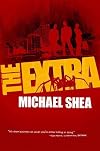
This is a perfecrtly packaged piece of entertainment. A dystopia of grotesque economic inequality and exploitation, a cast of endearing and plucky misfiits out to better themselves and their families and escape their urban prisons, a film industry obscenely bloated with funding and profits, movies of action and spectacle where the exras are filmed fighing for survival against artifical alien monstrosities for rich financial rewards if they survive, a secret resistance within the industry show more helping the extras, unlikely alliances formed in the thick of battle, deeply moving connections with family and community. Honestly it's rare for a 'people fighting and dying for entertainment' story have so much defiantly uncynical-in-the-face-of-societal-horror heart. The build-up, the setting, the frenetic action, the slef-regarding genius of the director behind it all are all absolutely pitch-perfect, and it all comes in just over five hours of listening time. show less

For the record, I've not read any of the actual Dying Earth books, or even any Vance for that matter, despite pretty extensive familiarity with the material and concepts thanks to a lifetime of ttrpgs. I'm sure that influences how I felt about this one to some degree, maybe if I'd read Vance's stuff first I wouldn't care for this as much as I do. Because I loved this.
Shea's Lovecraft sequel, per a review way back, fell pretty flat for me. Which left me a little apprehensive about this sequel show more written in someone else's world, though less so due to its reputation (including amongst such notable as Patton Oswalt). This was such a pleasantly surprising experience though.
It certainly has some of the sword and sorcery tropes, though it never feels like its really embracing that subgenre. It reminds me a little bit of some of Moorcock's work in that regard.
I think what really made the book was that it was funny, which was something I wasn't expecting. Its not poking fun at the genre, or Vance's setting, but it also never feels like its taking itself too seriously. The series of misadventures experienced by the characters along their titular quest seem so random, beyond their power, and the characters themselves make such amusingly silly choices at times. This is really working in someone else's world, in a genre that maybe has aged past its prime, at its absolute best. show less
Shea's Lovecraft sequel, per a review way back, fell pretty flat for me. Which left me a little apprehensive about this sequel show more written in someone else's world, though less so due to its reputation (including amongst such notable as Patton Oswalt). This was such a pleasantly surprising experience though.
It certainly has some of the sword and sorcery tropes, though it never feels like its really embracing that subgenre. It reminds me a little bit of some of Moorcock's work in that regard.
I think what really made the book was that it was funny, which was something I wasn't expecting. Its not poking fun at the genre, or Vance's setting, but it also never feels like its taking itself too seriously. The series of misadventures experienced by the characters along their titular quest seem so random, beyond their power, and the characters themselves make such amusingly silly choices at times. This is really working in someone else's world, in a genre that maybe has aged past its prime, at its absolute best. show less
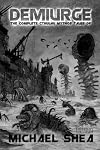
This is going to feel more like a review of the collection itself, rather than of the individual stories. Why? Because I already really enjoy Michael Shea. He's capable of really humanizing more esoteric horror and fantasy by grounding it in believable, identifiable, and realistic characters. He can do action that feels like a more believable Howard. At least, when he's at his best. And the initial half to two-thirds of this collection is some of his best.
Demiurge is as close to a complete show more collection of every cthulhu mythos related tale that Michael Shea wrote as you're likely to get (there's an outlandishly expensive Centipede Press collection that's probably more complete). I do not necessarily know if that is a good thing.
You see, its essentially the Perilous Press edition of Copping Squid, with a few other stories tacked on to the end. And I mean tacked on. Its clear to see why several of these entries may have been omitted from that collection, as they just don't hold up by comparison. Some of them don't even feel related to the cthulhu mythos besides stylistic similarities to Lovecraft. Taken on their individual merits, there are a couple of fun additional stories though.
Momma Durtt was fantastic, creative, original story about gangsters, truckers, poor small town folk, and maybe some sort of cthonic entity (or something else entirely?). For me, it had echoes of Ambrose Bierce's "Damned Thing."
Under the Shelf fooled me. Its opening with characters preparing to explore the ocean below the ice shelf had me prepped for a Jules Verne, Jacque Cousteau, Abyss, but-with-some-more-horror style adventure. It quickly and surprisingly morphs into one of the most action packed (and to some degree sci-fi channel movie goofy/campy) Shea short stories I've read.
Ultimately, though, none of the individual stories added on to this collection are good enough that you really need to read this in addition to Copping Squid. Barring being a completionist. show less
Demiurge is as close to a complete show more collection of every cthulhu mythos related tale that Michael Shea wrote as you're likely to get (there's an outlandishly expensive Centipede Press collection that's probably more complete). I do not necessarily know if that is a good thing.
You see, its essentially the Perilous Press edition of Copping Squid, with a few other stories tacked on to the end. And I mean tacked on. Its clear to see why several of these entries may have been omitted from that collection, as they just don't hold up by comparison. Some of them don't even feel related to the cthulhu mythos besides stylistic similarities to Lovecraft. Taken on their individual merits, there are a couple of fun additional stories though.
Momma Durtt was fantastic, creative, original story about gangsters, truckers, poor small town folk, and maybe some sort of cthonic entity (or something else entirely?). For me, it had echoes of Ambrose Bierce's "Damned Thing."
Under the Shelf fooled me. Its opening with characters preparing to explore the ocean below the ice shelf had me prepped for a Jules Verne, Jacque Cousteau, Abyss, but-with-some-more-horror style adventure. It quickly and surprisingly morphs into one of the most action packed (and to some degree sci-fi channel movie goofy/campy) Shea short stories I've read.
Ultimately, though, none of the individual stories added on to this collection are good enough that you really need to read this in addition to Copping Squid. Barring being a completionist. show less
Lists
Awards


You May Also Like


Associated Authors
Statistics
- Works
- 40
- Also by
- 41
- Members
- 1,576
- Popularity
- #16,374
- Rating
- 3.8
- Reviews
- 30
- ISBNs
- 112
- Languages
- 5
- Favorited
- 4