
John Buckley (1) (1967–)
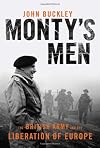
Author of Monty's Men: The British Army and the Liberation of Europe
For other authors named John Buckley, see the disambiguation page.
About the Author
John Buckley is Senior Lecturer in War Studies and History at the University of Wolverhampton, UK.
Image credit: Amazon.com
Works by John Buckley
British Armour in the Normandy Campaign 1944 (Military History and Policy) (2004) 36 copies, 3 reviews
Operation Market Garden: The Campaign for the Low Countries, Autumn 1944: Seventy Years On (Wolverhampton Military Studies) (2016) 23 copies, 2 reviews
Tagged
Common Knowledge
- Other names
- Buckley, John D.
- Birthdate
- 1967-03-27
- Gender
- male
- Education
- Lancaster University
- Occupations
- historian
university professor - Organizations
- University of Wolverhampton
- Nationality
- United Kingdom
- Map Location
- United Kingdom
Members
Reviews
A really excellent synthesis of the New Operational Military History as it relates to the way of war in 21st Army Group, in which Buckley concludes that this field force "...matched resources with objectives, developed proficient fighting power sufficient to overcome the enemy, and delivered a victory to the British state that has for too long been downplayed by the passage of time."
If Buckley has a particular mission it is to place the undeniable errors and systemic problems of the British show more Army into proper context and call out a wide range of critics (Liddell Hart, Cornelius Ryan, Max Hastings, etc.) who had political and professional agendas to pursue and in doing so misrepresented the real achievements that were accomplished in victory. If nothing else it's another sign that the legacy of Cold War military historiography, where it was politically convenient to exaggerate the performance of the German military (thus overlooking its professional and moral failings), is being rapidly left behind.
Still, Buckley also leaves one with the sense that much of the animus that has been directed at the British Army and its way of war is due to the resentment and anger that Bernard Montgomery's incompetence (there is no other appropriate word) at social engineering left in its wake, and which has fed into a "black legend" of arrogant poseurs leading unwilling donkeys. show less
If Buckley has a particular mission it is to place the undeniable errors and systemic problems of the British show more Army into proper context and call out a wide range of critics (Liddell Hart, Cornelius Ryan, Max Hastings, etc.) who had political and professional agendas to pursue and in doing so misrepresented the real achievements that were accomplished in victory. If nothing else it's another sign that the legacy of Cold War military historiography, where it was politically convenient to exaggerate the performance of the German military (thus overlooking its professional and moral failings), is being rapidly left behind.
Still, Buckley also leaves one with the sense that much of the animus that has been directed at the British Army and its way of war is due to the resentment and anger that Bernard Montgomery's incompetence (there is no other appropriate word) at social engineering left in its wake, and which has fed into a "black legend" of arrogant poseurs leading unwilling donkeys. show less

A really excellent monograph that examines in detail the myth of British mediocrity during the Normandy campaign. The key conclusion is that the prime determinant of how the campaign played out is Hitler's refusal to countenance an elastic defense, thus condemning both sides to a grinding slug-fest.
To be more specific, Buckley finds that while the British armored force had issues with doctrine, experience, and technology, it also had adaptability and overcame the issues facing it. If there show more was a key error it was that the British had a bad habit of resting on their laurels when they had a reasonably good tank gun. This happened with letting the 2-pounder soldier on too long, and it nearly happened with making the bet that the American medium-velocity 75mm weapon would be sufficient to get to the end of the war; it was fortunate that the 17-pounder gun was available.
As for the issue of morale, Buckley is skeptical that there was that much of a morale issue with the typical British tank crewman; the British infantryman is another matter. He is rather more critical of Montgomery's lack of forthrightness when the campaign did not play out as expected, which probably undid the field marshal's exercises in attitude management. As for whether formations such as the 7th Armored and 51st Highland were burned out when they entered the field, that issue is a little more murky. Buckley suspects that the real problem here was a failure to unlearn lessons from the North African battles. Matters of doctrine are of great relevance to Buckley in terms of explaining the failures of British war-making in Normandy. show less
To be more specific, Buckley finds that while the British armored force had issues with doctrine, experience, and technology, it also had adaptability and overcame the issues facing it. If there show more was a key error it was that the British had a bad habit of resting on their laurels when they had a reasonably good tank gun. This happened with letting the 2-pounder soldier on too long, and it nearly happened with making the bet that the American medium-velocity 75mm weapon would be sufficient to get to the end of the war; it was fortunate that the 17-pounder gun was available.
As for the issue of morale, Buckley is skeptical that there was that much of a morale issue with the typical British tank crewman; the British infantryman is another matter. He is rather more critical of Montgomery's lack of forthrightness when the campaign did not play out as expected, which probably undid the field marshal's exercises in attitude management. As for whether formations such as the 7th Armored and 51st Highland were burned out when they entered the field, that issue is a little more murky. Buckley suspects that the real problem here was a failure to unlearn lessons from the North African battles. Matters of doctrine are of great relevance to Buckley in terms of explaining the failures of British war-making in Normandy. show less

Buckley's book on British armour is a through and compelling investigation of why the British fought their armour the way they did; what motivated them, how and why they were equipped, how they thought their armour could and should be fought, and so on. In the process he fully addresses and overturns many standard interpretations of the campaign, some of which have been in place for 50 years or more.
Two key points I took away from this book:
1) *Everyone* suffered heavy losses in men and show more machines when they attacked in Normandy. The British, Canadians, Poles, Americans, German Army, and the SS, everyone. By 1944 the halcyon Blitzkreig days of 1939-1941 were long gone, and armour could no longer awe with it's mere presence.
2) It is pointless to criticise the British for not fighting like the Germans because a) they aren't the Germans, and b) unlike the Germans the British won, and did so at an acceptable pace and with bearable losses.
There are no tales of derring-do to be found here, this simply isn't that kind of book. Nevertheless, it is far from boring or tedious, and I read it from cover to cover within a week. Also, because Buckley so thoroughly examines the question, and from so many angles, there is some noticeable overlap between the thematically organised chapters. This means there is some probably unavoidable repetition which is noticeable, but not annoying.
The pictures are well chosen, and the map, although limited, is sufficient for the purposes of this book.
Overall, this is a very worthy addition to the library of anyone with a deep interest in the Normandy campaign. show less
Two key points I took away from this book:
1) *Everyone* suffered heavy losses in men and show more machines when they attacked in Normandy. The British, Canadians, Poles, Americans, German Army, and the SS, everyone. By 1944 the halcyon Blitzkreig days of 1939-1941 were long gone, and armour could no longer awe with it's mere presence.
2) It is pointless to criticise the British for not fighting like the Germans because a) they aren't the Germans, and b) unlike the Germans the British won, and did so at an acceptable pace and with bearable losses.
There are no tales of derring-do to be found here, this simply isn't that kind of book. Nevertheless, it is far from boring or tedious, and I read it from cover to cover within a week. Also, because Buckley so thoroughly examines the question, and from so many angles, there is some noticeable overlap between the thematically organised chapters. This means there is some probably unavoidable repetition which is noticeable, but not annoying.
The pictures are well chosen, and the map, although limited, is sufficient for the purposes of this book.
Overall, this is a very worthy addition to the library of anyone with a deep interest in the Normandy campaign. show less
.. Buckley's previous work "British Armour in Normandy" was the sort of wonderful eye-opening re-appraisal of the British Army's performance post-D-Day that Max Hastings' 'pro-German' treatments had always warranted. It is thus easy to agree with Buckley in this new work that the reputation of the British Army has suffered through a " disturbing" and very unflattering comparison with the German Army. You see it all the time on the net and in the literature - there is a sort of 'fan-boy' show more admiration for the German Army and its 'flamboyant' commanders - despite the ideological motivations, despite the racial and criminal undertones, despite harsh 'internal' terror - which is ultimately based on a very narrow definition of what constitutes military 'effectiveness'. Buckley argues that this image of German 'superiority'- largely based on the 'Blitzkrieg' of the early war years - conceals and ignores many many shortcomings and deficiencies on the German and almost toally ignores those areas in which the British were much stronger - artillery firepower, logistical competence etc etc. By repeatedly attempting to mount ad-hoc and unsupported operations post-1941 the German Army delivered some short-term success but lived under constant threat of potential near-disaster. As Buckley argues the British conduct of operations predicated on firepower and logistics were not inferior to the Germans; if anything these kinds of operational methods were more sophisticated, requiring as they did, greater integration of the various operational constituents to achieve the desired affect.
No doubt Allied armies "Citizen soldiers" may have seemed lke 'amateurs' compared to German veterans skilled since 1939 - but 'amateurishness' - or at least what some commentators see as such - was a part of the Allies military culture. They were fresh. Free to experiment. Unlike the Germans post- D-Day who were scraping the bottom of barrel, sending Volksturm and Luftwaffe Field Divisions into battle, worn down by six years of constant conflict and intense brutal ground warfare. Manpower concerns were a prime Allied consideration. Another British misfortune after September 1944 was they were fighting on terrain which was best suited to defence. The Dutch-German frontier area is broken by canals , rivers and full of woods.
From the British perspective, morale and manpower were key issues affecting the British 'style' of waging war. Another was command and leadership style - leadership,morale and unit cohesion, rather than racial or political doctrine, were the central tenants in the production of fighting power. When the British recognised the potential fragility of the morale of the men deployed on the ground, Montgomery and other senior commanders sought to develop an operational method that developed fighting power that achieved objectives. The Germans from the First World War through the Second World War had little understanding of theses levels of war as Buckley makes clear and woefully underperformed in this respect. There is some truth that at the smallest unit level the Germans were better than the British, however, this was of little use if it could not be translated into operational or strategic effectiveness. Integration of firepower and movement was a much more 'mature' military philosophy, which ultimately saw Montgomery accepting German surrender on the Baltic less than one year after the landings in Normandy.. show less
No doubt Allied armies "Citizen soldiers" may have seemed lke 'amateurs' compared to German veterans skilled since 1939 - but 'amateurishness' - or at least what some commentators see as such - was a part of the Allies military culture. They were fresh. Free to experiment. Unlike the Germans post- D-Day who were scraping the bottom of barrel, sending Volksturm and Luftwaffe Field Divisions into battle, worn down by six years of constant conflict and intense brutal ground warfare. Manpower concerns were a prime Allied consideration. Another British misfortune after September 1944 was they were fighting on terrain which was best suited to defence. The Dutch-German frontier area is broken by canals , rivers and full of woods.
From the British perspective, morale and manpower were key issues affecting the British 'style' of waging war. Another was command and leadership style - leadership,morale and unit cohesion, rather than racial or political doctrine, were the central tenants in the production of fighting power. When the British recognised the potential fragility of the morale of the men deployed on the ground, Montgomery and other senior commanders sought to develop an operational method that developed fighting power that achieved objectives. The Germans from the First World War through the Second World War had little understanding of theses levels of war as Buckley makes clear and woefully underperformed in this respect. There is some truth that at the smallest unit level the Germans were better than the British, however, this was of little use if it could not be translated into operational or strategic effectiveness. Integration of firepower and movement was a much more 'mature' military philosophy, which ultimately saw Montgomery accepting German surrender on the Baltic less than one year after the landings in Normandy.. show less
Awards

You May Also Like


Statistics
- Works
- 8
- Members
- 288
- Popularity
- #81,141
- Rating
- 4.0
- Reviews
- 8
- ISBNs
- 49