
Ross Campbell (1) (1936–2012)
Author of How to really love your child
For other authors named Ross Campbell, see the disambiguation page.
About the Author
Ross Campbell is formerly an associate clinical professor of pediatries and psychiatry at the University of Tennessee College of Medicinc
Image credit: via Find A Grave
Works by Ross Campbell
Parenting Your Adult Child: How You Can Help Them Achieve Their Full Potential (1999) 123 copies, 1 review
Relational Parenting: Going Beyond Your Child's Behavior to Meet Their Deepest Needs (2000) 88 copies
How to Really Parent Your Child: Anticipating What a Child Needs Instead of Reacting to What a Child Does (2005) 53 copies
Kā patiesi mīlēt pusaudzi 4 copies
Parenting by Heart [VHS] 2 copies
Kinder sind Persönlichkeiten 2 copies
How to Really Love Your Children : How to Really Love Your Child; How to Really Love Your Teenager 1 copy
FILHOS EM PERIGO 1 copy
Mânia îți distruge copiii! 1 copy
Educatia prin iubire 1 copy
Tagged
Common Knowledge
- Legal name
- Campbell, Donald Ross
- Other names
- 羅斯.康貝
- Birthdate
- 1936-11-25
- Date of death
- 2012-11-02
- Gender
- male
- Education
- Savannah College of Art and Design
- Occupations
- artist
writer - Nationality
- USA
- Birthplace
- Albuquerque, New Mexico, United States
- Places of residence
- Rochester, New York, USA
- Place of death
- South Cumberland State Park, Monteagle, Tennessee, United States
- Associated Place (for map)
- New York, USA
Members
Reviews
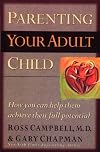
This excellent book covers all aspects of relating to adult children. For instance, it describes problems with children in their twenties who drift, never leaving home; or who don't want independence; or who treat their parents as doormats.
I don't have any of those problems, but still found it very interesting in understanding better how younger people think, and why the traditional model of the empty next is no longer so appropriate. There was advice in dealing with behaviour problems, show more with boyfriends/girlfriends, with in-laws, with money... and one about what we leave our children as legacies, not just financial but moral and spiritual too.
The book is very well written, with anecdotes and clear advice. My only quibble was that almost every page was advice about going to counselling to resolve problems - but for some that may, of course, be appropriate.
All in all, highly recommended to anyone with adult (or nearly adult) children, particularly if you are having any problems with them. Written from a Judaeo-Christian perspective, but relevant to anyone. show less
I don't have any of those problems, but still found it very interesting in understanding better how younger people think, and why the traditional model of the empty next is no longer so appropriate. There was advice in dealing with behaviour problems, show more with boyfriends/girlfriends, with in-laws, with money... and one about what we leave our children as legacies, not just financial but moral and spiritual too.
The book is very well written, with anecdotes and clear advice. My only quibble was that almost every page was advice about going to counselling to resolve problems - but for some that may, of course, be appropriate.
All in all, highly recommended to anyone with adult (or nearly adult) children, particularly if you are having any problems with them. Written from a Judaeo-Christian perspective, but relevant to anyone. show less
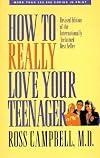
Excellent, reassuring advice about showing older children that they are loved by their parents. The book deals with potential areas of conflict, and explains how to create good environments for listening and sharing, and increased communication.
As well as reading it in full in 2000 - when my sons were 13 and 11 - I dipped into this repeatedly, just about every year until they left home, and each time found more gems of wisdom.
Highly recommended, to all parents of pre-teens and teenagers, show more whether or not problems are occurring. show less
As well as reading it in full in 2000 - when my sons were 13 and 11 - I dipped into this repeatedly, just about every year until they left home, and each time found more gems of wisdom.
Highly recommended, to all parents of pre-teens and teenagers, show more whether or not problems are occurring. show less

While so many parenting books out there are "ages and stages" and discipline (reacting AFTER behavior), Dr. Campbell take a preventative approach.I think every parent, teacher, grandparent, babysitter, social worker ... basically anyone who interacts with children on a regular basis should read this book!
How to Really Love Your Child by Dr. Ross Campbell, M.D.
In the preface, Dr. Campbell acknowledges that there is a lot of parenting information out there--enough to overwhelm parents. show more Though the information is good "many books, articles, and lectures have honed in on one, or at most only a few specific aspects of child rearing without clearly defining the specific areas they cover." It's not that the information is wrong or the parents didn't do it right, "the problem lies in the parents not having a general, balanced perspective on how to relate to a child." Dr. Campbell believes "the problem is how to manifest our love to a child through discipline and when to show it in other more affectionate ways."
In chapter one he cites some of the common problems he has seen as a psychiatrist. Chapters two and three talk about the home, parents and child and how important this relationship is for the child to understand love. An entire chapter is devoted to how the husband and wife relate and how that affects the children. Chapter three defines what unconditional love is and is not. The next three chapters discuss how to express, demonstrate, show this unconditional love through eye contact, physical contact and focused attention.
While chapter three defined unconditional love, chapter seven touches on appropriate and inappropriate love: possessiveness, seductiveness, vicariousness and role-reversal. If you are a loving, Christian parent and think you can skip over this chapter--wait. Read through it if only to know possible warning signs if you ever see them in your friends' or your child's friends' family.
Though chapter eight touches on helping your child learn how to deal with his anger, Dr. Campbell says this topic is thoroughly covered in How to Really Love Your Angry Child. There is some helpful starting information in this chapter, however.
Chapter nine is about discipline. Dr. Campbell says "that making a child feel loved is the first and most important part of good discipline." Love and discipline should not be viewed as separate entities, and "punishment is a very small part of discipline." But the next thing he says is what I found interesting:
"What you have read thus far in this book is the most important aspect of discipline, and you must apply what you've learned to expect the best results from disciplining your child. There is no point in reading further at this time if you have not applied what you have already read." show less
How to Really Love Your Child by Dr. Ross Campbell, M.D.
In the preface, Dr. Campbell acknowledges that there is a lot of parenting information out there--enough to overwhelm parents. show more Though the information is good "many books, articles, and lectures have honed in on one, or at most only a few specific aspects of child rearing without clearly defining the specific areas they cover." It's not that the information is wrong or the parents didn't do it right, "the problem lies in the parents not having a general, balanced perspective on how to relate to a child." Dr. Campbell believes "the problem is how to manifest our love to a child through discipline and when to show it in other more affectionate ways."
In chapter one he cites some of the common problems he has seen as a psychiatrist. Chapters two and three talk about the home, parents and child and how important this relationship is for the child to understand love. An entire chapter is devoted to how the husband and wife relate and how that affects the children. Chapter three defines what unconditional love is and is not. The next three chapters discuss how to express, demonstrate, show this unconditional love through eye contact, physical contact and focused attention.
While chapter three defined unconditional love, chapter seven touches on appropriate and inappropriate love: possessiveness, seductiveness, vicariousness and role-reversal. If you are a loving, Christian parent and think you can skip over this chapter--wait. Read through it if only to know possible warning signs if you ever see them in your friends' or your child's friends' family.
Though chapter eight touches on helping your child learn how to deal with his anger, Dr. Campbell says this topic is thoroughly covered in How to Really Love Your Angry Child. There is some helpful starting information in this chapter, however.
Chapter nine is about discipline. Dr. Campbell says "that making a child feel loved is the first and most important part of good discipline." Love and discipline should not be viewed as separate entities, and "punishment is a very small part of discipline." But the next thing he says is what I found interesting:
"What you have read thus far in this book is the most important aspect of discipline, and you must apply what you've learned to expect the best results from disciplining your child. There is no point in reading further at this time if you have not applied what you have already read." show less

Good read.
This book has really challenged me to make a better effort to really love my children. So often as a parent we get caught up in all the responsibilities and task that come with parenting and we lose sight of what matters most - Showing Gods love and our love to our children. For me, it is taking the time to stop, look and listen to each child as they need me each day!
This book has really challenged me to make a better effort to really love my children. So often as a parent we get caught up in all the responsibilities and task that come with parenting and we lose sight of what matters most - Showing Gods love and our love to our children. For me, it is taking the time to stop, look and listen to each child as they need me each day!
Awards

You May Also Like


Associated Authors
Statistics
- Works
- 33
- Members
- 1,992
- Popularity
- #12,914
- Rating
- 3.9
- Reviews
- 15
- ISBNs
- 123
- Languages
- 16
- Favorited
- 1