
Michael Stein (1) (1960–)
Author of The Addict: One Patient, One Doctor, One Year
For other authors named Michael Stein, see the disambiguation page.
Michael Stein (1) has been aliased into Michael D. Stein.
About the Author
Michael Stein, a physician, teaches at Brown University. His first novel, "Probabilities," was nominated for the PEN/Hemingway Award. Both his first & second novel, "The White Life," were published by The Permanent Press. (Bowker Author Biography)
Works by Michael Stein
Works have been aliased into Michael D. Stein.
Tagged
Common Knowledge
- Legal name
- Stein, Michael D.
- Birthdate
- 1960-01-15
- Gender
- male
- Occupations
- novelist
non-fiction writer
doctor - Nationality
- USA
- Places of residence
- Providence, Rhode Island, USA
- Associated Place (for map)
- Rhode Island, USA
Members
Reviews
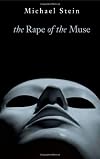
Michael Stein's new novel "The Rape of the Muse" ponders the worth of art and the place of beauty in our contemporary society. Stein's re-imagining of painter Paul Georges' trial for libel in 1980 updates the events to the 21st century and fleshes out the characters with a post September 11th ennui. When Georges' trial took place in 1980, the Neo-Expressionist boom in art was just beginning. Emotional, brightly colored paintings using the figure as a theme filled galleries in New York and show more Europe. In that time Paul Georges’ artwork was included in exhibitions at the Whitney Museum in New York, the Rose Art Museum at Brandeis, and the Pennsylvania Academy of Fine Arts. But still, Georges was an outsider looking in on an art world that often considered narrative painting to be atavistic at best - reactionary at worst.
Michael Stein adeptly weaves elements of Paul Georges' life into the story of his fictive painter - Harris Montrose. Montrose cares deeply about the gift and responsibility of art. This humble esteem for the muse that stokes his creative fire leads to a showdown with an artistic colleague over a limned image. Are we all fair game for artistic interpretation? Is anything really private anymore? Is the language of painting relevant to our time?
Stein brings in a young artist, already marked by the reigning critics as one to watch, who is psychologically blocked from the creative process. This young artist, Rand Taber, becomes Montrose's studio assistant. As if in a scene from Martin Scorsese's segment in the film "New York Stories", Taber learns life lessons from his mentor Montrose. In this sense, Michael Stein seems to hold up the elder painter as a pugnacious model of validity. Harris Montrose paints like his life depends on it. The muse needs to be honored. And if anyone gets in the way they should heed the warnings. The muse shall be avenged.
It is refreshing to read a work in which art is considered deeply as much more than a commodity or a means to privilege. Michael Stein’s “The Rape of the Muse” is gutsy – almost an aesthetic bar fight of a novel. It is heartening to feel Paul Georges’ passion seep into Stein’s writing. Art is not just style. At its best, art considers life and then makes something new. Michael Stein’s “The Rape of the Muse” digs into the life and work of the forceful painter Paul Georges and conjures up a story for our moment.
Highly recommended. show less
Michael Stein adeptly weaves elements of Paul Georges' life into the story of his fictive painter - Harris Montrose. Montrose cares deeply about the gift and responsibility of art. This humble esteem for the muse that stokes his creative fire leads to a showdown with an artistic colleague over a limned image. Are we all fair game for artistic interpretation? Is anything really private anymore? Is the language of painting relevant to our time?
Stein brings in a young artist, already marked by the reigning critics as one to watch, who is psychologically blocked from the creative process. This young artist, Rand Taber, becomes Montrose's studio assistant. As if in a scene from Martin Scorsese's segment in the film "New York Stories", Taber learns life lessons from his mentor Montrose. In this sense, Michael Stein seems to hold up the elder painter as a pugnacious model of validity. Harris Montrose paints like his life depends on it. The muse needs to be honored. And if anyone gets in the way they should heed the warnings. The muse shall be avenged.
It is refreshing to read a work in which art is considered deeply as much more than a commodity or a means to privilege. Michael Stein’s “The Rape of the Muse” is gutsy – almost an aesthetic bar fight of a novel. It is heartening to feel Paul Georges’ passion seep into Stein’s writing. Art is not just style. At its best, art considers life and then makes something new. Michael Stein’s “The Rape of the Muse” digs into the life and work of the forceful painter Paul Georges and conjures up a story for our moment.
Highly recommended. show less
 This review was written for LibraryThing Early Reviewers.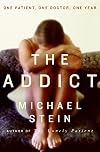
The Addict by Dr. Michael Stein is a true story chronicling a physician’s practice treating patients with opiate addiction. The subtitle “One Patient, One Doctor, One Year” is a bit of a misnomer; while the book focuses primarily on the case of a single patient, “Lucy,” Dr. Stein draws parallels and provides contrasts between her case and several other patients he treats for the same disorder. However, the book follows Lucy far more closely and chronologically than any of the show more others, with each of the 10 chapters each detailing a single visit to the office, from her initial arrival through 9 subsequent appointments over the following year.
Overall the book is an interesting one, and it paints a detailed and troubling picture of the epidemic of opiate addiction in America; Stein claims 11 million people use these drugs recreationally. His pictures of Vicodin addiction are far more disturbing than the pill popping House so many of us have seen on television. He does an excellent job of presenting his patents as complex and challenged people, and particularly with Lucy’s complex life story, shows remarkable restraint in allowing her history to be revealed gradually over the course of the year, rather than taking the more clinical (and less literary) approach of telling us what he’s learned about her from the beginning. It is this unfolding of her life story more than her recovery that really drives the book forward. Stein is also very honest about his own personal struggles and shortcomings, even when that honesty comes off as less than flattering, and that is certainly to be admired.
While I did find myself rooting for Lucy, and for all of Dr. Stein’s patients, I did find sections of the book repetitive, and it was sometimes challenging to keep track of which patient Stein was referring to when he jumped between several cases in the same chapter. Still, the book is a strong one. I would recommend it enthusiastically to those interested in the medical treatment of addiction, and perhaps to those who know someone who suffers from opiate addiction. I am not sure though, that this book has the wide appeal to really reach people without at least some prior interest in the subject. show less
Overall the book is an interesting one, and it paints a detailed and troubling picture of the epidemic of opiate addiction in America; Stein claims 11 million people use these drugs recreationally. His pictures of Vicodin addiction are far more disturbing than the pill popping House so many of us have seen on television. He does an excellent job of presenting his patents as complex and challenged people, and particularly with Lucy’s complex life story, shows remarkable restraint in allowing her history to be revealed gradually over the course of the year, rather than taking the more clinical (and less literary) approach of telling us what he’s learned about her from the beginning. It is this unfolding of her life story more than her recovery that really drives the book forward. Stein is also very honest about his own personal struggles and shortcomings, even when that honesty comes off as less than flattering, and that is certainly to be admired.
While I did find myself rooting for Lucy, and for all of Dr. Stein’s patients, I did find sections of the book repetitive, and it was sometimes challenging to keep track of which patient Stein was referring to when he jumped between several cases in the same chapter. Still, the book is a strong one. I would recommend it enthusiastically to those interested in the medical treatment of addiction, and perhaps to those who know someone who suffers from opiate addiction. I am not sure though, that this book has the wide appeal to really reach people without at least some prior interest in the subject. show less
This review was written for LibraryThing Early Reviewers.The Rape of the Muse is an interesting novel about part of the art world of New York. Some artists who have been successful in the big city struggle over time with barely conscious personal motives and retreat to Connecticut for a life review. Their art becomes dated and creative desires wane. Discussions of beauty vs pretty, and art vs commercial products are words filling empty space.
The mythical symbol of an artist’s creativity, a muse, appears in the guise of a sexually alluring, show more stimulating vamp. This person enables the delusion that she can help the artists get back on track. The reality of the situation is that delusions provide only short term gains in insights that fade quickly. Where is the renewal of energy and confidence to take artistic action in a timely social context? Is that the right question?
The novel involves characters at various levels of self-awareness at turning points in their artistic careers. They all have confused movement with action, and discussions of it are often meaningless. But words they use produce serious consequences within and between characters. They have created art and tried to sell it and have taken to heart the consequences of buyer skepticism and pettiness. What can the characters do in this no-win situation?
Mr. Stein has painted a picture in bleak black and white calling to mind Eric Erikson’s notion of looking back on life with ego integrity vs despair. Integrity in this novel comes from looking to find beauty and represent it so that people will look at it. It is up to the viewer to decide the value of the art from their own perspective. As Proust indicated though, once you put your art out there, the viewer owns it and the artist has no control over reactions. Well, what do you expect, kudos? If so, despair is inevitable. All the artist can hope for is that viewers will allow themselves to have personally honest reactions and not be swayed by social whims.
The artist does not need to believe in a muse (a bit embarrassing like talking to your dog when walking him); he simply needs to get back to work. It is all a matter of the artist maintaining his own unique perspective of beauty.
I enjoyed the novel and will read more of the work of Michael Stein. There were, however, more than a few sentences that had too many words to be believable, from my perspective. show less
The mythical symbol of an artist’s creativity, a muse, appears in the guise of a sexually alluring, show more stimulating vamp. This person enables the delusion that she can help the artists get back on track. The reality of the situation is that delusions provide only short term gains in insights that fade quickly. Where is the renewal of energy and confidence to take artistic action in a timely social context? Is that the right question?
The novel involves characters at various levels of self-awareness at turning points in their artistic careers. They all have confused movement with action, and discussions of it are often meaningless. But words they use produce serious consequences within and between characters. They have created art and tried to sell it and have taken to heart the consequences of buyer skepticism and pettiness. What can the characters do in this no-win situation?
Mr. Stein has painted a picture in bleak black and white calling to mind Eric Erikson’s notion of looking back on life with ego integrity vs despair. Integrity in this novel comes from looking to find beauty and represent it so that people will look at it. It is up to the viewer to decide the value of the art from their own perspective. As Proust indicated though, once you put your art out there, the viewer owns it and the artist has no control over reactions. Well, what do you expect, kudos? If so, despair is inevitable. All the artist can hope for is that viewers will allow themselves to have personally honest reactions and not be swayed by social whims.
The artist does not need to believe in a muse (a bit embarrassing like talking to your dog when walking him); he simply needs to get back to work. It is all a matter of the artist maintaining his own unique perspective of beauty.
I enjoyed the novel and will read more of the work of Michael Stein. There were, however, more than a few sentences that had too many words to be believable, from my perspective. show less
This review was written for LibraryThing Early Reviewers.A thin little novel that attempts to do grand things in its discussion of aesthetics and the ambitions of careerism. Unfortunately, the project is marred by a fundamental misapprehension of current aesthetic debates within the art world; the notion of any artist seriously making a claim for "true beauty" and turning to "radically new" digital methods is simply absurd, and sits uncomfortably with the more on-point descriptions of exhibition opening dynamics and the social concerns of young show more artists. The pleasure of the reading is in the details, in these personal tics and awkward character dynamics that do manage to capture something of the neurotic art scene today. As such, the novel would read in a much more interesting way were it not left to the ridiculously grandiloquent thematic gestures of phrases like "the rape of the muse," which demonstrate that the book takes itself just a bit too seriously. show less
This review was written for LibraryThing Early Reviewers.Lists
You May Also Like


Statistics
- Works
- 9
- Members
- 233
- Popularity
- #96,931
- Rating
- 3.4
- Reviews
- 47
- ISBNs
- 42
- Languages
- 3
