
Thomas Harris (1)
Author of The Silence of the Lambs
For other authors named Thomas Harris, see the disambiguation page.
About the Author
Author Thomas Harris was born in Jackson, Mississippi in 1940 to Thomas, an electrical engineer, and Polly, a high school chemistry and biology teacher. He graduated with a B.A. from Baylor University in 1964. He has one child, a daughter, from his first marriage. Harris worked as a general show more assignment reporter for the Associated Press in New York and covered the crime beat daily. He spent time at the FBI's Behavioral Science Unit in Quantico and has interviewed serial killer Ted Bundy in researching for his novels. Harris's first novel, "Black Sunday" (1975), was a collaborative effort with fellow reporters Sam Maul and Dick Riley. While working the evening shift for the AP, they came up with the idea of using the Goodyear Blimp as the vehicle for a terrorist attack at the Super Bowl. The next novel, "Red Dragon" (1981), tells the story of the FBI's search for a murderer and introduces the infamous character Dr. Hannibal "The Cannibal" Lecter. The 1986 movie version of this novel was titled Manhunter. Next came, what many considered to be a masterpiece of suspense, "The Silence of the Lambs" (1988) and brings back the psychopathic killer Hannibal Lecter in an intense exploration of evil. The film version became the third movie in history to claim the top five Academy Awards, which were Best Actor (Anthony Hopkins), Best Actress (Jodie Foster), Best Screenplay (Ted Tally), Best Director (Jonathan Demme) and Best Picture. The sequel, "Hannibal," was published in 1999 and it was also made into a movie. (Bowker Author Biography) show less
Series
Works by Thomas Harris
Hannibal Rising [excerpt] 2 copies
Associated Works
The Graphic Canon of Crime & Mystery, Vol. 2: From Salome to Edgar Allan Poe to The Silence of the Lambs (2021) — Contributor — 14 copies
Tagged
Common Knowledge
- Birthdate
- 1940-04-11
- Gender
- male
- Education
- Baylor University
- Occupations
- reporter
writer
screenwriter - Organizations
- Waco Tribune-Herald
Associated Press - Awards and honors
- Bram Stoker Award (Lifetime Achievement, 2006)
- Agent
- Morton Janklow
- Nationality
- USA
- Birthplace
- Jackson, Tennessee, USA
- Places of residence
- Jackson, Tennessee, USA
Rich, Mississippi, USA
New York, New York, USA
Florida, USA
Sag Harbor, Long Island, New York, USA
Miami, Florida, USA - Associated Place (for map)
- USA
Members
Discussions
Suntup Press -- The Silence of the Lambs in Fine Press Forum (April 2023)
Reviews
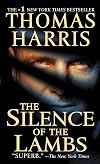
I read this mainly because I miss the TV show 'Hannibal', the third series of which I await with impatience, but also because it is a classic of horror fiction. Now I know why - the narrative is incredibly tense and compelling. The writing has a measured, flat quality that belies the terrifying events unfolding. What really lifts this book above [b:Red Dragon|28877|Red Dragon (Hannibal Lecter, #1)|Thomas Harris|https://images.gr-assets.com/books/1390284698s/28877.jpg|925503], in my view, is show more Clarice Starling as the main point of view character. She is a fascinating, complex creation. Although I knew from general exposure to popular culture that she would survive the book, I was still very worried for her at certain points. Especially given Hannibal Lecter’s fondness for maiming people. Frankly, I defy anyone to interrupt their reading of the last two hundred pages of this book for anything other than an emergency. Although the style of TV’s 'Hannibal' is inevitably somewhat different to the original novels, both have the same intense effect on the nerves. show less
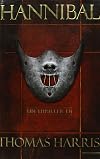
Oh boy, is this an epitome of involuntary humour. Or maybe voluntary, as I read that Harris was stalked by his publisher into writing a sequel to The Silence of the Lambs. I interpret the total, DouglasAdamesque, flamboyant unbelievability of story and characters as a form of cunning yet harmless vengeance.
Proofs that the guy was taking the piss, when he wrote this thing:
The Sardinian killers WITH A SAUSAGE IN THE RIBBON OF THEIR HATS. Of course, every Sardinian walks about his business with show more a hat, and a sausage stuck in it.
The Florence inspector who goes to the opera on a regular basis, has a super-pussy, ambitious wife, and is a descendant of the Pazzi family. Beware, not because that individual character has these out-of-the-norm traits for some reason. He just happens to be, you know, Italian from Florence. They all go the opera, have gorgeous wives and descends from ancient families. Moreover if they are (mwahahahaaaahah) policemen. Seriously, whatever.
SPOILER SPOILER SPOILER
The whole story of (SPOILER!!!) Clarice's kidnapping and romantic dinner. I actually appreciated. At the time, I would have sold my mother to eat my boss's brain sliced and sautéed.
END OF SPOILER
Now, it's been a decade since I read this thing. This mean that these pearls are all I remember, but there is more, way more, to it. Together with Giorgio Faletti's masterpiece of (seriously) involuntary humour, Io Uccido, this novel introduced me to the guilty pleasures of horrible, fascinating purple prose and out-of-the-world characterisation. show less
Proofs that the guy was taking the piss, when he wrote this thing:
The Sardinian killers WITH A SAUSAGE IN THE RIBBON OF THEIR HATS. Of course, every Sardinian walks about his business with show more a hat, and a sausage stuck in it.
The Florence inspector who goes to the opera on a regular basis, has a super-pussy, ambitious wife, and is a descendant of the Pazzi family. Beware, not because that individual character has these out-of-the-norm traits for some reason. He just happens to be, you know, Italian from Florence. They all go the opera, have gorgeous wives and descends from ancient families. Moreover if they are (mwahahahaaaahah) policemen. Seriously, whatever.
SPOILER SPOILER SPOILER
The whole story of (SPOILER!!!) Clarice's kidnapping and romantic dinner. I actually appreciated. At the time, I would have sold my mother to eat my boss's brain sliced and sautéed.
END OF SPOILER
Now, it's been a decade since I read this thing. This mean that these pearls are all I remember, but there is more, way more, to it. Together with Giorgio Faletti's masterpiece of (seriously) involuntary humour, Io Uccido, this novel introduced me to the guilty pleasures of horrible, fascinating purple prose and out-of-the-world characterisation. show less
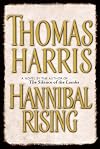
I wasn’t sure what to expect when I picked up the conclusion of Thomas Harris’s Hannibal Lecter tetralogy, four years after finishing “Hannibal.” The latter book is one of the most nihilistic I’ve read, with scenes that still unsettle me not for their graphic nature but for their negation of human worth. No goodness escapes the black hole that is Hannibal Lecter. Why, then, you might ask, would I read the fourth book? Because, my friend, I am a finisher. I finish things. show more Surprisingly, I’m glad I did.
I’ve decided Hannibal is best understood as a character if you cut the tetralogy into two unrelated duologies. I admit you can’t do this cleanly from a plot perspective. FBI agent Clarice Starling’s central role fuses both “The Silence of the Lambs” and “Hannibal” into a shared universe. However, the smartest cannibal in the world is nothing but a supporting (if memorable) character in “Red Dragon” and “The Silence of the Lambs.” His backstory is unknown apart from a childhood penchant for animal cruelty, and the horror of him is that his evil has no reason. He simply exists as a moral nullity in human form. But in “Hannibal” and “Hannibal Rising,” we find a man who is compassionate toward animals, embraces evil for comprehensible reasons, and rejects humanity without extinguishing his hunger for love; even if that love is on his terms and frightening in its capitulation to the grave.
If you can separate the two Hannibals, then the second one does something interesting. I’m certain Harris didn’t plan for this since he originally intended to close the story with the third book. I don’t know if he wanted me to receive the origin story of “Hannibal Rising” the way I do since the meaning of literature always passes through a prism of the reader’s own mind. Regardless of what Harris planned or wanted, what I find in Hannibal’s origin story and in its preceding denouement is a confrontation with what the horrors of the 20th century did to us, and the choice that man’s inhumanity forces upon us.
Harris takes us to Hannibal’s boyhood home in Lithuania on the eve of the Second World War. The boy Hannibal is the last memory of a lost innocence: born into landed aristocracy, gifted with a prodigy’s intellect, filled with a brother’s protective love for his little sister Mischa, and cushioned by parental love. By the time he emerges from snowy woods in 1944, alone and traumatized with gaps in his memory, all of that has disappeared down the throats of Hitler’s war and the men who thrive in depraved times. As Hannibal grows to young manhood in post-war France, tries to recover his lost memories, and begins hunting the war criminals who took everything, it becomes clear that a sickness and a rot lies beneath the quiet manners and refined tastes of this genteel young man.
In one sense, Hannibal is humanity writ large at the end of the deadliest war in human history. We fought a war in which human life meant less than nothing, and we’ve never stopped wondering if we were more right than we knew. If the most highly cultured and intelligent human civilizations on Earth could eat each other’s hearts, then what are we really? This self-doubt pulses in the novel’s subplot of Allied attempts to redistribute stolen art pieces to their rightful owners. You can shuffle around all the pretty things you want in an attempt to recover a sense of your own nobility, but can redistributed beauty erase what you’ve seen? What you’ve done? Or is all our high culture just a mask for the cannibal who waits for his next opportunity to feed? Inspector Popil’s summary of Hannibal serves just as well for the world that stumbled out of the smokestacks of Auschwitz, out of the steppes of the Eastern Front, and out of cozy French villages where neighbors betrayed neighbors to death: “The little boy Hannibal died in 1945 out there in the snow trying to save his sister. His heart died with Mischa. What is he now? There's not a word for it yet. For lack of a better word, we'll call him a monster.”
In a more private sense, Hannibal is every person who knows why Ralph wept for the end of innocence and the darkness of man's heart. As Hannibal penetrates ever nearer to a truth his mind rejects, as he penetrates ever nearer to men who rejected their humanity, he is faced with the eternal choice: to swear allegiance to the darkness or to believe that light still shines even if it doesn’t shine on you. Lady Murasaki, Hannibal’s Japanese aunt by her marriage to his uncle, represents the latter choice. She understands her broken nephew better than most because she knows what it is to suffer when all you love is consumed in atomic fire. She knows that a part of him is still drawn to the living, breathing, beautiful world that she personifies. No one is better able to plead with Hannibal to abandon his journey into the night: “In Hiroshima, green plants push up through ashes to the light.”
At some level, Hannibal seems to understand the decision before him when, upon seeing caged birds awaiting their turn in the stewpot, says, “They’re just like us. They can smell the others cooking, and still they try to sing.” The tragedy is that we already know what Hannibal chooses, because we’ve already read the books. Powerful is the drive to return pain for pain, to take from them what they took from you, to hide from a darkness that feels like pain in a darkness that feels like truth. And we know from “Hannibal” where the surrender to death ends: on a bloody balcony at the Palazzo Vecchio, in a gruesome dinner of death, and by the corruption of love and goodness into grotesque self-parodies.
No, this is not a necessary ending. Every time men grease the wheels of history with the blood of the innocent, survivors face the same choice: to push up through the ashes or to choke on them. Many years ago, I attended a talk given by a Holocaust survivor who chose the light. She spoke frankly of the way her trauma from the camps remained seven decades after her release; but she also spoke of celebrating her birthday with enthusiasm, because every year of life was another reminder that Hitler didn’t win. Should I ever, God forbid, be forced to endure such horrors, this is who I want to be: this, and not a man who passes into the valley of the shadow of death and decides that the shadow is all that is. show less
I’ve decided Hannibal is best understood as a character if you cut the tetralogy into two unrelated duologies. I admit you can’t do this cleanly from a plot perspective. FBI agent Clarice Starling’s central role fuses both “The Silence of the Lambs” and “Hannibal” into a shared universe. However, the smartest cannibal in the world is nothing but a supporting (if memorable) character in “Red Dragon” and “The Silence of the Lambs.” His backstory is unknown apart from a childhood penchant for animal cruelty, and the horror of him is that his evil has no reason. He simply exists as a moral nullity in human form. But in “Hannibal” and “Hannibal Rising,” we find a man who is compassionate toward animals, embraces evil for comprehensible reasons, and rejects humanity without extinguishing his hunger for love; even if that love is on his terms and frightening in its capitulation to the grave.
If you can separate the two Hannibals, then the second one does something interesting. I’m certain Harris didn’t plan for this since he originally intended to close the story with the third book. I don’t know if he wanted me to receive the origin story of “Hannibal Rising” the way I do since the meaning of literature always passes through a prism of the reader’s own mind. Regardless of what Harris planned or wanted, what I find in Hannibal’s origin story and in its preceding denouement is a confrontation with what the horrors of the 20th century did to us, and the choice that man’s inhumanity forces upon us.
Harris takes us to Hannibal’s boyhood home in Lithuania on the eve of the Second World War. The boy Hannibal is the last memory of a lost innocence: born into landed aristocracy, gifted with a prodigy’s intellect, filled with a brother’s protective love for his little sister Mischa, and cushioned by parental love. By the time he emerges from snowy woods in 1944, alone and traumatized with gaps in his memory, all of that has disappeared down the throats of Hitler’s war and the men who thrive in depraved times. As Hannibal grows to young manhood in post-war France, tries to recover his lost memories, and begins hunting the war criminals who took everything, it becomes clear that a sickness and a rot lies beneath the quiet manners and refined tastes of this genteel young man.
In one sense, Hannibal is humanity writ large at the end of the deadliest war in human history. We fought a war in which human life meant less than nothing, and we’ve never stopped wondering if we were more right than we knew. If the most highly cultured and intelligent human civilizations on Earth could eat each other’s hearts, then what are we really? This self-doubt pulses in the novel’s subplot of Allied attempts to redistribute stolen art pieces to their rightful owners. You can shuffle around all the pretty things you want in an attempt to recover a sense of your own nobility, but can redistributed beauty erase what you’ve seen? What you’ve done? Or is all our high culture just a mask for the cannibal who waits for his next opportunity to feed? Inspector Popil’s summary of Hannibal serves just as well for the world that stumbled out of the smokestacks of Auschwitz, out of the steppes of the Eastern Front, and out of cozy French villages where neighbors betrayed neighbors to death: “The little boy Hannibal died in 1945 out there in the snow trying to save his sister. His heart died with Mischa. What is he now? There's not a word for it yet. For lack of a better word, we'll call him a monster.”
In a more private sense, Hannibal is every person who knows why Ralph wept for the end of innocence and the darkness of man's heart. As Hannibal penetrates ever nearer to a truth his mind rejects, as he penetrates ever nearer to men who rejected their humanity, he is faced with the eternal choice: to swear allegiance to the darkness or to believe that light still shines even if it doesn’t shine on you. Lady Murasaki, Hannibal’s Japanese aunt by her marriage to his uncle, represents the latter choice. She understands her broken nephew better than most because she knows what it is to suffer when all you love is consumed in atomic fire. She knows that a part of him is still drawn to the living, breathing, beautiful world that she personifies. No one is better able to plead with Hannibal to abandon his journey into the night: “In Hiroshima, green plants push up through ashes to the light.”
At some level, Hannibal seems to understand the decision before him when, upon seeing caged birds awaiting their turn in the stewpot, says, “They’re just like us. They can smell the others cooking, and still they try to sing.” The tragedy is that we already know what Hannibal chooses, because we’ve already read the books. Powerful is the drive to return pain for pain, to take from them what they took from you, to hide from a darkness that feels like pain in a darkness that feels like truth. And we know from “Hannibal” where the surrender to death ends: on a bloody balcony at the Palazzo Vecchio, in a gruesome dinner of death, and by the corruption of love and goodness into grotesque self-parodies.
No, this is not a necessary ending. Every time men grease the wheels of history with the blood of the innocent, survivors face the same choice: to push up through the ashes or to choke on them. Many years ago, I attended a talk given by a Holocaust survivor who chose the light. She spoke frankly of the way her trauma from the camps remained seven decades after her release; but she also spoke of celebrating her birthday with enthusiasm, because every year of life was another reminder that Hitler didn’t win. Should I ever, God forbid, be forced to endure such horrors, this is who I want to be: this, and not a man who passes into the valley of the shadow of death and decides that the shadow is all that is. show less
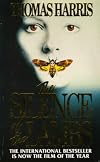
This is my first time rereading Silence since it was originally published back in 1989. I snagged a copy from the library and never got around buying a copy of my own. It became so ubiquitous and was so influential that I somehow never got around to it, even though I know I recommended it to lots of people at the time. Then the film came out and the whole thing went stratospheric. I didn't even see the film when it was on general release: I watched it on ferry back from France. Anyway. I was show more annoyed at Silence because of the way it turned the police procedural into almost fetishistic forensic investigation for sexycool serial killers Me, I preferred the approach in Peter Straub's Koko, released around the same time, also about a hunt for a serial killer but with nary an autopsy or fibre analysis. Though Koko was successful in its own terms, it was Silence that set its stamp on popular culture, and I was unreasonably annoyed about that.
Weird then to discover how little forensics there is in the book itself. There's one post-mortem examination, the antithesis of every pop-video fast-cut CSI montage. It deals with the body and those who examine it with humanity and respect, and the psychological profiling is fairly basic and dismissed with contempt by good old Doctor Lecter. Even his own insights turn out retrospectively to have been the result of direct knowledge of the killer rather than second-hand analysis.
What we have then, is an amazing game of cat-and-mouse between Starling and Lector. The film has inescapably stamped its imprint all over the book, but that's okay. The book and the film complement each other quite well. So Starling is Foster and Lector is Hopkins and, not insignificantly, Scott Glenn is Jack Crawford. Certainly you couldn't ask for a better cast to voice the characters in your head, and the book has a greater depth that the film can't match.
The book is also incredibly well written, rare enough in massively popular bestsellers. It's a rare author who can handle switching POVs and moving in and out of the present tense so smoothly, giving voice to the anger and pain of the victims and the agents and the crazy evil of the killer with equal assurance. Lector's escape at the book's mid-point is one of the most riveting sequences in all of suspense fiction, and the narrative dexterity when he wrong-foots the reader a few chapters later is subtle and sophisticated. Jeffrey Deaver appears to have made a career out of replicating endless variations of that sequence and that trick, so you can appreciate Harris' restraint all the more.
I suppose it's understandable that Harris turned the sequel, Hannibal into a sort of gorgeous, camp gothic romance rather than try to replicate Silence. Whatever you might think of that, this itself remains a masterpiece of the thriller genre, and though you might expect endless imitators to have diluted its effectiveness, the fact is none of them really got to the heart of what makes it work. Read it, watch the film and enjoy it all over again. show less
Weird then to discover how little forensics there is in the book itself. There's one post-mortem examination, the antithesis of every pop-video fast-cut CSI montage. It deals with the body and those who examine it with humanity and respect, and the psychological profiling is fairly basic and dismissed with contempt by good old Doctor Lecter. Even his own insights turn out retrospectively to have been the result of direct knowledge of the killer rather than second-hand analysis.
What we have then, is an amazing game of cat-and-mouse between Starling and Lector. The film has inescapably stamped its imprint all over the book, but that's okay. The book and the film complement each other quite well. So Starling is Foster and Lector is Hopkins and, not insignificantly, Scott Glenn is Jack Crawford. Certainly you couldn't ask for a better cast to voice the characters in your head, and the book has a greater depth that the film can't match.
The book is also incredibly well written, rare enough in massively popular bestsellers. It's a rare author who can handle switching POVs and moving in and out of the present tense so smoothly, giving voice to the anger and pain of the victims and the agents and the crazy evil of the killer with equal assurance. Lector's escape at the book's mid-point is one of the most riveting sequences in all of suspense fiction, and the narrative dexterity when he wrong-foots the reader a few chapters later is subtle and sophisticated. Jeffrey Deaver appears to have made a career out of replicating endless variations of that sequence and that trick, so you can appreciate Harris' restraint all the more.
I suppose it's understandable that Harris turned the sequel, Hannibal into a sort of gorgeous, camp gothic romance rather than try to replicate Silence. Whatever you might think of that, this itself remains a masterpiece of the thriller genre, and though you might expect endless imitators to have diluted its effectiveness, the fact is none of them really got to the heart of what makes it work. Read it, watch the film and enjoy it all over again. show less
Lists
Favourite Books (1)
Five star books (1)
Books I've Read (1)
Eerie eTales (4)
Serial Killers (2)
Gen X Library (2)
1980s (2)
Unread books (2)
Horror: Top 10 (1)
Overdue Podcast (1)
Page Turners (1)
To Read - Horror (2)
1970s (1)
Awards


You May Also Like


Associated Authors
Statistics
- Works
- 14
- Also by
- 3
- Members
- 45,390
- Popularity
- #357
- Rating
- 3.8
- Reviews
- 549
- ISBNs
- 726
- Languages
- 37
- Favorited
- 86

