
Martin Stannard (1)
Author of The Good Soldier [Norton Critical Edition]
For other authors named Martin Stannard, see the disambiguation page.
About the Author
Martin Stannard is a professor of modern English literature at the University of Leicester. He is the author of a celebrated two-volume biography of Evelyn Waugh and editor of Evelyn Waugh: The Critical Heritage and of Ford Madox Ford's The Good Soldier. His many articles and reviews have appeared show more in Review of English Studies, Essays in Criticism, the New York Times Book Review, the Sunday Times, the Spectator, and the Times Literary Supplement, among other publications. show less
Series
Works by Martin Stannard
Tagged
Common Knowledge
- Gender
- male
- Education
- University of Warwick
University of Sussex
University of Oxford - Occupations
- Professor of Modern English Literature
poet - Organizations
- University of Leicester
- Awards and honors
- Royal Society of Literature (Fellow)
- Nationality
- UK
- Map Location
- England, UK
Members
Reviews
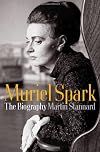
This is an exasperating and troubling biography, though my opinion could be clouded by pre-publication rumor. As Stannard notes in his preface, he was handpicked by Spark to write her biography. This was enough to get the rumor mill going early. A biography of Spark at the request of Spark?! Spark had always been known to be fabulously private, even going so far to write her autobiography, Curriculum Vitae, a monument to pure evasion that touched upon nothing that most readers were probably show more reading the book for in the first place. Why would *she* invite a biographer into her life? *cue some major control issues*
Stannard also notes that while not holding veto power over him, Spark did hold the power to confirm the title of "Authorized Biography" over the book depending upon how he treated his subject. Here's where the rumor comes in: Spark apparently did withhold the coveted designation of "authorized biography," and then she died. Her literary executrix then took over, also withholding the official imprimatur until she had scrupulously gone over every line of the book in order to "correct" the picture painted of her friend.
If any or all of these rumors are true, it shows in this biography. The text is mushy and imprecise, with many sentences directly contradicting the preceding one. It does indeed read like an account of a woman in which every word has been tinkered with in order to manipulate the subject just so. Parts of Spark's life (presumably the less flattering parts, of which I gather there are many) are scandalously glossed over while Stannard balances this out by spending too much time with dull literary interpretations of the writers peripheral to Spark's career. I don't normally blame the biographer for disliking the subject of his biography, but in this case there is a bit of blame to be meted out to Stannard. Who would write a biography under these circumstances, knowing that the result would be so intellectually dishonest?
Spark's curious readers will continue to wait for the definitive account of her life; this just isn't it. show less
Stannard also notes that while not holding veto power over him, Spark did hold the power to confirm the title of "Authorized Biography" over the book depending upon how he treated his subject. Here's where the rumor comes in: Spark apparently did withhold the coveted designation of "authorized biography," and then she died. Her literary executrix then took over, also withholding the official imprimatur until she had scrupulously gone over every line of the book in order to "correct" the picture painted of her friend.
If any or all of these rumors are true, it shows in this biography. The text is mushy and imprecise, with many sentences directly contradicting the preceding one. It does indeed read like an account of a woman in which every word has been tinkered with in order to manipulate the subject just so. Parts of Spark's life (presumably the less flattering parts, of which I gather there are many) are scandalously glossed over while Stannard balances this out by spending too much time with dull literary interpretations of the writers peripheral to Spark's career. I don't normally blame the biographer for disliking the subject of his biography, but in this case there is a bit of blame to be meted out to Stannard. Who would write a biography under these circumstances, knowing that the result would be so intellectually dishonest?
Spark's curious readers will continue to wait for the definitive account of her life; this just isn't it. show less
It was a case of literary name-dropping that led me to search out Ford Madox Ford's The Good Solider. Having aged out of copyright restrictions (published in 1915) and having drawn sufficient attention over the years to be able to boast of its own CliffsNotes, The Good Soldier is available on the internet as a free pdf download, which is how I read it.
The story is told in the first person by a self-described “leisure American,” a wealthy man who marries an attractive woman of such show more delicate nature and precipitous health that the marriage is never consummated. Yet the marriage survives, and the narrator and his wife, whom he takes to calling “poor Florence,” live abroad, attaching themselves in couple-fashion to a former British military officer and his wife. Our narrator describes them as a “model couple”: “He was as devoted as was possible to be without appearing fatuous. So well set up, with such honest blue eyes, such a touch of stupidity, such a warm goodheartedness! And she—so tall, so splendid in the saddle, so fair! Yes, Leonora was extraordinarily fair and so extraordinarily the real thing that she seemed too good to be true.” Yet from the beginning, our narrator has forewarned us that things might not be as they appear: “Some one has said that the death of a mouse from cancer is the whole sack of Rome by the Goths, and I swear to you that the breaking up of our little four-square coterie was such another unthinkable event.”
And that’s the subject matter of Ford’s Good Solider—the events leading up to and immediately following the demise of the relationship between two married couples, all of them in their thirties, whose lives take a number of odd and unanticipated turns that culminate in the “breaking up” of this pair of couple-friends.
Despite a series of tragedies, the action is something of a comedy of errors, kept light by the narrator’s candid humor, typically illustrated by his description of the seeming lack of communication between husband and wife, the couple to whom he and Florence have become so attached: “You cannot be absolutely dumb when you live with a person unless you are an inhabitant of the North of England or the State of Maine.” His is a snobbish, self-indulgent humor.
As I sat down to write this review, I was curious about what else may have been written about it since 1915, what with the CliffsNotes and all. One female reviewer commented about the two primary male protagonists, “They have fully colluded in their emasculation by not knowing how to be men.” Having been myself married a time and a fraction and having reached a certain age, I saw these characters quite differently. I rather think they were baffled by the difference between being men (according to the culture of the times) and being husbands; how different and more complicated the world of marriage from the world of making one’s mark as a man—something that continues to mystify many men to this day.
As I began to wonder how The Good Soldier became a classic, I ran across a review that labels it “one of the few stylistically perfect novels in any language.” And now I puzzle through that. It hasn’t been an enjoyable read, yet I found it difficult to put down. In retrospect, I can see that an ambitious, intricate plot comes quite perfectly together at the end. There are no characters that cause the reader to ask, “Whatever happened to her?” There are no loose ends that cause you to ask, “But how did the dog get from the backyard to the library?” Everything is quite expertly and tidily brought to a conclusion with no missing pieces. I suspect I would enjoy reading this one again, this time at a more leisurely pace, to enjoy the masterful technique of bringing everything so perfectly together. show less
The story is told in the first person by a self-described “leisure American,” a wealthy man who marries an attractive woman of such show more delicate nature and precipitous health that the marriage is never consummated. Yet the marriage survives, and the narrator and his wife, whom he takes to calling “poor Florence,” live abroad, attaching themselves in couple-fashion to a former British military officer and his wife. Our narrator describes them as a “model couple”: “He was as devoted as was possible to be without appearing fatuous. So well set up, with such honest blue eyes, such a touch of stupidity, such a warm goodheartedness! And she—so tall, so splendid in the saddle, so fair! Yes, Leonora was extraordinarily fair and so extraordinarily the real thing that she seemed too good to be true.” Yet from the beginning, our narrator has forewarned us that things might not be as they appear: “Some one has said that the death of a mouse from cancer is the whole sack of Rome by the Goths, and I swear to you that the breaking up of our little four-square coterie was such another unthinkable event.”
And that’s the subject matter of Ford’s Good Solider—the events leading up to and immediately following the demise of the relationship between two married couples, all of them in their thirties, whose lives take a number of odd and unanticipated turns that culminate in the “breaking up” of this pair of couple-friends.
Despite a series of tragedies, the action is something of a comedy of errors, kept light by the narrator’s candid humor, typically illustrated by his description of the seeming lack of communication between husband and wife, the couple to whom he and Florence have become so attached: “You cannot be absolutely dumb when you live with a person unless you are an inhabitant of the North of England or the State of Maine.” His is a snobbish, self-indulgent humor.
As I sat down to write this review, I was curious about what else may have been written about it since 1915, what with the CliffsNotes and all. One female reviewer commented about the two primary male protagonists, “They have fully colluded in their emasculation by not knowing how to be men.” Having been myself married a time and a fraction and having reached a certain age, I saw these characters quite differently. I rather think they were baffled by the difference between being men (according to the culture of the times) and being husbands; how different and more complicated the world of marriage from the world of making one’s mark as a man—something that continues to mystify many men to this day.
As I began to wonder how The Good Soldier became a classic, I ran across a review that labels it “one of the few stylistically perfect novels in any language.” And now I puzzle through that. It hasn’t been an enjoyable read, yet I found it difficult to put down. In retrospect, I can see that an ambitious, intricate plot comes quite perfectly together at the end. There are no characters that cause the reader to ask, “Whatever happened to her?” There are no loose ends that cause you to ask, “But how did the dog get from the backyard to the library?” Everything is quite expertly and tidily brought to a conclusion with no missing pieces. I suspect I would enjoy reading this one again, this time at a more leisurely pace, to enjoy the masterful technique of bringing everything so perfectly together. show less
"This is the saddest story I have ever heard." Thus, the famous opening line of The Good Soldier: A Tale of Passion by Ford Madox Ford. Ford gives us a story set during la Belle Époque filled with passion to be sure, but also with irony and the suffering of two married couples, one English and the other American. Told by one of the protagonists, it presents as sympathetically as might humanly be expected the sad tale of the gradual disintegration of what appeared at the outset to be show more exemplars of the beautiful people of the age, "good people," as Ford repeatedly reminds us. Both couples were of the rentier class, i.e., bourgeois, upper middle class, wealthy and with far too much time on their hands for their own good. In calling his novel The Good Soldier, the reader will come to find out the depth of Ford's irony.
Ford's construction of this great tale is masterful in the sense that he keeps the reader on tenterhooks, not in a suspenseful way, but in the way one's impressions of each character rise and fall with each new revelation. And "impression" is the word, because Ford has produced a classic of literary impressionism in the way his narrator Dowell unravels events in his own mind and reveals the character of each protagonist.
What we have here is a kind of circular tale. It is not a narrative in the usual sense where one thing happens after another. Dowell has sat down to tell his story in an effort to understand what has transpired himself, and so as Dowell reminisces and goes back and forth to fill in the blanks as he recalls them, the reader shares his self-revelations and gradual grasping of the enormity of it all.
It is a haunting story. One may come away feeling entirely exasperated with the stupidity and self-destructiveness on display, but The Good Soldier is one of those classics that deserves to be read and reread. show less
Ford's construction of this great tale is masterful in the sense that he keeps the reader on tenterhooks, not in a suspenseful way, but in the way one's impressions of each character rise and fall with each new revelation. And "impression" is the word, because Ford has produced a classic of literary impressionism in the way his narrator Dowell unravels events in his own mind and reveals the character of each protagonist.
What we have here is a kind of circular tale. It is not a narrative in the usual sense where one thing happens after another. Dowell has sat down to tell his story in an effort to understand what has transpired himself, and so as Dowell reminisces and goes back and forth to fill in the blanks as he recalls them, the reader shares his self-revelations and gradual grasping of the enormity of it all.
It is a haunting story. One may come away feeling entirely exasperated with the stupidity and self-destructiveness on display, but The Good Soldier is one of those classics that deserves to be read and reread. show less

Hmmm... Well, I expected to love this well-written novel of unrequited love, I guess one would say, written in the early 1900's by the American Maddox Ford. One really could not tell this was American though really- a very British restraint and setting. Two young married couples meet each summer at a German spa and their lives become intertwined.
It is really about how people who ostensibly should love each other come to loathe one another and almost unwittingly suck the soul out of one show more another. God forbid one does not keep up appearances and simply separate. The prose was crystalline and lovely and the storytelling, jumping around in time as it did, was both enchanting and maddening. I guess my issue is I could not stand our deluded narrator; what a milk sop! It was hard for me to feel sympathy really for any of the characters except Leonora, who I guess I was actually supposed to blame for the whole debacle. While I enjoyed the novel and the dramatic tension -- in the end I was frustrated by Florence and Edward's grand finales. I mean really; man up already. Leonora, despite her Catholicim which was just mercilessly criticized in the novel -- she is the good soldier IMO.
I guess for all the lovely restraint in the writing I wanted more depth to justify the tragedies. Because certainly the story is a tragedy of Greek proportions. Considered a modern classic -- I can't completely agree, but I am glad I read it and enjoyed it for the most part. show less
It is really about how people who ostensibly should love each other come to loathe one another and almost unwittingly suck the soul out of one show more another. God forbid one does not keep up appearances and simply separate. The prose was crystalline and lovely and the storytelling, jumping around in time as it did, was both enchanting and maddening. I guess my issue is I could not stand our deluded narrator; what a milk sop! It was hard for me to feel sympathy really for any of the characters except Leonora, who I guess I was actually supposed to blame for the whole debacle. While I enjoyed the novel and the dramatic tension -- in the end I was frustrated by Florence and Edward's grand finales. I mean really; man up already. Leonora, despite her Catholicim which was just mercilessly criticized in the novel -- she is the good soldier IMO.
I guess for all the lovely restraint in the writing I wanted more depth to justify the tragedies. Because certainly the story is a tragedy of Greek proportions. Considered a modern classic -- I can't completely agree, but I am glad I read it and enjoyed it for the most part. show less
Lists
Awards


You May Also Like


Statistics
- Works
- 5
- Members
- 641
- Popularity
- #39,338
- Rating
- 3.7
- Reviews
- 9
- ISBNs
- 27