
Sheila Williams (1) (1956–)
Author of Writing Science Fiction & Fantasy
For other authors named Sheila Williams, see the disambiguation page.
About the Author
Sheila Williams is the multiple Hugo Award-winning editor of Asimov's Science Fiction magazine and the editor or co-editor of more than two dozen anthologies.
Image credit: Patrick Nielsen Hayden
Series
Works by Sheila Williams
Asimov's Science Fiction: Hugo & Nebula Award Winning Stories (1995) — Editor — 102 copies, 2 reviews
Why I Left Harry's All-Night Hamburgers and Other Stories from Isaac Asimov's Science Fiction Magazine (1992) — Editor — 68 copies
Tales from Isaac Asimov's Science Fiction Magazine: Short Stories for Young Adults (1986) — Editor — 43 copies
Asimov's Science Fiction: Vol. 35, No. 10 & 11 [October/November 2011] (2011) — Editor — 25 copies, 2 reviews
Asimov's Science Fiction: Vol. 41, No. 11 & 12 [November/December 2017] (2017) — Editor — 22 copies, 3 reviews
Asimov's Science Fiction: Vol. 31, No. 10 & 11 [October/November 2007] (2007) — Editor — 18 copies, 1 review
Asimov's Science Fiction: Vol. 41, No. 9 & 10 [September/October 2017] (2017) — Editor — 17 copies, 2 reviews
Asimov's Science Fiction: Vol. 31, No. 4 & 5 [April/May 2007] (2007) — Editor; Contributor — 17 copies
Asimov's Science Fiction: Vol. 35, No. 4 & 5 [April/May 2011] (2011) — Editor — 15 copies, 2 reviews
Asimov's Science Fiction: Vol. 32, No. 10 & 11 [October/November 2008] (2008) — Editor — 15 copies, 1 review
Asimov's Science Fiction: Vol. 32, No. 4 & 5 [April/May 2008] (2008) — Editor — 14 copies, 2 reviews
The Loch Moose Monster: More Stories From Isaac Asimov's Science Fiction Magazine (1993) — Editor — 13 copies
Asimov's Science Fiction: Vol. 34, No. 10 & 11 [October/November 2010] (2010) — Editor — 13 copies, 1 review
Asimov's Science Fiction: Vol. 33, No. 10 & 11 [October/November 2009] (2009) — Editor — 13 copies, 2 reviews
Asimov's Science Fiction: Vol. 42, No. 3 & 4 [March/April 2018] (2018) — Editor — 12 copies, 1 review
Asimov's Science Fiction: Vol. 37, No. 10 & 11 [October/November 2013] (2013) — Editor — 11 copies, 3 reviews
Asimov's Science Fiction: Vol. 41, No. 7 & 8 [July/August 2017] (2017) — Editor — 9 copies, 1 review
Asimov's Science Fiction: Vol. 47, No. 11 & 12 [November/December 2023] (2023) — Editor — 8 copies, 1 review
Asimov's Science Fiction: Vol. 47, No. 7 & 8 [July/August 2023] — Editor — 8 copies
Asimov's Science Fiction: Vol. 48, No. 9 & 10 [September/October 2024] — Editor — 7 copies
Asimov's Science Fiction: Vol. 47, No. 9 & 10 [September/October 2023] — Editor — 7 copies
Asimov's Science Fiction: Vol. 46, No. 11 & 12 [November/December 2022] (2022) — Editor — 6 copies, 1 review
Asimov's Science Fiction: Vol. 48, No. 1 & 2 [January/February 2024] — Editor — 6 copies
Asimov's Science Fiction: Vol. 46, No. 3 & 4 [March/April 2022] (2022) — Editor — 6 copies, 2 reviews
Asimov's Science Fiction: Vol. 44, No. 7 & 8 [July/August 2020] (2020) — Editor — 5 copies, 1 review
Asimov's Science Fiction: Vol. 48, No. 3 & 4 [March/April 2024] — Editor — 5 copies
Asimov's Science Fiction: Vol. 48, No. 5 & 6 [May/June 2024] — Editor — 5 copies
Asimov's Science Fiction: Vol. 43, No. 1 & 2 [January/February 2019] (2019) — Editor — 5 copies, 1 review
Asimov's Science Fiction: Vol. 49, No. 5 & 6 [May/June 2025] — Editor — 5 copies
Asimov's Science Fiction: Vol. 49, No. 7 & 8 [July/August 2025] — Editor — 4 copies
Asimov's Science Fiction: Vol. 49, No. 9 & 10 [September/October 2025] — Editor — 3 copies
Asimov's Science Fiction: Vol. 48, No. 11 & 12 [November/December 2024] — Editor — 3 copies
Asimov's Science Fiction: Vol. 48, No. 7 & 8 [July/August 2024] — Editor — 3 copies
Asimov's Science Fiction: Vol. 46, No. 1 & 2 [January/February 2022] (2022) — Editor — 3 copies, 1 review
Asimov's science fiction magazine: A decade of Hugo and Nebula award winning stories, 1995-2015 (2021) 2 copies
Asimov's Science Fiction: Vol. 49, No. 11 & 12 [November/December 2025] — Editor — 2 copies
Associated Works
Isaac Asimov's Science Fiction Magazine: Vol. 12, No. 7 [July 1988] (1988) — Managing editor — 20 copies, 1 review
Isaac Asimov's Science Fiction Magazine: Vol. 9, No. 1 [January 1985] (1985) — Associate editor — 15 copies
Isaac Asimov's Science Fiction Magazine: Vol. 10, No. 12 [December 1986] (1986) — Managing editor — 14 copies
Isaac Asimov's Science Fiction Magazine: Vol. 13, No. 12 [December 1989] (1989) — Managing editor — 14 copies
Isaac Asimov's Science Fiction Magazine: Vol. 12, No. 1 [January 1988] (1988) — Managing editor — 13 copies
Isaac Asimov's Science Fiction Magazine: Vol. 13, No. 7 [July 1989] (1989) — Managing editor — 13 copies
Isaac Asimov's Science Fiction Magazine: Vol. 7, No. 4 [April 1983] (1983) — Editorial assistant — 13 copies
Isaac Asimov's Science Fiction Magazine: Vol. 7, No. 11 [November 1983] (1983) — Assistant editor — 13 copies
Isaac Asimov's Science Fiction Magazine: Vol. 11, No. 12 [December 1987] (1987) — Managing editor — 12 copies
Isaac Asimov's Science Fiction Magazine: Vol. 14, No. 13 [December 1990] (1990) — Managing editor — 12 copies
Isaac Asimov's Science Fiction Magazine: Vol. 7, No. 2 [February 1983] (1983) — Editorial assistant — 12 copies
Tagged
Common Knowledge
- Birthdate
- 1956-09-27
- Gender
- female
- Education
- Elmira College, New York (BA)helor's degree)
Washington University, St. Louis (MA) - Occupations
- editor
- Awards and honors
- Hugo Award (Best Short Form Editor ∙ 2011)
Locus Award Finalist (Editor, 2017)
Hugo Nominee (Best editor - short form, 2022)
Hugo Nominee (Editor - short form, 2026)
Locus Award Finalist (Editor, 2026) - Nationality
- USA
- Birthplace
- Springfield, Massachusetts, USA
- Associated Place (for map)
- Massachusetts, USA
Members
Reviews

The February 2015 issue of Asimov's Science Fiction is a reasonably strong issue, containing six pieces of short fiction, two of which are average, two are fairly good, and two of which are excellent. With stories touching on the insidious invasion of work into other aspects of life, the American obsession with firearms, inheritance, and domestic violence, this issue hits on several hot-button issues with a collection of well-written and thought-provoking stories full of interesting science show more fictional ideas and some pretty pointed social commentary.
The cover story of the issue is On the Night of the Robo-Bulls and Zombie Dancers by Nick Wolven, an unsettling vision of the future and a scathing indictment of the modern economy, especially the financial sector. Gabriel is a trader originally from Ghana working for Kappalytics in New York City. When he shows up for his night shift, he is given the special assignment to go consult with a reclusive financial wizard named Ribbeck about strange predictions coming from Penrose, an artificial intelligence dedicated to making financial forecasts. It soon becomes apparent that artificial intelligences living in quantum computers isn't the point of the story, rather it is the "wake-up pills" that everyone relies upon. Gabriel is not merely starting his night shift, he is returning from dinner after his day shift. In fact, Gabriel is working his seventh consecutive day shift to night shift work day, having apparently spent about one hundred and sixty hours at work. This sort of dedication is not seen as exemplary, but is rather simply what is expected from a decent employee. Gabriel is even chided by his boss for taking the time to go eat dinner with his wife rather than eating at his desk for presumably the twenty-first meal in a row. All of this is fueled by the "wake-up pills" that allow people to go without sleep, and while being effectively enslaved to one's job seems like a horrific way to live, it seems like it is only different in degree from the world we live in today. With work-issued cell phones, laptops, and tablets a commonplace fact of life, with placing employees "on call" so that they must make them selves available to be summoned at a moment's notice, the workplace has already begun crowding out every other aspect of modern life, so the environment described in the story is just our world taken to a logical extreme. Rather than giving people time to do the things they want, technology only serves to accelerate the treadmill such that taking time to sleep is a luxury only indulged in by the wealthiest of the wealthy. This imagined future also posits that as much as half of the population would be unemployed, and yet would still use the "wake-up pills" to create a perpetual party fueled by resentment and paranoia, almost an endless "Occupy Wall Street" built on hopelessness and anger with added synthetic zombies, street gangs of private security personnel, and self-styled vampires. The plot of the story is essentially Gabriel's quest to make it to the Village and meet up with Ribbeck, a narrative that has overtones of Heart of Darkness and Apocalypse Now, where the journey is more important than the revelation that takes place at the destination. On the Night of the Robo-Bulls and Zombie Dancers is a chilling and altogether too plausible exploration of a potential future, and is an utterly brilliant story.
Rattlesnakes and Men by Michael Bishop is a story that is short on science fiction and long on metaphor involving the politics of a small Georgia town obsessed with rattlesnakes. After the Godfrey's are made homeless by a tornado, they relocate to the town of Wriggly on the promise of a job at the Shallowpit Feed & Seed. Once they arrive, they discover that the entire town's economy is based upon snakes, and that every town resident is required by law to own a pet rattlesnake. The snake is allegedly genetically modified to be no danger to its owning family, but it's presence makes Wylene Godfrey uneasy, despite her husband Reed's reassurances. As the story progresses, the dangers of the snakes become more and more apparent, as does the willingness of the locals to go to extremes in defense of their snake-based economy and culture. Other than the handful of references to genetic modifications to the snakes and the fact that the U.S. Army seems to rely upon crossbows as small arms, there is very little speculative fiction in the story. The snakes are fairly obviously a metaphor for firearms, although to be blunt, the snakes as presented appear to be less dangerous than firearms. Even so, the story is pretty heavy-handed in the way it presents its points, although the arguments seem to be fundamentally sound.
What would the world be like if wealthy people could live indefinitely long lives? Elizabeth bear touches on this question in her story No Decent Patrimony, set in a future in which a treatment that can extend human life has been developed, but it is effectively limited by law to those who have the money to pay not only for the procedure but for the tax penalties that undergoing it entails. The story itself follows Edward Jacobin, the unexpected heir to William Jacobin's fortune - unexpected because William had undergone the life-extending procedure and likely would have continued living for the foreseeable future, except that his car was blown up with him in it. This leaves Edward as an heir to a fortune in which almost no one becomes an heir to a fortune, and sets the stage for him to have an interview with a freelance journalist of his day to muse about the state of the world he lives in. The whole piece is held together by the barest shred of a story, which more or less resolves itself off-stage, but the setting material is so well presented that the weakness of the plot doesn't really matter.
Red Legacy by Eneasz Brodski is a strange Cold War era tale, told from the perspective of Soviet research scientist Marya Kovanich as she diverts state funds for her personal project of attempting to clone a healthy version of her deceased daughter. The story is told in a series of vignettes, first featuring an incursion by a British agent, next an audit by Russian authorities, and finally an attack by American operatives. Through the story the reader discovers that the actual project Marya is supposed to be working on is the development of organisms that will make it possible for the Soviet populace to survive the fallout caused by a nuclear war, but given her adherence to the state approved view of Lamarckian evolution, it seems almost certain that her efforts will be doomed to failure. The story goes to great lengths to try to describe the social and economic systems of the various powers involved in terms of evolutionary science, almost making the choice between Lamarck and Darwin out to be an ideological decision rather than a reality of nature, and this is what makes the story both somewhat interesting and fairly ridiculous. Underlying the whole story is something of a tragic love story that is told out of order so as to hide just what a wretched person Marya is until the very end. Overall, this story has a spark of cleverness, but it thinks it is just a little bit more clever than it actually is and falls somewhat flat as a result.
Ghost Colors by Derek Künsken is a short story that crosses the supernatural with genetic engineering. Brian is haunted by the ghost of his dead aunt Nicole's admirer Pablo, a fact that distresses Brian's girlfriend Vanessa. In the fictional world, gene therapy has been developed that will fool a ghost into leaving the hauntee alone, and Vanessa would like Brian to get this treatment. Although the haunting and the possible technological exorcism is the framing element, it isn't the meat of the story, which is focused on Brian's somewhat quirky relationship with his black sheep aunt as seen through the hazy memories of Brian's youth. Pablo, it turns out, was a scientist whose life's work was figuring out the colors of dinosaurs from their fossils, and who was in love with Nicole, although she never regarded him as anything but an adorable puppy. The story meanders through something of a muddled mess with the ultimate point essentially amounting to saying that stopping to smell the flowers is important.
The most gripping story in the issue is Forgiveness by Leah Cypess, a tale about the aftermath and rekindling of an abusive relationship potentially healed by technology. The story starts when Michael, Anna's former boyfriend, returns to school after treatment by being "chipped", that is to say having a chip implanted in his brain that is supposed to make it impossible for him to act out on his violent emotions that had caused him to beat Anna. Because Michael's chip now makes him "safe", Anna falls back into a relationship with him, testing his limits by flirting with another boy in school, pushing to see whether the chip's inhibitions are absolute. The story is a compelling exploration of the insidious nature of abusive relationships, and seems at first glance to offer the solution that many victims of domestic abuse want: Their partner that they love, just without the violence. But the critical point is that while the chip might be able to stop the actions of an abuser, it doesn't stop the emotions, and the story makes clear that those are the truly dangerous element. The story is frightening and painful to read, but it is frightening and painful to read in the best possible way.
The poetry in this issue is up to the usual standards for the magazine, with four fairly interesting pieces. An Unrequited Love Process Loops by Marie Vibbert is a short love ballad from the perspective of a robot. Almost a piece of flash poetry, Nanobots by Joshua Gage is a love story in four line. The most interesting poem in the issue is Perhaps by Jane Yolen, which suggests and alternative version of The Snow Queen than Hans Christian Anderson may have wanted to write but could not. The last poem in the issue is I Loved You More Last Time by Thom Dunn, a clever piece about lovers caught in a time loop that uses repeating language to convey the time-travel motif.
Science fiction is at its best when it uses its imagined realities to focus a spotlight on issues in our own. The February 2015 issue of Asimov's Science Fiction features several stories that do exactly that, and quite effectively as well. The top stories in the issue are On the Night of the Robo-Bulls and Zombie Dancers and Forgiveness, which both combine a chilling vision that seems uncomfortably real. Just behind them are No Decent Patrimony and Rattlesnakes and Men, which both explore interesting ideas but are just a bit too didactic for my tastes. Even Red Legacy and Ghost Colors are pretty good, although not nearly as good as the other stories in the issue. With a couple of excellent stories and a strong supporting cast, this is a very worthwhile read for a fan of short form science fiction.
This review has also been posted to my blog Dreaming About Other Worlds. show less
The cover story of the issue is On the Night of the Robo-Bulls and Zombie Dancers by Nick Wolven, an unsettling vision of the future and a scathing indictment of the modern economy, especially the financial sector. Gabriel is a trader originally from Ghana working for Kappalytics in New York City. When he shows up for his night shift, he is given the special assignment to go consult with a reclusive financial wizard named Ribbeck about strange predictions coming from Penrose, an artificial intelligence dedicated to making financial forecasts. It soon becomes apparent that artificial intelligences living in quantum computers isn't the point of the story, rather it is the "wake-up pills" that everyone relies upon. Gabriel is not merely starting his night shift, he is returning from dinner after his day shift. In fact, Gabriel is working his seventh consecutive day shift to night shift work day, having apparently spent about one hundred and sixty hours at work. This sort of dedication is not seen as exemplary, but is rather simply what is expected from a decent employee. Gabriel is even chided by his boss for taking the time to go eat dinner with his wife rather than eating at his desk for presumably the twenty-first meal in a row. All of this is fueled by the "wake-up pills" that allow people to go without sleep, and while being effectively enslaved to one's job seems like a horrific way to live, it seems like it is only different in degree from the world we live in today. With work-issued cell phones, laptops, and tablets a commonplace fact of life, with placing employees "on call" so that they must make them selves available to be summoned at a moment's notice, the workplace has already begun crowding out every other aspect of modern life, so the environment described in the story is just our world taken to a logical extreme. Rather than giving people time to do the things they want, technology only serves to accelerate the treadmill such that taking time to sleep is a luxury only indulged in by the wealthiest of the wealthy. This imagined future also posits that as much as half of the population would be unemployed, and yet would still use the "wake-up pills" to create a perpetual party fueled by resentment and paranoia, almost an endless "Occupy Wall Street" built on hopelessness and anger with added synthetic zombies, street gangs of private security personnel, and self-styled vampires. The plot of the story is essentially Gabriel's quest to make it to the Village and meet up with Ribbeck, a narrative that has overtones of Heart of Darkness and Apocalypse Now, where the journey is more important than the revelation that takes place at the destination. On the Night of the Robo-Bulls and Zombie Dancers is a chilling and altogether too plausible exploration of a potential future, and is an utterly brilliant story.
Rattlesnakes and Men by Michael Bishop is a story that is short on science fiction and long on metaphor involving the politics of a small Georgia town obsessed with rattlesnakes. After the Godfrey's are made homeless by a tornado, they relocate to the town of Wriggly on the promise of a job at the Shallowpit Feed & Seed. Once they arrive, they discover that the entire town's economy is based upon snakes, and that every town resident is required by law to own a pet rattlesnake. The snake is allegedly genetically modified to be no danger to its owning family, but it's presence makes Wylene Godfrey uneasy, despite her husband Reed's reassurances. As the story progresses, the dangers of the snakes become more and more apparent, as does the willingness of the locals to go to extremes in defense of their snake-based economy and culture. Other than the handful of references to genetic modifications to the snakes and the fact that the U.S. Army seems to rely upon crossbows as small arms, there is very little speculative fiction in the story. The snakes are fairly obviously a metaphor for firearms, although to be blunt, the snakes as presented appear to be less dangerous than firearms. Even so, the story is pretty heavy-handed in the way it presents its points, although the arguments seem to be fundamentally sound.
What would the world be like if wealthy people could live indefinitely long lives? Elizabeth bear touches on this question in her story No Decent Patrimony, set in a future in which a treatment that can extend human life has been developed, but it is effectively limited by law to those who have the money to pay not only for the procedure but for the tax penalties that undergoing it entails. The story itself follows Edward Jacobin, the unexpected heir to William Jacobin's fortune - unexpected because William had undergone the life-extending procedure and likely would have continued living for the foreseeable future, except that his car was blown up with him in it. This leaves Edward as an heir to a fortune in which almost no one becomes an heir to a fortune, and sets the stage for him to have an interview with a freelance journalist of his day to muse about the state of the world he lives in. The whole piece is held together by the barest shred of a story, which more or less resolves itself off-stage, but the setting material is so well presented that the weakness of the plot doesn't really matter.
Red Legacy by Eneasz Brodski is a strange Cold War era tale, told from the perspective of Soviet research scientist Marya Kovanich as she diverts state funds for her personal project of attempting to clone a healthy version of her deceased daughter. The story is told in a series of vignettes, first featuring an incursion by a British agent, next an audit by Russian authorities, and finally an attack by American operatives. Through the story the reader discovers that the actual project Marya is supposed to be working on is the development of organisms that will make it possible for the Soviet populace to survive the fallout caused by a nuclear war, but given her adherence to the state approved view of Lamarckian evolution, it seems almost certain that her efforts will be doomed to failure. The story goes to great lengths to try to describe the social and economic systems of the various powers involved in terms of evolutionary science, almost making the choice between Lamarck and Darwin out to be an ideological decision rather than a reality of nature, and this is what makes the story both somewhat interesting and fairly ridiculous. Underlying the whole story is something of a tragic love story that is told out of order so as to hide just what a wretched person Marya is until the very end. Overall, this story has a spark of cleverness, but it thinks it is just a little bit more clever than it actually is and falls somewhat flat as a result.
Ghost Colors by Derek Künsken is a short story that crosses the supernatural with genetic engineering. Brian is haunted by the ghost of his dead aunt Nicole's admirer Pablo, a fact that distresses Brian's girlfriend Vanessa. In the fictional world, gene therapy has been developed that will fool a ghost into leaving the hauntee alone, and Vanessa would like Brian to get this treatment. Although the haunting and the possible technological exorcism is the framing element, it isn't the meat of the story, which is focused on Brian's somewhat quirky relationship with his black sheep aunt as seen through the hazy memories of Brian's youth. Pablo, it turns out, was a scientist whose life's work was figuring out the colors of dinosaurs from their fossils, and who was in love with Nicole, although she never regarded him as anything but an adorable puppy. The story meanders through something of a muddled mess with the ultimate point essentially amounting to saying that stopping to smell the flowers is important.
The most gripping story in the issue is Forgiveness by Leah Cypess, a tale about the aftermath and rekindling of an abusive relationship potentially healed by technology. The story starts when Michael, Anna's former boyfriend, returns to school after treatment by being "chipped", that is to say having a chip implanted in his brain that is supposed to make it impossible for him to act out on his violent emotions that had caused him to beat Anna. Because Michael's chip now makes him "safe", Anna falls back into a relationship with him, testing his limits by flirting with another boy in school, pushing to see whether the chip's inhibitions are absolute. The story is a compelling exploration of the insidious nature of abusive relationships, and seems at first glance to offer the solution that many victims of domestic abuse want: Their partner that they love, just without the violence. But the critical point is that while the chip might be able to stop the actions of an abuser, it doesn't stop the emotions, and the story makes clear that those are the truly dangerous element. The story is frightening and painful to read, but it is frightening and painful to read in the best possible way.
The poetry in this issue is up to the usual standards for the magazine, with four fairly interesting pieces. An Unrequited Love Process Loops by Marie Vibbert is a short love ballad from the perspective of a robot. Almost a piece of flash poetry, Nanobots by Joshua Gage is a love story in four line. The most interesting poem in the issue is Perhaps by Jane Yolen, which suggests and alternative version of The Snow Queen than Hans Christian Anderson may have wanted to write but could not. The last poem in the issue is I Loved You More Last Time by Thom Dunn, a clever piece about lovers caught in a time loop that uses repeating language to convey the time-travel motif.
Science fiction is at its best when it uses its imagined realities to focus a spotlight on issues in our own. The February 2015 issue of Asimov's Science Fiction features several stories that do exactly that, and quite effectively as well. The top stories in the issue are On the Night of the Robo-Bulls and Zombie Dancers and Forgiveness, which both combine a chilling vision that seems uncomfortably real. Just behind them are No Decent Patrimony and Rattlesnakes and Men, which both explore interesting ideas but are just a bit too didactic for my tastes. Even Red Legacy and Ghost Colors are pretty good, although not nearly as good as the other stories in the issue. With a couple of excellent stories and a strong supporting cast, this is a very worthwhile read for a fan of short form science fiction.
This review has also been posted to my blog Dreaming About Other Worlds. show less
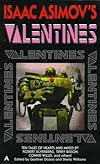
My tradition is to read a special book for Valentine's Day, something that's about love but doesn't make me want to vomit. Last year I read Pet Semetery, the most romantic story ever written, and this year I chose this collection of spec fic short stories. It was perfect for the occasion and I really enjoyed this anthology. All the stories were strong and I think there's something for everyone here--I noticed the other reviewer had very different favorites.
"Death Do Us Part" by Robert show more Silverberg--When humans become virtually immortal, a May/December romance can be between a 30-year old and a 300-year old, but there's a twist. I've read a few of Silverberg's books which weren't really my thing, and with this story I feel like I finally understand why he's so legendary.
"Chemistry" by James Patrick Kelly. At a sort of love spa, a student finds that falling in love is just a combination of hormones--does that make it not real?
"No Love in All of Dwingeloo" by Tony Daniel. The concept of aliens who trade in literal futures was interesting and explored a poignant situation but to me the story itself was flat.
"The Lovers" by Eleanor Aronson. One of my favorites. It's told in a kind of anthropology/comparative literature framework, except that sounds boring and it wasn't. About a non-human warrior society where heterosexuality is unpleasant/taboo except for very structured breeding purposes. Again, that sounds terrible but it was sweet and the world made total sense.
"Press Ann" by Terry Bison. An ATM that gives unusual options. Kind of reminds me of how your phone or web browser is always spying on you, except this story is from 1991.
"Romance in Lunar G" by Tom Purdon. If you could alter your personality types, who would choose to keep on falling hopelessly and obsessively in love? The kind of person who unwittingly thwarts a heist and runs around on the moon in a space suit.
"The Blue Love Potion" by Lisa Goldstein. In another context, this might not even be a SF story. It all depends if you think the love potion really works or not.
"Always True to Thee, In My Fashion" by Nancy Kress. If love followed bubble-headed fashion seasons. I need to read more Nancy Kress!
"Burger Love" by Robert Reed. I think I've read a million stories by Robert Reed; he must be very prolific. The only really cynical one in the lot. Imagine if you left your body behind and became an immortal spacefaring entity and then you met another entity who was originally from your childhood school on earth...
"Blued Moon" by Connie Willis. I love Connie Willis and she's very funny. But there's something about her screwball romantic stories that are SO not my kind of thing, so for me this one was a bust. show less
"Death Do Us Part" by Robert show more Silverberg--When humans become virtually immortal, a May/December romance can be between a 30-year old and a 300-year old, but there's a twist. I've read a few of Silverberg's books which weren't really my thing, and with this story I feel like I finally understand why he's so legendary.
"Chemistry" by James Patrick Kelly. At a sort of love spa, a student finds that falling in love is just a combination of hormones--does that make it not real?
"No Love in All of Dwingeloo" by Tony Daniel. The concept of aliens who trade in literal futures was interesting and explored a poignant situation but to me the story itself was flat.
"The Lovers" by Eleanor Aronson. One of my favorites. It's told in a kind of anthropology/comparative literature framework, except that sounds boring and it wasn't. About a non-human warrior society where heterosexuality is unpleasant/taboo except for very structured breeding purposes. Again, that sounds terrible but it was sweet and the world made total sense.
"Press Ann" by Terry Bison. An ATM that gives unusual options. Kind of reminds me of how your phone or web browser is always spying on you, except this story is from 1991.
"Romance in Lunar G" by Tom Purdon. If you could alter your personality types, who would choose to keep on falling hopelessly and obsessively in love? The kind of person who unwittingly thwarts a heist and runs around on the moon in a space suit.
"The Blue Love Potion" by Lisa Goldstein. In another context, this might not even be a SF story. It all depends if you think the love potion really works or not.
"Always True to Thee, In My Fashion" by Nancy Kress. If love followed bubble-headed fashion seasons. I need to read more Nancy Kress!
"Burger Love" by Robert Reed. I think I've read a million stories by Robert Reed; he must be very prolific. The only really cynical one in the lot. Imagine if you left your body behind and became an immortal spacefaring entity and then you met another entity who was originally from your childhood school on earth...
"Blued Moon" by Connie Willis. I love Connie Willis and she's very funny. But there's something about her screwball romantic stories that are SO not my kind of thing, so for me this one was a bust. show less

The main novella, "The Choice" by Paul McAuley, is definitely the stand-out work for me in this one. The story is beautifully written, set in a future where the ice-caps have melted and the Earth is working itself out of the convulsions and upheaval that ever-more-sophisticated wars left. There are lots of delicious hints at what that world is like, but never so much details that the plot is slowed down. The central character, Lance, is sympathetic and intriguing and the writer manages to show more tell a good story that is both resolved and left me wanting to return to that world one day to explore more. The novellette, "Out of the Dream Closet" by David Ira Cleary, was much more disturbing and didn't have quite the same level of polish. It was filled with ideas and I was held by it throughout despite the uncomfortable subject matter. While it was not precisely enjoyable, I know that it's one that will stay with me for a long time. The short stories were a bit of a mixed bag, with the only one that really stood out being "Planet of the Sealies" by Jeff Carlson because it had quite the unusual kicker at the end. show less

My Paul Cornell obsession continues, bringing me to an issue of Asimov's-- I don't even know what the last time I bought a single issue of an sf mag was. But damn straight I was going to get my hands on the next Major Jonathan Hamilton story... even if I didn't like the previous two very much. (And even if it took me over a year to get around to reading the issue!) But "The Copenhagen Interpretation" is the story that finally does it for me, providing some depth for Hamilton, some emotional show more complexity, and a fabulous merging of an old pseudoscience idea with a bit of actual modern science. There's a very cool sequence that a character tells us about that you kinda wish Hamilton was seeing for himself, but other than that, it's a very good story. (In between my reading it and my writing this review, it failed to win the Hugo.)
There's other stuff, too, of course, and it ranges from okay to good to great. Chris Beckett's "Day 29" is pretty good, about what people would do if they knew they wouldn't remember what they were doing now. I also enjoyed the setting of Josh Roseman's "Bring on the Rain," a sort of anti-Waterworld where people roam about on ships because water is so scarce you have to get to it as soon as it rains. The best story in the issue, though, is without a doubt "Twelvers" by Leah Cypess, about a girl who spent twelve months in the womb (in a future where this was briefly common) and is mocked by her classmates for this, as she experiences her own internal problems. A very realistic look at the cruelty of children.
There are also some misses, though: I don't know what happened in Theodora Goss's "Pug," Norman Spinrad has once again mistaken idea for story in "The Music of the Sphere," and I may have to reconcile myself to just never being able to accept Kristine Kathryn Rusch's short fiction as being remotely sensical. show less
There's other stuff, too, of course, and it ranges from okay to good to great. Chris Beckett's "Day 29" is pretty good, about what people would do if they knew they wouldn't remember what they were doing now. I also enjoyed the setting of Josh Roseman's "Bring on the Rain," a sort of anti-Waterworld where people roam about on ships because water is so scarce you have to get to it as soon as it rains. The best story in the issue, though, is without a doubt "Twelvers" by Leah Cypess, about a girl who spent twelve months in the womb (in a future where this was briefly common) and is mocked by her classmates for this, as she experiences her own internal problems. A very realistic look at the cruelty of children.
There are also some misses, though: I don't know what happened in Theodora Goss's "Pug," Norman Spinrad has once again mistaken idea for story in "The Music of the Sphere," and I may have to reconcile myself to just never being able to accept Kristine Kathryn Rusch's short fiction as being remotely sensical. show less
Awards

Asimov's Science Fiction: Vol. 29, No. 9 [September 2005] (Winner – Cover Illustration: Magazine – 2006)
Asimov's Science Fiction: Vol. 32, No. 8 [August 2008] (Nominee – Cover Illustration: Magazine – 2009)

You May Also Like


Associated Authors
Statistics
- Works
- 214
- Also by
- 15
- Members
- 3,426
- Popularity
- #7,428
- Rating
- 3.4
- Reviews
- 155
- ISBNs
- 88
- Languages
- 2
- Favorited
- 1