
Gwyn Thomas (2) (1936–2016)
Author of Tales from the Mabinogion
For other authors named Gwyn Thomas, see the disambiguation page.
About the Author
Gwyn Thomas was born in Tanygrisiau, Wales on September 2, 1936. During his lifetime, he published 16 collections of poetry and several books of literary and cultural criticism. He also translated the mythical Mabinogion stories into English. In 2006, he was appointed the National Poet of Wales. He show more was a professor at Bangor University for nearly four decades. He died on April 13, 2016 at the age of 79. (Bowker Author Biography) show less
Image credit: llenyddiaeth cymru
Series
Works by Gwyn Thomas
Y Weledigaeth haearn 2 copies
Alun Llywelyn-Williams 1 copy
Associated Works
Dafydd Ap Gwilym: The Poems (Medieval & Renaissance Texts & Studies, V. 9) (1982) — Translator, some editions — 36 copies
Tagged
Common Knowledge
- Birthdate
- 1936-04-02
- Date of death
- 2016-04-13
- Gender
- male
- Education
- Ysgol Sir Ffestiniog
University of Wales, Bangor
University of Oxford (Jesus College) - Occupations
- academic
poet - Awards and honors
- National Poet of Wales (2006-2008)
Tir na n-Og Award (1989|1993|2004) - Short biography
- Professor Gwyn Thomas (1936-2016) was a Welsh poet, academic and a former National Poet of Wales.
- Nationality
- UK
- Birthplace
- Tanygrisiau, Wales, UK
- Places of residence
- Blaenau Ffestiniog, Wales
- Map Location
- Wales, UK
Members
Reviews

I suppose it's a tribute to the power of these stories that I always finish them literally shaking with rage, determined that never again will I subject myself to their despicable misogyny, only to find myself drawn back in again, at some later point, and reading some other translation, retelling or iteration. I suspect that it is the tension between their ugliness - and make no mistake, the sheer woman-hating savagery here is nothing if not ugly - and their simultaneous beauty - the show more language! the sorcery! the rules of hospitality, and of honor! - that so fascinates me. Either that, or I'm just a glutton for punishment.
This gorgeous children's version of the Mabinogion - and as Professor Gwyn Thomas, who was commissioned by the Welsh Arts Council to produce the original Welsh-language edition of this book, points out in his foreword, these four stories are the Mabinogion, despite the name being commonly used for a broader collection of eleven tales - is skillfully retold and simplified, by Thomas, of course, and by Kevin Crossley-Holland as well, in the English version, and beautifully illustrated by Margaret Jones. All the main incidents of the four branches - Pwyll, Prince of Dyfed; Branwen, Daughter of Llŷr; Manawydan, son of Llŷr; Math, son of Mathonwy - are here, together with a brief glossary of Welsh names, at the rear.
As always, when reading these stories, I was most struck by the second branch - probably because the character of Efnisien has a way of surfacing, in the world of children's fantasy literature, which I study (see Lloyd Alexander's The Black Cauldron and Jenny Nimmo's The Snow Spider, for two prominent, and very different treatments); and because Branwen's self-recrimination always makes me want to brain someone (possibly her) with a stone. No, sweetheart, the men of Wales and Ireland did not come to grief because of you, but rather because of your horse-mutilating, child-murdering asshole brother. Got it? Ugh!
Then again, the fourth branch is also always good for some ulcer-inducing fury! How about those rapist brothers, Gwydion and Gilfaethwy? How about their punishment, at the hands of their uncle, Math, Son of Mathonwy? Three years in animal form (not so bad!), and they must bear children (horrors!)? You get it? Bearing children - ie, being a woman - is the most degrading punishment that can be devised! Even worse than being an animal! Fantabulous, early Welsh songsters - thanks for that. Then Gywdion, suitably chastised, gets to call his sister Arionrhod all kind of bad names, because she a) isn't a maiden, and b) isn't properly maternal! Hypocrite, thy name is man... at least it is in the Mabinogion.
There are, of course, reasons to read this classic work, despite these appalling themes - which are too seldom discussed, that I can see, looking over other reviews online - and chief amongst them is the sense, when reading, that one in being ensnared in a web of sorcery, by the teller. The sense of magic in these tales is strong, and it is idiosyncratic as well - it feels like nothing else. Whole kingdoms go down under spells, and their kings wander off to become craftsmen! But of course - isn't that what heroes do? Women are created from flowers (I know, I know, but this was before it was stereotypical), and baptized anyway. Of course they turn out to be traitorous bitches, but that's another story (and all part of a grand Welsh tradition). I love these stories - I really do! I just wish I didn't hate them as well...
Addendum: Did I mention that this edition had gorgeous illustrations? Fabulous job, Margaret Jones! I loved all the little decorative details (Celtic knotwork throughout, and an ogham stone, at one point!), and the composition of each image. Simply beautiful! show less
This gorgeous children's version of the Mabinogion - and as Professor Gwyn Thomas, who was commissioned by the Welsh Arts Council to produce the original Welsh-language edition of this book, points out in his foreword, these four stories are the Mabinogion, despite the name being commonly used for a broader collection of eleven tales - is skillfully retold and simplified, by Thomas, of course, and by Kevin Crossley-Holland as well, in the English version, and beautifully illustrated by Margaret Jones. All the main incidents of the four branches - Pwyll, Prince of Dyfed; Branwen, Daughter of Llŷr; Manawydan, son of Llŷr; Math, son of Mathonwy - are here, together with a brief glossary of Welsh names, at the rear.
As always, when reading these stories, I was most struck by the second branch - probably because the character of Efnisien has a way of surfacing, in the world of children's fantasy literature, which I study (see Lloyd Alexander's The Black Cauldron and Jenny Nimmo's The Snow Spider, for two prominent, and very different treatments); and because Branwen's self-recrimination always makes me want to brain someone (possibly her) with a stone. No, sweetheart, the men of Wales and Ireland did not come to grief because of you, but rather because of your horse-mutilating, child-murdering asshole brother. Got it? Ugh!
Then again, the fourth branch is also always good for some ulcer-inducing fury! How about those rapist brothers, Gwydion and Gilfaethwy? How about their punishment, at the hands of their uncle, Math, Son of Mathonwy? Three years in animal form (not so bad!), and they must bear children (horrors!)? You get it? Bearing children - ie, being a woman - is the most degrading punishment that can be devised! Even worse than being an animal! Fantabulous, early Welsh songsters - thanks for that. Then Gywdion, suitably chastised, gets to call his sister Arionrhod all kind of bad names, because she a) isn't a maiden, and b) isn't properly maternal! Hypocrite, thy name is man... at least it is in the Mabinogion.
There are, of course, reasons to read this classic work, despite these appalling themes - which are too seldom discussed, that I can see, looking over other reviews online - and chief amongst them is the sense, when reading, that one in being ensnared in a web of sorcery, by the teller. The sense of magic in these tales is strong, and it is idiosyncratic as well - it feels like nothing else. Whole kingdoms go down under spells, and their kings wander off to become craftsmen! But of course - isn't that what heroes do? Women are created from flowers (I know, I know, but this was before it was stereotypical), and baptized anyway. Of course they turn out to be traitorous bitches, but that's another story (and all part of a grand Welsh tradition). I love these stories - I really do! I just wish I didn't hate them as well...
Addendum: Did I mention that this edition had gorgeous illustrations? Fabulous job, Margaret Jones! I loved all the little decorative details (Celtic knotwork throughout, and an ogham stone, at one point!), and the composition of each image. Simply beautiful! show less

The whole point of reading traditional folk and fairy tales (in my opinion) is not only to discover things about previous cultures, but also for the sheer entertainment value that stems from the ridiculous aspects of some of the stories. The birth and early years of Taliesin, a bardic character from Welsh history and lore, is a classic example of both of these themes since it combines interesting observations about Welsh society and provides many opportunities for raised eyebrows. I won't go show more into a lot of detail about the story itself, since the myths are nothing a reader in the tradition can't find elsewhere, but I found this retelling to be very readable even if the illustrations were rather underwhelming. show less
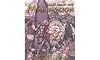
I wanted this book as much for the pictures as for the stories, after seeing works by Margarat Jones displayed at the National Library of Wales. The Mabinogion are medievel Welsh tales.

Awards


You May Also Like


Associated Authors
Statistics
- Works
- 46
- Also by
- 6
- Members
- 300
- Popularity
- #78,267
- Rating
- 4.0
- Reviews
- 6
- ISBNs
- 95
- Languages
- 2