
Jerry Mitchell (3) (1959–)
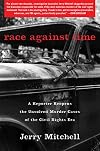
Author of Race Against Time: A Reporter Reopens the Unsolved Murder Cases of the Civil Rights Era
For other authors named Jerry Mitchell, see the disambiguation page.
About the Author
Image credit: via Amazon.com
Works by Jerry Mitchell
Race Against Time: A Reporter Reopens the Unsolved Murder Cases of the Civil Rights Era (2020) 232 copies, 8 reviews
Tagged
Common Knowledge
- Legal name
- Mitchell, Jerry W.
- Birthdate
- 1959
- Gender
- male
- Education
- Ohio State University (Master's, Journalism)
Harding University - Occupations
- reporter
- Organizations
- The Mississippi Center for Investigative Reporting
- Nationality
- USA
- Birthplace
- Springfield, Missouri, USA
- Places of residence
- Jackson, Mississippi, USA
- Associated Place (for map)
- USA
Members
Reviews
Race Against Time: A Reporter Reopens the Unsolved Murder Cases of the Civil Rights Era by Jerry Mitchell
In 1986, young reporter Jerry Mitchell had just started working at the Clarion-Ledger newspaper in Jackson, Mississippi. After watching the movie Mississippi Burning, about the 1964 Goodman-Schwerner-Chaney civil rights murders, he is astounded to discover that no one had ever been convicted of the crime. The same incomprehensible fact is true for the “'Four Little Girls" church bombing in Birmingham and the murder of Medger Evers in 1963, and the murder of another civil rights activist, show more Vernon Dahmer Sr, in 1966. Mitchell writes an article and begins to investigate, speaking with witnesses and killers alike twenty years later. He also meets with family members of the victims and together, they pressure the "justice" systems in the two states to bring charges on all nine deaths, as there is no statute of limitations for murder. The most valuable lesson from his efforts is the ongoing necessity for investigative journalism, responsive law enforcement, and the eradication of the KKK and white supremacists. The starkly racist language used by the convicted criminals and witnesses is especially shocking when the reader recognizes that most of these events took place barely 60 years ago. It will be a true revelation for those too young to have lived through those terrible times.
Quotes: "How are we going to live with ourselves in the next century if we are unable to correct the glaring errors of the past?" show less
Quotes: "How are we going to live with ourselves in the next century if we are unable to correct the glaring errors of the past?" show less
Race Against Time: A Reporter Reopens the Unsolved Murder Cases of the Civil Rights Era by Jerry Mitchell
If you needed another reason to get mad over the American justice system and violence against Black people, this book will do it for you. It’s got everything—murdered civil rights activists, families begging for justice, Klansmen in positions of power, apathetic district attorneys, government conspiracies, leaked documents, people bragging about getting away with murder…. Mitchell’s shock and outrage is palpable, and it’s really no wonder that he spent decades chasing leads and show more seeing these cases closed.
This really reads more like a legal thriller than true crime. It’s got that same tension, the same sorts of twists and characters, the same burning pace that grabs hold and doesn’t let go. Mitchell absolutely knows how to tell a story, whether it’s walking you through a crime and the original investigation, relaying his own research and poking at lawyers, sheriffs, and the general public, playing out the trials, or talking about his life and the lives of the victims’ families. You can’t help but feel for the people who suffered under the KKK’s reign of terror, or to hate the racists and their abetters as much as Mitchell does. (Not that the racists don’t make it easy to hate them. Good Lord.)
And maybe this is because I’m Canadian or maybe it’s because I’m white, but I learned a lot about the civil rights era from this too, because Mitchell makes sure to give context for why these activists were killed, what their tactics were, the networks and reverberations of the killings, and how the police and FBI dealt with everything. And we’re not talking small, unknown cases here. We’re talking about people even I’d heard of, though I’m ashamed to say I didn’t know the details of their lives or deaths. Heck, Mitchell’s fight for justice started when he watched a movie reenactment. So yes! History! Learning things! Good!
Of course, because this is Mitchell’s story and at some level a memoir, there is a sense of Mitchell being the hero of the story. After all, he was the one who found key information, the one who got confessions, the one who bothered DAs until they gave a darn—but on the one hand, he doesn’t seem to be exaggerating his part, and on the other, he’s making sure to give credit to the others fighting to get these victims justice, especially the families. He’s also pretty good about pointing out failures, lost opportunities, and grey areas where things aren’t necessarily Good or Bad, they just Are. So I’m inclined to give him a pass.
In short: an excellent, frightening, illuminating, topical read. I definitely recommend it.
To bear in mind: The murderers and their friends are literally KKK-level white supremacists and 110% okay with spouting vileness on the record. Mitchell is equally okay laying that all out for everyone to see. So besides the hate crimes and a largely apathetic judicial system, you will get racial slurs, racist conspiracy theories, death threats, and the like.
8.5/10 show less
This really reads more like a legal thriller than true crime. It’s got that same tension, the same sorts of twists and characters, the same burning pace that grabs hold and doesn’t let go. Mitchell absolutely knows how to tell a story, whether it’s walking you through a crime and the original investigation, relaying his own research and poking at lawyers, sheriffs, and the general public, playing out the trials, or talking about his life and the lives of the victims’ families. You can’t help but feel for the people who suffered under the KKK’s reign of terror, or to hate the racists and their abetters as much as Mitchell does. (Not that the racists don’t make it easy to hate them. Good Lord.)
And maybe this is because I’m Canadian or maybe it’s because I’m white, but I learned a lot about the civil rights era from this too, because Mitchell makes sure to give context for why these activists were killed, what their tactics were, the networks and reverberations of the killings, and how the police and FBI dealt with everything. And we’re not talking small, unknown cases here. We’re talking about people even I’d heard of, though I’m ashamed to say I didn’t know the details of their lives or deaths. Heck, Mitchell’s fight for justice started when he watched a movie reenactment. So yes! History! Learning things! Good!
Of course, because this is Mitchell’s story and at some level a memoir, there is a sense of Mitchell being the hero of the story. After all, he was the one who found key information, the one who got confessions, the one who bothered DAs until they gave a darn—but on the one hand, he doesn’t seem to be exaggerating his part, and on the other, he’s making sure to give credit to the others fighting to get these victims justice, especially the families. He’s also pretty good about pointing out failures, lost opportunities, and grey areas where things aren’t necessarily Good or Bad, they just Are. So I’m inclined to give him a pass.
In short: an excellent, frightening, illuminating, topical read. I definitely recommend it.
To bear in mind: The murderers and their friends are literally KKK-level white supremacists and 110% okay with spouting vileness on the record. Mitchell is equally okay laying that all out for everyone to see. So besides the hate crimes and a largely apathetic judicial system, you will get racial slurs, racist conspiracy theories, death threats, and the like.
8.5/10 show less
Race against time : a reporter reopens the unsolved murder cases of the civil rights era by Jerry Mitchell

Investigative reporter Mitchell spent most of his career at the Clarion-Ledger in Jackson, Mississippi. He was on the court beat early in his career when he volunteered to cover the premiere of Mississippi Burning. The man seated next to him kept up a running commentary during the film, telling him which parts were accurate and which were not. After the movie ended, Mitchell joined his neighbor in a conversation with two men seated behind them. Two of the men were retired FBI agents who had show more investigated the murders, and the third was a journalist who had covered the murders. The information these men shared with Mitchell set him on a trail that eventually led to convictions in four cold Civil Rights era cases: the murder of Medgar Evers, the murder of Vernon Dahmer, Sr., Birmingham’s 16th Street Baptist Church bombing, and the “Mississippi Burning” murders.
Mitchell’s writing had me on the edge of my seat. I had a hard time putting the book down once I started. It’s difficult reading because of the truly evil people Mitchell interviewed as part of his reporting. It must have been infinitely more difficult for Mitchell to live. I only had to read about these people. Mitchell had to meet with them, talk with them on the phone, and worry about which one of them might show up at his home on a dark night. The evil is balanced with the heroic and the brave in the form of the widows, parents, children, siblings, and friends of the victims, and the bittersweet satisfaction of justice after so many decades of waiting.
The book includes a thorough index, end notes, and a good-sized bibliography for further reading. The acknowledgments include a list of successful Civil Rights prosecutions from 1977–2010 including the case name, the victims, the outcome, the sentence, and the prosecution team. Mitchell helpfully provides the reader with the correct pronunciation for the names of all of the main figures. The only thing lacking is a list of the important figures and their roles. I would have referred to such a list frequently if one had been provided.
This book belongs in all Civil Rights collections. Highly recommended. show less
Mitchell’s writing had me on the edge of my seat. I had a hard time putting the book down once I started. It’s difficult reading because of the truly evil people Mitchell interviewed as part of his reporting. It must have been infinitely more difficult for Mitchell to live. I only had to read about these people. Mitchell had to meet with them, talk with them on the phone, and worry about which one of them might show up at his home on a dark night. The evil is balanced with the heroic and the brave in the form of the widows, parents, children, siblings, and friends of the victims, and the bittersweet satisfaction of justice after so many decades of waiting.
The book includes a thorough index, end notes, and a good-sized bibliography for further reading. The acknowledgments include a list of successful Civil Rights prosecutions from 1977–2010 including the case name, the victims, the outcome, the sentence, and the prosecution team. Mitchell helpfully provides the reader with the correct pronunciation for the names of all of the main figures. The only thing lacking is a list of the important figures and their roles. I would have referred to such a list frequently if one had been provided.
This book belongs in all Civil Rights collections. Highly recommended. show less
A book that is fifty years in the making. It chronicles four different crimes in Mississippi where for years the perpetrators got away Scot free including the assassination of Medgar Evers and the church bombings that killed four young Black girls who were in their Sunday school class. The thing that binds these events together is the Ku Klux KLan. The author is an intrepid reporter who with others keeps these killings in the news always hoping that those who were responsible would be held show more accountable. It took over forty years but ultimately some were. A testament to dogged persistence. show less
Lists
True Crime (1)
Awards


You May Also Like


Associated Authors
Statistics
- Works
- 4
- Members
- 241
- Popularity
- #94,247
- Rating
- 4.4
- Reviews
- 8
- ISBNs
- 19