

Richard N. Haass
Author of The World: A Brief Introduction
About the Author
Richard N. Haass, president of the Council on Foreign Relations since 2003, has worked for four presidents, most recently as director of policy planning in the Department of State under George W. Bush, where he was a principal adviser to Secretary of State Colin Powell. The recipient of the State show more Department's Distinguished Honor Award and the Presidential Citizens Medal, he is the author or editor of twelve previous books. Haass lives in New York City. show less
Image credit: Robert Scoble
Works by Richard N. Haass
A World in Disarray: American Foreign Policy and the Crisis of the Old Order (2017) 301 copies, 2 reviews
Foreign Policy Begins at Home: The Case for Putting America's House in Order (2013) 78 copies, 1 review
Intervention: The Use of American Military Force in the Post-Cold War World (1994) 50 copies, 1 review
Associated Works
Tagged
Common Knowledge
- Legal name
- Haass, Richard Nathan
- Birthdate
- 1951-07-28
- Gender
- male
- Education
- St. Antony's College, Oxford (DPhil|1978)
Oberlin College (AB|1973) - Occupations
- diplomat
- Organizations
- Brookings Institution
U.S. Department of Defense
U.S. Department of State
Council on Foreign Relations - Awards and honors
- Rhodes Scholarship
- Nationality
- USA
- Birthplace
- Brooklyn, New York, USA
- Places of residence
- New York, New York, USA
- Associated Place (for map)
- New York, USA
Members
Reviews
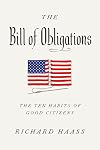
“When union is stressed to the exclusion of freedom we fall into totalitarianism; but when freedom is stressed exclusively we fall into chaos.”
At the heart of our political discord lies an obsession with rights and freedom, and while these things are undoubtedly important, overemphasizing them tends to collectively make us more selfish, intolerant, and aggressive toward each other. By focusing only on rights—with no sense of duty or obligation to others or to the country—we become show more belligerent and self-centered when our rights inevitably conflict with the rights of others.
But we should remember that conflict is inevitable—and welcome—in a democracy. We sacrifice getting everything we want by force by sometimes not getting what we want through peaceful debate, voting, and institutional processes. And while we may take it for granted, as Richard Haass notes, democracy is not guaranteed nor is it inevitable—it must be sustained through the collective action of a country’s citizens.
This demands, however, that we replace our obsession with individual rights with a sense of obligation to our country, to others, and to the common good. Without devaluing or ignoring our rights, we need to supplement our idea of citizenship with a sense that we are part of a collective community with a common identity—and reject and penalize the politicians that simply want to sow discord among us for short-term political gain.
To that end, Haass has developed a list of 10 obligations that can supplement the Bill of Rights, and it’s worth taking a minute to review them. They are:
1. Be informed — An informed citizenry is crucial for any democracy. Being informed means taking it upon yourself to understand the distinctions between facts, opinions, assessments, and recommendations; to understand the difference between credible and non-credible sources of information; to not be fooled into believing outlandish conspiracy theories; to demand high standards of evidence for claims; to obtain information from a wide variety of sources and media, including opposing views; and to understand the basics of how the government operates, basic political philosophy, and the history of the country. Also keep in mind that traditional news outlets—while not perfect and subject to error and bias—do employ editors and fact checkers and follow journalistic procedures that lend infinitely more credibility to their content compared to, for example, individual pundits with obvious political motivations and no means or desire for editorial review.
2. Get involved — The next logical step after being informed is getting involved in the political process by, first and foremost, voting, or by directly or indirectly supporting a political cause. In a recent survey of thirty-five democracies with successful economies, “the United States ranked thirtieth when it came to the percentage of the voting-age population that actually voted.” If you benefit from the things the government does for you—from physical defense against violence and crime to the establishment of laws and currency to the construction of roads and bridges, among much else—you owe it to at least get out and vote, irrespective of whether or not you think it makes a difference. It’s your most fundamental obligation, and in some countries, like Australia, it’s mandatory.
3. Stay open to compromise — In any democracy, rights, policy preferences, and political philosophies will conflict. There’s not only no getting around this, it’s also preferable as legitimate opposition keeps the ruling party in check and presents viable alternative solutions to political problems. The unwillingness to compromise in a democracy is a recipe for not getting anything accomplished at all—which is an all-too-familiar scenario in this age of stubbornness and dogma.
4. Remain civil — Democracies function best when its citizens and politicians engage in dispassionate and substantive debates regarding key political issues. Sticking to the facts, arguing in good faith, and attacking ideas, not people, are the ideals to strive for. It is in this area, however, that we’ve perhaps drifted farthest from the ideal—and have done a rather poor job of penalizing politicians who refuse to promote civility.
5. Reject violence — This is another one that should be obvious to any thinking person. Achieving objectives through violence is not only an illegitimate path to power, it sets up a precedent whereby violence can be reciprocated by others, which can quickly spiral out of control. Again, dispassionate and issue-focused debate through peaceful means is the ideal, even if the results are often less than satisfactory in the short-term.
6. Value norms — Norms, as opposed to laws, are not legally binding; however, they ensure smooth political and social interactions. Remaining civil is a good example; this of course isn’t and cannot be legally mandated, but we all benefit when we can focus our debates on substantive issues and refrain from personal attacks and other red herrings that seek only to distract. Another good norm to consider is the election of politicians with strong character and some signs of intelligence. Something to think about.
7. Promote the common good — When we’re singularly focused on our own individual rights, we tend to lose sight of the rights of others. Relevant to this is the “harm principle,” originally devised by John Stuart Mill, that states that we are free to live our lives as we see fit granted our actions do not inflict harm on others, or, stated another way, “your right to swing your arm ends where the other man’s nose begins.” Since we are all economically, socially, culturally, and politically interdependent, the well-being of others indirectly impacts our own well-being. So in addition to the moral reasons to care about the welfare of others, there are practical reasons to care as well. To abide by this obligation, think about how your actions may negatively impact others, and also of the ultimate implications of your actions, should others follow suit.
8. Respect government service — A common trope is that the government is the problem, not the solution. But like many other cliches, this one certainly obscures and oversimplifies reality. As Haass wrote, “Given how important government is, the reaction to imperfect government should be better government. Think about it. Government provides for our physical security against criminals, terrorists, and foreign militaries; designs and carries out our foreign policy; builds the roads, airports, bridges, rails, and tunnels that make up the country’s infrastructure; makes sure that the water we drink, food we eat, and air we breathe is safe; sets aside resources for retirees, children, the disabled, and the unemployed; operates public schools and hospitals and sets standards for private institutions; licenses those with a large impact on their fellow citizens, including doctors, lawyers, teachers, and engineers; makes sure the currency is valued and accepted; protects individuals and groups against discrimination; sets a minimum wage; oversees an economy that is the world’s largest in a manner to limit inflation; creates jobs; encourages entrepreneurs; and provides a floor for the less fortunate.” I would add that the government also protects us from the tyranny of the free market and from exploitative employers and corporations that would otherwise have free reign over our lives. While fraud, waste, and abuse does obviously occur in government, we have democratic mechanisms for rooting this out (albeit imperfectly), which, historically, have been very successful. We therefore need to drop the idea that government service is second-rate, unimportant, unnecessary, or inherently corrupt, and thus encourage the best among us (intellectually and morally) to commit to government service.
9. Support the teaching of civics — One alarming statistic is that only eight states and the District of Columbia require a full year of high school civics, while ten states require little to no education in civics at all. Colleges and universities are not much better. We need to create a more robust and shared civic education if we are to produce an informed citizenry. Not that this is easy; the framing of historical events, including their ultimate interpretations and implications, can of course be controversial. However, I like Haass’s approach in the book; he writes: “My instinct here is to suggest that the major debates, events, and developments be studied, that any single framing be avoided, and where there is disagreement, that the various perspectives be presented. One possibility is for students to be assigned a range of readings and then asked to debate competing interpretations of the past.” One thing I would add that Haass missed is that the “various perspectives” that are presented need to be respectable, credible, and recognized by professional historians. Just as we don’t teach creationism in biology class, we shouldn’t be teaching outlandish and unlikely conspiracies in history class under the guise of “competing perspectives.” In the current environment of rampant misinformation, this caveat is a critical oversight by Haass.
10. Put country first — This obligation simply states that you should value the continued functioning of American democracy over short-term political gains, your political party, or your personal interests. While it’s always nice to have your preferred candidate win elections, doing so at the risk of weakening long-established democratic norms, traditions, and trust is, frankly, acting in an un-American way.
Perhaps, at this point, you’re thinking that these obligations are naive, or that they don’t account for bad-faith actors that take advantage of the good behavior of others. You might wonder what good these obligations will be for the rest of us if a substantial subset of the country refuses to abide by them. This is a fair point, and perhaps the US is in fact beyond the point of attaining civility in the political arena.
But if we are to preserve our democracy, cultivating a sense of obligation in ourselves and others is a good place to start. It may also be the only place to start—and the only way out of the polarization that plagues us, and the obsession with rights that exacerbates it.
We should also remember that, in the end, we get the politicians we vote for—and therefore deserve. So if democracy gets destroyed in the process by politicians with poor character and little competence, then we really have no one to blame but ourselves. We need to start demanding better. show less
At the heart of our political discord lies an obsession with rights and freedom, and while these things are undoubtedly important, overemphasizing them tends to collectively make us more selfish, intolerant, and aggressive toward each other. By focusing only on rights—with no sense of duty or obligation to others or to the country—we become show more belligerent and self-centered when our rights inevitably conflict with the rights of others.
But we should remember that conflict is inevitable—and welcome—in a democracy. We sacrifice getting everything we want by force by sometimes not getting what we want through peaceful debate, voting, and institutional processes. And while we may take it for granted, as Richard Haass notes, democracy is not guaranteed nor is it inevitable—it must be sustained through the collective action of a country’s citizens.
This demands, however, that we replace our obsession with individual rights with a sense of obligation to our country, to others, and to the common good. Without devaluing or ignoring our rights, we need to supplement our idea of citizenship with a sense that we are part of a collective community with a common identity—and reject and penalize the politicians that simply want to sow discord among us for short-term political gain.
To that end, Haass has developed a list of 10 obligations that can supplement the Bill of Rights, and it’s worth taking a minute to review them. They are:
1. Be informed — An informed citizenry is crucial for any democracy. Being informed means taking it upon yourself to understand the distinctions between facts, opinions, assessments, and recommendations; to understand the difference between credible and non-credible sources of information; to not be fooled into believing outlandish conspiracy theories; to demand high standards of evidence for claims; to obtain information from a wide variety of sources and media, including opposing views; and to understand the basics of how the government operates, basic political philosophy, and the history of the country. Also keep in mind that traditional news outlets—while not perfect and subject to error and bias—do employ editors and fact checkers and follow journalistic procedures that lend infinitely more credibility to their content compared to, for example, individual pundits with obvious political motivations and no means or desire for editorial review.
2. Get involved — The next logical step after being informed is getting involved in the political process by, first and foremost, voting, or by directly or indirectly supporting a political cause. In a recent survey of thirty-five democracies with successful economies, “the United States ranked thirtieth when it came to the percentage of the voting-age population that actually voted.” If you benefit from the things the government does for you—from physical defense against violence and crime to the establishment of laws and currency to the construction of roads and bridges, among much else—you owe it to at least get out and vote, irrespective of whether or not you think it makes a difference. It’s your most fundamental obligation, and in some countries, like Australia, it’s mandatory.
3. Stay open to compromise — In any democracy, rights, policy preferences, and political philosophies will conflict. There’s not only no getting around this, it’s also preferable as legitimate opposition keeps the ruling party in check and presents viable alternative solutions to political problems. The unwillingness to compromise in a democracy is a recipe for not getting anything accomplished at all—which is an all-too-familiar scenario in this age of stubbornness and dogma.
4. Remain civil — Democracies function best when its citizens and politicians engage in dispassionate and substantive debates regarding key political issues. Sticking to the facts, arguing in good faith, and attacking ideas, not people, are the ideals to strive for. It is in this area, however, that we’ve perhaps drifted farthest from the ideal—and have done a rather poor job of penalizing politicians who refuse to promote civility.
5. Reject violence — This is another one that should be obvious to any thinking person. Achieving objectives through violence is not only an illegitimate path to power, it sets up a precedent whereby violence can be reciprocated by others, which can quickly spiral out of control. Again, dispassionate and issue-focused debate through peaceful means is the ideal, even if the results are often less than satisfactory in the short-term.
6. Value norms — Norms, as opposed to laws, are not legally binding; however, they ensure smooth political and social interactions. Remaining civil is a good example; this of course isn’t and cannot be legally mandated, but we all benefit when we can focus our debates on substantive issues and refrain from personal attacks and other red herrings that seek only to distract. Another good norm to consider is the election of politicians with strong character and some signs of intelligence. Something to think about.
7. Promote the common good — When we’re singularly focused on our own individual rights, we tend to lose sight of the rights of others. Relevant to this is the “harm principle,” originally devised by John Stuart Mill, that states that we are free to live our lives as we see fit granted our actions do not inflict harm on others, or, stated another way, “your right to swing your arm ends where the other man’s nose begins.” Since we are all economically, socially, culturally, and politically interdependent, the well-being of others indirectly impacts our own well-being. So in addition to the moral reasons to care about the welfare of others, there are practical reasons to care as well. To abide by this obligation, think about how your actions may negatively impact others, and also of the ultimate implications of your actions, should others follow suit.
8. Respect government service — A common trope is that the government is the problem, not the solution. But like many other cliches, this one certainly obscures and oversimplifies reality. As Haass wrote, “Given how important government is, the reaction to imperfect government should be better government. Think about it. Government provides for our physical security against criminals, terrorists, and foreign militaries; designs and carries out our foreign policy; builds the roads, airports, bridges, rails, and tunnels that make up the country’s infrastructure; makes sure that the water we drink, food we eat, and air we breathe is safe; sets aside resources for retirees, children, the disabled, and the unemployed; operates public schools and hospitals and sets standards for private institutions; licenses those with a large impact on their fellow citizens, including doctors, lawyers, teachers, and engineers; makes sure the currency is valued and accepted; protects individuals and groups against discrimination; sets a minimum wage; oversees an economy that is the world’s largest in a manner to limit inflation; creates jobs; encourages entrepreneurs; and provides a floor for the less fortunate.” I would add that the government also protects us from the tyranny of the free market and from exploitative employers and corporations that would otherwise have free reign over our lives. While fraud, waste, and abuse does obviously occur in government, we have democratic mechanisms for rooting this out (albeit imperfectly), which, historically, have been very successful. We therefore need to drop the idea that government service is second-rate, unimportant, unnecessary, or inherently corrupt, and thus encourage the best among us (intellectually and morally) to commit to government service.
9. Support the teaching of civics — One alarming statistic is that only eight states and the District of Columbia require a full year of high school civics, while ten states require little to no education in civics at all. Colleges and universities are not much better. We need to create a more robust and shared civic education if we are to produce an informed citizenry. Not that this is easy; the framing of historical events, including their ultimate interpretations and implications, can of course be controversial. However, I like Haass’s approach in the book; he writes: “My instinct here is to suggest that the major debates, events, and developments be studied, that any single framing be avoided, and where there is disagreement, that the various perspectives be presented. One possibility is for students to be assigned a range of readings and then asked to debate competing interpretations of the past.” One thing I would add that Haass missed is that the “various perspectives” that are presented need to be respectable, credible, and recognized by professional historians. Just as we don’t teach creationism in biology class, we shouldn’t be teaching outlandish and unlikely conspiracies in history class under the guise of “competing perspectives.” In the current environment of rampant misinformation, this caveat is a critical oversight by Haass.
10. Put country first — This obligation simply states that you should value the continued functioning of American democracy over short-term political gains, your political party, or your personal interests. While it’s always nice to have your preferred candidate win elections, doing so at the risk of weakening long-established democratic norms, traditions, and trust is, frankly, acting in an un-American way.
Perhaps, at this point, you’re thinking that these obligations are naive, or that they don’t account for bad-faith actors that take advantage of the good behavior of others. You might wonder what good these obligations will be for the rest of us if a substantial subset of the country refuses to abide by them. This is a fair point, and perhaps the US is in fact beyond the point of attaining civility in the political arena.
But if we are to preserve our democracy, cultivating a sense of obligation in ourselves and others is a good place to start. It may also be the only place to start—and the only way out of the polarization that plagues us, and the obsession with rights that exacerbates it.
We should also remember that, in the end, we get the politicians we vote for—and therefore deserve. So if democracy gets destroyed in the process by politicians with poor character and little competence, then we really have no one to blame but ourselves. We need to start demanding better. show less
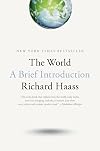
Here’s a disturbing thought: we live in a democracy in which it is not only possible, but highly likely, that one can complete their formal education without taking a single course in world history, politics, government, or economics. That’s true for the 70 percent of Americans whose formal education ends with high school as well as for the 30 percent who earn a college degree but focus almost exclusively on the technical courses associated with their major.
As Richard Haass writes:
“A show more recent survey of over eleven hundred American colleges and universities found that only 17 percent require students to take courses in U.S. government or history, while only 3 percent require them to take coursework in economics.”
Unless people are taking it upon themselves to learn these subjects, much of our voting public has zero experience or formal education in the subjects directly related to the issues they are voting on. You simply couldn’t ask for a population more primed for manipulation and propaganda than this.
This is the background and impetus for Richard Haass’s latest book, which seeks to correct this deficiency in knowledge by providing a crash course on the modern history of the world and the major global issues that dominate the news. While Haass can’t make you an expert in international relations in a single 300-page book, he can at least make you more conversant regarding world issues and events, less susceptible to propaganda, and better positioned to pursue further study.
The book is divided into four parts, which results in some repetition but also drives home some key points. The first part is a brief chronological history of the world from the Thirty Years’ War and Treaty of Westphalia through World War I, World War II, the Cold War, and up to the present day.
The second section covers each region of the world, including the Americas, Europe, Africa, the Middle East, South Asia, and East Asia and the Pacific. The third section covers global issues such as climate change, trade, immigration, and nuclear proliferation, and the fourth section describes the elements of global order and disorder and the balance of power.
As Haass notes, each chapter of the book deserves its own book—of which several have been written—but what Haass is attempting to provide is exactly what is missing: a higher-level overview of world history and international relations that can serve as a foundation for a deeper investigation of specific issues. This is beneficial, particularly for someone entirely new to the subject, as they may have difficulty knowing where to start without the benefit of seeing the bigger picture. And if one’s education in international relations were to consist solely from the reading of this book, that person would still be head-and-shoulders above most US citizens in their knowledge of the world.
The coverage, as far as I can tell, strives for objectivity without hiding the fact that the current US administration—by any reasonable understanding of history and politics—is placing the current world order at significant risk. The very things (in addition to nuclear deterrence) that have resulted in the long-term peace between nations since World War II, such as strong alliances, an increasing number of democracies, the delegitimization of war, and the creation of international organizations and law—all overseen by the US taking a leading role in the world—are slowly being replaced by nationalism, isolationism, xenophobia, and authoritarianism that makes global war and instability far more likely.
This is not to say that the US has not made significant mistakes in terms of foreign relations; it only suggests that the US, in isolating itself from the world order it helped to create, is only going to increase the level of instability and conflict in the world. World order does not happen on its own, and, without direction, there is a natural tendency to disorder—or to the emergence of another superpower willing to adopt the role vacated by the US (China).
While Haass’s coverage is extensive, I was surprised that inequality, while mentioned several times throughout the book, did not receive its own dedicated chapter, considering the significance of the issue. Growing levels of economic inequality have led to growing levels of political inequality, which has essentially led to the oligarchic capture of the US government. This is a major storyline worthy of further coverage, but the interested reader will have to look elsewhere. Personally, I would recommend checking out Robert Reich’s The System, Who Rigged It, How We Fix It.
Also absent from the book is any meaningful coverage of the intellectual movements underlying major political changes, such as the impact of the Scientific Revolution and the Age of Enlightenment on political thinking, particularly its influence on the US founders. The foundational political philosophy of the left and right—in large part established in the aftermath of the French Revolution by Thomas Paine (advocate of Enlightenment-era liberal ideas) and Edmund Burke (the philosophical founder of modern conservatism)—is not addressed.
But this is probably asking too much; The World admirably fulfills its basic purpose as a general introduction or refresher course on the state of the world, and represents a timely and much needed antidote to ignorance and the overconfidence that ignorance breeds. As Charles Darwin said, “Ignorance more frequently begets confidence than does knowledge.”
And what better description is there of the US voting population at large? Not only are we highly polarized; we’re also more sure of ourselves than ever—despite the fact that the data tells us almost everyone has no experience or education regarding the topics they are so overconfident about. We could all do ourselves a favor by reading this book and rethinking our positions from a more informed perspective. show less
As Richard Haass writes:
“A show more recent survey of over eleven hundred American colleges and universities found that only 17 percent require students to take courses in U.S. government or history, while only 3 percent require them to take coursework in economics.”
Unless people are taking it upon themselves to learn these subjects, much of our voting public has zero experience or formal education in the subjects directly related to the issues they are voting on. You simply couldn’t ask for a population more primed for manipulation and propaganda than this.
This is the background and impetus for Richard Haass’s latest book, which seeks to correct this deficiency in knowledge by providing a crash course on the modern history of the world and the major global issues that dominate the news. While Haass can’t make you an expert in international relations in a single 300-page book, he can at least make you more conversant regarding world issues and events, less susceptible to propaganda, and better positioned to pursue further study.
The book is divided into four parts, which results in some repetition but also drives home some key points. The first part is a brief chronological history of the world from the Thirty Years’ War and Treaty of Westphalia through World War I, World War II, the Cold War, and up to the present day.
The second section covers each region of the world, including the Americas, Europe, Africa, the Middle East, South Asia, and East Asia and the Pacific. The third section covers global issues such as climate change, trade, immigration, and nuclear proliferation, and the fourth section describes the elements of global order and disorder and the balance of power.
As Haass notes, each chapter of the book deserves its own book—of which several have been written—but what Haass is attempting to provide is exactly what is missing: a higher-level overview of world history and international relations that can serve as a foundation for a deeper investigation of specific issues. This is beneficial, particularly for someone entirely new to the subject, as they may have difficulty knowing where to start without the benefit of seeing the bigger picture. And if one’s education in international relations were to consist solely from the reading of this book, that person would still be head-and-shoulders above most US citizens in their knowledge of the world.
The coverage, as far as I can tell, strives for objectivity without hiding the fact that the current US administration—by any reasonable understanding of history and politics—is placing the current world order at significant risk. The very things (in addition to nuclear deterrence) that have resulted in the long-term peace between nations since World War II, such as strong alliances, an increasing number of democracies, the delegitimization of war, and the creation of international organizations and law—all overseen by the US taking a leading role in the world—are slowly being replaced by nationalism, isolationism, xenophobia, and authoritarianism that makes global war and instability far more likely.
This is not to say that the US has not made significant mistakes in terms of foreign relations; it only suggests that the US, in isolating itself from the world order it helped to create, is only going to increase the level of instability and conflict in the world. World order does not happen on its own, and, without direction, there is a natural tendency to disorder—or to the emergence of another superpower willing to adopt the role vacated by the US (China).
While Haass’s coverage is extensive, I was surprised that inequality, while mentioned several times throughout the book, did not receive its own dedicated chapter, considering the significance of the issue. Growing levels of economic inequality have led to growing levels of political inequality, which has essentially led to the oligarchic capture of the US government. This is a major storyline worthy of further coverage, but the interested reader will have to look elsewhere. Personally, I would recommend checking out Robert Reich’s The System, Who Rigged It, How We Fix It.
Also absent from the book is any meaningful coverage of the intellectual movements underlying major political changes, such as the impact of the Scientific Revolution and the Age of Enlightenment on political thinking, particularly its influence on the US founders. The foundational political philosophy of the left and right—in large part established in the aftermath of the French Revolution by Thomas Paine (advocate of Enlightenment-era liberal ideas) and Edmund Burke (the philosophical founder of modern conservatism)—is not addressed.
But this is probably asking too much; The World admirably fulfills its basic purpose as a general introduction or refresher course on the state of the world, and represents a timely and much needed antidote to ignorance and the overconfidence that ignorance breeds. As Charles Darwin said, “Ignorance more frequently begets confidence than does knowledge.”
And what better description is there of the US voting population at large? Not only are we highly polarized; we’re also more sure of ourselves than ever—despite the fact that the data tells us almost everyone has no experience or education regarding the topics they are so overconfident about. We could all do ourselves a favor by reading this book and rethinking our positions from a more informed perspective. show less
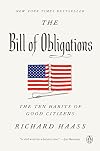
Haas' discussion of the consequences of separating "freedom" from "obligation" in our discussions of what it means to be citizens is timely. Among many good points, one that stood out for me was the link between the end of compulsory service (the draft, other programs working for your country) after Viet Nam and the slow slide away from a sense of proudly shared responsibility for preserving a more perfect union. Terrific book.
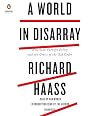
Dr. Richard Haass has the experience and background to discuss American foreign policy, and his book "A World in Disarray" does just that. He provides historical perspectives of America's relationships with other nations, and then discusses ideas of where we should be heading. There's no faulting his observations, however I felt that much of what he presented was fairly generic, much like a politician's campaign rhetoric. When he notes that we need to work to prevent North Korea from show more developing nuclear weapons, or encourage Pakistan and India to resolve their differences, there's little to disagree with. But there's not much new there, and little in the way of specific recommendations.
So I thought the book provided good background, but less in the way of concrete actionable steps. Unfortunately, I don't imagine there's any author or national leader who's got better answers for all these problems. show less
So I thought the book provided good background, but less in the way of concrete actionable steps. Unfortunately, I don't imagine there's any author or national leader who's got better answers for all these problems. show less
Lists
Awards

You May Also Like


Associated Authors
Statistics
- Works
- 28
- Also by
- 3
- Members
- 1,214
- Popularity
- #21,144
- Rating
- 3.6
- Reviews
- 22
- ISBNs
- 54