
Chief Seattle (–1866)
Author of Brother Eagle, Sister Sky
About the Author
Image credit: From Wikipedia. Taken by Sammis (studio) in 1864.
Works by Chief Seattle
Associated Works
When the Light of the World Was Subdued, Our Songs Came Through: A Norton Anthology of Native Nations Poetry (2020) — Contributor — 379 copies, 4 reviews
Thinking Like a Mountain: Towards a Council of All Beings (1988) — Contributor — 231 copies, 1 review
Tagged
Common Knowledge
- Other names
- Sealth, Noah (baptismal)
- Birthdate
- c. 1780
- Date of death
- 1866-06-07
- Gender
- male
- Occupations
- tribal chief
- Nationality
- Suquamish
Duwamish - Birthplace
- Black River, Washington, USA
- Place of death
- Suquamish Reservation, Port Madison, Washington, USA
- Map Location
- USA
Members
Reviews
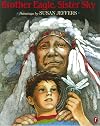
There's no reliable transcript of what Si'ahl said to his gathered people in March 1854. He was a Native American though, so we should just assume it was all about bears and deers, and leaping spirits, and the importance of harnessing renewable energy for a sustainable future. He didn't ride a horse, as he wasn't a plains Indian, but what kind of boring illustration would that make? I'd like to think that Chief Seattle invented the environmental movement with a searing vision-warning about show more our industrialised future and that he didn't just have a moan about being shuffled off to a reservation. Reading this, I can believe that he did. show less
3starP
Ages 5 to 8
Artistic Media: watercolors, pastels
Artistic Style: impressionism
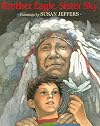
Kindergarten-Third Grade. An adaptation of a speech with a powerful environmental message given by Chief Seattle during treaty negotiations in the 1850s is accompanied by detailed, colorful pen-and-ink illustrations of nature in all her glory as well as her destruction by human hands. Opening with moving words, "How can you buy the sky? How can you own the rain?", the complementary illustrations depict a show more romantic and picturesque view of Native Americans working in harmony with the land and a flourishing of plants and animals. As the tone of the speech becomes more cautionary, so do the illustrations—the lush landscapes become barren wastelands stripped of trees and animals. The book's strength lies in Jeffers' artistic ability to convey a stirring and timely environmental message. However, it falls disappointingly short in its overly simplistic and romanticized portrayal of Native Americans. Jeffers does a disservice to the complexity of Native Americans by lumping all Native American tribes in together and using stereotypical Indian images (teepees, fringe clothing, and canoes). The minimal attempt to acknowledge the origins and source of the speech does not override the lack of source notes or list of resources. A disappointing read despite its moving, environmental message. show less
Ages 5 to 8
Artistic Media: watercolors, pastels
Artistic Style: impressionism
Kindergarten-Third Grade. An adaptation of a speech with a powerful environmental message given by Chief Seattle during treaty negotiations in the 1850s is accompanied by detailed, colorful pen-and-ink illustrations of nature in all her glory as well as her destruction by human hands. Opening with moving words, "How can you buy the sky? How can you own the rain?", the complementary illustrations depict a show more romantic and picturesque view of Native Americans working in harmony with the land and a flourishing of plants and animals. As the tone of the speech becomes more cautionary, so do the illustrations—the lush landscapes become barren wastelands stripped of trees and animals. The book's strength lies in Jeffers' artistic ability to convey a stirring and timely environmental message. However, it falls disappointingly short in its overly simplistic and romanticized portrayal of Native Americans. Jeffers does a disservice to the complexity of Native Americans by lumping all Native American tribes in together and using stereotypical Indian images (teepees, fringe clothing, and canoes). The minimal attempt to acknowledge the origins and source of the speech does not override the lack of source notes or list of resources. A disappointing read despite its moving, environmental message. show less
1Q 4P
While the paintings by Susan Jeffers are quite beautiful there are too many issues and missteps within this book to warrant a high quality book review. Chief Seattle's "speech" is warped and manipulated to fit the purposes of Jeffers environmental stance and the blatant ignorance of specific tribes is rather offensive. I also found the last two pages especially disturbing for what they seem to suggest (white family remains, native americans are merely ghosts). However this book is show more popular even to this day and I have encountered people who still rave about it. show less
While the paintings by Susan Jeffers are quite beautiful there are too many issues and missteps within this book to warrant a high quality book review. Chief Seattle's "speech" is warped and manipulated to fit the purposes of Jeffers environmental stance and the blatant ignorance of specific tribes is rather offensive. I also found the last two pages especially disturbing for what they seem to suggest (white family remains, native americans are merely ghosts). However this book is show more popular even to this day and I have encountered people who still rave about it. show less
I'm not sure whether or not I find this book sort of offensive. Chief Seattle's powerful words seem to be being co-opted by a white illustrator to make a point to white readers. I'd like to hear what members of Chief Seattle's tribe have to say about the paintings, before I shared the book with children.
Lists
Awards


You May Also Like


Associated Authors
Statistics
- Works
- 15
- Also by
- 5
- Members
- 2,426
- Popularity
- #10,573
- Rating
- 3.8
- Reviews
- 58
- ISBNs
- 56
- Languages
- 10