
Simon Sebag Montefiore
Author of Jerusalem: The Biography
About the Author
Simon Jonathan Sebag Montefiore was born on June 27, 1965 in London. He is a British historian, award winning author of history books and novels and television presenter. He was educated at Ludgrove School and Harrow School. He read history at Gonville and Caius College, Cambridge where he received show more his Doctorate of Philosophy (PhD). He won an Exhibition to Caius College. He went on to work as a banker, a foreign affairs journalist, and a war correspondent. Montefiore's first book Catherine the Great & Potemkin. Stalin: The Court of the Red Tsar won History Book of the Year at the 2004 British Book Awards. Young Stalin won the LA Times Book Prize for Best Biography, the Costa Book Award, the Bruno Kreisky Award for Political Literature, and Le Grand Prix de la Biographie Politique. Jerusalem: The Biography was a global bestseller and won The Book of the Year Prize from the Jewish Book Council. His latest history is The Romanovs: 1613-1918. He is also the author of the acclaimed novels Sashenka and One Night in Winter. One Night in Winter won the Political Novel of the Year Prize. (Bowker Author Biography) show less
Image credit: Simon Sebag-Montefiore - Photo uncredited
Series
Works by Simon Sebag Montefiore
Romanowowie : 1613-1918 1 copy
Stalin : punase tsaari kond 1 copy
Associated Works
What Might Have Been : Leading Historians on Twelve 'What Ifs' of History (2004) — Contributor — 197 copies, 6 reviews
Piggy Foxy and the Sword of Revolution: Bolshevik Self-Portraits (2006) — Foreword, some editions — 34 copies
Tagged
Common Knowledge
- Canonical name
- Sebag Montefiore, Simon
- Legal name
- Sebag Montefiore, Simon Jonathan
- Birthdate
- 1965-06-27
- Gender
- male
- Education
- Gonville and Caius College, University of Cambridge (BA|1987|MA|1991|Ph.D)
Harrow School - Occupations
- historian
novelist
professor - Organizations
- University of Buckingham
- Awards and honors
- Royal Society of Literature (Fellow, 2003)
- Relationships
- Montefiore, Santa (spouse)
Sebag-Montefiore, Hugh (brother)
Palmer-Tomkinson, Tara (sister-in-law)
Montefiore, Moses (great-great-uncle)
Sebag-Montefiore, Joseph (great-grandfather)
Sebag-Montefiore, Stephen Eric (father) - Short biography
- Simon Sebag Montefiore was born in London. His brother Hugh Sebag-Montefiore is also a writer. Simon was educated at Harrow School and read history at Gonville and Caius College, University of Cambridge, where he received his doctoral degree in philosophy. He has worked as a banker, a foreign affairs journalist, and a war correspondent covering the fall of the Soviet Union. His debut novel, King's Parade, was published in 1991.
- Nationality
- UK
- Birthplace
- London, England, UK
- Places of residence
- London, England, UK
- Map Location
- England, UK
Members
Reviews
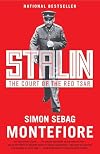
If Cheney would be Stalin, who would be Beria? Ok, so Cheney would be Stalin and Beria. Or let Wolfowitz be Stalin. Bolton as Molotov? Close enough. Obama? Let's say Bulganin. This regime unleashed a terror the likes of which have only been seen in previous regimes with different Stalin/Berias. Only they did it outside their own country. What is remarkable in the case of Stalin is that he did it to his own people (and to a lesser extent those in his sphere of control to the west). Is it show more justifiable to compare this 'Monster' to our monsters? I think so. Our comparisons are effective and sometimes necessary, particularly when we begin to make the mistake of looking at politics in terms of good versus evil. Stalin and gang's crude and massively murderous rapid industrialization is certainly ugly to read about, but what was it if not a compression of the Industrialization that took place in England, which certainly exceeded Stalin's efforts in terms of vicitms, coming as it did along with colonial rapine and the complete gutting of India, where the British orchestrated famines as bad as that in the Ukraine in the early 30s.
Simon Sebag Montefiore's The Court of the Red Tsar has little new to say in broad terms about Stalin and his crew, because Stalin has been written about repeatedly, from the early and percipient biography by the all but forgotten Isaac Deutscher to the perhaps definitive biographer Robert Service. But Montefiore has more information at his disposal than any writer has yet had and he made the decision to write a rather gossipy book that reads like a South American novel of a despot. Even his language is that of a novelist at times, freely using the word dwarf, mostly to describe the sadistic (the book is filled with sadists, but it has to be said here anyway) shorty Yezhov, who headed the inquisitions after Yagoda and before Beria. So the book is highly entertaining, more so than any other biography of Stalin, giving specific inside story after inside story, quote after quote, so that a bland statement like 'Stalin was merciless even in his closest circles, ordering the executions of...' is given horrific life by closely acquainting the reader with these people, what they said, and how they subsequently suffered: there are many accounts of specific tortures (One thing I learned was that I have been wrong all these years to believe that a paranoid Stalin was quite practical about offing his enemies, simply sending them to the Lubyanka to be shot; given the extraordinary numbers of political murders [millions] this had to be to some extent true, but he often requested various tortures be applied and in many personal cases took an interest in the reactions of the victims.)
Since so little of the general story was new to me, I didn't begin marking the book until late, around page 500 or so. Here are some of these bits:
Stalin: 'Leave them in peace. We can always shoot them later.'
'The film star Zoya Fyodorovna was picked up by these Chekists at a time when she was still breastfeeding her baby. Taken to a party where there were no other guests, she was joined by Beria whom she begged to let her go as her breasts were painful. »Beria was furious.« The officer who was taking her home mistakenly handed her a bouquet at the door. When Beria saw, he shouted: »It's a wreath not a bouquet. May they rot on your grave!« She was arrested afterwards.
'The film actress Tatiana Okunevskaya was even less lucky: at the end of the war, Beria invited her to perform for the Politburo. Instead they went to a dacha. Beria plied her with drink, »virtually pouring the wine into my lap. He ate greedily, tearing at the food with his hands, chattering away.« Then »he undresses, rolls around, eyes ogling, an ugly, shapeless toad. »'Scream or not, doesn't matter',« he said. »'Think and behave accordingly.'« Beria softened her up by promising to releaase her beloved father and grandfather from prison and then raped her. He knew very well that both had already been executed. She too was arrested soon afterwards and sentenced to solitary confinement. Felling trees in the Siberian taiga, she was saved, like so many others, by the kindness of ordinary people.'
Like I say, the book fleshes out novelistically what we for the most part already knew. One of the most astonishing things we knew was how Stalin refused to accept the fact that Germany was going to attack his country and refused to make any efforts to prepare, in fact did the opposite so as not to offend Hitler, who might take troop movements and such as a provocation. This book does not bore on the topic, for instance Montefiore finds a quote from Stalin who is told less than a week before Operation Barbarossa that a spy in the Luftwaffe confirms the impending attack, and Stalin replies 'Tell the »source« in the Staff of the German Air Force to fuck his mother!«
Other matters of particular interest to me are Churchill's calling his agreement to divide post-war Europe into states controlled by East and West, using percentages (Greece 90% west, 10% East...) a 'naughty document'; And, moreso, I was pleased that an anecdote I have been telling for years regarding attempted assassinations of Tito was factual. Some letters were found on Stalin's Kremlin desk, apparently the contents unknown to any but Stalin. In my old version there were three, two from Lenin, one from Tito. In this version there were five, but only three could be recalled by witnesses. One was indeed from Lenin, scolding Stalin for speaking ill of Krupskaya, one from Bukharin asking why he needed to die, and the third was from Tito that read 'Stop sending assassins to muder me...If this doesn't stop, I will send a man to Moscow and there'll be no need to send any more.'
Finally, grading this book. The effort, the travels, the inexhaustible reading and travelling the author undertook...this alone suggests five of five stars. The writing itself, weaving the personal and the enormous historic without jarring the reader, managing to tell readers what they quite likely already know without boring them, that too suggests five of five stars. And, more difficult than anything probably, telling much the same personal tales of victims, endless victims close to Stalin, their stories not significantly different from all the others for the most part, without either appealing to the basest instincts of the reader (I, for one, could have used more specifics) or boring us—that deserves a five as well. show less
Simon Sebag Montefiore's The Court of the Red Tsar has little new to say in broad terms about Stalin and his crew, because Stalin has been written about repeatedly, from the early and percipient biography by the all but forgotten Isaac Deutscher to the perhaps definitive biographer Robert Service. But Montefiore has more information at his disposal than any writer has yet had and he made the decision to write a rather gossipy book that reads like a South American novel of a despot. Even his language is that of a novelist at times, freely using the word dwarf, mostly to describe the sadistic (the book is filled with sadists, but it has to be said here anyway) shorty Yezhov, who headed the inquisitions after Yagoda and before Beria. So the book is highly entertaining, more so than any other biography of Stalin, giving specific inside story after inside story, quote after quote, so that a bland statement like 'Stalin was merciless even in his closest circles, ordering the executions of...' is given horrific life by closely acquainting the reader with these people, what they said, and how they subsequently suffered: there are many accounts of specific tortures (One thing I learned was that I have been wrong all these years to believe that a paranoid Stalin was quite practical about offing his enemies, simply sending them to the Lubyanka to be shot; given the extraordinary numbers of political murders [millions] this had to be to some extent true, but he often requested various tortures be applied and in many personal cases took an interest in the reactions of the victims.)
Since so little of the general story was new to me, I didn't begin marking the book until late, around page 500 or so. Here are some of these bits:
Stalin: 'Leave them in peace. We can always shoot them later.'
'The film star Zoya Fyodorovna was picked up by these Chekists at a time when she was still breastfeeding her baby. Taken to a party where there were no other guests, she was joined by Beria whom she begged to let her go as her breasts were painful. »Beria was furious.« The officer who was taking her home mistakenly handed her a bouquet at the door. When Beria saw, he shouted: »It's a wreath not a bouquet. May they rot on your grave!« She was arrested afterwards.
'The film actress Tatiana Okunevskaya was even less lucky: at the end of the war, Beria invited her to perform for the Politburo. Instead they went to a dacha. Beria plied her with drink, »virtually pouring the wine into my lap. He ate greedily, tearing at the food with his hands, chattering away.« Then »he undresses, rolls around, eyes ogling, an ugly, shapeless toad. »'Scream or not, doesn't matter',« he said. »'Think and behave accordingly.'« Beria softened her up by promising to releaase her beloved father and grandfather from prison and then raped her. He knew very well that both had already been executed. She too was arrested soon afterwards and sentenced to solitary confinement. Felling trees in the Siberian taiga, she was saved, like so many others, by the kindness of ordinary people.'
Like I say, the book fleshes out novelistically what we for the most part already knew. One of the most astonishing things we knew was how Stalin refused to accept the fact that Germany was going to attack his country and refused to make any efforts to prepare, in fact did the opposite so as not to offend Hitler, who might take troop movements and such as a provocation. This book does not bore on the topic, for instance Montefiore finds a quote from Stalin who is told less than a week before Operation Barbarossa that a spy in the Luftwaffe confirms the impending attack, and Stalin replies 'Tell the »source« in the Staff of the German Air Force to fuck his mother!«
Other matters of particular interest to me are Churchill's calling his agreement to divide post-war Europe into states controlled by East and West, using percentages (Greece 90% west, 10% East...) a 'naughty document'; And, moreso, I was pleased that an anecdote I have been telling for years regarding attempted assassinations of Tito was factual. Some letters were found on Stalin's Kremlin desk, apparently the contents unknown to any but Stalin. In my old version there were three, two from Lenin, one from Tito. In this version there were five, but only three could be recalled by witnesses. One was indeed from Lenin, scolding Stalin for speaking ill of Krupskaya, one from Bukharin asking why he needed to die, and the third was from Tito that read 'Stop sending assassins to muder me...If this doesn't stop, I will send a man to Moscow and there'll be no need to send any more.'
Finally, grading this book. The effort, the travels, the inexhaustible reading and travelling the author undertook...this alone suggests five of five stars. The writing itself, weaving the personal and the enormous historic without jarring the reader, managing to tell readers what they quite likely already know without boring them, that too suggests five of five stars. And, more difficult than anything probably, telling much the same personal tales of victims, endless victims close to Stalin, their stories not significantly different from all the others for the most part, without either appealing to the basest instincts of the reader (I, for one, could have used more specifics) or boring us—that deserves a five as well. show less
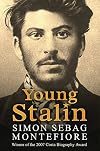
Hard to fault - brilliantly researched and written with style, Stalin's chaotic life of radicalism, bank robberies, assassinations, Siberian exile, gangland warfare, and rise to prominence amongst the Bolshevik leaders is set out in an informative and even enjoyable way. Fascinating to see Stalin in this period - during these years he was a terrible guy, but still a recognisably human terrible guy. What came next, however, is already visible, waiting to emerge if circumstances allowed it.
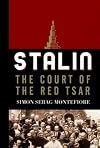
Montefiore’s history of Stalin’s inner circle is a well-researched and thoroughly detailed look at the lives of a group of mass murderers. It’s not a biography of Stalin or a history of the USSR – Stalin’s early life is glossed over and world events are a backdrop to the squabbles of the group or just something that they react to. In fact, it can be a bit hard to keep track of the “jobs” of all of Stalin’s magnates as their appointments were constantly shifting, all seemed to show more maintain political positions that became increasingly useless except as a mark of Stalin’s favor, and the day-to-day details of their work weren’t given much coverage. Exceptions include some out-of-the ordinary jobs (Molotov’s diplomatic position), the actual military officers (as opposed to all the amateurs Stalin sent out) and whoever happened to be the head of the secret police.
The story picks up around the 20’s, when Stalin wasn’t yet the undisputed head of the party, and ends with his death in 1953. The writing is clear and very readable, Montefiore presents an interesting if understandably repulsive at time narrative and he nicely balances the overwhelming list of people arrested and executed with intimate stories of both Stalin and his inner circle and ordinary citizens affected by them. Usually, the author is very clear about things that are unknown and includes speculations on whether various individuals were murdered as well as multiple motivations for people’s behavior. He also presents good evidence against some commonly-held beliefs – that the arrests and executions were put on hold during WWII, that Stalin acted alone in many of the murders or alternatively that the executions were the sole responsibility of his NKVD heads, Yezhov and Beria. Sometimes, though, he presents ideas that are not well-supported. He suggests that Stalin’s wife Nadya’s suicide contributed to his paranoia and was a reason for some arrests. However, Montefiore doesn’t cite much evidence for this idea. It is certainly possible but there is not much written or remembered to suggest that Stalin felt anything other than an expected grief and anger. I was also unsure of how much evidence there was for Stalin’s relationship with his sister-in-law, Zhenya Alliluyeva, or his daughter Svetlana’s unrequited love for Sergo Beria - this one sounded like there were conflicting personal accounts.
The first section covers Stalin and Nadya’s relationship, family life and friendships with other important Bolshevik politicians. Stalin and Nadya had a stormy marriage. Montefiore seems to be addressing a popular view of Nadya as another of Stalin’s victims who was driven to suicide but he shows that she was very unstable and likely had a psychosomatic disorder. She was thin-skinned and argumentative like her husband and would often reject their children. Stalin loved his daughter Svetlana but was less enthusiastic about his son Vasily and Yakov, his son from his first marriage. They lived close to a number of others who would come to form Stalin’s inner circle – Vyacheslav Molotov, an uptight true believer married to the intelligent and ambitious Polina, Lazar Kaganovich, who was an early fervent Stalinist, and Klim Voroshilov, from a humble background and often portrayed as unintelligent but an old friend of Stalin’s who would oppose him at various instances. The group was constantly together, in and out of each others’ apartments, taking vacations together. Even as Stalin quarreled with members of the Politburo, consolidated power, and forced collectivization of the peasants, leading to the Ukrainian peasant revolts and famine, the letters of his inner circle were filled with details of holidays and their constant worries over illnesses.
After Nadya’s death, Stalin leaned on his friendship with Sergei Kirov, the Leningrad boss. With Kirov, Stalin showed the love-hate or maybe dependence-repulsion, admiration-jealousy that he displayed in his relationships with many others. After Kirov’s death, Stalin and his minions engineered a conspiracy leading to the famous show trials. All the details of how Zinoviev and Kamenev were railroaded by their old ally Stalin are pretty horrible to read – Stalin writing up what they would say, his instances of genuine-sounding indignation (wondering with no sense of irony how they could live with themselves), his morbid interest in their last moments. Yagoda, the head of the NKVD at the time, dug out the bullets that killed Zinoviev and Kamenev and had them framed and displayed. Further conspiracies were “discovered” - old Bolsheviks of Lenin’s generation, army officers and Stalin’s close friends, comrades and family members were purged.
Nikolai Yezhov, chief of the NKVD after Yagoda, was often blamed for the Great Terror but Montefiore shows how Stalin and his associates signed off on names or suggested more and fully agreed with the lists of arrests and executions that were sent out to different regions. Stalin could save people if he wanted – though he would cynically claim he couldn’t help out those who asked, as his own family members were in prison – and occasionally his magnates could try, though it was always a dicey thing to attempt. Montefiore includes all sorts of salacious details and Yezhov’s life is closely covered – as a vicious, torturing, drunken, sickly bisexual dwarf married to a flamboyant woman who had affairs with various literary lights, he provides many such details. Yezhov once came to a meeting splattered in blood of those he had been interrogating, which he proudly described as a mark of his dedication. He commented that one thousand extra executed was no big deal and was always pushing for more. His wife Yevgenia committed suicide when it became clear their end was near and Yezhov comforted himself with drunken orgies. Ironically, Yezhov’s ashes were dumped in the same pit as Isaac Babel’s, the great writer who had also been Yevgenia’s lover. Lavrenti Beria, his successor was just as bad – a loving husband, father and father-in-law, he was also a sadistic torturer and rapist who, while efficient, energetic and politically savvy, distinguished himself by his nasty behavior towards Stalin’s friends and relatives. He groped the wives and female relatives, enjoyed unpleasant teasing and cruel pranks (constantly calling Georgi Malenkov, his political ally, fat and shoving tomatoes in Anastas Mikoyan’s pockets then smashing him into the wall) and frequently threatened those who crossed him and made good on his threats.
The sections leading up to and during the war and are quite interesting. Montefiore describes well-known meetings and actions but adds the discussion and gossip in Stalin’s inner circle, descriptions of preparations and security surrounding the events and possible motivations of Stalin and others. Stalin’s war against his own people never stopped – in fact, they were still arresting military personnel while everyone talked of the coming war. Stalin admired Hitler though he had to hate him as a Fascist. He hoped the West would keep Hitler occupied but was later glad to divide eastern Europe between the two of them. Even after the non-aggression pact, Stalin often talked about how untrustworthy Hitler was and still discussed war as inevitable. I thought some of the interpretations of Stalin’s actions that were said to appease Hitler weren’t entirely supported. But despite his talk, Stalin dithered endlessly when he had evidence of German treachery. After the German attack, Stalin still thought it could be a rogue German officer. He seemed to hope that no war would happen despite the frequent discussions and advice from his magnates and generals.
Once it became clear that the war had started, Stalin had a mini-breakdown. Montefiore speculates that it was partly true, partly an act to gauge the reaction of his magnates or an idea based on the actions of past rulers. While the fear and toadying around Stalin never stopped, the war occasionally caused a loosening of the past terror. To supervise the war effort, he sent his cronies out. However, most provided no help or bungled badly. Zhdanov drank and panicked at Leningrad; Voroshilov tried but couldn’t turn the tide and when Molotov and Malenkov were sent, they mostly tried to find scapegoats and gossiped about Zhdanov. Mekhlis suffered a defeat due to his ineptitude and was demoted but Stalin forgave him. Khrushchev also lost his battle and had a possible breakdown; Stalin forgave him as well. In the Caucasus, Beria screamed and threatened but didn’t seem to do much good. When Stalin collaborated with General Georgi Zhukov, things started to turn around. Montefiore is perhaps a bit thin and general when it comes to military strategy but excellently covers all the meetings, the atmosphere of nonstop working that soon became the norm and the usual falls from favor and incestuous in-group plotting. Whoever was with Stalin all the time was in favor and could look on at his constant meetings with Zhukov and others. After victory at Stalingrad, Stalin regained his confidence; it was the beginning of endless military swaggering. Personally, the war resulted in some casualties in his family – Yakov, his first son, was captured and committed suicide. Svetlana’s close relationship with her father was abruptly shattered when he found out about her relationship with an older married man. Vasily had never been on good terms with Stalin and one can see why – he behaved like a stereotype of a spoiled, vicious dictator’s son. Montefiore partly defends Stalin’s behavior towards his children – any father would be angry about an affair like Svetlana’s and as the leader of the country he couldn’t trade only his son.
After the war, Stalin became increasingly paranoid although probably not insane as was believed. While Montefiore covers world events - Yalta (Stalin had an odd affection for Roosevelt but disliked Churchill), the Cold War, the development of the bomb, dissent and repression in the Eastern European satellites – they are mostly background to the infighting among the group, which became more pronounced. Stalin was old and questions about his successor inevitably arose. However, whoever seen as his successor was bound to end up dead or a pariah as Stalin was jealous of recognition or praise to others. He allowed Zhukov to share honors for WWII then decided he was overreaching and demoted him. He appointed Molotov, his longtime comrade, to run the country while he was recovering then quickly turned on him. Stalin made moves to dilute the respect and power that his older magnates – Molotov, Voroshilov, Kaganovich – had accrued. He had become suspicious of Beria before the war ended and after the war sacked him as NKVD head. Zhdanov then became the favorite and he and Stalin would have long intellectual conversations and bonded over the Jewish purges and repression of Yugoslavia. Zhdanov fell out with Stalin and died soon after – a suspicious death but likely a natural one. Stalin handpicked Zhdanov’s allies Kuznetsov and Voznesensky as his successors; Beria and Malenkov quickly engineered their downfall. Stalin’s arrest of Jews is described in detail and a number of explanations are provided by Montefiore. Molotov’s Jewish wife Polina was arrested and attempts were made to implicate her in a conspiracy. Purges of Leningraders and doctors are also analyzed – they were related to the death of Zhdanov and Kuznetsov’s end. Stalin also persecuted Georgians in an attempt to implicate Beria, who, like Stalin, was Georgian.
Montefiore describes the drawn-out death of Stalin and the reactions of his inner circle. He also deals with the rumors surrounding the death – that Stalin was killed (unlikely, he thinks) or that the delay in medical attention killed him (hard to tell, but unlikely). His afterward relates the fate of the group and their families. This is an extremely informative and detailed book despite occasional lapses (some interpretations, weird contemporary comparisons). Highly recommended. show less
The story picks up around the 20’s, when Stalin wasn’t yet the undisputed head of the party, and ends with his death in 1953. The writing is clear and very readable, Montefiore presents an interesting if understandably repulsive at time narrative and he nicely balances the overwhelming list of people arrested and executed with intimate stories of both Stalin and his inner circle and ordinary citizens affected by them. Usually, the author is very clear about things that are unknown and includes speculations on whether various individuals were murdered as well as multiple motivations for people’s behavior. He also presents good evidence against some commonly-held beliefs – that the arrests and executions were put on hold during WWII, that Stalin acted alone in many of the murders or alternatively that the executions were the sole responsibility of his NKVD heads, Yezhov and Beria. Sometimes, though, he presents ideas that are not well-supported. He suggests that Stalin’s wife Nadya’s suicide contributed to his paranoia and was a reason for some arrests. However, Montefiore doesn’t cite much evidence for this idea. It is certainly possible but there is not much written or remembered to suggest that Stalin felt anything other than an expected grief and anger. I was also unsure of how much evidence there was for Stalin’s relationship with his sister-in-law, Zhenya Alliluyeva, or his daughter Svetlana’s unrequited love for Sergo Beria - this one sounded like there were conflicting personal accounts.
The first section covers Stalin and Nadya’s relationship, family life and friendships with other important Bolshevik politicians. Stalin and Nadya had a stormy marriage. Montefiore seems to be addressing a popular view of Nadya as another of Stalin’s victims who was driven to suicide but he shows that she was very unstable and likely had a psychosomatic disorder. She was thin-skinned and argumentative like her husband and would often reject their children. Stalin loved his daughter Svetlana but was less enthusiastic about his son Vasily and Yakov, his son from his first marriage. They lived close to a number of others who would come to form Stalin’s inner circle – Vyacheslav Molotov, an uptight true believer married to the intelligent and ambitious Polina, Lazar Kaganovich, who was an early fervent Stalinist, and Klim Voroshilov, from a humble background and often portrayed as unintelligent but an old friend of Stalin’s who would oppose him at various instances. The group was constantly together, in and out of each others’ apartments, taking vacations together. Even as Stalin quarreled with members of the Politburo, consolidated power, and forced collectivization of the peasants, leading to the Ukrainian peasant revolts and famine, the letters of his inner circle were filled with details of holidays and their constant worries over illnesses.
After Nadya’s death, Stalin leaned on his friendship with Sergei Kirov, the Leningrad boss. With Kirov, Stalin showed the love-hate or maybe dependence-repulsion, admiration-jealousy that he displayed in his relationships with many others. After Kirov’s death, Stalin and his minions engineered a conspiracy leading to the famous show trials. All the details of how Zinoviev and Kamenev were railroaded by their old ally Stalin are pretty horrible to read – Stalin writing up what they would say, his instances of genuine-sounding indignation (wondering with no sense of irony how they could live with themselves), his morbid interest in their last moments. Yagoda, the head of the NKVD at the time, dug out the bullets that killed Zinoviev and Kamenev and had them framed and displayed. Further conspiracies were “discovered” - old Bolsheviks of Lenin’s generation, army officers and Stalin’s close friends, comrades and family members were purged.
Nikolai Yezhov, chief of the NKVD after Yagoda, was often blamed for the Great Terror but Montefiore shows how Stalin and his associates signed off on names or suggested more and fully agreed with the lists of arrests and executions that were sent out to different regions. Stalin could save people if he wanted – though he would cynically claim he couldn’t help out those who asked, as his own family members were in prison – and occasionally his magnates could try, though it was always a dicey thing to attempt. Montefiore includes all sorts of salacious details and Yezhov’s life is closely covered – as a vicious, torturing, drunken, sickly bisexual dwarf married to a flamboyant woman who had affairs with various literary lights, he provides many such details. Yezhov once came to a meeting splattered in blood of those he had been interrogating, which he proudly described as a mark of his dedication. He commented that one thousand extra executed was no big deal and was always pushing for more. His wife Yevgenia committed suicide when it became clear their end was near and Yezhov comforted himself with drunken orgies. Ironically, Yezhov’s ashes were dumped in the same pit as Isaac Babel’s, the great writer who had also been Yevgenia’s lover. Lavrenti Beria, his successor was just as bad – a loving husband, father and father-in-law, he was also a sadistic torturer and rapist who, while efficient, energetic and politically savvy, distinguished himself by his nasty behavior towards Stalin’s friends and relatives. He groped the wives and female relatives, enjoyed unpleasant teasing and cruel pranks (constantly calling Georgi Malenkov, his political ally, fat and shoving tomatoes in Anastas Mikoyan’s pockets then smashing him into the wall) and frequently threatened those who crossed him and made good on his threats.
The sections leading up to and during the war and are quite interesting. Montefiore describes well-known meetings and actions but adds the discussion and gossip in Stalin’s inner circle, descriptions of preparations and security surrounding the events and possible motivations of Stalin and others. Stalin’s war against his own people never stopped – in fact, they were still arresting military personnel while everyone talked of the coming war. Stalin admired Hitler though he had to hate him as a Fascist. He hoped the West would keep Hitler occupied but was later glad to divide eastern Europe between the two of them. Even after the non-aggression pact, Stalin often talked about how untrustworthy Hitler was and still discussed war as inevitable. I thought some of the interpretations of Stalin’s actions that were said to appease Hitler weren’t entirely supported. But despite his talk, Stalin dithered endlessly when he had evidence of German treachery. After the German attack, Stalin still thought it could be a rogue German officer. He seemed to hope that no war would happen despite the frequent discussions and advice from his magnates and generals.
Once it became clear that the war had started, Stalin had a mini-breakdown. Montefiore speculates that it was partly true, partly an act to gauge the reaction of his magnates or an idea based on the actions of past rulers. While the fear and toadying around Stalin never stopped, the war occasionally caused a loosening of the past terror. To supervise the war effort, he sent his cronies out. However, most provided no help or bungled badly. Zhdanov drank and panicked at Leningrad; Voroshilov tried but couldn’t turn the tide and when Molotov and Malenkov were sent, they mostly tried to find scapegoats and gossiped about Zhdanov. Mekhlis suffered a defeat due to his ineptitude and was demoted but Stalin forgave him. Khrushchev also lost his battle and had a possible breakdown; Stalin forgave him as well. In the Caucasus, Beria screamed and threatened but didn’t seem to do much good. When Stalin collaborated with General Georgi Zhukov, things started to turn around. Montefiore is perhaps a bit thin and general when it comes to military strategy but excellently covers all the meetings, the atmosphere of nonstop working that soon became the norm and the usual falls from favor and incestuous in-group plotting. Whoever was with Stalin all the time was in favor and could look on at his constant meetings with Zhukov and others. After victory at Stalingrad, Stalin regained his confidence; it was the beginning of endless military swaggering. Personally, the war resulted in some casualties in his family – Yakov, his first son, was captured and committed suicide. Svetlana’s close relationship with her father was abruptly shattered when he found out about her relationship with an older married man. Vasily had never been on good terms with Stalin and one can see why – he behaved like a stereotype of a spoiled, vicious dictator’s son. Montefiore partly defends Stalin’s behavior towards his children – any father would be angry about an affair like Svetlana’s and as the leader of the country he couldn’t trade only his son.
After the war, Stalin became increasingly paranoid although probably not insane as was believed. While Montefiore covers world events - Yalta (Stalin had an odd affection for Roosevelt but disliked Churchill), the Cold War, the development of the bomb, dissent and repression in the Eastern European satellites – they are mostly background to the infighting among the group, which became more pronounced. Stalin was old and questions about his successor inevitably arose. However, whoever seen as his successor was bound to end up dead or a pariah as Stalin was jealous of recognition or praise to others. He allowed Zhukov to share honors for WWII then decided he was overreaching and demoted him. He appointed Molotov, his longtime comrade, to run the country while he was recovering then quickly turned on him. Stalin made moves to dilute the respect and power that his older magnates – Molotov, Voroshilov, Kaganovich – had accrued. He had become suspicious of Beria before the war ended and after the war sacked him as NKVD head. Zhdanov then became the favorite and he and Stalin would have long intellectual conversations and bonded over the Jewish purges and repression of Yugoslavia. Zhdanov fell out with Stalin and died soon after – a suspicious death but likely a natural one. Stalin handpicked Zhdanov’s allies Kuznetsov and Voznesensky as his successors; Beria and Malenkov quickly engineered their downfall. Stalin’s arrest of Jews is described in detail and a number of explanations are provided by Montefiore. Molotov’s Jewish wife Polina was arrested and attempts were made to implicate her in a conspiracy. Purges of Leningraders and doctors are also analyzed – they were related to the death of Zhdanov and Kuznetsov’s end. Stalin also persecuted Georgians in an attempt to implicate Beria, who, like Stalin, was Georgian.
Montefiore describes the drawn-out death of Stalin and the reactions of his inner circle. He also deals with the rumors surrounding the death – that Stalin was killed (unlikely, he thinks) or that the delay in medical attention killed him (hard to tell, but unlikely). His afterward relates the fate of the group and their families. This is an extremely informative and detailed book despite occasional lapses (some interpretations, weird contemporary comparisons). Highly recommended. show less
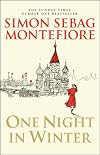
It is Moscow, 1945. Stalin is in power, WWII is coming to a close. The Josef Stalin Commune School 801 educates the children of the elite - politicians, military, film. While they are meant to be educated to be good Bolsheviks, loyal Party members, a small group of the students have formed a secret society called the Fatal Romantics' Club. They read, recite, and re-enact scenes from literature and poetry, especially Pushkin. When two of the members are shot and killed, the children become show more entangled in a tricky web involving not only each other, but those around them, especially their teachers and their families. Secrets are both dangerous and a valuable commodity, a potential bargaining chip against punishment and torture.
While One Night in Winter is, at heart, about love - especially love in a time fraught with paranoia, deceit, and danger - the book is at its best building the historical backdrop. Sebag Montefiore captures the terror felt not only by those in prison, but also by those around them. The runaway train that is an interrogation, the willingness to sign confessions against your better judgment, the inability to call in favors because that would potentially incur Stalin's wrath - and therefore the response to one spouse's plea just to talk to Stalin is, *must be*, met with a cold and desperate response that the Organs are always just and all faith must be put in them to do the right thing. There are sacrifices made, betrayals, self-preservation, and more.
Tense, taught novel, some of which is based very loosely on actual events. The book brings the reader in to the lives of elite Soviets riding the fine line between privilege, paranoia, and downfall. show less
While One Night in Winter is, at heart, about love - especially love in a time fraught with paranoia, deceit, and danger - the book is at its best building the historical backdrop. Sebag Montefiore captures the terror felt not only by those in prison, but also by those around them. The runaway train that is an interrogation, the willingness to sign confessions against your better judgment, the inability to call in favors because that would potentially incur Stalin's wrath - and therefore the response to one spouse's plea just to talk to Stalin is, *must be*, met with a cold and desperate response that the Organs are always just and all faith must be put in them to do the right thing. There are sacrifices made, betrayals, self-preservation, and more.
Tense, taught novel, some of which is based very loosely on actual events. The book brings the reader in to the lives of elite Soviets riding the fine line between privilege, paranoia, and downfall. show less
Lists
Awards


You May Also Like


Associated Authors
Statistics
- Works
- 60
- Also by
- 3
- Members
- 12,899
- Popularity
- #1,813
- Rating
- 3.9
- Reviews
- 225
- ISBNs
- 543
- Languages
- 28
- Favorited
- 13
