
Youngman Carter (1904–1969)
Author of Cargo of Eagles
About the Author
Image credit: On left, with Margery Allingham. Margery Allingham Society website.
Series
Works by Youngman Carter
On to Andorra 3 copies
Associated Works
Tagged
Common Knowledge
- Legal name
- Carter, Philip Youngman
- Other names
- Carter, Youngman
Gulley, George - Birthdate
- 1904-09-26
- Date of death
- 1969-11-30
- Gender
- male
- Education
- Bluecoat School, Christ's Hospital, hear Horsham
Regent Street Polytechnic (Art | 1921) - Occupations
- graphic artist
military officer
journalist
novelist - Organizations
- Garrick Club, London, England, UK
- Relationships
- Allingham, Margery (spouse)
- Short biography
- He was the husband of Margery Allingham.
As an artist, he designed over 2000 book wrappers (covers).
He used the pseudonym George Gulley while working at 'The Tatler'.
Mr. Carter was a keen cricketer. - Nationality
- England
UK - Places of residence
- Watford, England, UK
London, England, UK
Essex, England, UK - Burial location
- Tolleshunt D'Arcy, Essex, England, UK
- Associated Place (for map)
- England, UK
Members
Reviews

I enjoyed the final Campion novel. Youngman Carter clearly favoured action more than his wife Margery Allingham, but that was no hindrance to the story. I felt that his Campion was convincingly the same man and in fact his heroic behaviour in this book, despite his age being somewhere in his sixties, reminded me more of his best eras of the 30s and 40s, rather than the more toned down 50s and 60s stuff. I also enjoyed how the story ends up not being the one Campion is initially hired to show more investigate and doesn't have a big bad villain, just various flawed people. I was a little irritated by the trendy young romantic couple which were often a staple of Allingham's stories too, but ultimately it actually played very well into the heart of the story. I appreciated the brief Amanda cameo too. So all in all, I think this was a great send off. Next I will have to investigate the modern Campion books. show less
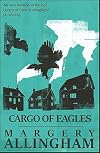
Summary: Poison pen letters, a released smuggler, a murder, a motorcycle gang and a treasure in Allingham’s last Campion.
This is the last Campion story written by Margery Allingham. Actually, her husband, Philip Youngman Carter completed the book after her death. For whatever reason, I found it one of her better works.
Campion aged with his author. While in the background for much of the story, he functions as a kind of “director” for the whole. His interest centers on the Essex coastal show more village of Saltey, which seems to have as “salty” a reputation as its name. He sends his manservant Lugg ahead to embed in the village by buying a bungalow.
While Campion pursues behind the scenes investigations, he recruits a young historian, Mortimer (“Morty”) Kelsey to be his eyes on the ground. Ostensibly, he is researching Saltey’s colorful history as a hub for smuggling. In reality, he is taken with Saltey’s newest resident, Dido, a doctor who inherited a house from a patient. The residents do not welcome her with open arms. Instead, she received a number of poison pen letters. Then they find her agent, Hector Askew, murdered.
Meanwhile, rumors abound that a recently released convict, James Teague, released from prison and his accomplice, are back in the area to recover a hidden treasure. All this occurs amid the village’s “salty” history, and an invasion of a raucous motorcycle gang led by a hardbitten woman.
However, as readers, we wonder where is Teague? will they find Askew’s murderer? who is behind the letters? and is there a treasure? After finding several of the previous stories disappointing, this one represented a strong finish for Allingham, and for her hero Campion. show less
This is the last Campion story written by Margery Allingham. Actually, her husband, Philip Youngman Carter completed the book after her death. For whatever reason, I found it one of her better works.
Campion aged with his author. While in the background for much of the story, he functions as a kind of “director” for the whole. His interest centers on the Essex coastal show more village of Saltey, which seems to have as “salty” a reputation as its name. He sends his manservant Lugg ahead to embed in the village by buying a bungalow.
While Campion pursues behind the scenes investigations, he recruits a young historian, Mortimer (“Morty”) Kelsey to be his eyes on the ground. Ostensibly, he is researching Saltey’s colorful history as a hub for smuggling. In reality, he is taken with Saltey’s newest resident, Dido, a doctor who inherited a house from a patient. The residents do not welcome her with open arms. Instead, she received a number of poison pen letters. Then they find her agent, Hector Askew, murdered.
Meanwhile, rumors abound that a recently released convict, James Teague, released from prison and his accomplice, are back in the area to recover a hidden treasure. All this occurs amid the village’s “salty” history, and an invasion of a raucous motorcycle gang led by a hardbitten woman.
However, as readers, we wonder where is Teague? will they find Askew’s murderer? who is behind the letters? and is there a treasure? After finding several of the previous stories disappointing, this one represented a strong finish for Allingham, and for her hero Campion. show less
This is the final book in the Albert Campion series; it was actually completed by Allingham's husband after her death. The book features Campion at the end of his career, and unlike earlier books he takes a backseat in the investigation of this case. Campion acts more as an adviser to a young American, Morty Kelsey, and his love interest, an attractive young doctor who has just inherited a country house in a seaside town. The town has quite a history of ghosts and pirates, among other show more things.
I enjoyed seeing Campion late in his career. He is world-weary in this book, happy to leave the actual investigating to younger associates. The end brings a surprising twist, and finally reveals to the reader the meaning of the title. As with other Campion books this one relies heavily on space and time- who was where when. Also like other books in the series this can get overwhelming. Still, it's interesting to see the gentleman sleuth in old age, and the books makes for a satisfying mystery. show less
I enjoyed seeing Campion late in his career. He is world-weary in this book, happy to leave the actual investigating to younger associates. The end brings a surprising twist, and finally reveals to the reader the meaning of the title. As with other Campion books this one relies heavily on space and time- who was where when. Also like other books in the series this can get overwhelming. Still, it's interesting to see the gentleman sleuth in old age, and the books makes for a satisfying mystery. show less

Well here it is, the last Campion novel written by Margery Allingham, although it was actually finished by her husband.
Like the previous book in the series, we're leaning on the Campion is (not) a spy plot. (Unlike the pervious book, we have returned to normal genres, so that weird science fiction jaunt really was a blip.) Campion worked for Intelligence during the war but returned to civilian life afterwards, however he has in the past acted a lot like a spy anyway, being hired by someone show more important and anonymous to fiddle around with events to stop a bad guy getting some item or land or whatnot, and in this and the previous novel his old spy boss calls on him to help out. So he's not a spy, but he basically is a spy.
Anyway, as happens in all the Campion books that I don't like so much, Campion keeps dropping out of the story to let some boring headstrong love-mad young man take the lead. These characters are all the exact same (see The China Governess and Hide My Eyes for recent examples) and I don't know why I am expected to want to spend time with them rather than Campion who is much more interesting. In this case our surrogate lead is Morty, an American who knows Campion's son. No, we can't see Campion's son. The last three books all dealt with situations or characters who could have been Campion's son but weren't. I don't know why Allingham wouldn't write about him. If Campion is too old to be the hero then surely his son makes more sense than some rando.
Anyway as it turns out, Morty is just here to hide the fact that as often happens, Campion is working in the background investigating, calling on contacts and setting up traps and if he were in the forefront and we were allowed to see what he was doing then the story would be much shorter. But I KNOW Allingham COULD write stories where Campion was at the centre of the story because I have read them. My two favourite books in fact are the two that are entirely from his perspective (The Case Of The Late Pig and Traitor's Purse).
The mystery that needs resolving here is similar to the one in the previous book in that the resolution is that there is much less of a mystery here than you thought. An anti-climax if you will. Kind of a let down really, but hey, at least both Oates AND Lugg show up, so if you can ignore boring young Morty, it is almost like old times!
Anyway, I will go on to read the two novels that her husband wrote after this. I am hoping that maybe he actually wanted to write about Campion? You know, as the main character? We'll see. show less
Like the previous book in the series, we're leaning on the Campion is (not) a spy plot. (Unlike the pervious book, we have returned to normal genres, so that weird science fiction jaunt really was a blip.) Campion worked for Intelligence during the war but returned to civilian life afterwards, however he has in the past acted a lot like a spy anyway, being hired by someone show more important and anonymous to fiddle around with events to stop a bad guy getting some item or land or whatnot, and in this and the previous novel his old spy boss calls on him to help out. So he's not a spy, but he basically is a spy.
Anyway, as happens in all the Campion books that I don't like so much, Campion keeps dropping out of the story to let some boring headstrong love-mad young man take the lead. These characters are all the exact same (see The China Governess and Hide My Eyes for recent examples) and I don't know why I am expected to want to spend time with them rather than Campion who is much more interesting. In this case our surrogate lead is Morty, an American who knows Campion's son. No, we can't see Campion's son. The last three books all dealt with situations or characters who could have been Campion's son but weren't. I don't know why Allingham wouldn't write about him. If Campion is too old to be the hero then surely his son makes more sense than some rando.
Anyway as it turns out, Morty is just here to hide the fact that as often happens, Campion is working in the background investigating, calling on contacts and setting up traps and if he were in the forefront and we were allowed to see what he was doing then the story would be much shorter. But I KNOW Allingham COULD write stories where Campion was at the centre of the story because I have read them. My two favourite books in fact are the two that are entirely from his perspective (The Case Of The Late Pig and Traitor's Purse).
The mystery that needs resolving here is similar to the one in the previous book in that the resolution is that there is much less of a mystery here than you thought. An anti-climax if you will. Kind of a let down really, but hey, at least both Oates AND Lugg show up, so if you can ignore boring young Morty, it is almost like old times!
Anyway, I will go on to read the two novels that her husband wrote after this. I am hoping that maybe he actually wanted to write about Campion? You know, as the main character? We'll see. show less
Lists
Awards

You May Also Like


Associated Authors
Statistics
- Works
- 10
- Also by
- 3
- Members
- 959
- Popularity
- #26,864
- Rating
- 3.5
- Reviews
- 14
- ISBNs
- 42
- Languages
- 2