
M. R. O'Connor
Author of Wayfinding: The Science and Mystery of How Humans Navigate the World
Works by M. R. O'Connor
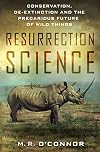
Resurrection Science: Conservation, De-Extinction and the Precarious Future of Wild Things (2015) 118 copies, 9 reviews
Tagged
Common Knowledge
- Legal name
- O'Connor, Maura
- Birthdate
- 1982
- Gender
- female
- Occupations
- journalist
- Nationality
- USA
- Places of residence
- The Bronx, New York, USA
- Associated Place (for map)
- New York, USA
Members
Reviews
Resurrection Science: Conservation, De-Extinction and the Precarious Future of Wild Things by M. R. O'Connor
Rating: 4.5 stars
Resurrection Science by M.R. O'Connor takes a look at current conservation movement and it's possible future. This book is written in an engaging manner that doesn't bog the reader down with too much heavy science. Personally, I would have liked to read more science, but that isn't the focus of the book.
The author delves into the history of the conservation movement, exploring a handful of species facing imminent extinction via the thought-provoking, often sad and almost show more always futile stories of the men and women trying to save these species. Each chapter deals with a different species of animal that raises a different question regarding the course of conservation and extinction. Should species be protected/saved if it is detrimental to the human community around it? At what point does a hybridized species stop being what it was originally? If human interference is largely responsible for the differences between a species that has been fragmented, are they still the original endangered species? How can we protect endangered species that we know very little about? What if breeding a species in captivity results in erasing the behaviors that were the defining features of that species? Would artificially reviving a species produce the same species, or would it be different, with different behaviours? Is on the ground conservation more feasible than storing genetic material/data?
Ms O'Connor discusses the complex ethical issues behind conserving, modifying and resurrecting species in what appears to be a balanced manner, taking into account economics, ethics, science and the nature of humans. De-extinction is the process of creating an organism, which is either a member of, or resembles an extinct species, or breeding population of such organisms, with cloning or selective breeding being the proposed methods. There is significant controversy over de-extinction, with critics asserting that efforts would be better spent conserving existing species, and that the habitat necessary for formerly extinct species to survive is too limited to warrant de-extinction. There is also the conflict between nature/animals and the developmental needs of humans - in essence, determining what a species is worth. The author also takes a look at genetic conservation. This involves gene banks containing millions of tissue samples of extinct and still living species, stored in the hopes that future generations can use the genetic material to bring back extinct species.
This book is a well-written, interesting and thought provoking look at the science and ethics of current and future conservation efforts. The author asks uncomfortable questions and raises troubling points that should be considered. show less
Resurrection Science by M.R. O'Connor takes a look at current conservation movement and it's possible future. This book is written in an engaging manner that doesn't bog the reader down with too much heavy science. Personally, I would have liked to read more science, but that isn't the focus of the book.
The author delves into the history of the conservation movement, exploring a handful of species facing imminent extinction via the thought-provoking, often sad and almost show more always futile stories of the men and women trying to save these species. Each chapter deals with a different species of animal that raises a different question regarding the course of conservation and extinction. Should species be protected/saved if it is detrimental to the human community around it? At what point does a hybridized species stop being what it was originally? If human interference is largely responsible for the differences between a species that has been fragmented, are they still the original endangered species? How can we protect endangered species that we know very little about? What if breeding a species in captivity results in erasing the behaviors that were the defining features of that species? Would artificially reviving a species produce the same species, or would it be different, with different behaviours? Is on the ground conservation more feasible than storing genetic material/data?
Ms O'Connor discusses the complex ethical issues behind conserving, modifying and resurrecting species in what appears to be a balanced manner, taking into account economics, ethics, science and the nature of humans. De-extinction is the process of creating an organism, which is either a member of, or resembles an extinct species, or breeding population of such organisms, with cloning or selective breeding being the proposed methods. There is significant controversy over de-extinction, with critics asserting that efforts would be better spent conserving existing species, and that the habitat necessary for formerly extinct species to survive is too limited to warrant de-extinction. There is also the conflict between nature/animals and the developmental needs of humans - in essence, determining what a species is worth. The author also takes a look at genetic conservation. This involves gene banks containing millions of tissue samples of extinct and still living species, stored in the hopes that future generations can use the genetic material to bring back extinct species.
This book is a well-written, interesting and thought provoking look at the science and ethics of current and future conservation efforts. The author asks uncomfortable questions and raises troubling points that should be considered. show less
Resurrection Science: Conservation, De-Extinction and the Precarious Future of Wild Things by M. R. O'Connor
In Resurrection Science M.R. O'Connor examines many of the difficult aspects of contemporary conservation. This work is broken down into species-specific case studies (each chapter) to illustrate various elements of past, present and future conservation efforts. In so doing some past procedures are shown to have unexpected consequences which leads to a valid questioning of present and future interventions (if indeed interventions are what is best).
In addressing some of the ethical issues of show more conservation science she has accomplished a feat most nonfiction works strive for yet seldom attain, namely the ability to both provide information while also generating further questions for the reader to ponder. I have some fairly secure stances on conservation and the environment yet found myself questioning what I knew, what I thought I knew and most importantly whether I had thought through many of my stances. I found myself both enthralled by the stories within each chapter as well as applying the lessons from each to my own thinking. Don't get me wrong, when I say lessons I don't mean to imply she is trying to "teach" the reader how to think, the lessons from each chapter are the lessons the scientists and conservation workers learned from their experiences.
I highly recommend this book to anyone even remotely interested in wildlife, wildlife management and conservation, and environmental protection. The chapters are wonderfully written and in some ways self-contained. The ideas that link all of the chapters are integral to the work but does not detract from the readability of each case study.
Reviewed from a copy made available through Goodreads First Reads. show less
In addressing some of the ethical issues of show more conservation science she has accomplished a feat most nonfiction works strive for yet seldom attain, namely the ability to both provide information while also generating further questions for the reader to ponder. I have some fairly secure stances on conservation and the environment yet found myself questioning what I knew, what I thought I knew and most importantly whether I had thought through many of my stances. I found myself both enthralled by the stories within each chapter as well as applying the lessons from each to my own thinking. Don't get me wrong, when I say lessons I don't mean to imply she is trying to "teach" the reader how to think, the lessons from each chapter are the lessons the scientists and conservation workers learned from their experiences.
I highly recommend this book to anyone even remotely interested in wildlife, wildlife management and conservation, and environmental protection. The chapters are wonderfully written and in some ways self-contained. The ideas that link all of the chapters are integral to the work but does not detract from the readability of each case study.
Reviewed from a copy made available through Goodreads First Reads. show less
An engaging and well-written exploration into all things wildfire with a view to commending the practice of consistent controlled burning.
The author fully immerses herself in the world of wildfires: she remains a writer but very much becomes a wildland firefighter and trained in both fire suppression and controlled fires. Much of the book is her recounting her experiences in both controlled burns and wildfires. She interviews many people who have been very engaged in terms of wildland fire. show more
She also recounts the history of how the Indigenous people of at least North America consistently burned the land. This is attested both by Indigenous lore and the accounts of early white settlers. She also explores how we have come to our current fire suppression consensus: the "enlightened" belief that we should leave nature alone, the mythic allure of the untouched, undeveloped land, and a lot of bigotry, prejudice, and hostility toward fire and burning. It escaped their minds to imagine how fire might cleanse a land, and how the land we all now live in was not untouched wilderness but had been significantly managed by humans for millennia.
Through her conversations and experiences one can perceive the insanity of our current fire suppression regime, and how often attempts at fire suppression can lead to even greater amounts of territory burned. She explains the developments we've gained in fire science and the dangerous prospect of megafires doing mega-damage. We have created the unholy combination of a warmer planet while allowing excessive amount of flammable material to spread throughout the forests of America. It will eventually end in it all being burned; the only question is whether it will be burned with "good fire" that cleanses and renews or "bad fire" which scorches.
The time is long past to again appreciate Indigenous knowledge and to restore controlled burning throughout the country on a consistent basis, and above all, to recognize fire is "normal," and the complete absence of fire in the land is the artificial and unnatural situation which we have created and which we will not be able to sustain.
Worth reading.
**--galley received as part of early review program show less
The author fully immerses herself in the world of wildfires: she remains a writer but very much becomes a wildland firefighter and trained in both fire suppression and controlled fires. Much of the book is her recounting her experiences in both controlled burns and wildfires. She interviews many people who have been very engaged in terms of wildland fire. show more
She also recounts the history of how the Indigenous people of at least North America consistently burned the land. This is attested both by Indigenous lore and the accounts of early white settlers. She also explores how we have come to our current fire suppression consensus: the "enlightened" belief that we should leave nature alone, the mythic allure of the untouched, undeveloped land, and a lot of bigotry, prejudice, and hostility toward fire and burning. It escaped their minds to imagine how fire might cleanse a land, and how the land we all now live in was not untouched wilderness but had been significantly managed by humans for millennia.
Through her conversations and experiences one can perceive the insanity of our current fire suppression regime, and how often attempts at fire suppression can lead to even greater amounts of territory burned. She explains the developments we've gained in fire science and the dangerous prospect of megafires doing mega-damage. We have created the unholy combination of a warmer planet while allowing excessive amount of flammable material to spread throughout the forests of America. It will eventually end in it all being burned; the only question is whether it will be burned with "good fire" that cleanses and renews or "bad fire" which scorches.
The time is long past to again appreciate Indigenous knowledge and to restore controlled burning throughout the country on a consistent basis, and above all, to recognize fire is "normal," and the complete absence of fire in the land is the artificial and unnatural situation which we have created and which we will not be able to sustain.
Worth reading.
**--galley received as part of early review program show less
O'Connor is a journalist that catches the wildland "fire bug" and travels across the US learning about and the practicing both fire suppression and prescribed burning activities. She makes the case that our wildlands evolved with and need fire to be healthy and to support healthy communities. She especially connects with indigenous fire practitioners and the tragedy of removing both native peoples and their cultural practices from much of the land. There is some hope as indigenous burning show more seems to be getting more and more support from land managers. Finally, this is an interesting read for fire ecologists looking for the views of a layperson. show less
Awards


You May Also Like


Associated Authors
Statistics
- Works
- 4
- Members
- 260
- Popularity
- #88,385
- Rating
- 4.2
- Reviews
- 13
- ISBNs
- 14