

S. P. Somtow
Author of Vampire Junction
About the Author
S. P. Somtow is a composer, film director, and author of over forty books His prolific output spans the genres of horror, science-fiction, fantasy, historical fiction, and children's literature. His work has won or been nominated for dozens of major awards, including the John W. Campbell Award, the show more Locus, the Bram Stoker, the Hugo, and the World Fantasy Award He has written and directed two feature films -- The Laughing Dead and Ill met at Moonlight -- and will soon direct Timetwist from his own script. His epic ballet, Kaki, premiered as a Royal Command performance in Bangkok and he recently conducted the Bangkok Symphony Orchestra. Somtow -- otherwise known as the Secret Godfather of the New Age -- currently lurks somewhere in the bowels of Los Angeles show less
Image credit: S.P. Somtow
Series
Works by S. P. Somtow
Lottery Night [short fiction] 4 copies
An Alien Heresy 3 copies
Dragon's Fin Soup [short story] 3 copies
Chui Chai [short fiction] 3 copies
Damnatio Memoriae: From Empress to Goddess in the Year of Four Emperors (Nero and Sporus Book 3) (2024) 2 copies
Der Fremde Ninja 2 copies
The Laughing Dead [Blu-ray] 2 copies
Il ritorno di Aquila 2 copies
Gingerbread 2 copies
Darker Angels [short story] 2 copies
Dinosaur Ballet 2 copies
The Laughing Dead 1 copy
Mallworld 1 copy
Starship & Haiku 1 copy
Vampire Junction 1 copy
The Fallen Country 1 copy
The Shattered Horse 1 copy
Moon Dance 1 copy
Riverrun 1 copy
Mallworld Becomes Elektra 1 copy
Forest Of The Night 1 copy
Vanitas 1 copy
The Aquiliad 1 1 copy
Inquestor 3: Utopia Hunters 1 copy
A Symphony of Terror 1 copy
Vanilla Blood 1 copy
Aquiliade 1 copy
Dinosaur Ballet: A Primer in Poetry and Pictures for Dinosaurs and Children about Classical Ballet (Dinosaur Classics) 1 copy, 1 review
Damnatio 1 copy
Memoriae 1 copy
Delicatus 1 copy
Chronicles of the High Inquest: Homeworld of the Heart: The Fifth Novel in the Inquestor Series (2020) 1 copy
The Dark Side of Mallworld 1 copy
Encuentro con el mal 1 copy
Diamonds Aren't Forever 1 copy
Hunting the Lion 1 copy
The Voice of the Hummingbird 1 copy
The Vampire of Mallworld 1 copy
Red as Jade 1 copy
Aquila [novelette] 1 copy
The Thirteenth Utopia 1 copy
Associated Works
The Year's Best Science Fiction: Seventh Annual Collection (1990) — Contributor — 311 copies, 2 reviews
The Year's Best Fantasy and Horror: Fifteenth Annual Collection (2002) — Contributor — 275 copies, 4 reviews
The Year's Best Fantasy and Horror: Ninth Annual Collection (1996) — Contributor — 258 copies, 3 reviews
The Year's Best Science Fiction: Fourth Annual Collection (1987) — Contributor — 221 copies, 1 review
Why I Left Harry's All-Night Hamburgers and Other Stories from Isaac Asimov's Science Fiction Magazine (1992) — Contributor — 68 copies
Isaac Asimov's Science Fiction Magazine: Vol. 6, No. 2 [February 1982] (1982) — Contributor — 11 copies
Best of the Rest 2: The Best Unknown Science Fiction and Fantasy of 1998 (1999) — Contributor — 4 copies
S-Fマガジン 1983年 09月号 — Contributor — 1 copy
Tagged
Common Knowledge
- Canonical name
- Somtow, S. P.
- Legal name
- Sucharitkul, Somtow Papinian
สมเถา สุจริตกุล - Birthdate
- 1952-12-30
- Gender
- male
- Education
- Eton College
University of Cambridge (St. Catherine's) - Occupations
- composer
conductor
artistic director (Bangkok Opera)
director (film)
actor
science fiction writer (show all 8)
fantasy writer
horror writer - Awards and honors
- John W. Campbell Award (1981)
- Nationality
- Thailand
- Birthplace
- Bangkok, Thailand
- Associated Place (for map)
- Bangkok, Thailand
Members
Reviews
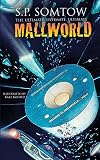
Mallworld is a brilliant playground for stories. Between 1979 and ’81, S.P. Somtow published a slew of seven stories set in the titular Malllworld, a mall 30 kilometers long situated near Jupiter, floating in the void. Somtow’s vision of consumerism gone amok was simultaneously ahead of its time and forgettable. His ideas helped lay the groundwork for what would become cyberpunk (and the Mall of America): A grimy marriage of technology and class division, with extensive corporate show more intrigue and rebellious no-care attitude.
Mallworld’s a wonderful place, and the best moments of these stories revel in the mall’s consumerism, but many Mallworld stories are also mired in dated stereotypes and sloppy writing desperately in need of an editor. Somtow — then writing under the name Somtow Sucharitkul — moved on from Mallworld in ’81 and continued to develop his writing with quirky sci-fi, fantasy, and horror fiction alongside a music career, but most of his work is either self-published or out-of-print today.*
[N.B. This review features images and formatting specific to my book site, dendrobibliography: Check it out here.]
The lore of Mallworld poses a far-future where the Selespridar — tall, blue humanoids with purple hair akin to dreadlocks and who emit a pheromone attracting humans uncontrollably — have caged the human race, effecting an opaque shield just beyond the orbit of Saturn. Humanity, then, has lost access to the stars, until such a time as they prove themselves socially advanced enough to the Selespridar.
The Selespridar themselves are ridiculous, and the hammiest part of the stories. Most of their powers are more magic than sci-fi, and their alien sense of ethics is mindnumbingly backwards even by human standards. Not all of the nine stories deal with the Selespridar, thankfully, but those that do are the weakest links and are perhaps why Mallworld is largely forgotten today.
On the other hand, the stories that focus on the corporate worship of Mallworld and the grimy underworld in the mall’s forgotten corners offer endlessly creative and addictive. The Way Out Corp., a company that has bankrolled suicide into both a product and entertainment; Storkways Inc., which controls the market on genetically-modified children and has made natural births unfashionable; Copuland, a theme park-cum-brothel that works hand-in-hand with the Way Out Corp.; the Churches of Colonel Sanders, St. Martin Luther King, Jr., and St. Indiana Jones, which need no further explanation
The earliest stories and the opening frame narrative are the weakest points, focusing on the Selespridar over the mall itself. The frame narrative loosely ties the nine short stories together and is written as half the conversation between two Selespridar discussing the future of humanity. It’s bad, and adds nothing to the stories themselves. In only four pages, it features plot holes and the worst aspects of the magical aliens, who joke and jab about how dumb humanity is while saying plenty of dumb things. The nine stories are meant to be their reading nine minds within Mallworld itself, picked at random, but this never makes sense as some of the stories take place over multiple years, one the Selespridar reading minds also shows up as a character frequently, and most of the narrators are directly related to one another and from a very close-knit, small family. Either skip it, or read knowing it gets better.
The first two stories — also among the first published — are serviceable prototypes for Mallworld. ‘A Day in Mallworld’ (1979) and ‘Sing a Song of Mallworld’ (1980) offer fascinating glimpses of colorful consumerism, but they’re mostly buried under Selespridar lore — boring — or shallow characterization. The former is a tale of a Bible Belt runaway landing on Mallworld for the first time. She immediately meets a Selespridar who’s wandering among humans looking for the meaning of life. They wander the variety of churches representing the future of religion until finally realizing that books providing life with meaning. It’s a dated and cynical message swamped in naivete about technology.
The latter is more interesting, but signals a serious issue with this series’ male narrators: They’re misogynistic twerps who fall in love on sight and demand that women sleep with them. Their demand for sex often drives the plot, which makes these nothing but shallow boys’ stories. The narrator here is our introduction to the barJulians, a wealthy family that built Mallworld generations ago, and have amassed most of human wealth to splurge on whatever they desire. A bored 17-year-old virtuoso, this barJulian wanders Mallworld looking for distractions from his musical career, and stumbles upon a cult of children living in the skin of Mallworld. Instead of diving into this cult, his story is about ‘rescuing’ one of its members so she’ll sleep with him. Not cool. Also featured is a life-sized game of pinball. Cool.
The third story, ‘the Vampire of Mallworld,’ really picks up the pace and shows the possibilities of this world. It also, obviously, casually introduces vampires into a consumerist sci-fi vision of the future without batting an eye. A TV producer and actor working on his own reality TV show — long before reality TV — about Mallworld’s darkest secrets finds the ultimate secret: An underground suicide parlor where guests watch volunteers get slaughtered by a starving vampire. Introducing a network of barJulian family secrets, corporations selling suicide, baby wholesalers embroiled in corporate conspiracies, talking TV cameras full of snarky backtalk, and, of course, vampires, it’s easy to see the seeds that would eventually flower into cyberpunk here. ‘The Vampire of Mallworld’ is best described on simple terms: Batshit crazy.
That vampire story was one of the last Mallworld stories written in 1981, and shows how Somtow’s writing style and ideas were evolving past shallow characters and shallow messages on consumerism. The following story, ‘Rabid in Mallworld,’ is another early outing, most similar to ‘a Day in Mallworld.’ ‘Rabid’ expands on the Selespridar lore, showing the stages of their multi-century life cycles. It’s not a bad story, but it’s forgettable, and the family drama that’s meant to be at the forefront is lost behind a bulwark of sci-fi gobbledygook.
The longest story, ‘Mallworld Graffiti,’ is two stories fitted together. A reprisal of the misogyny from ‘Sing a Song’ fills up the first half, and a page-turner about social justice and dystopian realities next door the latter half. An artist tries to win the heart of a barJulian by sculpting her likeness in a massive fixture of ice orbiting Jupiter — he obsesses about her, about how much he deserves her, about how much he wants to show the world by sleeping with her. Then the narrative shifts, and instead he’s atoning and miserable, spending his days helping those in need at the mall’s ‘Graffiti,’ which is a massive collection of public messages and cries for help. Eventually another Mallworld is seen next door via a rip in reality, and he meets another him trying to escape the oppression of their world’s Selespridar overlords. If this sounds completely irrelevant to the ice sculpture, tail-chasing escapades, that’s because it is. It’s also much better.
‘The Darkside of Mallworld’ is another highlight, and another precursor to the cyberpunk movement. We follow a repo agent working for Storkways Inc., hunting down and stealing children whose parents fail to pay their monthly dues. Repossessed children are taken to used kid lots and sold to whoever’s willing to pay. This amazing scenario leads into another: Our repo’d kid escapes and we chase her into Mallworld’s darkside — floors where stores couldn’t pay their rent, long abandoned by commerce and left to slowly rot. Mallworld’s darkest corners are now ruled by competing gangs torn from butchered mythology. It’s the Mallkyries at war with the Amazons. The Mallkyries seek an honorable death in order to make it to Mallhalla, an afterworld where they can purchase all the coprokinetic sculptures their souls could want.
‘The Jaws of Mallworld’ was the original closer for the 1981 and 1984 editions of Mallworld, and it’s a weird one. The title is a reference to Stephen Spielberg’s Jaws, as a portal between the Atlantic Ocean and the floor of Copuland releases endless torrents of salt water and sea critters into Mallworld. A man-eating shark moves in, and Copuland shifts from selling sex with ‘porcupines’ — modified people with 30 or more sets of genitalia — to selling death in the jaws of the visiting shark.
With the 2000 and 2013 reprints of Mallworld, Somtow wrote two new stories set in the universe: ‘A Mall and the Gneiss Visitors’ and ‘Bug-Eyed in Mallworld.’ They’re both among the series’ best stories, and show a lot of growth in Somtow’s writing. The Pope and the bug-eyed barJulian aren’t shallow wells of sexual desires like earlier protagonists, but developed observers with developed goals.
Geology is alive in the ‘Gneiss’ story, and are visiting our solar system in order to rescue long-lost family from human abuse. The Black Stone of Kaaba arrived centuries earlier, and hides in plain sight, waiting for a chance to escape. Without rescue soon, it’s feared, the Black Stone will die alone and turn into what we think of as a normal rock. A future Pope narrates this story, a woman who was genetically-engineered to be the Pope: She’s a figurehead who stands naked and pure in a world where Catholicism has bought out and merged with Hinduism, and where Jesus returned in the 21st century to combat Mormonism. She travels with the geologic visitors to help return their lost family.
‘Bug-Eyed’ tells of a corporate takeover, of an elaborate ruse set off by smarter species — cetaceans and the Selespridar. Curly the whale gives our narrating barJulian the keys to the shield enclosing our solar system around Saturn’s orbit, and shortly after Mallworld’s suffered a corporate takeover. His credentials barred from traveling within Mallworld, he buys a new body — that of an ancient race of giant insects that doubled, we mythologize, as detectives. Born anew as a giant preying mantis in an overcoat, our barJulian travels to a new department store literally devouring all of Mallworld with promises of savings and sales. He has to choose between saving himself and all of humankind.
These two stories seem immediately more complex than the older ones, and, along with ‘Vampire’ and ‘Darkside,’ are the most fun to read. The closing of the frame narrative is about as dumb as its opening, unfortunately.
Mallworld‘s stories all exude charm and creativity like no other, but it’s impossible to say most of them are actually any good. Characters are two-dimensional stereotypes, and plotlines are as self-involved and shallow as the concept of Mallworld demands. Stories like ‘a Day in Mallworld’ and ‘Sing a Song for Mallworld’ are immediately forgettable slogs, but then ‘the Darkside of Mallworld’ and ‘the Vampire of Mallworld’ are classic, goofy tales of cyberpunk, required reading for fans of the genre.
Somtow’s stories are worthwhile for sheer creativity, and the writing comes second. Even when they fall flat, Mallworld gets by on just plain coolness. Given the growth in Somtow’s writing between the 1979 and 2000 stories, I hope he returns to Mallworld once again: A new collection or a novel devoted to the best parts of Mallworld — its dark underbelly, the corporate intrigue, and other human elements — could kick a little life into cyberpunk and open lots of younger readers to this forgotten gem of the genre. show less
Mallworld’s a wonderful place, and the best moments of these stories revel in the mall’s consumerism, but many Mallworld stories are also mired in dated stereotypes and sloppy writing desperately in need of an editor. Somtow — then writing under the name Somtow Sucharitkul — moved on from Mallworld in ’81 and continued to develop his writing with quirky sci-fi, fantasy, and horror fiction alongside a music career, but most of his work is either self-published or out-of-print today.*
[N.B. This review features images and formatting specific to my book site, dendrobibliography: Check it out here.]
The lore of Mallworld poses a far-future where the Selespridar — tall, blue humanoids with purple hair akin to dreadlocks and who emit a pheromone attracting humans uncontrollably — have caged the human race, effecting an opaque shield just beyond the orbit of Saturn. Humanity, then, has lost access to the stars, until such a time as they prove themselves socially advanced enough to the Selespridar.
The Selespridar themselves are ridiculous, and the hammiest part of the stories. Most of their powers are more magic than sci-fi, and their alien sense of ethics is mindnumbingly backwards even by human standards. Not all of the nine stories deal with the Selespridar, thankfully, but those that do are the weakest links and are perhaps why Mallworld is largely forgotten today.
On the other hand, the stories that focus on the corporate worship of Mallworld and the grimy underworld in the mall’s forgotten corners offer endlessly creative and addictive. The Way Out Corp., a company that has bankrolled suicide into both a product and entertainment; Storkways Inc., which controls the market on genetically-modified children and has made natural births unfashionable; Copuland, a theme park-cum-brothel that works hand-in-hand with the Way Out Corp.; the Churches of Colonel Sanders, St. Martin Luther King, Jr., and St. Indiana Jones, which need no further explanation
The earliest stories and the opening frame narrative are the weakest points, focusing on the Selespridar over the mall itself. The frame narrative loosely ties the nine short stories together and is written as half the conversation between two Selespridar discussing the future of humanity. It’s bad, and adds nothing to the stories themselves. In only four pages, it features plot holes and the worst aspects of the magical aliens, who joke and jab about how dumb humanity is while saying plenty of dumb things. The nine stories are meant to be their reading nine minds within Mallworld itself, picked at random, but this never makes sense as some of the stories take place over multiple years, one the Selespridar reading minds also shows up as a character frequently, and most of the narrators are directly related to one another and from a very close-knit, small family. Either skip it, or read knowing it gets better.
The first two stories — also among the first published — are serviceable prototypes for Mallworld. ‘A Day in Mallworld’ (1979) and ‘Sing a Song of Mallworld’ (1980) offer fascinating glimpses of colorful consumerism, but they’re mostly buried under Selespridar lore — boring — or shallow characterization. The former is a tale of a Bible Belt runaway landing on Mallworld for the first time. She immediately meets a Selespridar who’s wandering among humans looking for the meaning of life. They wander the variety of churches representing the future of religion until finally realizing that books providing life with meaning. It’s a dated and cynical message swamped in naivete about technology.
The latter is more interesting, but signals a serious issue with this series’ male narrators: They’re misogynistic twerps who fall in love on sight and demand that women sleep with them. Their demand for sex often drives the plot, which makes these nothing but shallow boys’ stories. The narrator here is our introduction to the barJulians, a wealthy family that built Mallworld generations ago, and have amassed most of human wealth to splurge on whatever they desire. A bored 17-year-old virtuoso, this barJulian wanders Mallworld looking for distractions from his musical career, and stumbles upon a cult of children living in the skin of Mallworld. Instead of diving into this cult, his story is about ‘rescuing’ one of its members so she’ll sleep with him. Not cool. Also featured is a life-sized game of pinball. Cool.
The third story, ‘the Vampire of Mallworld,’ really picks up the pace and shows the possibilities of this world. It also, obviously, casually introduces vampires into a consumerist sci-fi vision of the future without batting an eye. A TV producer and actor working on his own reality TV show — long before reality TV — about Mallworld’s darkest secrets finds the ultimate secret: An underground suicide parlor where guests watch volunteers get slaughtered by a starving vampire. Introducing a network of barJulian family secrets, corporations selling suicide, baby wholesalers embroiled in corporate conspiracies, talking TV cameras full of snarky backtalk, and, of course, vampires, it’s easy to see the seeds that would eventually flower into cyberpunk here. ‘The Vampire of Mallworld’ is best described on simple terms: Batshit crazy.
That vampire story was one of the last Mallworld stories written in 1981, and shows how Somtow’s writing style and ideas were evolving past shallow characters and shallow messages on consumerism. The following story, ‘Rabid in Mallworld,’ is another early outing, most similar to ‘a Day in Mallworld.’ ‘Rabid’ expands on the Selespridar lore, showing the stages of their multi-century life cycles. It’s not a bad story, but it’s forgettable, and the family drama that’s meant to be at the forefront is lost behind a bulwark of sci-fi gobbledygook.
The longest story, ‘Mallworld Graffiti,’ is two stories fitted together. A reprisal of the misogyny from ‘Sing a Song’ fills up the first half, and a page-turner about social justice and dystopian realities next door the latter half. An artist tries to win the heart of a barJulian by sculpting her likeness in a massive fixture of ice orbiting Jupiter — he obsesses about her, about how much he deserves her, about how much he wants to show the world by sleeping with her. Then the narrative shifts, and instead he’s atoning and miserable, spending his days helping those in need at the mall’s ‘Graffiti,’ which is a massive collection of public messages and cries for help. Eventually another Mallworld is seen next door via a rip in reality, and he meets another him trying to escape the oppression of their world’s Selespridar overlords. If this sounds completely irrelevant to the ice sculpture, tail-chasing escapades, that’s because it is. It’s also much better.
‘The Darkside of Mallworld’ is another highlight, and another precursor to the cyberpunk movement. We follow a repo agent working for Storkways Inc., hunting down and stealing children whose parents fail to pay their monthly dues. Repossessed children are taken to used kid lots and sold to whoever’s willing to pay. This amazing scenario leads into another: Our repo’d kid escapes and we chase her into Mallworld’s darkside — floors where stores couldn’t pay their rent, long abandoned by commerce and left to slowly rot. Mallworld’s darkest corners are now ruled by competing gangs torn from butchered mythology. It’s the Mallkyries at war with the Amazons. The Mallkyries seek an honorable death in order to make it to Mallhalla, an afterworld where they can purchase all the coprokinetic sculptures their souls could want.
‘The Jaws of Mallworld’ was the original closer for the 1981 and 1984 editions of Mallworld, and it’s a weird one. The title is a reference to Stephen Spielberg’s Jaws, as a portal between the Atlantic Ocean and the floor of Copuland releases endless torrents of salt water and sea critters into Mallworld. A man-eating shark moves in, and Copuland shifts from selling sex with ‘porcupines’ — modified people with 30 or more sets of genitalia — to selling death in the jaws of the visiting shark.
With the 2000 and 2013 reprints of Mallworld, Somtow wrote two new stories set in the universe: ‘A Mall and the Gneiss Visitors’ and ‘Bug-Eyed in Mallworld.’ They’re both among the series’ best stories, and show a lot of growth in Somtow’s writing. The Pope and the bug-eyed barJulian aren’t shallow wells of sexual desires like earlier protagonists, but developed observers with developed goals.
Geology is alive in the ‘Gneiss’ story, and are visiting our solar system in order to rescue long-lost family from human abuse. The Black Stone of Kaaba arrived centuries earlier, and hides in plain sight, waiting for a chance to escape. Without rescue soon, it’s feared, the Black Stone will die alone and turn into what we think of as a normal rock. A future Pope narrates this story, a woman who was genetically-engineered to be the Pope: She’s a figurehead who stands naked and pure in a world where Catholicism has bought out and merged with Hinduism, and where Jesus returned in the 21st century to combat Mormonism. She travels with the geologic visitors to help return their lost family.
‘Bug-Eyed’ tells of a corporate takeover, of an elaborate ruse set off by smarter species — cetaceans and the Selespridar. Curly the whale gives our narrating barJulian the keys to the shield enclosing our solar system around Saturn’s orbit, and shortly after Mallworld’s suffered a corporate takeover. His credentials barred from traveling within Mallworld, he buys a new body — that of an ancient race of giant insects that doubled, we mythologize, as detectives. Born anew as a giant preying mantis in an overcoat, our barJulian travels to a new department store literally devouring all of Mallworld with promises of savings and sales. He has to choose between saving himself and all of humankind.
These two stories seem immediately more complex than the older ones, and, along with ‘Vampire’ and ‘Darkside,’ are the most fun to read. The closing of the frame narrative is about as dumb as its opening, unfortunately.
Mallworld‘s stories all exude charm and creativity like no other, but it’s impossible to say most of them are actually any good. Characters are two-dimensional stereotypes, and plotlines are as self-involved and shallow as the concept of Mallworld demands. Stories like ‘a Day in Mallworld’ and ‘Sing a Song for Mallworld’ are immediately forgettable slogs, but then ‘the Darkside of Mallworld’ and ‘the Vampire of Mallworld’ are classic, goofy tales of cyberpunk, required reading for fans of the genre.
Somtow’s stories are worthwhile for sheer creativity, and the writing comes second. Even when they fall flat, Mallworld gets by on just plain coolness. Given the growth in Somtow’s writing between the 1979 and 2000 stories, I hope he returns to Mallworld once again: A new collection or a novel devoted to the best parts of Mallworld — its dark underbelly, the corporate intrigue, and other human elements — could kick a little life into cyberpunk and open lots of younger readers to this forgotten gem of the genre. show less
Dinosaur Ballet: A Primer in Poetry and Pictures for Dinosaurs and Children about Classical Ballet (Dinosaur Classics) by S. P. Somtow

S.P. SomTow, the author and illustrator of this unique picture book full of darling poems, shows he knows his audience from the very first poem:
D’ye ever get the feeling
That all you do is boring?
Just get a dinosaur on stage
The public will stop snoring.
As a teacher in an elementary school, I can attest to that! Dinosaurs are everything! SomTow, a composer and the author of Dinosaur Symphony: A Book of Poetry and Pictures about Dinosaurs and Classical Music, takes on educating children on show more ballet through dinosaurs, as well.
Do I love the humorous poems? Of course! But the real star of this show (pardon the pun) are SomTow’s breathtaking illustrations of these lithesome dinosaurs (and ballet dancers, too). What child could resist ballet after this? Do yourself a favor: Buy this book even if you have no children in your life. You won’t regret it.
In the interest of full disclosure, I received this book from NetGalley, Boys Town Press Publishing and the Independent Book Publishers Association (IBPA in exchange for an honest review. show less
D’ye ever get the feeling
That all you do is boring?
Just get a dinosaur on stage
The public will stop snoring.
As a teacher in an elementary school, I can attest to that! Dinosaurs are everything! SomTow, a composer and the author of Dinosaur Symphony: A Book of Poetry and Pictures about Dinosaurs and Classical Music, takes on educating children on show more ballet through dinosaurs, as well.
Do I love the humorous poems? Of course! But the real star of this show (pardon the pun) are SomTow’s breathtaking illustrations of these lithesome dinosaurs (and ballet dancers, too). What child could resist ballet after this? Do yourself a favor: Buy this book even if you have no children in your life. You won’t regret it.
In the interest of full disclosure, I received this book from NetGalley, Boys Town Press Publishing and the Independent Book Publishers Association (IBPA in exchange for an honest review. show less

Sadly, this book was far from great.
As a matter of fact, I have to say it was really awful. OK, it's a TV tie-in book and I didn't expect a lot, but this is an author I generally think is wonderful - esp. his High Inquest series - but this book was just bad on so many levels.
I didn't watch "V" religiously, but I did watch it occasionally & thought it was all right.
The book starts out a bit promisingly with some spicy implications of interspecies sex to come... but it pulls back from that way show more too quickly. I almost guessed that the editor wasn't having ANY of what the author wanted to do with the book, and then he just gave up and churned out whatever.
The basic plot device - that the aliens want to kidnap Martial Arts masters and have them train brainwashed armies - is really pretty dumb. I felt like some scenes were kinda lifted right from The Karate Kid. The Asian (and other) stereotypes were surprising. And the main character is really just a total jerk - there's no reason to even root for him.
There were a few funny 80's moments - when's the last time you heard of a 'sexy' woman described as wearing a sweatband, suspenders and purple 'parachute' pants? - but overall, this book was not worth reading.
Sad. Go read the author's other books; they're great! And he's awesome! show less
As a matter of fact, I have to say it was really awful. OK, it's a TV tie-in book and I didn't expect a lot, but this is an author I generally think is wonderful - esp. his High Inquest series - but this book was just bad on so many levels.
I didn't watch "V" religiously, but I did watch it occasionally & thought it was all right.
The book starts out a bit promisingly with some spicy implications of interspecies sex to come... but it pulls back from that way show more too quickly. I almost guessed that the editor wasn't having ANY of what the author wanted to do with the book, and then he just gave up and churned out whatever.
The basic plot device - that the aliens want to kidnap Martial Arts masters and have them train brainwashed armies - is really pretty dumb. I felt like some scenes were kinda lifted right from The Karate Kid. The Asian (and other) stereotypes were surprising. And the main character is really just a total jerk - there's no reason to even root for him.
There were a few funny 80's moments - when's the last time you heard of a 'sexy' woman described as wearing a sweatband, suspenders and purple 'parachute' pants? - but overall, this book was not worth reading.
Sad. Go read the author's other books; they're great! And he's awesome! show less

This was a re-read for me - but it's been over 20 years since I first read it. It's interesting to come back to something after so long. I'm happy that I still really, really liked it.
It's a reading experience that's more like experiencing a poem or a song than a typical novel. This is not to say that the plot is not clear and easy to follow (if anything, the plot might be overly simple, given such a rich and complex universe), but it is suffused with almost a synaesthesia of the senses, show more with music and glittering darkness. It's full of weird and wonderful imagery.
That said, perhaps some people might find it dated in some ways - personally, I found it giving me a nostalgia for the time period when it was written, which was much more filled with over-the-top fantasy, with an unabashed flair for the dramatic. Although this is sci-fi, it's definitely aesthetically influenced by the goth scene of the time, and reminds me of when goth was all about beauty, decadence and playing at cruelty and power, skirting the edges of convention. Some people found goth rock too bombastic too. I don't.
I wish Somtow would write more SF. Being a conductor is all very nice and worthwhile, but.... More Books! :-)
For now, I think I'll re-read this entire series. show less
It's a reading experience that's more like experiencing a poem or a song than a typical novel. This is not to say that the plot is not clear and easy to follow (if anything, the plot might be overly simple, given such a rich and complex universe), but it is suffused with almost a synaesthesia of the senses, show more with music and glittering darkness. It's full of weird and wonderful imagery.
That said, perhaps some people might find it dated in some ways - personally, I found it giving me a nostalgia for the time period when it was written, which was much more filled with over-the-top fantasy, with an unabashed flair for the dramatic. Although this is sci-fi, it's definitely aesthetically influenced by the goth scene of the time, and reminds me of when goth was all about beauty, decadence and playing at cruelty and power, skirting the edges of convention. Some people found goth rock too bombastic too. I don't.
I wish Somtow would write more SF. Being a conductor is all very nice and worthwhile, but.... More Books! :-)
For now, I think I'll re-read this entire series. show less
Lists
Awards


You May Also Like


Associated Authors
Statistics
- Works
- 120
- Also by
- 57
- Members
- 3,397
- Popularity
- #7,501
- Rating
- 3.6
- Reviews
- 37
- ISBNs
- 184
- Languages
- 5
- Favorited
- 6

