
Philip Pullman
Author of Northern Lights
About the Author
Philip Pullman was born in Norwich on October 19, 1946. He graduated from Oxford University with a degree in English. He taught at various Oxford middle schools and at Westminster College for eight years. He is the author of many acclaimed novels, plays, and picture books for readers of all ages. show more His first book, Count Karlstein, was published in 1982. His other books include: The Firework-Maker's Daughter; I Was a Rat!; Clockwork or All Wound Up; and The Good Man Jesus and the Scoundrel Christ. He is also the author of the Sally Lockhart series and the His Dark Materials Trilogy. He is the author of The Book of Dust, volume 1. He has received numerous awards including the Carnegie Medal and the Guardian Fiction Award for Northern Lights (The Golden Compass), the Whitbread Book of the Year Award for The Amber Spyglass, the Eleanor Farjeon Award for children's literature in 2002, and the Astrid Lindgren Award in 2005. (Bowker Author Biography) show less
Series
Works by Philip Pullman
His Dark Materials Trilogy (Northern Lights, a/k/a The Golden Compass | The Subtle Knife | The Amber Spyglass ) (2000) 15,317 copies, 205 reviews
The Good Man Jesus and the Scoundrel Christ (2010) — Author; Narrator, some editions — 1,952 copies, 105 reviews
Fairy Tales from the Brothers Grimm: A New English Version (2012) — Retelling — 1,644 copies, 40 reviews
Fairy Tales from the Brothers Grimm: A New English Version {Penguin Classics Deluxe Edition} (2012) 344 copies, 4 reviews
Two Crafty Criminals!: and how they were Captured by the Daring Detectives of the New Cut Gang (1994) 126 copies, 7 reviews
Sally Lockhart Collection: The Ruby in the Smoke / The Shadow in the North / The Tiger in the Well / The Tin Princess (2004) 47 copies, 1 review
The Golden Key: And Other Fairy Tales from the Brothers Grimm (A Penguin Special from Viking) (2012) 28 copies, 1 review
The Sally Lockhart Trilogy: The Ruby in the Smoke / The Shadow in the North / The Tiger in the Well (1997) 18 copies
The Firework-Maker's Daughter; Clockwork or All Wound Up: Two Tales (Everyman's Library Children's Classics Series) (2025) 5 copies, 1 review
[unidentified works] 4 copies
Lyra's Oxford • Once Upon a Time in the North • La Belle Sauvage • The Secret Commonwealth (2021) 1 copy
黃金羅盤(下) (黑暗元素三部曲, #2) 1 copy
Something To Read 1 copy
Video Nasty 1 copy
Associated Works
The Science of Philip Pullman's His Dark Materials (2003) — Introduction, some editions — 349 copies, 7 reviews
The Wand in the Word: Conversations with Writers of Fantasy (2006) — Contributor — 254 copies, 9 reviews
The Graphic Canon of Children's Literature: The World's Greatest Kids' Lit as Comics and Visuals (2014) — Contributor — 101 copies, 1 review
Life and Death: A Collection of Classic Poetry and Prose (2004) — Introduction, some editions — 18 copies
Tagged
Common Knowledge
- Legal name
- Pullman, Philip Nicholas Outram
- Birthdate
- 1946-10-19
- Gender
- male
- Education
- Ysgol Ardudwy, Wales
Exeter College, Oxford University (BA | 1968 | English) - Occupations
- primary school teacher
lecturer
writer - Organizations
- Blake Society
Society of Authors (council member|president|2013-2022)
British Humanist Association (patron)
National Secular Society
Westminster College
Oxfordshire/Westminster Language-to-Learning Centre (head) - Awards and honors
- Carnegie Medal (1995)
Royal Society of Literature (Fellow, 2001)
May Hill Arbuthnot Lecturer (2002)
Eleanor Farjeon Award (2002)
Order of the British Empire (Commander, 2004)
Eastercon, UK (guest of honour | 2004) (show all 10)
Astrid Lindgren Memorial Award (2005)
Freedom of the City of Oxford (2007)
Action for Children's Arts (J. M. Barrie Award | 2019)
Knight Bachelor (2019) - Agent
- Caradoc King (AP Watt)
- Short biography
- Philip Pullman CBE, FRSL (born 19 October 1946) is a British writer. He is the author of several best-selling books, most notably the fantasy trilogy His Dark Materials and the fictionalised biography of Jesus, The Good Man Jesus and the Scoundrel Christ. In 2008, The Times named Pullman one of the "50 greatest British writers since 1945".
- Nationality
- UK
- Birthplace
- Norwich, Norfolk, England, UK
- Places of residence
- Llanbedr, Gwynedd, Wales, UK
Oxford, Oxfordshire, England, UK - Map Location
- England, UK
Members
Discussions
Book Discussion: The Golden Compass - Contains SPOILERS! Finish the book first! in The Green Dragon (April 2023)
His Dark Materials in Folio Society Devotees (December 2022)
Book Discussion: The Golden Compass - SPOILER FREE thread in The Green Dragon (December 2007)
Reviews
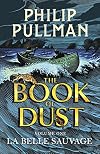
Seventeen years after the publication of The Amber Spyglass, Philip Pullman returned to the world of His Dark Materials with this novel, the first in a new trilogy, The Book of Dust. This book, La Belle Sauvage, is a prequel to the previous trilogy, telling the story of how Lyra Belacqua comes to Jordan College as a baby. It introduces a new character, Malcolm Polstead, who takes it upon himself to act as baby Lyra's protector as various parties swirl around Oxford in attempts to take the show more child, for reasons that are unclear even with our hindsight from reading the earlier trilogy.
We are introduced to other characters who we already know: Lord Asriel and Marisa Coulter. Asriel's motives are fairly clear; Mrs. Coulter's less so. And there are various individuals and organs of the State who seem to want to track Lyra down for their own purposes. 11-year-old Malcolm and his trusty canoe – the eponymous Belle Sauvage – intervene and adventure follows. Lest you think that an 11-year-old in a canoe is all a bit Swallows and Amazons, disabuse yourself of that notion. Malcolm, his unwilling companion Alice and baby Lyra suffer considerable discomfort and visceral threat in their escape down a River Thames gargantuanly swollen with an apocalyptic flood. We know how this will end, of course, but the cost of that final outcome is uncertain. Pullman does not allow a nominal classification of this book as 'young adult' to restrict him in a willingness to bring adult themes into the story, even if their depiction is less graphic than a fully 'adult' novel would display. The only authorial concession to 'young adult' status is in some phrasing; otherwise, only the typesetting (12-point on 18 in a fairly easy-reading typeface – New Baskerville) betrays the ostensibly intended audience. But given that any barely teen reader of His Dark Materials when it first appeared is now likely to be in their late twenties or early thirties, this is getting to be a little academic (if you'll pardon the pun).
Elsewhere, there is a lot of setting up situations we have already encountered in the earlier trilogy, for instance Coram van Texel and the gyptians. But there is also a lot of additional world-building that begins to hint at some of the differences between Pullman's Brytain and our reality. Fairly early, we are given a pointer that the action takes place in the last quarter of the Twentieth Century, yet the society is resolutely placed in a 1930s/1950s milieu, both in terms of technology and social attitudes to class and gender. This is reinforced by Malcolm sounding like Richmal Compton's William Brown, something I found mildly irritating in the earlier books but which here I rapidly came to accept.
I found it interesting to speculate on the hinge-points for Pullman's alternate reality. Electricity ('anbaric energy') and internal combustion engines are available, but not widespread; there appear to be no telephones; and heavier-than-air flight exists but has gone down a particular cul-de-sac and is extremely rare. Mass media, even along a 1930s model, is absent, and is restricted to newspapers. There is reference made to a 1933 war against Switzerland, probably over the division of powers between the Brytish state and the Magisterium, though the Government has to maintain its own secret service as a secret within its own establishment; the operatives of 'Oakley Street' (as it is known) appear to be fighting a losing battle against various arms of the Magisterium, which in themselves appear to direct a sort of 'morality police'. Pullman makes the nature of this religious governance structure completely clear in his description of the 'League of St. Alexander', a Stasi-style organisation that encourages schoolchildren to inform on their parents. The equation of organised religion intervening in civil politics with totalitarian social control is unavoidable.
The nature of this world and its stage of development suggests that in Pullman's alternate reality, there was no Reformation, leaving the Catholic Church unchallenged. It's interesting to speculate that what we see is a depiction of the Merton Hypothesis in action; the historian Robert Merton proposed that it was possible to identify different strands in societal development in Catholic and Protestant societies, and that Protestant nations went down a path of promoting scientific and technological development, whereas Catholic nations put greater emphasis on the arts and culture. Whilst this has been widely debated, and is not generally considered to represent an invariable dichotomy between different societies, nonetheless comparing and contrasting Pullman's reality with ours does suggest a society with a different developmental emphasis.
With the exception of the daemons and other fantastic creatures, the fantasy elements in His Dark Materials were restricted to excursions into other realms via the actions of Will and the Subtle Knife. Here, though, we see something different, The gyptians appear to be aware of elemental fantasy figures – Old Father Thames, for example – and in the course of their downstream odyssey, Malcolm, Alice and Lyra encounter a fantasy realm straight out of myth as well as someone from the realm of Faerie (as opposed to a witch; the witches are mentioned but hardly encountered). This blurring of the boundaries between the fantastic and the rational is something of a departure for Pullman in the telling of this story; it puts some events of His Dark Materials into a different light.
We do see Lyra's daemon, Pantalaimon, grow from juvenile forms of his different creature images, though this does rather beg the question of how daemons come into being in the first place. And Pullman asks in the text (through another character) how daemons know what forms to take – especially if they take the forms of more exotic creatures such as moles or bushbabies – when their humans have no conception of what such creatures are?
The book is exquisitely written and for the most part reads well. However, I had a few minor problems with it. By introducing Malcolm Polstead in Lyra's infancy, and telling us that Malcolm becomes besotted with the baby Lyra and vows to look after her, this then begs the question: where is Malcolm during the events of His Dark Materials? Presumably, he is still in Oxford; perhaps his future life has taken him in directions where his access to Jordan College and its young ward is limited, or perhaps the older Malcolm has realised that a ten-year difference in ages would make any sort of relationship, even if only platonic, rather suspect. Minor spoiler – Malcolm is a character in later volumes of The Book of Dust, so perhaps this will get explained in due course.
The execution of the story has a few issues; Philip Pullman obviously knows his home city well, and this shows up with occasional discontinuities in scene-setting. He refers to places and features that he automatically assumes we are familiar with, and therefore misses a few details of geographical relationships. But this is a minor issue. More concerning is the rather rushed final chapter, where Malcolm, Alice and Lyra reach London, and are suddenly caught up in a speedboat chase between the agents of the Magisterium and Lord Asriel. The change of pace is rather sudden; then when Malcolm, Alice and Lyra are rescued, they are whisked back to Oxford and the book ends with Lyra being handed into Jordan College by Lord Asriel and the other characters disappear. There is no coda showing Malcolm reunited with his parents; and the growing relationship between Malcolm and Alice, which started out as barely-disguised hostility and then grew, in fits and starts, through adversity into a deeper sort of friendship, is left hanging. Again, perhaps this will be resolved in later volumes.
Pullman does give us a couple of Easter Eggs. I said earlier that there was internal evidence that the story was set in the 1990s or early 2000s; Lyra's Oxford has its own Stephen Hawking, though it's interesting to speculate over whether he suffers the same impediments there as 'our' Hawking did. Would a Stephen Hawking unencumbered by disability have the same development of intellect that enabled him to theorise about the nature of the universe? Given that Pullman's Brytain doesn’t have such advanced technology, would a Stephen Hawking there have the same access to advanced medicine and medical technology to preserve his life long enough for him to make his contributions to science? Or are we just looking at authorial fiat, with Pullman saying “It's my universe, I'll have Stephen Hawking in it if I want.” He certainly gives us another Easter Egg reference, and that on the first page of the text. The Trout Inn, where Malcolm lives and his father is landlord, has two resident peacocks, named Norman and Barry. It's hard for any British reader of A Certain Age not to immediately think of the urbane film critic Barry Norman (1933-2017), who presented the BBC's flagship cinema magazine show from 1972 to 1998. (https://en.wikipedia.org/wiki/Barry_Norman). Surely this cannot be coincidence.
Ultimately, though, this is a satisfying return to Lyra's Oxford with a lot of material for thought, especially in the back story and world-building. It works as a story, even if some aspects can look a little odd on reflection. A number of readers were slightly misled into thinking that the next two volumes would continue Malcolm's story rather than jumping ahead to continue the story from where His Dark Materials left off, but that was then and we now have the complete trilogy to consider. But I was drawn into the story from the outset and was kept enthralled for the whole of the book.
Next up, The Secret Commonwealth. show less
We are introduced to other characters who we already know: Lord Asriel and Marisa Coulter. Asriel's motives are fairly clear; Mrs. Coulter's less so. And there are various individuals and organs of the State who seem to want to track Lyra down for their own purposes. 11-year-old Malcolm and his trusty canoe – the eponymous Belle Sauvage – intervene and adventure follows. Lest you think that an 11-year-old in a canoe is all a bit Swallows and Amazons, disabuse yourself of that notion. Malcolm, his unwilling companion Alice and baby Lyra suffer considerable discomfort and visceral threat in their escape down a River Thames gargantuanly swollen with an apocalyptic flood. We know how this will end, of course, but the cost of that final outcome is uncertain. Pullman does not allow a nominal classification of this book as 'young adult' to restrict him in a willingness to bring adult themes into the story, even if their depiction is less graphic than a fully 'adult' novel would display. The only authorial concession to 'young adult' status is in some phrasing; otherwise, only the typesetting (12-point on 18 in a fairly easy-reading typeface – New Baskerville) betrays the ostensibly intended audience. But given that any barely teen reader of His Dark Materials when it first appeared is now likely to be in their late twenties or early thirties, this is getting to be a little academic (if you'll pardon the pun).
Elsewhere, there is a lot of setting up situations we have already encountered in the earlier trilogy, for instance Coram van Texel and the gyptians. But there is also a lot of additional world-building that begins to hint at some of the differences between Pullman's Brytain and our reality. Fairly early, we are given a pointer that the action takes place in the last quarter of the Twentieth Century, yet the society is resolutely placed in a 1930s/1950s milieu, both in terms of technology and social attitudes to class and gender. This is reinforced by Malcolm sounding like Richmal Compton's William Brown, something I found mildly irritating in the earlier books but which here I rapidly came to accept.
I found it interesting to speculate on the hinge-points for Pullman's alternate reality. Electricity ('anbaric energy') and internal combustion engines are available, but not widespread; there appear to be no telephones; and heavier-than-air flight exists but has gone down a particular cul-de-sac and is extremely rare. Mass media, even along a 1930s model, is absent, and is restricted to newspapers. There is reference made to a 1933 war against Switzerland, probably over the division of powers between the Brytish state and the Magisterium, though the Government has to maintain its own secret service as a secret within its own establishment; the operatives of 'Oakley Street' (as it is known) appear to be fighting a losing battle against various arms of the Magisterium, which in themselves appear to direct a sort of 'morality police'. Pullman makes the nature of this religious governance structure completely clear in his description of the 'League of St. Alexander', a Stasi-style organisation that encourages schoolchildren to inform on their parents. The equation of organised religion intervening in civil politics with totalitarian social control is unavoidable.
The nature of this world and its stage of development suggests that in Pullman's alternate reality, there was no Reformation, leaving the Catholic Church unchallenged. It's interesting to speculate that what we see is a depiction of the Merton Hypothesis in action; the historian Robert Merton proposed that it was possible to identify different strands in societal development in Catholic and Protestant societies, and that Protestant nations went down a path of promoting scientific and technological development, whereas Catholic nations put greater emphasis on the arts and culture. Whilst this has been widely debated, and is not generally considered to represent an invariable dichotomy between different societies, nonetheless comparing and contrasting Pullman's reality with ours does suggest a society with a different developmental emphasis.
With the exception of the daemons and other fantastic creatures, the fantasy elements in His Dark Materials were restricted to excursions into other realms via the actions of Will and the Subtle Knife. Here, though, we see something different, The gyptians appear to be aware of elemental fantasy figures – Old Father Thames, for example – and in the course of their downstream odyssey, Malcolm, Alice and Lyra encounter a fantasy realm straight out of myth as well as someone from the realm of Faerie (as opposed to a witch; the witches are mentioned but hardly encountered). This blurring of the boundaries between the fantastic and the rational is something of a departure for Pullman in the telling of this story; it puts some events of His Dark Materials into a different light.
We do see Lyra's daemon, Pantalaimon, grow from juvenile forms of his different creature images, though this does rather beg the question of how daemons come into being in the first place. And Pullman asks in the text (through another character) how daemons know what forms to take – especially if they take the forms of more exotic creatures such as moles or bushbabies – when their humans have no conception of what such creatures are?
The book is exquisitely written and for the most part reads well. However, I had a few minor problems with it. By introducing Malcolm Polstead in Lyra's infancy, and telling us that Malcolm becomes besotted with the baby Lyra and vows to look after her, this then begs the question: where is Malcolm during the events of His Dark Materials? Presumably, he is still in Oxford; perhaps his future life has taken him in directions where his access to Jordan College and its young ward is limited, or perhaps the older Malcolm has realised that a ten-year difference in ages would make any sort of relationship, even if only platonic, rather suspect. Minor spoiler – Malcolm is a character in later volumes of The Book of Dust, so perhaps this will get explained in due course.
The execution of the story has a few issues; Philip Pullman obviously knows his home city well, and this shows up with occasional discontinuities in scene-setting. He refers to places and features that he automatically assumes we are familiar with, and therefore misses a few details of geographical relationships. But this is a minor issue. More concerning is the rather rushed final chapter, where Malcolm, Alice and Lyra reach London, and are suddenly caught up in a speedboat chase between the agents of the Magisterium and Lord Asriel. The change of pace is rather sudden; then when Malcolm, Alice and Lyra are rescued, they are whisked back to Oxford and the book ends with Lyra being handed into Jordan College by Lord Asriel and the other characters disappear. There is no coda showing Malcolm reunited with his parents; and the growing relationship between Malcolm and Alice, which started out as barely-disguised hostility and then grew, in fits and starts, through adversity into a deeper sort of friendship, is left hanging. Again, perhaps this will be resolved in later volumes.
Pullman does give us a couple of Easter Eggs. I said earlier that there was internal evidence that the story was set in the 1990s or early 2000s; Lyra's Oxford has its own Stephen Hawking, though it's interesting to speculate over whether he suffers the same impediments there as 'our' Hawking did. Would a Stephen Hawking unencumbered by disability have the same development of intellect that enabled him to theorise about the nature of the universe? Given that Pullman's Brytain doesn’t have such advanced technology, would a Stephen Hawking there have the same access to advanced medicine and medical technology to preserve his life long enough for him to make his contributions to science? Or are we just looking at authorial fiat, with Pullman saying “It's my universe, I'll have Stephen Hawking in it if I want.” He certainly gives us another Easter Egg reference, and that on the first page of the text. The Trout Inn, where Malcolm lives and his father is landlord, has two resident peacocks, named Norman and Barry. It's hard for any British reader of A Certain Age not to immediately think of the urbane film critic Barry Norman (1933-2017), who presented the BBC's flagship cinema magazine show from 1972 to 1998. (https://en.wikipedia.org/wiki/Barry_Norman). Surely this cannot be coincidence.
Ultimately, though, this is a satisfying return to Lyra's Oxford with a lot of material for thought, especially in the back story and world-building. It works as a story, even if some aspects can look a little odd on reflection. A number of readers were slightly misled into thinking that the next two volumes would continue Malcolm's story rather than jumping ahead to continue the story from where His Dark Materials left off, but that was then and we now have the complete trilogy to consider. But I was drawn into the story from the outset and was kept enthralled for the whole of the book.
Next up, The Secret Commonwealth. show less

now this is more like it.
this story is bigger. the world feels massive and complicated. you don’t know what everyone’s going to do before they do it. i think what impresses me the most, and what is the most welcome change from its predecessor, is that it fucking takes its time. the book manages to convey the breathless pace of a final, desperate fight for survival & freedom without feeling like it’s in a hurry. it feels very in control, very measured, and like it gives everything that show more happens a real chance to breathe despite the fact that so much shit is happening.
i do think lord asriel & mrs. coulter’s redemption arcs are a little too easy. and i am giving serious side-eye to the fact that the book (justifiably) harshes on mrs. coulter quite a bit while basically never really grappling whatsoever with the fact that lord asriel killed a fucking child. like, it just literally never comes up. so that’s… awkward.
i think it’s fucking wild that catholics get so up in arms about these books considering how fucking nothing the allegorizing in them is. like, yeah, this one does specifically mention “the swiss guard” which is the most overt reference to the fact that the church in lyra’s world is clearly a vastly more powerful version of the catholic church that maintained the overt political authority they had in the middle ages rather than having to get by with being wealthy landowners like they are today. but just. idk man, it’s still so possible to imagine someone reading this without even noticing that it’s anti-church. so getting all upset about it & demanding boycotts just comes off as the most fragile shit ever imo.
on that note, the cosmology of this world is a bit lacking for my tastes. like, i ended up agreeing with what my partner said about the second book that just having the entire conflict be between spicy atheists & spicy christians, where even seemingly powerful outsiders like the witches ultimately end up deriving all their shit from the same boring source is just a bit disappointing.
i also completely agree with him that it’s pretty annoying that pullman just had to go with a downer ending. like, i admittedly did actually get pretty genuinely emotional when lyra & will realized they were going to have to be separated. it was very well-written, and in a limited amount of time (considering the sheer amount of other shit the book had to get through, seriously this thing was massive) the book did manage to make me care quite a bit about their relationship even though i knew where things were going from the vague memories of previous reading.
what really puts this book over the top for me, though, is mary’s story in the chapter “marzipan.”
you know when a story has That Scene? the one where you could pull it out of the larger story and, standing completely on its own, it would still be just absolutely stunningly good? and if you did pull it out of the larger body it was from, that larger body would just suddenly be drastically less special? i’m thinking of, like, valerie page’s diary in v for vendetta. this is that scene for me.
the way mary told her story just made me smile so much. it’s just… it’s so intimate, and it’s so tender. it really emphasizes the literal sweetness, the playfulness that comes along with love. it’s just some truly incredible writing, i’m really not sure what else to say.
and i guess that’s kind of what it comes down to with these books. like, there are plenty of things about them i don’t like. but they’re just so damn well-written. i think i’ve reached a point in my life where i’m comfortable saying that i’d rather spend my time reading things that more directly appeal to me, but i’m still glad i revisited these to see if they held up at all, and discovered that they mostly do. show less
this story is bigger. the world feels massive and complicated. you don’t know what everyone’s going to do before they do it. i think what impresses me the most, and what is the most welcome change from its predecessor, is that it fucking takes its time. the book manages to convey the breathless pace of a final, desperate fight for survival & freedom without feeling like it’s in a hurry. it feels very in control, very measured, and like it gives everything that show more happens a real chance to breathe despite the fact that so much shit is happening.
i do think lord asriel & mrs. coulter’s redemption arcs are a little too easy. and i am giving serious side-eye to the fact that the book (justifiably) harshes on mrs. coulter quite a bit while basically never really grappling whatsoever with the fact that lord asriel killed a fucking child. like, it just literally never comes up. so that’s… awkward.
i think it’s fucking wild that catholics get so up in arms about these books considering how fucking nothing the allegorizing in them is. like, yeah, this one does specifically mention “the swiss guard” which is the most overt reference to the fact that the church in lyra’s world is clearly a vastly more powerful version of the catholic church that maintained the overt political authority they had in the middle ages rather than having to get by with being wealthy landowners like they are today. but just. idk man, it’s still so possible to imagine someone reading this without even noticing that it’s anti-church. so getting all upset about it & demanding boycotts just comes off as the most fragile shit ever imo.
on that note, the cosmology of this world is a bit lacking for my tastes. like, i ended up agreeing with what my partner said about the second book that just having the entire conflict be between spicy atheists & spicy christians, where even seemingly powerful outsiders like the witches ultimately end up deriving all their shit from the same boring source is just a bit disappointing.
i also completely agree with him that it’s pretty annoying that pullman just had to go with a downer ending. like, i admittedly did actually get pretty genuinely emotional when lyra & will realized they were going to have to be separated. it was very well-written, and in a limited amount of time (considering the sheer amount of other shit the book had to get through, seriously this thing was massive) the book did manage to make me care quite a bit about their relationship even though i knew where things were going from the vague memories of previous reading.
what really puts this book over the top for me, though, is mary’s story in the chapter “marzipan.”
you know when a story has That Scene? the one where you could pull it out of the larger story and, standing completely on its own, it would still be just absolutely stunningly good? and if you did pull it out of the larger body it was from, that larger body would just suddenly be drastically less special? i’m thinking of, like, valerie page’s diary in v for vendetta. this is that scene for me.
the way mary told her story just made me smile so much. it’s just… it’s so intimate, and it’s so tender. it really emphasizes the literal sweetness, the playfulness that comes along with love. it’s just some truly incredible writing, i’m really not sure what else to say.
and i guess that’s kind of what it comes down to with these books. like, there are plenty of things about them i don’t like. but they’re just so damn well-written. i think i’ve reached a point in my life where i’m comfortable saying that i’d rather spend my time reading things that more directly appeal to me, but i’m still glad i revisited these to see if they held up at all, and discovered that they mostly do. show less

"...rumors and guesses flew through the palace and the city like shuttles in a loom, weaving a story of corpses and ghosts, of curses and devils, of death and life and clockwork. But no one knew the truth."
A haunting little puzzle of stories: A clockmaker's apprentice fears the next day's exposure when all will realize he hasn't made an addition to the town's famous clock tower. A storyteller begins a story that came to him in a dream, without knowing how it will end. A character from that show more story enters the inn where the story is being told. A clockwork prince is saved by his father's sacrifice, and again by an innkeeper's daughter's cleverness and affection. And the clockmaker's apprentice meets his fate at the point of a clockwork knight's sword.
See also: Kate DiCamillo, Brian Selznick, Chris Van Allsburg, Kate Atkinson (for adults), Leah Hager Cohen (for adults) show less
A haunting little puzzle of stories: A clockmaker's apprentice fears the next day's exposure when all will realize he hasn't made an addition to the town's famous clock tower. A storyteller begins a story that came to him in a dream, without knowing how it will end. A character from that show more story enters the inn where the story is being told. A clockwork prince is saved by his father's sacrifice, and again by an innkeeper's daughter's cleverness and affection. And the clockmaker's apprentice meets his fate at the point of a clockwork knight's sword.
See also: Kate DiCamillo, Brian Selznick, Chris Van Allsburg, Kate Atkinson (for adults), Leah Hager Cohen (for adults) show less

In his Carnegie Medal Acceptance Speech, given in 1996, Philip Pullman contends that "There are some themes, some subjects, too large for adult fiction; they can only be dealt with adequately in a children's book." His subsequent remarks about the importance of story, its centrality to both children's and adult literature, will be most welcome to anyone who grows tired of the sort of "literary armageddon" that certain critics, ala Harold Bloom, envision when faced with the adult consumption show more of children's books.
These are exactly the sort of bold words one would expect from the author of His Dark Materials, a juvenile fantasy trilogy inspired in part by the works of Milton and Blake, and which takes up the cause of challenging certain long-entrenched theological and religious beliefs; among them the perfection and immortality of god, the justice of religious authority, the concept of original sin, and the role of free will.
The Golden Compass is the first book in Pullman's trilogy, and opens in Oxford, in a "universe like ours, but different in many ways." It follows the adventures of a young girl named Lyra, who, together with her daemon Pantalaimon, finds herself swept up in an extraordinary adventure, the consequences of which will be more far-reaching than anything she ever could have imagined.
With a sinister and all-powerful church, known as the Magisterium; a mystery involving kidnapped children and the terrible rumors as to their fate; a sea voyage to the far north; a fascinating cast of characters including gyptians, armoured bears, and Siberian witches; this book offers more than enough narrative excitement to keep any reader enthralled. The theological and philosophical controversies of Lyra's world provide a fascinating undercurrent to the story, particularly the concept of dust - a mysterious substance with great significance for the future of individual people, individual worlds, and the general universe....
This is my third time reading The Golden Compass, which I first encountered when I was given an advance reading copy of it back in 1996. I have found each reading to be an incredibly rich and rewarding experience, and have been struck by different aspects of the story every time. As there are over 1,000 reviews for this title, I will avoid any more general summary, and focus on some of my specific observations this time around.
First, this work always reminds me of the fact that adults too frequently undervalue the intellectual capability of children, their curiosity about and ability to grasp complex ideas and realities. Given that Pullman explicitly makes this point, when writing of Lyra's desire to learn about Dust, I find it ironic how often adult reviewers of this series will speak of its sophistication as somehow astonishing, "in a children's book." I must conclude that they have either failed to grasp this key point, or are seeking to assuage their own insecurities.
Pullman's books have stirred up quite a bit of controversy, due to their sharp criticism of orthodox theology and religious institutions. While I do not find his arguments arbitrary or unfounded, I had to chuckle when I realized that much of what is considered "theology" in Lyra's world would be considered science in our own. Is Pullman being ironic, or is he intentionally implying that scientific institutions are as susceptible to corruption as religious ones?
Finally, I consider Pullman's conception of the "daemon" to be a stroke of pure genius! The physicality of the soul in this world provides an extended, and very useful, metaphor for examining the human soul. It also allows the reader to truly witness the horror of spiritual violence, in a way impossible under any other circumstance. The complicated relationships between people and daemons, both their own and others, and between the daemons themselves, gave me much to ponder, this time around. show less
These are exactly the sort of bold words one would expect from the author of His Dark Materials, a juvenile fantasy trilogy inspired in part by the works of Milton and Blake, and which takes up the cause of challenging certain long-entrenched theological and religious beliefs; among them the perfection and immortality of god, the justice of religious authority, the concept of original sin, and the role of free will.
The Golden Compass is the first book in Pullman's trilogy, and opens in Oxford, in a "universe like ours, but different in many ways." It follows the adventures of a young girl named Lyra, who, together with her daemon Pantalaimon, finds herself swept up in an extraordinary adventure, the consequences of which will be more far-reaching than anything she ever could have imagined.
With a sinister and all-powerful church, known as the Magisterium; a mystery involving kidnapped children and the terrible rumors as to their fate; a sea voyage to the far north; a fascinating cast of characters including gyptians, armoured bears, and Siberian witches; this book offers more than enough narrative excitement to keep any reader enthralled. The theological and philosophical controversies of Lyra's world provide a fascinating undercurrent to the story, particularly the concept of dust - a mysterious substance with great significance for the future of individual people, individual worlds, and the general universe....
This is my third time reading The Golden Compass, which I first encountered when I was given an advance reading copy of it back in 1996. I have found each reading to be an incredibly rich and rewarding experience, and have been struck by different aspects of the story every time. As there are over 1,000 reviews for this title, I will avoid any more general summary, and focus on some of my specific observations this time around.
First, this work always reminds me of the fact that adults too frequently undervalue the intellectual capability of children, their curiosity about and ability to grasp complex ideas and realities. Given that Pullman explicitly makes this point, when writing of Lyra's desire to learn about Dust, I find it ironic how often adult reviewers of this series will speak of its sophistication as somehow astonishing, "in a children's book." I must conclude that they have either failed to grasp this key point, or are seeking to assuage their own insecurities.
Pullman's books have stirred up quite a bit of controversy, due to their sharp criticism of orthodox theology and religious institutions. While I do not find his arguments arbitrary or unfounded, I had to chuckle when I realized that much of what is considered "theology" in Lyra's world would be considered science in our own. Is Pullman being ironic, or is he intentionally implying that scientific institutions are as susceptible to corruption as religious ones?
Finally, I consider Pullman's conception of the "daemon" to be a stroke of pure genius! The physicality of the soul in this world provides an extended, and very useful, metaphor for examining the human soul. It also allows the reader to truly witness the horror of spiritual violence, in a way impossible under any other circumstance. The complicated relationships between people and daemons, both their own and others, and between the daemons themselves, gave me much to ponder, this time around. show less
Lists
Victorian Period (1)
Winter Books (1)
Current To Read (1)
BBC Big Read (1)
2000s decade (1)
Loan Library (1)
100 New Classics (1)
Winter Books (1)
Fantasy Fiction (1)
Read in 2010 (1)
Farm Boy Fantasy (1)
Favorite Series (1)
Read in 1999 (1)
A Novel Cure (1)
quigui wishlish (1)
Next in Series (1)
British Mystery (1)
Gaslamp Fantasy (1)
Ghosts (1)
Folio Society (3)
Read These Too (3)
Steampunk (3)
Overdue Podcast (3)
Lista d2 (3)
Best Young Adult (3)
Favourite Books (5)
BBC Big Read (4)
Unread books (4)
Page Turners (1)
Witchy Fiction (1)
Read (1)
Booker Prize (1)
Comfort Reads (1)
Reading LIst (1)
Series (1)
al.vick-series (2)
Five star books (2)
2010s (2)
Nineties (2)
1990s (2)
Awards


You May Also Like


Associated Authors
Statistics
- Works
- 87
- Also by
- 30
- Members
- 150,496
- Popularity
- #40
- Rating
- 4.0
- Reviews
- 2,869
- ISBNs
- 1,903
- Languages
- 36
- Favorited
- 589


