

Marge Piercy
Author of Woman on the Edge of Time
About the Author
Poet and novelist Marge Piercy was born in Detroit, Michigan on March 31, 1936. She received a B. A. from the University of Michigan and an M. A. from Northwestern. She is involved in the Jewish renewal and political work and was part of the civil rights movement. She won the Arthur C. Clarke show more award. Besides writing her own novels and collections of poetry, she has collaborated with her husband Ira Wood on a play, The Last White Class, and a novel, Storm Tide. In 1997, they founded a small literary publishing company called the Leapfrog Press. She currently lives in Cape Cod. (Bowker Author Biography) Marge Piercy is the author of 14 previous poetry collections and 14 novels. In 1990 her poetry won the Golden Rose, the oldest poetry award in the country. She lives on Cape Cod. (Publisher Provided) Marge Piercy is the author of 35 books of poetry & fiction, including the best sellers "Gone to Soldiers" & "The Longings of Women". (Publisher Provided) show less
Image credit: Richard Rosenthal
Works by Marge Piercy
So You Want to Write (2nd Edition): How to Master the Craft of Writing Fiction and Memoir (2001) 109 copies, 1 review
Cybergolem 3 copies
"Lord Valentine's Castle" 2 copies
Piercy, Marge Archive 1 copy
An Open Letter {article} 1 copy
Barbie Doll {poem} 1 copy
"Beauty I Would Suffer For" 1 copy
What's That Smell in the Kitchen? (included in The Norton Introduction to Literature - 5th Edition) 1 copy
The Secretary Chant 1 copy
Associated Works
Race, Class, and Gender in the United States: An Integrated Study (1992) — Contributor, some editions — 561 copies
Writers on Writing: Collected Essays from the New York Times (2001) — Contributor — 479 copies, 5 reviews
For the Love of Books: 115 Celebrated Writers on the Books They Love Most (1999) — Contributor — 479 copies, 4 reviews
All We Can Save: Truth, Courage, and Solutions for the Climate Crisis (2020) — Contributor — 468 copies, 12 reviews
Sisters of the Earth: Women's Prose and Poetry About Nature (1991) — Contributor — 441 copies, 5 reviews
Cries of the Spirit: A Celebration of Women's Spirituality (2000) — Contributor — 404 copies, 2 reviews
Wise Women: Over Two Thousand Years of Spiritual Writing by Women (1996) — Contributor — 230 copies, 1 review
No More Masks: An Anthology of Twentieth-Century American Women Poets (1993) — Contributor, some editions — 226 copies, 3 reviews
Teaching with Fire: Poetry That Sustains the Courage to Teach (2003) — Contributor — 224 copies, 1 review
Leading from Within: Poetry That Sustains the Courage to Lead (2007) — Contributor — 114 copies, 3 reviews
What My Mother Gave Me: Thirty-one Women on the Gifts That Mattered Most (2013) — Contributor — 106 copies, 19 reviews
Wrestling with Zion: Progressive Jewish-American Responses to the Israeli-Palestinian Conflict (2003) — Contributor — 84 copies, 1 review
She Rises Like the Sun: Invocations of the Goddess by Contemporary American Women Poets (1989) — Contributor — 71 copies
Jewish Noir: Contemporary Tales of Crime and Other Dark Deeds (2015) — Contributor — 50 copies, 1 review
Paths of Resistance: The Art and Craft of the Political Novel (1989) — Contributor — 26 copies, 1 review
Editor's Choice II: Fiction, Poetry & Art from the U.S. Small Press, 1978 to 1983 (Contemporary Anthology Series) (1987) — Contributor — 6 copies
The Little Magazine, v. 11, #1, Spring 1977 — Contributor — 1 copy
The Little Magazine, v. 10, #1-2, Spring Summer 1976 — Contributor — 1 copy
Tagged
Common Knowledge
- Canonical name
- Piercy, Marge
- Birthdate
- 1936-03-31
- Gender
- female
- Education
- University of Michigan (BA|1957)
Northwestern University (MA|1958) - Occupations
- poet
novelist
essayist
reviewer - Organizations
- Leapfrog Press
- Awards and honors
- Hopwood Award (1956, 1957)
Arthur C. Clarke Award (1993)
Golden Rose Poetry Prize (1990)
Paterson Poetry Prize (2000)
Sheaffer-PEN/New England Award (1989)
May Sarton Award (1991) (show all 10)
Borestone Mountain Poetry Award (1968, 1974)
Carolyn Kizer Poetry Prize (1986, 1990)
Brit ha-Darot Award (1992)
Barbara Bradley Award (1992) - Agent
- Lois Wallace (Wallace Literary Agency)
- Relationships
- Wood, Ira (spouse)
- Short biography
- Marge Piercy was born in Detroit, educated at the University of Michigan, and is the recipient of four honorary doctorates. She is the author of seventeen novels. [from Amazon.com, 4/8/2013)
- Nationality
- USA
- Birthplace
- Detroit, Michigan, USA
- Places of residence
- Detroit, Michigan, USA
Wellfleet, Massachusetts, USA - Associated Place (for map)
- USA
Members
Discussions
***Woman on the Edge of Time Group Read--spoiler thread in 75 Books Challenge for 2011 (June 2011)
Reviews
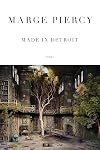
Marge Piercy doesn't pull her punches. She says what she feels and her poetry has a brutal honesty that doesn't shy away from calling people out on their stupidity. But I also found that she has a love of nature and the natural world, she thoughtfully looks back at relationships and painful moments and expresses herself with finely crafted poems that I really liked. Similar to my recent reading of one of Ursula LeGuin's books of poetry, I had only ever read Piercy's fiction and was unaware show more until recently that she even wrote poetry.
I learned about this book from reading a poem by Piercy called The rented lakes of my childhood which Ken Craft discussed on his blog. I think I liked it so much because, like Marge Piercy, I remember going with my family to various Michigan lakes and visiting family or friends in the inevitable, falling-down cottage that was their summer rental. This poem moved me to find the book which I was able to sleuth with my good friend, google.
Made in Detroit is divided into 6 chapters with poems in broad topic areas ranging from growing up in Detroit, nature, politics of the moment, Judaism, and possibly autobiographical poems about the past and past relationships. It was hard for me to be selective about what to quote here as I enjoyed so many of her poems. This is a book of poetry I would certainly like to own and it has spurred me to look out for more of Piercy's books.
One of my favorites is Little Diurnal Tragedies. Over the last 5 to 6 years my wife and I have spent a lot of time on the road taking our kids back and forth to various areas of the state of Michigan for college. Right now, we are just going back and forth to East Lansing but every time I am struck by the number of animals lying dead by the side of the road....it just bothers me more and more, especially knowing what is happening with the crashing populations of large and small animals throughout the world. Marge Piercy's poem expresses this tragedy well....
Little Diurnal Tragedies
Mercy for the dog lying broken
backed in the road while the car
that hit it speeds off.
Mercy for the wren baby pushed
from the nest by the bigger hatchling--
egg the cowbird deposited.
Mercy for the green turtles caught
in the sudden cold of the bay
when the nor'easter blows.
Mercy for the pregnant cat thrown
out to starve, nursing her five kittens
among garbage and broken glass.
Mercy for the geese the golfers
want poisoned because they disturb
the green beside already polluted pools.
Mercy for the birds trying to fly
south on ancient routes, blinded
by our lights, dying on skyscrapers.
All around us are creatures we barely
notice, trying to preserve their only
lives among our machinery,
among our smog and smoke, inside
our radiation, among the houses and
roads built on their once habitats.
This poem perfectly expresses what many are thinking right now in this US that is slowly turning fiction into fact...think Margaret Atwood.
Ethics for Republicans
An embryo is precious;
a woman is a vessel.
A fertilized egg is a person;
a woman is indentured to it.
An embryo is sacred until birth.
After that, he/she is on their own.
Abortion is murder. Rape,
incest are means to an end:
that precious fertilized egg
housed in an expendable body.
Let us make babies and babies
and babies; children are something
else, probably future criminals,
probably welfare cheats whose
education hikes taxes. You
can freely dispose of them. show less
I learned about this book from reading a poem by Piercy called The rented lakes of my childhood which Ken Craft discussed on his blog. I think I liked it so much because, like Marge Piercy, I remember going with my family to various Michigan lakes and visiting family or friends in the inevitable, falling-down cottage that was their summer rental. This poem moved me to find the book which I was able to sleuth with my good friend, google.
Made in Detroit is divided into 6 chapters with poems in broad topic areas ranging from growing up in Detroit, nature, politics of the moment, Judaism, and possibly autobiographical poems about the past and past relationships. It was hard for me to be selective about what to quote here as I enjoyed so many of her poems. This is a book of poetry I would certainly like to own and it has spurred me to look out for more of Piercy's books.
One of my favorites is Little Diurnal Tragedies. Over the last 5 to 6 years my wife and I have spent a lot of time on the road taking our kids back and forth to various areas of the state of Michigan for college. Right now, we are just going back and forth to East Lansing but every time I am struck by the number of animals lying dead by the side of the road....it just bothers me more and more, especially knowing what is happening with the crashing populations of large and small animals throughout the world. Marge Piercy's poem expresses this tragedy well....
Little Diurnal Tragedies
Mercy for the dog lying broken
backed in the road while the car
that hit it speeds off.
Mercy for the wren baby pushed
from the nest by the bigger hatchling--
egg the cowbird deposited.
Mercy for the green turtles caught
in the sudden cold of the bay
when the nor'easter blows.
Mercy for the pregnant cat thrown
out to starve, nursing her five kittens
among garbage and broken glass.
Mercy for the geese the golfers
want poisoned because they disturb
the green beside already polluted pools.
Mercy for the birds trying to fly
south on ancient routes, blinded
by our lights, dying on skyscrapers.
All around us are creatures we barely
notice, trying to preserve their only
lives among our machinery,
among our smog and smoke, inside
our radiation, among the houses and
roads built on their once habitats.
This poem perfectly expresses what many are thinking right now in this US that is slowly turning fiction into fact...think Margaret Atwood.
Ethics for Republicans
An embryo is precious;
a woman is a vessel.
A fertilized egg is a person;
a woman is indentured to it.
An embryo is sacred until birth.
After that, he/she is on their own.
Abortion is murder. Rape,
incest are means to an end:
that precious fertilized egg
housed in an expendable body.
Let us make babies and babies
and babies; children are something
else, probably future criminals,
probably welfare cheats whose
education hikes taxes. You
can freely dispose of them. show less
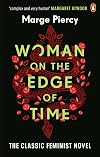
SPOILERS: Oh my days, what a fantastic read. But so sad, and so sad that it could have been written today but was actually published before I was born. Not only have we not learned anything, we're hurtling toward the bad future. Reading this felt at times like being given proper meaningful answers to the question But How Should We Live? I wish I'd read it twenty years ago, but then I probably wouldn't have understood either the question or the answer! This is a wonderfully crafted, terribly show more prescient novel about trauma, recovery, survival, the many possible futures, all topped off with a {SPOILER} clever twist But Was It Really A Mental Health Episode that made me sad and awestruck at the layers of cleverness going on here. Standing ovation from me. show less

What happens when black families move into white neighborhoods? This play examines the lives around one such incidence, this one set in Boston in the 1970s, shortly after busing brought desegregation. The white families in the neighborhood believe the area belongs to them, and that the black families are ruining all lives there. Mob violence is set off by a couple of young punks being used by a race-baiting politician. One of the strongest features of this work is that the people are real. show more They are not upper class people upset when "the other" moves into their neighborhood. They are working class, many of them out of work or underemployed, scared about the future, looking for a scapegoat. The fear of losing what little they have drives them to lash out at a visible manifestation of change. The tension builds throughout the work to the final confrontation, and the authors manage to keep hold of the tension and build it appropriately to a climax. Well written, easy to read, and thought provoking. show less

This is the story of the friendship between two women, a friendship that starts when they are girls and lasts over decades, following their braided lives as one marries and becomes the wife of a rich man while the other begins a career as a writer. The story is told from the first person perspective of the latter and explores what it means to be a woman in a capitalist society, with a distinct feminist slant.
And no, I am not referring to Elena Ferrante’s Neapolitan Novels, even though the show more similarities are more than striking and more than likely not coincidental – considering that the novel I am referring to here, Marge Piercy’s Braided Lives, is somewhat of a feminist classic, I think it is not too far-fetched to assume that it was the inspiration for the Italian author’s series of novels, and it actually was that assumption which made me decide to read Piercy’s novel right after the ones by Ferrante.
Which is why the following post will likely be focusing on the comparison between the two which is not quite fair towards Piercy’s novel, as it really deserves to be considered on its own terms and merits, not just as some kind of precursor to the Neapolitan Novels. So let me state outright (and I shall probably repeat this later) that Braided Lives stands very much on its own and is well worth reading even if you have not read Ferrante’s novels and maybe do not plan on ever doing so. As similar as both works are in their premise and concept, they read very differently indeed and I for one found it quite interesting to trace those differences.
First and probably most obvious is of course that Piercy’s novel – which is a “proper” novel with fictional protagonists (called Jill and Donna) but which on the other hand the author openly admits is inspired by her autobiography rather than taking Ferrante’s oblique approach on that matter – takes place in the USA rather in Italy; more important, however, is that place in general does not play as big a part in Braided Lives as it does in the Neapolitan Novels which are so firmly rooted in their setting that it almost becomes a protagonist in its own right. This gives Piercy’s novel a somewhat more universal air, a sense of “this could have happened anywhere” but it also increases the danger of the book coming across as didactic, a fable more concerned with the general than the personal, something which Ferrante, even with all her outspoken support of feminism and the labour movement, never did.
Marge Piercy, however, also manages to avoid that pitfall, and never turns her novel into a mere case history about patriarchal oppression of women. She achieves this mostly by virtue of her writing style which is – maybe somewhat paradoxically – simultaneously more openly literary and more personal than Ferrante’s. The Italian author’s prose is very reduced and matter-of-fact, only occasionally breaking out into short passages of beautiful writing which always are quickly reined in again. Piercy’s writing, on the other hand, is very rich in images and often assumes an outright lyrical tone (I was not at all surprised to find out, after reading Braided Lives, that she also writes poetry and has published several volumes of poems). Contrary to what one might expect, however, it is Ferrante’s apparently artless writing which comes across as objectified and (comparatively) distanced, while Piercy’s composed and arranged, openly artificial and writerly prose breathes subjectivity and has a much more immediate feel to it. And where Ferrante uses melodramatic narrative to draw in her readers, Piercy does it with her narrative voice whose tone oscillates between conversational poise and lyrical brilliance. The narrative of Braided Lives also shifts between present and future – while the focus of her story is clearly in the sixties and the friendship between the novel's protagonists Jill and Donna, Piercy intersects her main narrative with episodes from the narrator’s present, during some of which she looks back at what has happened to her or her friends in the intervening time. This is a far shot from Ferrante unwinding her tale in a linear chronology, and again it is Piercy’s book which marks itself unabashedly as literary fiction while at the same time feeling – precisely thanks to the literary techniques she uses – much closer to the actual process of remembering.
What Piercy and Ferrante have in common, however – apart from their basic plot premise – is that both are very outspoken about women’s rights, so much that they are a, if not the central concern of both works. Both are very sensitive to the suppression of women in a patriarchal society, their never-ending discrimination in job, family and everyday life; and both show women who do not just accept that state of affairs and suffer in silence but who actively take a stand against it and even succeed. Succeed up to a point, that is, for even without the advantage of hindsight that the Neapolitan Novels have, Braided Lives leaves no doubt that things still are very bad (and in fact delivers that insight with a gut punch) and there still is room for improvement. My edition of the novel also has an introduction by the author in which she remarks on the lasting relevance of Braided Lives in the 21st century as conservatives increasingly try to cut back on women’s rights and to bring back precisely the state of affairs Piercy’s novel positions itself against But even if we’d be living in a feminist Utopia, Braided Lives would still be worth reading if only to see what it was like in the bad old days and what price women had to pay to get out from under the thumb of male oppression but also to celebrate the courage of those who did oppose the patriarchy, not all that infrequently literally risking their lives in doing so. show less
And no, I am not referring to Elena Ferrante’s Neapolitan Novels, even though the show more similarities are more than striking and more than likely not coincidental – considering that the novel I am referring to here, Marge Piercy’s Braided Lives, is somewhat of a feminist classic, I think it is not too far-fetched to assume that it was the inspiration for the Italian author’s series of novels, and it actually was that assumption which made me decide to read Piercy’s novel right after the ones by Ferrante.
Which is why the following post will likely be focusing on the comparison between the two which is not quite fair towards Piercy’s novel, as it really deserves to be considered on its own terms and merits, not just as some kind of precursor to the Neapolitan Novels. So let me state outright (and I shall probably repeat this later) that Braided Lives stands very much on its own and is well worth reading even if you have not read Ferrante’s novels and maybe do not plan on ever doing so. As similar as both works are in their premise and concept, they read very differently indeed and I for one found it quite interesting to trace those differences.
First and probably most obvious is of course that Piercy’s novel – which is a “proper” novel with fictional protagonists (called Jill and Donna) but which on the other hand the author openly admits is inspired by her autobiography rather than taking Ferrante’s oblique approach on that matter – takes place in the USA rather in Italy; more important, however, is that place in general does not play as big a part in Braided Lives as it does in the Neapolitan Novels which are so firmly rooted in their setting that it almost becomes a protagonist in its own right. This gives Piercy’s novel a somewhat more universal air, a sense of “this could have happened anywhere” but it also increases the danger of the book coming across as didactic, a fable more concerned with the general than the personal, something which Ferrante, even with all her outspoken support of feminism and the labour movement, never did.
Marge Piercy, however, also manages to avoid that pitfall, and never turns her novel into a mere case history about patriarchal oppression of women. She achieves this mostly by virtue of her writing style which is – maybe somewhat paradoxically – simultaneously more openly literary and more personal than Ferrante’s. The Italian author’s prose is very reduced and matter-of-fact, only occasionally breaking out into short passages of beautiful writing which always are quickly reined in again. Piercy’s writing, on the other hand, is very rich in images and often assumes an outright lyrical tone (I was not at all surprised to find out, after reading Braided Lives, that she also writes poetry and has published several volumes of poems). Contrary to what one might expect, however, it is Ferrante’s apparently artless writing which comes across as objectified and (comparatively) distanced, while Piercy’s composed and arranged, openly artificial and writerly prose breathes subjectivity and has a much more immediate feel to it. And where Ferrante uses melodramatic narrative to draw in her readers, Piercy does it with her narrative voice whose tone oscillates between conversational poise and lyrical brilliance. The narrative of Braided Lives also shifts between present and future – while the focus of her story is clearly in the sixties and the friendship between the novel's protagonists Jill and Donna, Piercy intersects her main narrative with episodes from the narrator’s present, during some of which she looks back at what has happened to her or her friends in the intervening time. This is a far shot from Ferrante unwinding her tale in a linear chronology, and again it is Piercy’s book which marks itself unabashedly as literary fiction while at the same time feeling – precisely thanks to the literary techniques she uses – much closer to the actual process of remembering.
What Piercy and Ferrante have in common, however – apart from their basic plot premise – is that both are very outspoken about women’s rights, so much that they are a, if not the central concern of both works. Both are very sensitive to the suppression of women in a patriarchal society, their never-ending discrimination in job, family and everyday life; and both show women who do not just accept that state of affairs and suffer in silence but who actively take a stand against it and even succeed. Succeed up to a point, that is, for even without the advantage of hindsight that the Neapolitan Novels have, Braided Lives leaves no doubt that things still are very bad (and in fact delivers that insight with a gut punch) and there still is room for improvement. My edition of the novel also has an introduction by the author in which she remarks on the lasting relevance of Braided Lives in the 21st century as conservatives increasingly try to cut back on women’s rights and to bring back precisely the state of affairs Piercy’s novel positions itself against But even if we’d be living in a feminist Utopia, Braided Lives would still be worth reading if only to see what it was like in the bad old days and what price women had to pay to get out from under the thumb of male oppression but also to celebrate the courage of those who did oppose the patriarchy, not all that infrequently literally risking their lives in doing so. show less
Lists
Women in War (1)
Best Dystopias (1)
1970s (1)
Allie's Wishlist (1)
Awards


You May Also Like


Associated Authors
Statistics
- Works
- 66
- Also by
- 45
- Members
- 12,034
- Popularity
- #1,949
- Rating
- 3.8
- Reviews
- 188
- ISBNs
- 323
- Languages
- 9
- Favorited
- 50