
Juan Ruiz de Alarcón (–1639)
Author of The Truth Suspected
About the Author
Image credit: Courtesy of the NYPL Digital Gallery (image use requires permission from the New York Public Library)
Works by Juan Ruiz de Alarcón
Cuatro comedias: Las paredes oyen. La verdad sospechosa. Lospechos priviliegiados. Ganar amigos (SC010) (Spanish Edition) (1991) 25 copies, 1 review
Tres comedias de "enredo" (Biblioteca de la literatura y el pensamiento hispanicos ; 1) (Spanish Edition) (1975) 3 copies
COMEDIAS ESCOGIDAS 3 copies
Páginas escogidas 2 copies
Cuatro comedias 2 copies
Cuatro comedias 2 copies
Historias de Ruiz de Alarcón 1 copy
Las paredes oyen 1 copy
Juan Ruiz de Alarcón. La Verdad Sospechosa, II (Literatura) (Economia) (Spanish Edition) (1999) 1 copy
Mudarse por mejorarse 1 copy
Ispanskii teatr. 1 copy
Il bugiardo 1 copy
Associated Works
Tagged
Common Knowledge
- Other names
- Ruiz de Alarcón y Mendoza, Juan
- Birthdate
- c. 1580
- Date of death
- 1639-08-04
- Gender
- male
- Education
- University of Salamanca
- Occupations
- lawyer
playwright - Nationality
- Spain
- Birthplace
- Taxco, Mexico
- Place of death
- Madrid, Spain
- Associated Place (for map)
- Spain
Members
Reviews

I read a handful of Siglo de Oro plays a few years ago and I remember really enjoying the language and the rhymed dialogue. I'm planning on returning to some of my favorites (La vida es sueño, El caballero de Olmedo), and also reading some new works that expand my horizons beyond Lope and Calderón. Juan Ruiz de Alarcón was a contemporary of theirs, and the brief biography that begins this edition painted the picture of a sort of underdog on the scene of early 17th century Spanish letters. show more His work as a dramatist was at least partially motivated by economic need and the desire to attain higher level administrative posts. He was involved in mean-spirited poetic back-and-forths with Quevedo and Lope, among others. He bounced back and forth from Europe to Mexico (where he was born), eventually settling into a mid-level job back in America. He's thought to have been a rather short and hunchbacked man. His name hasn't survived like those of some of his contemporaries. I finished the introduction and wanted his play to be a good one, because it seemed like he took a lot of disrespect from his more illustrious peers, and I've always thought that Quevedo kind of seemed like a bully.
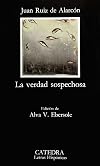
The play begins with young Don García's arrival to Madrid from Salamanca, where he was completing his university studies. His father, Don Beltrán, asks his son's tutor to be truthful with him and tell him about any character defects his son might have picked up while in school. The tutor explains that Don García's character befits his noble lineage except for one thing: he's not always truthful. This concerns Don Beltrán, and he concludes that he'd better arrange a marriage for his son as quickly as possible before Don García starts roving around the court telling lies and earning a less-than-honorable reputation. We then meet the son, and as he enters into city life it becomes obvious he has absolutely no intention of changing his ways. He tells lies all day, everyday. He meets a beautiful woman and tells her he's the type of guy who went to Peru and made a fortune, and he says he's had his eye on her for a year. He tells his old buddy Don Juan about this awesome party he threw the night before and leaves him completely jealous and convinced that his would-be fiancé attended the party and might just marry Don García instead. He convinces his father that he's already gotten married back in Salamanca. He builds this giant system of lies in order to win the beautiful lady's hand in marriage. Her name is Jacinta, although she's also got a friend named Lucrecia and there's always a bit of confusion as to who's who...anyway, Don García is an excellent liar and although he starts to struggle to keep his many stories straight, he pushes forward with confidence that things will work out in the end.
I don't know a whole lot about the conventions of the Golden Age comedy. I know that Lope de Vega pretty much established the rules for the genre in Spain, and I plan on re-reading a few of his plays along with the introductory studies to the critical editions I'm so fond of in the hopes of coming to an understand of what exactly the genre rules are. I do seem to remember that the long speeches in his plays, and in Calderón's, were generally fairly serious and sometimes moralizing in their nature. That's not always the case here: Don García will get going on a lie and go on for fifty or a hundred lines. I tried imagining what it must have been like to see the play and watch him build these elaborate stories as the other characters are drawn into his descriptions. Alongside these lies about sumptuous dinner spreads at parties in the countryside and romantic intrigue in Salamanca, there are more traditional discussions of honor and whether nobility is conferred by one's birth or one's deeds. Essentially, Don Beltrán wants his son to see that he can ruin his high birth through his lies, while the son often argues that he should be judged not by his words but by his deeds...but that's not really going to happen if everybody knows your words tend to be false.
One final reason why I enjoyed this play: the footnotes are excellent. It's a Castalia edition done by a Spanish professor named José Montero Reguera. He traces the uses of a lot of the more difficult or confusing words, but he also explains the theatrical conventions of the time and the way that the action and the characters in this play relate to the Golden Age tradition. For example, he points out occasions where Don García's servant, Tristán, makes statements that belie his social standing and carries out roles that transcend the traditional part of the "criado" in Spanish theater. The footnotes, on top of an introduction that was brief, informative, and made me curious about this play, all contributed greatly to the reading experience. show less
The play begins with young Don García's arrival to Madrid from Salamanca, where he was completing his university studies. His father, Don Beltrán, asks his son's tutor to be truthful with him and tell him about any character defects his son might have picked up while in school. The tutor explains that Don García's character befits his noble lineage except for one thing: he's not always truthful. This concerns Don Beltrán, and he concludes that he'd better arrange a marriage for his son as quickly as possible before Don García starts roving around the court telling lies and earning a less-than-honorable reputation. We then meet the son, and as he enters into city life it becomes obvious he has absolutely no intention of changing his ways. He tells lies all day, everyday. He meets a beautiful woman and tells her he's the type of guy who went to Peru and made a fortune, and he says he's had his eye on her for a year. He tells his old buddy Don Juan about this awesome party he threw the night before and leaves him completely jealous and convinced that his would-be fiancé attended the party and might just marry Don García instead. He convinces his father that he's already gotten married back in Salamanca. He builds this giant system of lies in order to win the beautiful lady's hand in marriage. Her name is Jacinta, although she's also got a friend named Lucrecia and there's always a bit of confusion as to who's who...anyway, Don García is an excellent liar and although he starts to struggle to keep his many stories straight, he pushes forward with confidence that things will work out in the end.
I don't know a whole lot about the conventions of the Golden Age comedy. I know that Lope de Vega pretty much established the rules for the genre in Spain, and I plan on re-reading a few of his plays along with the introductory studies to the critical editions I'm so fond of in the hopes of coming to an understand of what exactly the genre rules are. I do seem to remember that the long speeches in his plays, and in Calderón's, were generally fairly serious and sometimes moralizing in their nature. That's not always the case here: Don García will get going on a lie and go on for fifty or a hundred lines. I tried imagining what it must have been like to see the play and watch him build these elaborate stories as the other characters are drawn into his descriptions. Alongside these lies about sumptuous dinner spreads at parties in the countryside and romantic intrigue in Salamanca, there are more traditional discussions of honor and whether nobility is conferred by one's birth or one's deeds. Essentially, Don Beltrán wants his son to see that he can ruin his high birth through his lies, while the son often argues that he should be judged not by his words but by his deeds...but that's not really going to happen if everybody knows your words tend to be false.
One final reason why I enjoyed this play: the footnotes are excellent. It's a Castalia edition done by a Spanish professor named José Montero Reguera. He traces the uses of a lot of the more difficult or confusing words, but he also explains the theatrical conventions of the time and the way that the action and the characters in this play relate to the Golden Age tradition. For example, he points out occasions where Don García's servant, Tristán, makes statements that belie his social standing and carries out roles that transcend the traditional part of the "criado" in Spanish theater. The footnotes, on top of an introduction that was brief, informative, and made me curious about this play, all contributed greatly to the reading experience. show less
Libros de Matias y Carmen. Ed. Orbis - Historia de la Literatura española. Vol. 62


CONTENIDO: LAS PAREDES OYEN -- LA VERDAD SOSPECHOSA -- LOS PECHOS PRIVILEGIADOS -- GANAR AMIGOS
You May Also Like


Associated Authors
Statistics
- Works
- 80
- Also by
- 1
- Members
- 396
- Popularity
- #61,230
- Rating
- 3.7
- Reviews
- 11
- ISBNs
- 120
- Languages
- 2
- Favorited
- 1