
Robert Kaplan (1) (1933–2021)
Author of The Nothing that Is: A Natural History of Zero
For other authors named Robert Kaplan, see the disambiguation page.
About the Author
Robert Kaplan has taught mathematics to people from six to sixty, most recently at Harvard University. In 1994, with his wife Ellen, he founded The Math Circle, a program, open to the public, for the enjoyment of pure mathematics. He has also taught Philosophy, Greek, German, Sanskrit, and Inspired show more Guessing. Robert Kaplan lives in Cambridge, MA. show less
Works by Robert Kaplan
Tagged
Common Knowledge
- Legal name
- Kaplan, Robert Lee
- Birthdate
- 1933-05-30
- Date of death
- 2021-11-11
- Gender
- male
- Relationships
- Kaplan, Ellen (wife)
- Short biography
- [from Harvard Review website]
Robert Kaplan (1933–2021) taught mathematics to students ranging in age from four to seventy, as well as philosophy, Greek, German, Sanskrit, and Inspired Guessing. After a long career at several independent schools and at Harvard University, he and his wife Ellen founded The Global Math Circle, a program that teaches the enjoyment of pure mathematics. He was the author of The Nothing That Is: A Natural History of Zero (Oxford University Press, 2000), and, with Ellen, The Art of the Infinite: The Pleasures of Mathematics (Oxford University Press, 2003), Out of the Labyrinth: Setting Mathematics Free (Bloomsbury, 2014), and Hidden Harmonies: The Lives and Times of the Pythagorean Theorem (Bloomsbury, 2012). He was also a prolific writer of philosophy, essays, fiction, and especially poetry. - Places of residence
- Cambridge, Massachusetts, USA
- Map Location
- USA
Members
Reviews
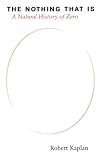
This is hard to review as it's on two opposite ends - fascinating subject satisfactorily explored and the purplest prose I've encountered. The history is dense, the math is surprisingly accessible, and the philosophy is heavily Christian.
Is it possible that Kaplan is a fan of Good Omens, or is it just coincidence that there are multiple references to things found in that book? Ussher's prediction of the exact hour when the world would end, "prestidigitation" in the same paragraph as angels show more dancing on the head of a pin, among others. Perhaps those were just common topics decades ago 😂. show less
Is it possible that Kaplan is a fan of Good Omens, or is it just coincidence that there are multiple references to things found in that book? Ussher's prediction of the exact hour when the world would end, "prestidigitation" in the same paragraph as angels show more dancing on the head of a pin, among others. Perhaps those were just common topics decades ago 😂. show less
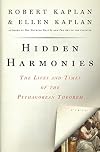
Many a reader, I think, would find this volume's writing to be too clever and erudite for its own good. A more straightforward popularization on the Pythagorean Theorem and related mathematics, such as Eli Maor's, would be a better starting treatment of the subject. Then this one's more sophisticated expression and insights could be better savored.
Well-written, but prefer the Seife book on zero. This one is just a tiny bit ramblier, quick but not AS ingeniously phrased or structured.
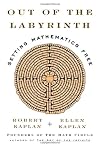
This book intends to make math more accessible, which I understand to be the point of the Math Circle program created by the authors. Unfortunately, that accessibility is obscured by a cumbersome narrative. The authors seem to have taken a cue from the "Never utilize a diminutive utterance when a polysyllabic synonym will suffice" mantra. Incongruously, in this book, when they are presented, simple concepts are inflated and more challenging concepts are oversimplified. They aren't presented show more all that much though.
The authors say in the first chapter that the book describes (among other things) how they removed the barriers to enjoying mathematics...but I don't think they succeeded. The illustrative problems are well done, but the trappings are the majority of the book and are unwieldy. The attempts to remove barriers to enjoying mathematics unfortunately include barriers to enjoying reading about the removal of barriers. show less
The authors say in the first chapter that the book describes (among other things) how they removed the barriers to enjoying mathematics...but I don't think they succeeded. The illustrative problems are well done, but the trappings are the majority of the book and are unwieldy. The attempts to remove barriers to enjoying mathematics unfortunately include barriers to enjoying reading about the removal of barriers. show less
Lists
Awards

You May Also Like


Associated Authors
Statistics
- Works
- 5
- Members
- 1,793
- Popularity
- #14,345
- Rating
- 3.4
- Reviews
- 19
- ISBNs
- 52
- Languages
- 9

