
Sebastian Barry
Author of The Secret Scripture
About the Author
Sebastian Barry is a playwright whose work has been produced in London, Dublin, Sydney, and New York. He lives in Wicklow, Ireland, with his wife and three children. Sebastian Barry is an Irish writer and playwright, born in 1955. He is the author of two novels, A Long Long Way and Days Without show more End, which won the Costa Book Award for best novel. His other awards include the Kerry Group Irish Fiction Prize, the Irish Book Awards Novel of the Year, the Independent Booksellers Prize and the James Tait Black Memorial Prize. (Bowker Author Biography) show less
Series
Works by Sebastian Barry
The Only True History of Lizzie Finn/The Steward of Christendom/White Woman Street: Three Plays (1995) 25 copies
The Newer World 2 copies
Barry Sebastian 1 copy
A Russian Beauty 1 copy
Tysiąc księżyców 1 copy
White Woman Street 1 copy
Boss Grady's boys 1 copy
Associated Works
Tagged
Common Knowledge
- Legal name
- Barry, Sebastian
- Birthdate
- 1955-07-05
- Gender
- male
- Education
- Trinity College, Dublin
- Occupations
- playwright
novelist
poet - Organizations
- Harry Ransom Center
University of Iowa
Villanova University - Awards and honors
- Lloyds Private Banking Playwright of the Year Award (1995)
- Agent
- Derek Johns (AP Watt)
- Short biography
- Sebastian Barry is an Irish novelist, playwright and poet. He was named Laureate for Irish Fiction, 2019–2021. He is noted for his dense literary writing style and is considered one of Ireland's finest writers.
- Nationality
- Ireland
- Birthplace
- Dublin, Ireland
- Places of residence
- Dublin, Ireland
County Wicklow, Ireland - Associated Place (for map)
- Ireland
Members
Discussions
October 2022: Sebastian Barry in Monthly Author Reads (October 2022)
On Canaan's Side by Sebastian Barry in Booker Prize (September 2011)
Reviews
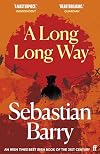
My fourth Sebastian Barry, to which I am drawn back for the beautiful language and imagery (read chapter ten and be not moved), and I am not disappointed, although the themes are as harrowing as his other historical novels.
Willie Dunne volunteers to join the Royal Dublin Fusiliers, which is sent to Belgium in the First World War, suffering horrendous casualties, including over 500 from one of the first gas attacks, which is chillingly described.
Willie then returns on leave to Dublin to show more witness at first hand the 1916 Easter uprising (of the Irish for home rule), before being sent back to Belgium and being caught in another gas attack.
Willie is a witness to the insubordination of a soldier he had met in the Easter uprising, Jesse Kirwan, who offered passive resistance following the execution of the Irish involved in the uprising. We are shown the conflict between the promise of Irish home rule if the Irish help in the “English” war, and the violence in Ireland following the failed uprising.
Throughout the story there is a well held tension of survival, with terrible deeds happening all around and years of war to endure, and we see the damage inflicted upon the humanity of Willie Dunne, but also, and perhaps more importantly, the humanity retained.
Harrowing, but beautiful.
No, he did not understand Jesse Kirwan entirely, but he would seek to in the coming years, he told himself. At least in the upshot he would try to know that philosophy. But how would he live and breathe? How would he love and live? How would any of them? Those that went out for a dozen reasons, both foolish and wise and all between, from a world they loved or feared, but that equally vanished behind them. How could a fella go out and fight for his country when his country would dissolve behind him like sugar in the rain? How could a fella love his uniform when that same uniform killed the new heroes, as Jesse Kirwan said? How could a fella like Willie hold England and Ireland equally in his heart, like his father before him, like his father’s father, and his father’s father’s father, when both now would call him a traitor, though his heart was clear and pure, as pure as a heart can be after three years of slaughter? What would his sisters do for succour and admiration in their own country, when their own country had gone? They were like these Belgian citizens toiling along the roads with their chattels and tables and pots, except they were entirely unlike them, because, destitute though these people were, and homeless, at least they were wandering and lost in their own land. show less
Willie Dunne volunteers to join the Royal Dublin Fusiliers, which is sent to Belgium in the First World War, suffering horrendous casualties, including over 500 from one of the first gas attacks, which is chillingly described.
Willie then returns on leave to Dublin to show more witness at first hand the 1916 Easter uprising (of the Irish for home rule), before being sent back to Belgium and being caught in another gas attack.
Willie is a witness to the insubordination of a soldier he had met in the Easter uprising, Jesse Kirwan, who offered passive resistance following the execution of the Irish involved in the uprising. We are shown the conflict between the promise of Irish home rule if the Irish help in the “English” war, and the violence in Ireland following the failed uprising.
Throughout the story there is a well held tension of survival, with terrible deeds happening all around and years of war to endure, and we see the damage inflicted upon the humanity of Willie Dunne, but also, and perhaps more importantly, the humanity retained.
Harrowing, but beautiful.
No, he did not understand Jesse Kirwan entirely, but he would seek to in the coming years, he told himself. At least in the upshot he would try to know that philosophy. But how would he live and breathe? How would he love and live? How would any of them? Those that went out for a dozen reasons, both foolish and wise and all between, from a world they loved or feared, but that equally vanished behind them. How could a fella go out and fight for his country when his country would dissolve behind him like sugar in the rain? How could a fella love his uniform when that same uniform killed the new heroes, as Jesse Kirwan said? How could a fella like Willie hold England and Ireland equally in his heart, like his father before him, like his father’s father, and his father’s father’s father, when both now would call him a traitor, though his heart was clear and pure, as pure as a heart can be after three years of slaughter? What would his sisters do for succour and admiration in their own country, when their own country had gone? They were like these Belgian citizens toiling along the roads with their chattels and tables and pots, except they were entirely unlike them, because, destitute though these people were, and homeless, at least they were wandering and lost in their own land. show less
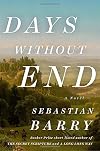
Just when I thought this novel would be a rehash of Dances with Wolves and Brokeback Mountain it suddenly became a story unto itself. A story of devotion, love and humanity in mid 1800's America where there is so much to discover about the country and humans of different ethnicity and sexual preference. It is where enemies come face to face and where their honor, loyalty, morality and dignity are tested.
Thomas McNulty relates the story to us in his own affable words starting with how he and show more John Cole met and became fast friends. During their years of menial labor, military duty in the Indian and Civil Wars and as farmhands they adopt a family of acquaintances and some who are not friends but seek justice.
The author's prose is exquisite! His literary landscape, mesmerizing and his take on race, emigrants and sexuality in 19th century America puts a different and thought provoking spin on what,otherwise, would be an old story. show less
Thomas McNulty relates the story to us in his own affable words starting with how he and show more John Cole met and became fast friends. During their years of menial labor, military duty in the Indian and Civil Wars and as farmhands they adopt a family of acquaintances and some who are not friends but seek justice.
The author's prose is exquisite! His literary landscape, mesmerizing and his take on race, emigrants and sexuality in 19th century America puts a different and thought provoking spin on what,otherwise, would be an old story. show less

Centenarian Roseanne Clear McNulty has been confined in a mental institution in rural Ireland for over four decades. The institution is being replaced, and her psychiatrist, Dr. Grene, must determine if she should be released or sent to the new smaller facility. Roseanne is writing her life story, hiding it under the floorboards of her room. Dr. Grene is writing his “Book of Commonplace,” a journal of sorts, recording observations about Roseanne and events in his own life.
This book is a show more deep character study of two individuals set against a backdrop of political and religious rivalries in Irish history. The plot revolves around the reasons Roseanne was initially confined, leading to up to a decision regarding her mental health. The story is artfully told, gradually revealing more information to uncover the secrets of the past. It explores the relationships among memory, fact, history, and the stories we tell ourselves. The writing is evocative. The prose sequences are reminiscent of a Victorian novel, though the time period covered here is the early 1900s through 2007. It is an emotional book about trauma, loss, betrayal, injustice, aging, and hope. I found it beautifully told, thought-provoking, and memorable. show less
This book is a show more deep character study of two individuals set against a backdrop of political and religious rivalries in Irish history. The plot revolves around the reasons Roseanne was initially confined, leading to up to a decision regarding her mental health. The story is artfully told, gradually revealing more information to uncover the secrets of the past. It explores the relationships among memory, fact, history, and the stories we tell ourselves. The writing is evocative. The prose sequences are reminiscent of a Victorian novel, though the time period covered here is the early 1900s through 2007. It is an emotional book about trauma, loss, betrayal, injustice, aging, and hope. I found it beautifully told, thought-provoking, and memorable. show less
Plays: 1: Boss Grady's Boys / Prayers of Sherkin / White Woman Street / The Only True History of Lizzie Finn / The Steward of Christendom by Sebastian Barry

Reading 5 of the early Barry plays allows you to see a playwright finding his feet and getting stronger with each play. Not that the first play in this book is weak per se - there is a reason why it is still being staged, 34 years after its first staging in 1988 but the complexity of the plays changes with time and the chunkiness which is obvious in places slowly disappears.
For some reason Methuen Drama decided to skip his very first play ("The Pentagonal Dream" or "The Pentagonal Dream show more Under Snow") which was only performed in one season in 1986 and never staged again (or so it seems). I suspect that just as with other books in their series, Methuen will publish it one day in a later or a revised volume but as far as I can find out, it is not available as text anywhere. However, a version of it is available as an audio reading from the Unseen Plays project by Abbey Theatre (https://www.abbeytheatre.ie/whats-on/unseen-plays/), using the same actress who played the parts back in 1986 so I am planning to listen to it. But let's talk about the 5 plays Methuen did print in this first collection of Barry's plays.
As different as the 5 plays are, they are very Irish - even the play set in Ohio is Irish. They all deal with history but not with the big names and big events - or not directly anyway. It is all about how the life of the Irish people changed, dragging them into a new world which they don't always want and about the people who got left behind. Having read 'Annie Dunne' before I read the plays, I can see where a lot of the topics of the novel started to develop - even if just one of these plays is actually a prequel to that novel, they all had been leading the author towards the novel. According to the introduction by Fintan O'Toole (don't read it before you read the plays!), the plays were not the original media for the ideas either - most of them started as poems in "Fanny Hawke Goes to the Mainland Forever" (and probably some ideas are even coming from his earlier poetry collections - too bad that it is almost impossible to find them these days). But this evolution of ideas and moving through the different forms of storytelling shows an author who feels comfortable across all of them - and his styles shows it - his prose sounds like poetry sometimes.
Boss Grady's Boys
First Performance: Abbey Theatre, Dublin (Peacock stage), 22 August 1988
2 brothers, one in his sixties, the other in his seventies, live on a farm on the Cork/Kerry border. Modern life is slowly squeezing them out but neither of them is prepared to change. We see them trying to live their life while ghosts of the past show up in their dreams (and not just in dreams by the end of the play) reminding them of the past. This is by far my least favorite of the 5 plays - it is almost pointless (and some of the characters are confusing - why did we need the Girl at all?). I suspect that it can be extremely powerful when performed, with actors who know what they are doing but it is a nostalgic piece about old Ireland. It is the only play that is not dated explicitly but based on the textual clues, it is probably set somewhere in the mid-20th century. This is the play which made Barry's name initially and I can see it working in Ireland, with Irish actors and at the time it was staged (it made even more sense after reading the introduction of this book which discusses the changes Barry brought to Irish theatre).
Prayers of Sherkin
First Performance: Abbey Theatre, Dublin (Peacock stage), 20 November 1990
This play is semi-autobiographical for Barry: he used the story of his own great-grandmother. Except that all he knew about her was her name and that she left her family for his lithographer great-grandfather. From that, he creates a play set in the 1890s on the island of Sherkin and in the town of Baltimore, across the sea from the island. Two generations ago a 3 families sailed away from Manchester and ended up on the island - looking for a place for their own religion and promised land. 3 generations later, the only people remaining on the island are Fanny Hawke, her brother, their father and two aunts. The two young people cannot just marry anyone outside of the Faith (or they will be shunted), they need to wait for someone to come from Manchester (even if noone had heard of anyone there since they sailed away). Then a new man arrives in Baltimore from Cork City and even if you do not know how the play originated, you can see what needs to happen next - Fanny must chose between her people and the new world. It is a nice play about a past which most people don't think about when thinking of Ireland (and England) but in also serves as a bigger story about choosing immigration and leaving your island forever - being it Sherkin or Ireland. It is a very calm play but it works.
White Woman Street
First Performance: Bush Theatre, London, 23 April 1992
The only play not set in Ireland, it takes us to the small town of White Woman Street, Ohio, USA in 1916. Trooper O'Hara had left his native Sligo in his youth to fight a war (or three) and then ended up an outlaw somewhere in the States. His birthplays ties this play to the McNulty Family novels which Barry will later write but the name of the family is not mentioned in the play. In the prairies of Ohio, he and his band of friends/co-outlaws, decide to attack a train. And while everyone else in the company agrees because of what is on the train, Trooper is trying to excoriate a ghost of the past - a young woman who used to live in the town of White Woman Street.
While the play does take some liberties with its American setting (it feels more like a costume play than an actual play set there in some scenes), its story of a man who came from Ireland to escape oppression just to become part of the oppression of the Native Americans once he crossed the ocean works. Despite the end goal of holding up the train, the play is not really about it - it is about choices and stories and what a man can live with (and what happens when he decides that he cannot live with it anymore).
The Only True History of Lizzie Finn
First Performance: Abbey Theatre, Dublin, 4 October 1995
The last of the 5 to open but printed 4th in the book (written earlier maybe?), the story is set in Weston-upon-Mare, Avon and in Inch, Kerry in the early 1900s. Lizzie Finn is dancer in her late 30s, working in a dance-hall in Weston-upon-Mare and not expecting love to ever come her way. And then Robert shows up. The first act of the play deals with their romance and Lizzie's decision to leave her life. The second act makes this play though. Somehow Robert forgets to tell his new wife that he is the only surviving son of a landowner Irish family (Lizzie, who was born in Ireland, is the daughter of a man who entertained the landowners). But the biggest shock is not for Lizzie - because noone is ready to accept her. Add a few secrets about Robert's war experience (and his brothers' death) and the things get even more complicated.
Barry takes the history of the land and uses it to create flawed characters. But as you keep reading (or watching) the play, you start wondering who are the flawed characters here - Lizzie and Robert or everyone else in Inch. It is a play about being human and being allowed to make mistakes, even if the big history of Ireland keeps moving along. And just as with the previous play, it becomes a play about choices and finding a way to live with them once you make them.
The Steward of Christendom
First Performance: Royal Court Theatre Upstairs, London, 30 March, 1995 (apparently this one opened before Lizzie Finn).
Coming from 'Annie Dunne', this was the play I wanted to read the most. Set in 1932 in the county home (aka the asylum sans doctors) of Baltinglass, County Wicklow, it is the story of Thomas Dunne - the former chief superintendent of the Dublin Metropolitan Police. Loosely based on Barry's own grandfather, Thomas Dunne comes alive in a tale of madness and refusal to give up even when he cannot remember who is dead. The story alternates between Thomas's past (touching on a lot of major historical events) and his present - a broken man whose family had not abandoned him yet but who had had to lock him in the county house for everyone's safely.
The details of the county house life are terrifying, even in a play that shows the slow disintegration of a man's mind, these descriptions horrify. Barry reuses a lot of this play later - some of it as is, some of slightly changed (here Annie's hump is a result of polio, in the novel she is afraid of passing it to children and is envious of a woman who got her hump from a disease thus implying that she was born with it; the present in the haystack and the hen under the bucket stories are here as part of Thomas's past and in 'Annie Dunne' as part of his great-grandson's present). That ability to take one story and change it and reuse it in another format seems to indeed be one of the trademarks of Barry. But it also tells me that I probably should read his work in the order it was written - or some of those connections will be lost.
While not perfect, the collection is interesting and worth reading. And while each play can work on its own, seeing the progression allows a reader to both see Barry's art developing but also the connections between the plays and the threads that run through all of them. show less
For some reason Methuen Drama decided to skip his very first play ("The Pentagonal Dream" or "The Pentagonal Dream show more Under Snow") which was only performed in one season in 1986 and never staged again (or so it seems). I suspect that just as with other books in their series, Methuen will publish it one day in a later or a revised volume but as far as I can find out, it is not available as text anywhere. However, a version of it is available as an audio reading from the Unseen Plays project by Abbey Theatre (https://www.abbeytheatre.ie/whats-on/unseen-plays/), using the same actress who played the parts back in 1986 so I am planning to listen to it. But let's talk about the 5 plays Methuen did print in this first collection of Barry's plays.
As different as the 5 plays are, they are very Irish - even the play set in Ohio is Irish. They all deal with history but not with the big names and big events - or not directly anyway. It is all about how the life of the Irish people changed, dragging them into a new world which they don't always want and about the people who got left behind. Having read 'Annie Dunne' before I read the plays, I can see where a lot of the topics of the novel started to develop - even if just one of these plays is actually a prequel to that novel, they all had been leading the author towards the novel. According to the introduction by Fintan O'Toole (don't read it before you read the plays!), the plays were not the original media for the ideas either - most of them started as poems in "Fanny Hawke Goes to the Mainland Forever" (and probably some ideas are even coming from his earlier poetry collections - too bad that it is almost impossible to find them these days). But this evolution of ideas and moving through the different forms of storytelling shows an author who feels comfortable across all of them - and his styles shows it - his prose sounds like poetry sometimes.
Boss Grady's Boys
First Performance: Abbey Theatre, Dublin (Peacock stage), 22 August 1988
2 brothers, one in his sixties, the other in his seventies, live on a farm on the Cork/Kerry border. Modern life is slowly squeezing them out but neither of them is prepared to change. We see them trying to live their life while ghosts of the past show up in their dreams (and not just in dreams by the end of the play) reminding them of the past. This is by far my least favorite of the 5 plays - it is almost pointless (and some of the characters are confusing - why did we need the Girl at all?). I suspect that it can be extremely powerful when performed, with actors who know what they are doing but it is a nostalgic piece about old Ireland. It is the only play that is not dated explicitly but based on the textual clues, it is probably set somewhere in the mid-20th century. This is the play which made Barry's name initially and I can see it working in Ireland, with Irish actors and at the time it was staged (it made even more sense after reading the introduction of this book which discusses the changes Barry brought to Irish theatre).
Prayers of Sherkin
First Performance: Abbey Theatre, Dublin (Peacock stage), 20 November 1990
This play is semi-autobiographical for Barry: he used the story of his own great-grandmother. Except that all he knew about her was her name and that she left her family for his lithographer great-grandfather. From that, he creates a play set in the 1890s on the island of Sherkin and in the town of Baltimore, across the sea from the island. Two generations ago a 3 families sailed away from Manchester and ended up on the island - looking for a place for their own religion and promised land. 3 generations later, the only people remaining on the island are Fanny Hawke, her brother, their father and two aunts. The two young people cannot just marry anyone outside of the Faith (or they will be shunted), they need to wait for someone to come from Manchester (even if noone had heard of anyone there since they sailed away). Then a new man arrives in Baltimore from Cork City and even if you do not know how the play originated, you can see what needs to happen next - Fanny must chose between her people and the new world. It is a nice play about a past which most people don't think about when thinking of Ireland (and England) but in also serves as a bigger story about choosing immigration and leaving your island forever - being it Sherkin or Ireland. It is a very calm play but it works.
White Woman Street
First Performance: Bush Theatre, London, 23 April 1992
The only play not set in Ireland, it takes us to the small town of White Woman Street, Ohio, USA in 1916. Trooper O'Hara had left his native Sligo in his youth to fight a war (or three) and then ended up an outlaw somewhere in the States. His birthplays ties this play to the McNulty Family novels which Barry will later write but the name of the family is not mentioned in the play. In the prairies of Ohio, he and his band of friends/co-outlaws, decide to attack a train. And while everyone else in the company agrees because of what is on the train, Trooper is trying to excoriate a ghost of the past - a young woman who used to live in the town of White Woman Street.
While the play does take some liberties with its American setting (it feels more like a costume play than an actual play set there in some scenes), its story of a man who came from Ireland to escape oppression just to become part of the oppression of the Native Americans once he crossed the ocean works. Despite the end goal of holding up the train, the play is not really about it - it is about choices and stories and what a man can live with (and what happens when he decides that he cannot live with it anymore).
The Only True History of Lizzie Finn
First Performance: Abbey Theatre, Dublin, 4 October 1995
The last of the 5 to open but printed 4th in the book (written earlier maybe?), the story is set in Weston-upon-Mare, Avon and in Inch, Kerry in the early 1900s. Lizzie Finn is dancer in her late 30s, working in a dance-hall in Weston-upon-Mare and not expecting love to ever come her way. And then Robert shows up. The first act of the play deals with their romance and Lizzie's decision to leave her life. The second act makes this play though. Somehow Robert forgets to tell his new wife that he is the only surviving son of a landowner Irish family (Lizzie, who was born in Ireland, is the daughter of a man who entertained the landowners). But the biggest shock is not for Lizzie - because noone is ready to accept her. Add a few secrets about Robert's war experience (and his brothers' death) and the things get even more complicated.
Barry takes the history of the land and uses it to create flawed characters. But as you keep reading (or watching) the play, you start wondering who are the flawed characters here - Lizzie and Robert or everyone else in Inch. It is a play about being human and being allowed to make mistakes, even if the big history of Ireland keeps moving along. And just as with the previous play, it becomes a play about choices and finding a way to live with them once you make them.
The Steward of Christendom
First Performance: Royal Court Theatre Upstairs, London, 30 March, 1995 (apparently this one opened before Lizzie Finn).
Coming from 'Annie Dunne', this was the play I wanted to read the most. Set in 1932 in the county home (aka the asylum sans doctors) of Baltinglass, County Wicklow, it is the story of Thomas Dunne - the former chief superintendent of the Dublin Metropolitan Police. Loosely based on Barry's own grandfather, Thomas Dunne comes alive in a tale of madness and refusal to give up even when he cannot remember who is dead. The story alternates between Thomas's past (touching on a lot of major historical events) and his present - a broken man whose family had not abandoned him yet but who had had to lock him in the county house for everyone's safely.
The details of the county house life are terrifying, even in a play that shows the slow disintegration of a man's mind, these descriptions horrify. Barry reuses a lot of this play later - some of it as is, some of slightly changed (here Annie's hump is a result of polio, in the novel she is afraid of passing it to children and is envious of a woman who got her hump from a disease thus implying that she was born with it; the present in the haystack and the hen under the bucket stories are here as part of Thomas's past and in 'Annie Dunne' as part of his great-grandson's present). That ability to take one story and change it and reuse it in another format seems to indeed be one of the trademarks of Barry. But it also tells me that I probably should read his work in the order it was written - or some of those connections will be lost.
While not perfect, the collection is interesting and worth reading. And while each play can work on its own, seeing the progression allows a reader to both see Barry's art developing but also the connections between the plays and the threads that run through all of them. show less
Lists
Booker Prize (4)
WBS - Book Club (1)
THE WAR ROOM (1)
Best of 2017 (1)
Awards


You May Also Like


Associated Authors
Statistics
- Works
- 54
- Also by
- 4
- Members
- 9,589
- Popularity
- #2,504
- Rating
- 3.9
- Reviews
- 520
- ISBNs
- 353
- Languages
- 22
- Favorited
- 36


