
Henning Mankell (1948–2015)
Author of Faceless Killers
About the Author
Henning Mankell was born in Stockholm, Sweden on February 3, 1948. He left secondary school at the age of 16 and worked as a merchant seaman. While working as a stagehand, he wrote his first play, The Amusement Park. His first novel, The Stone Blaster, was released in 1973. His other works included show more The Prison Colony that Disappeared, Daisy Sisters, The Eye of the Leopard, The Man from Beijing, Secrets in the Fire, The Chronicler of the Wind, Depths, and I Die, But My Memory Lives On. He also wrote the Kurt Wallander series, which have been adapted for film and television, and the Joel Gustafson Stories series. A Bridge to the Stars won the Rabén and Sjögren award for best children's book of the year. He was committed to the fight against AIDS. He helped build a village for orphaned children and devoted much of his spare time to his "memory books" project, where parents dying from AIDS are encouraged to record their life stories in words and pictures. He was also among the activists who were attacked and arrested by Israeli forces as they tried to sail to the Gaza strip with humanitarian supplies in June 2010. He died from cancer on October 5, 2015 at the age of 67. (Bowker Author Biography) show less
Image credit: Henning Mankell en mars 2013
Series
Works by Henning Mankell
Wallander, Series 1 (Sidetracked / Firewall / One Step Behind) (2009) — Screenwriter — 37 copies, 1 review
Der gewissenlose Mörder Hasse Karlsson. CD: Die entsetzliche Wahrheit, wie die Frau über der Eisenbahnbrücke zu Tode gekommen ist (1979) 7 copies
Inspecteur Wallander-reeks 4 copies
Trilogía del fuego: El secreto del fuego - Jugar con fuego - La ira del fuego (Las Tres Edades) (Spanish Edition) (2018) 3 copies
Le Coup de couteau. La Première enquête de Wallander: La Première enquête de Wallander (2014) 3 copies, 1 review
Il folle (Italian Edition) 2 copies
Tod in den Sternen Wallander 2 copies
MAN Pisando los talones 2 copies
MAN La quinta mujer 2 copies
Wallanderreeks Groot - 15 ex. pt 2 copies
Sidetracked 1 copy
MAN El hombre inquieto 1 copy
The Pyramid 1 copy
The Man who Smiled 1 copy
Pirßmide, La 1 copy
MAN La pirámide 1 copy
Ballade pour piano 1 copy
De waanzinnige 1 copy
Püramiid 1 copy
MAN Asesinos sin rostro 1 copy
MAN La falsa pista 1 copy
MAN Cortafuegos 1 copy
Henning Mankell 4 volume set of Kurt Wallander Mysteries: The White Lioness, Firewall, The Man Who Smiled, Kennedy's Brain (2003) 1 copy
Moorden met een boodschap 1 copy
2008 1 copy
Tbres 1 copy
Tod im Paradies Wallander 1 copy
Der wunde Punk Wallander 1 copy
Hugget 1 copy
Kurt Wallander Mystery Series (Set of 4) The White Lioness, One Step Behind, Side-tracked, and Firewall (2003) 1 copy
Die weisse Löwin 1 copy
Associated Works
Freedom: Stories Celebrating the Universal Declaration of Human Rights (2009) — Contributor — 88 copies, 2 reviews
Wallander, Series 3: (An Event in Autumn / Dogs of Riga / Before the Frost) (2012) — Original book — 21 copies
Reader's Digest Condensed Books: The Da Vinci Code • Up and Down the Dales • The Return of the Dancing Master • A Gathering Light (2004) 11 copies
Reader's Digest Condensed Books: Gone Tomorrow | Folly | The Guernsey Literary and Potato Peel Pie Society | The Pyramid (2009) 8 copies
Tagged
Common Knowledge
- Canonical name
- Mankell, Henning
- Legal name
- Mankell, Henning Georg
- Birthdate
- 1948-02-03
- Date of death
- 2015-10-05
- Gender
- male
- Occupations
- author
stage director - Organizations
- Free Gaza Movement
- Awards and honors
- ABF:s litteraturpris (1996)
BMF-plaketten (1996)
Eldh-Ekblads fredspris (2000)
Litteris et Artibus medal (2006)
Rivertonklubbens internasjonale ærespris (2012)
August Prize (1995) - Agent
- Leonhardt & Høier Literary Agency
- Relationships
- Ingmar Bergman (father-in-law)
- Nationality
- Sweden
- Birthplace
- Stockholm, Sweden
- Places of residence
- Ystad, Sweden
Maputo, Mozambique
Särö, Sweden - Place of death
- Gothenburg, Sweden
- Burial location
- Vieux cimetière d'Örgryte, Goteborg, Suède
- Map Location
- Sweden
Members
Discussions
Henning Mankell, RIP in All Writers Considered (October 2015)
Reviews

This is Mankell's last novel, and it's full of lovely meditations on aging and death. Frederik, an elderly doctor, lives alone on an island in the Swedish archipelago with very little human contact other than the postman Jonasson. Late one autumn night, he awakens to find his house engulfed in flames. He barely escapes with his life, his possessions reduced to the clothes he was wearing, including two left boots. In short order, it is discovered that the fire was deliberately set, and when show more Frederik is suspected of being the arsonist, his life begins to change in ways big and small.
However, this is not a crime novel, and the discovery of who set the fire is only the background to the more important story. This is an exploration of aging and loneliness and how we meet the end of our days, with hope or not. It's an absolutely lovely book.
4 stars
(During the course of reading this, I learned that the main character Frederik was the subject of ab earlier Mankell book, Italian Shoes, and I gather it's a sequel of sorts. I've checked Italian Shoes out of the library and should get to it soon show less
However, this is not a crime novel, and the discovery of who set the fire is only the background to the more important story. This is an exploration of aging and loneliness and how we meet the end of our days, with hope or not. It's an absolutely lovely book.
4 stars
(During the course of reading this, I learned that the main character Frederik was the subject of ab earlier Mankell book, Italian Shoes, and I gather it's a sequel of sorts. I've checked Italian Shoes out of the library and should get to it soon show less
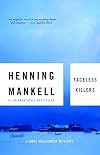
In the early days before I discovered crime fiction I was more into... well, whatever I could find in the basement and the occasional texts from English classes that particularly struck me. Then I got wind that Scandinavia's a happening place for the genre, picked up this book, and read a lot of [a:Henning Mankell|22339|Henning Mankell|https://images.gr-assets.com/authors/1336761478p2/22339.jpg] and [a:Jo Nesbø|904719|Jo Nesbø|https://images.gr-assets.com/authors/1493220079p2/904719.jpg] show more before the subsequent and ongoing fantasy binge. The idea of rereading any crime fiction book wasn't an immediately attractive one, because where's the fun in a mystery that you already know all the answers to, but somehow I liked it far more having reread it.
Faceless Killers/Mördare utan ansikte, the first in the Wallander series about a detective based in the southern Swedish town of Ystad, has Kurt Wallander investigate the double murder of a farmer and his wife. Latent xenophobes immediately latch onto the wife's dying word, "foreign", and thinking it gives them license to act on their hatred, begin a slew of racially motivated crimes that keeps the police department's hands full.
In what I hear is the grand tradition of Scandinavian crime fiction there's a great deal of social commentary, mostly concerning immigration in this case. I gather that it was a sensitive issue in 1991 Sweden, and it probably still is, though it's far more evenhanded than I remember it being. Mankell rightly decries the bigoted asshats that Wallander has to put up with, but he also has dim view of contemporary immigration policies, or at least the policymakers; there's a chapter where Wallander phones an immigration officer who refuses to acknowledge the government's failure to account for a shamefully large amount of refugees and somehow fails to realize that anything's amiss. Best of all, the book doesn't offer any answers, which I find surprising more than ever given Mankell's left-wing persuasion, but I actually kind of respect him for that, because the issues the book grapple with are far too complex for there to be a single or easy solution, and it's not something that can be solved by any one person, let alone a novelist.
Mundanity also has as much a presence in the novel as Wallander's work; there's several diversions devoted to his personal life, and sometimes it's not even that, like his car breaking down, for example. Probably sounds uneventful, I know, but it rounds out Wallander's character nicely, and it makes the people surrounding him also feel equally real. The environment also seems to mirror the drabness of Wallander's life; the story takes place in the dead of winter, and the backdrop is so grey that it probably looks something like purgatory for those afflicted with seasonal depression. It's also entirely possible that's just what Sweden's like at that time of year, though, so perhaps it's quite presumptuous of me to frame it like pathetic fallacy.
There is one loose end that annoys me to no end though, and it's what preventing me from giving it the highest possible score. The press gets hold of Maria Lövgren's last word within hours of her death, and it's deduced fairly quickly that someone within the force is leaking every development in the case for the highest bidder. Want to know who the leak is? So the fuck would I, because that subplot has no resolution whatsoever, and it's been long enough since I've read the rest of the series that I can't remember if it ever comes up again.
Aside from that and the generic-ass title, Faceless Killers is a promising start, even if it is obviously indebted to the Martin Beck series. It has a well-conceived crime, a reasonably sympathetic detective, more nuanced social commentary than I initially gave it credit for, and lastly, it strikes a nice balance between crime fiction and slice-of-life. show less
Faceless Killers/Mördare utan ansikte, the first in the Wallander series about a detective based in the southern Swedish town of Ystad, has Kurt Wallander investigate the double murder of a farmer and his wife. Latent xenophobes immediately latch onto the wife's dying word, "foreign", and thinking it gives them license to act on their hatred, begin a slew of racially motivated crimes that keeps the police department's hands full.
In what I hear is the grand tradition of Scandinavian crime fiction there's a great deal of social commentary, mostly concerning immigration in this case. I gather that it was a sensitive issue in 1991 Sweden, and it probably still is, though it's far more evenhanded than I remember it being. Mankell rightly decries the bigoted asshats that Wallander has to put up with, but he also has dim view of contemporary immigration policies, or at least the policymakers; there's a chapter where Wallander phones an immigration officer who refuses to acknowledge the government's failure to account for a shamefully large amount of refugees and somehow fails to realize that anything's amiss. Best of all, the book doesn't offer any answers, which I find surprising more than ever given Mankell's left-wing persuasion, but I actually kind of respect him for that, because the issues the book grapple with are far too complex for there to be a single or easy solution, and it's not something that can be solved by any one person, let alone a novelist.
Mundanity also has as much a presence in the novel as Wallander's work; there's several diversions devoted to his personal life, and sometimes it's not even that, like his car breaking down, for example. Probably sounds uneventful, I know, but it rounds out Wallander's character nicely, and it makes the people surrounding him also feel equally real. The environment also seems to mirror the drabness of Wallander's life; the story takes place in the dead of winter, and the backdrop is so grey that it probably looks something like purgatory for those afflicted with seasonal depression. It's also entirely possible that's just what Sweden's like at that time of year, though, so perhaps it's quite presumptuous of me to frame it like pathetic fallacy.
There is one loose end that annoys me to no end though, and it's what preventing me from giving it the highest possible score. The press gets hold of Maria Lövgren's last word within hours of her death, and it's deduced fairly quickly that someone within the force is leaking every development in the case for the highest bidder. Want to know who the leak is? So the fuck would I, because that subplot has no resolution whatsoever, and it's been long enough since I've read the rest of the series that I can't remember if it ever comes up again.
Aside from that and the generic-ass title, Faceless Killers is a promising start, even if it is obviously indebted to the Martin Beck series. It has a well-conceived crime, a reasonably sympathetic detective, more nuanced social commentary than I initially gave it credit for, and lastly, it strikes a nice balance between crime fiction and slice-of-life. show less
This was an enjoyable read. First the murder, an elderly farmer is bludgeoned to death and his wife left to die with a noose around her neck. The last word she utters before dying is “foreign”. Since Sweden is currently having problems with anti-immigrant sentiments, this could be a problem for the police. Also the crime appears to be motiveless, why would anyone want to kill a farmer and his wife?
I liked everything about this book, the way the author describes the victim’s neighbors show more realizing something is wrong and finding the crime. The way events are related very matter of fact appealed to me. Apparently Swedes are not squeamish about bodily functions, as I have noticed in other books.
In Ystad police Inspector Kurt Wallander we have a dedicated investigator who is always thinking about the victim, he wants to solve this crime. He is also drinks too much, eats the wrong food (too fast most of the time) and gets angry and irritated at almost everyone. He also appreciates the wisdom and experience of others. He has an ex-wife he is trying to get back with, a daughter he is trying to reconnect with and a father with health problems who resents Wallender not being there and also trying to run his life at the same time. He also starts to develop romantic feelings for the new beautiful prosecutor who happens to be married. We end up with a complex but very human character. All the characters in this story are well done.
Wallander has to deal with all these problems and more while trying to solve this seemingly senseless crime. How he does so is fascinating and made this book work for me. I recommend it. show less
I liked everything about this book, the way the author describes the victim’s neighbors show more realizing something is wrong and finding the crime. The way events are related very matter of fact appealed to me. Apparently Swedes are not squeamish about bodily functions, as I have noticed in other books.
In Ystad police Inspector Kurt Wallander we have a dedicated investigator who is always thinking about the victim, he wants to solve this crime. He is also drinks too much, eats the wrong food (too fast most of the time) and gets angry and irritated at almost everyone. He also appreciates the wisdom and experience of others. He has an ex-wife he is trying to get back with, a daughter he is trying to reconnect with and a father with health problems who resents Wallender not being there and also trying to run his life at the same time. He also starts to develop romantic feelings for the new beautiful prosecutor who happens to be married. We end up with a complex but very human character. All the characters in this story are well done.
Wallander has to deal with all these problems and more while trying to solve this seemingly senseless crime. How he does so is fascinating and made this book work for me. I recommend it. show less

Wallander is investigating the suicide of a girl when a serial killer starts his gruesome series of murders in Skåne. The killer seems to target wealthy men. Wallander and his team work around the clock, but it is hard to find out anything and the case is utterly complicated.
This novel kept me turning the pages from beginning to end. There was not even one chapter that did not keep my interest. The characterization of Wallander, his team mates and the other people involved in the case, the show more intricate weaving of the story, the descriptions of the settings and Mankell's prose - all this is top notch.
The German translation is stellar and never clumsy or artificial. The atmosphere that is created through the language supports the Nordic Noir atmosphere in an outstanding way.
The only aspect I need to criticize is the way thekiller is portrayed. He takes on the persona of a First Nations American when he kills, wearing face paint and using an ax, and it is never fully explained why. It seems like this feature was just included to give the story an "exotic" touch and to make the case more bizarre, but that is not satisfying and culture should not be used or depicted like that, even though it was written in the 1990s. show less
This novel kept me turning the pages from beginning to end. There was not even one chapter that did not keep my interest. The characterization of Wallander, his team mates and the other people involved in the case, the show more intricate weaving of the story, the descriptions of the settings and Mankell's prose - all this is top notch.
The German translation is stellar and never clumsy or artificial. The atmosphere that is created through the language supports the Nordic Noir atmosphere in an outstanding way.
The only aspect I need to criticize is the way the
Lists
Mooie titels (1)
Urban Fiction (1)
Global Mysteries (1)
Read in 2003 (1)
Nordic Crime (1)
Tour of Africa (1)
the L2go shelf (1)
Scandinavian Crime (15)
Allie's Wishlist (5)
Detective Stories (13)
Reading Globally (1)
Five star books (1)
Awards


You May Also Like


Associated Authors
Statistics
- Works
- 146
- Also by
- 15
- Members
- 53,945
- Popularity
- #279
- Rating
- 3.7
- Reviews
- 1,574
- ISBNs
- 2,692
- Languages
- 32
- Favorited
- 176
