
Gregory Benford
Author of Timescape
About the Author
Gregory Benford, was born on January 30, 1941 in Mobile, Alabama. He is a physicist and science fiction writer who earned his Ph.D. from the University of California, San Diego, in 1967. He is a Woodrow Wilson Fellow and a consultant for NASA. Benford's first novel "Deeper than the Darkness" show more (1970), which was revised as "The Stars in Shroud" (1978), gave him notice as a serious Science Fiction writer. His most popular work is "Timescape" (1980), which was the winner of the Nebula and John W. Campbell Memorial Awards; it presented a hard physics approach to limited time travel. "In the Ocean of Night" (1977), "Across the Sea of Suns" (1984), "Great Sky River" (1987), "Tides of Light" (1989) and "Furious Gulf" (1994) were all a part of the Galactic Cluster Series. He has also written the juvenile novel "Jupiter Project" (1975), "Against Infinity" (1983) and the thriller "Artifact" (1985). He has been nominated for 12 Nebula Awards (winning for "Timescape" and for the novelette, "If the Stars are Gods"). Benford, writing alternately with Bruce Sterling, produces science fact articles for the Magazine of Fantasy and Science Fiction. They took over after the death of regular columnist Isaac Asimov. He has also co-edited theme anthologies with Martin H. Greenburg, which include "Hitler Victorious" (1986), "Nuclear War" (1988), "What Might Have Been, Volume 1: Alternate Empires" (1988), "Volume 2: Alternate Heroes" (1989) and "Volume 3: Alternate Wars." (Bowker Author Biography) show less
Image credit: By sarahfelicity.
Series
Works by Gregory Benford
Alternate Empires (What Might Have Been, Vol. 1) (1989) — Editor; Contributor — 236 copies, 2 reviews
The Wonderful Future That Never Was: Flying Cars, Mail Delivery by Parachute, and Other Predictions from the Past (Popular Mechanics) (2010) 189 copies, 8 reviews
What Might Have Been, Volumes 1 & 2: Alternate Empires, Alternate Heroes (1990) — Editor — 184 copies, 2 reviews
What Might Have Been, Volumes 3 & 4 : Alternate Wars, Alternate Americas (1992) — Editor — 70 copies
Popular Mechanics The Amazing Weapons That Never Were: Robots, Flying Tanks & Other Machines of War (2012) 32 copies
The Second Foundation Trilogy: Foundation's Fear, Foundation and Chaos, Foundation's Triumph (2004) 21 copies
Sucker Bait/Un-Man/to the Storming Gulf (Bart Science Fiction Tirplet, No 1) (1988) — Author — 21 copies
Matter's End [short fiction] 8 copies
Anomalies [short fiction] 6 copies
Down the River Road 6 copies
Zoomers {short story} 6 copies
A Worm in the Well {novelette} 6 copies
Dark Sanctuary 5 copies
Alphas [short fiction] 5 copies
What Might Have Been, Volumes I-IV 4 copies
A Desperate Calculus 4 copies
The Voice {short story} 4 copies
Dark Heaven 4 copies
Terrestri alla prova 3 copies
Proselytes [short fiction] 3 copies
The Hydrogen Wall 3 copies
The Clear Blue Seas of Luna 3 copies
High Abyss 3 copies
Reasons not to Publish [short story] 3 copies
West Wind Falling 3 copies
The Man Who Wasn't There 3 copies
Brink 3 copies
What Might Have Been 3 copies
Bridges to Science Fiction and Fantasy: Outstanding Essays from the J. Lloyd Eaton Conferences (2018) 3 copies
And The Sea Like Mirrors 3 copies
A Cold Dry Cradle [short fiction] 3 copies
Inima Cometei 2 copies
Caveat Time Traveler [short story] 2 copies
Threads of Time [novella] 2 copies
Star crossing 2 copies
The First Commandment 2 copies
Slow Symphonies Of Mass And Time 2 copies
Seti Library: Mars Mat 2 copies
How It All Went [short story] 2 copies
Across the Sea of Suns, Part 2 2 copies
Stars in Shroud-Can: Grassy Knoll 2 copies
A snark in the night (novella) 2 copies
Shakers of the Earth 2 copies
Doing Alien 2 copies
Seti Library: Black Smoker 2 copies
Penumbra [short story] 2 copies
Slices 2 copies
Oltre Plutone 1 copy
Vremenski pejzaž 1 copy
Newton Sleep [novella] 1 copy
The Best of Greg Benford 1 copy
Warstory 1 copy
Natură moartă cu timp 1 copy
Short Fiction Collection 1 copy
The Sigma Structure Symphony 1 copy
The Scarred Man 1 copy
Blood's a Rover 1 copy
En El Océano De La Noche 1 copy
Across the Sea of Suns & Timescape & Jupiter Project & foundation's Fear & Cosm ( Set of 5 Books ) 1 copy
I Could've Done Better 1 copy
Early Bird 1 copy
Beyond Pluto 1 copy
The Pain Gun 1 copy
Soon Comes Night 1 copy
What Did You Do Last Year? — Editor — 1 copy
We Could Do More 1 copy
Jupiter Project 1 1 copy
Station Spaces 1 copy
Leviathan (short story) 1 copy
The Bigger One (short story) 1 copy
Immortal Night (short story) 1 copy
Time Guide (short story) 1 copy
Stand-In (short story) 1 copy
Knowing Her (short story) 1 copy
Side Effect (short story) 1 copy
Touches (short story) 1 copy
Sleepstory (Novelette) 1 copy
Shadows of the Lost 1 copy
Twenty-Two Centimeters 1 copy
Goldilocks Problem 1 copy
Cadenza (short story) 1 copy
Shall We Take A Little Walk? 1 copy
Mammoth Dawn 1 copy
The Semisent [short story] 1 copy
Pebble Among the Stars 1 copy
The Fourth Dimension 1 copy
Seti Library: Orbitfall 1 copy
Vortex {short story} 1 copy
A Life with a Semisent 1 copy
Leaving Night [short story] 1 copy
Paradise Afternoon 1 copy
The Man Who Sold the Stars 1 copy
On the Edge (short story) 1 copy
Associated Works
Seeing Further: The Story of Science, Discovery, and the Genius of the Royal Society (2010) — Contributor — 1,152 copies, 19 reviews
What Is Your Dangerous Idea? Today's Leading Thinkers on the Unthinkable (2007) — Contributor — 668 copies, 8 reviews
The Best Alternate History Stories of the 20th Century (2001) — Contributor — 616 copies, 10 reviews
The Year's Best Science Fiction: Twentieth Annual Collection (2003) — Contributor — 526 copies, 1 review
The Year's Best Science Fiction: Twenty-Fifth Annual Collection (2008) — Contributor — 512 copies, 3 reviews
The Year's Best Science Fiction: Fifteenth Annual Collection (1998) — Contributor — 468 copies, 2 reviews
The Year's Best Science Fiction: Ninth Annual Collection (1992) — Contributor — 457 copies, 4 reviews
The Year's Best Science Fiction: Twenty-Fourth Annual Collection (2007) — Contributor — 455 copies, 6 reviews
The Year's Best Science Fiction: Fourteenth Annual Collection (1997) — Contributor — 446 copies, 2 reviews
The Ascent of Wonder: The Evolution of Hard SF (1994) — Introduction; Contributor — 436 copies, 6 reviews
The Mammoth Book of Extreme Science Fiction: New Generation Far-Future SF (2006) — Contributor — 349 copies, 7 reviews
The Norton Book of Science Fiction: North American Science Fiction, 1960-1990 (1993) — Contributor — 345 copies, 6 reviews
The Year's Best Science Fiction: Seventh Annual Collection (1990) — Contributor — 309 copies, 2 reviews
Lord of the Fantastic: Stories in Honor of Roger Zelazny (1998) — Contributor — 174 copies, 1 review
The Way It Wasn't : Great Science Fiction Stories of Alternate History (1996) — Contributor — 163 copies, 4 reviews
The Year's Best Science Fiction: Thirty-Fourth Annual Collection (2017) — Contributor — 146 copies, 4 reviews
The Science Fiction Hall of Fame, Volume Four: Nebula Winners 1970-1974 (1986) — Contributor — 132 copies, 1 review
Loosed upon the World: The Saga Anthology of Climate Fiction (2015) — Contributor — 131 copies, 4 reviews
Gateways: A Feast of Great New Science Fiction Honoring Grand Master Frederik Pohl (2010) — Contributor — 113 copies, 2 reviews
Carbide Tipped Pens: Seventeen Tales of Hard Science Fiction (2016) — Contributor — 109 copies, 6 reviews
Nebula Awards 31: SFWA's Choices For The Best Science Fiction And Fantasy Of The Year (Nebula Awards Showcase) (1997) — Contributor — 97 copies
Best Science Fiction Stories of the Year Eighth Annual Collection (1979) — Contributor — 69 copies, 2 reviews
Nebula Awards 29: SFWA's Choices For The Best Science Fiction And Fantasy Of The Year (Nebula Awards Showcase) (1995) — Contributor — 57 copies
Great Science Fiction Stories By the World's Greatest Scientists (1985) — Author — 56 copies, 2 reviews
Nebula Awards 22: Sfwa's Choices for the Best Science Fiction and Fantasy 1986 (Nebula Awards Showcase) (1988) — Contributor — 52 copies, 1 review
Nebula Awards 21: Sfwa's Choices for the Best Science Fiction and Fantasy, 1985 (Nebula Awards Showcase) (1986) — Contributor — 44 copies, 2 reviews
Fourth Planet from the Sun: Tales of Mars from the Magazine of Fantasy and Science Fiction (2005) — Contributor — 44 copies, 4 reviews
Visions of Tomorrow: Science Fiction Predictions that Came True (2010) — Contributor — 40 copies, 1 review
Light Years and Dark: Science Fiction and Fantasy of and for Our Time (1984) — Contributor — 37 copies
Life Beyond Us: An Original Anthology of SF Stories and Science Essays (2023) — Contributor — 35 copies, 1 review
Analog Science Fiction/Science Fact: Vol. XCVIII, No. 6 (June 1978) (1978) — Contributor — 28 copies
L. Ron Hubbard Presents Writers of the Future, Volume 40 (2024) — Contributor — 26 copies, 9 reviews
Spaceships and Spells: A Collection of New Fantasy and Science-fiction Stories (1987) — Contributor — 24 copies
Analog Science Fiction/Science Fact: Vol. XCV, No. 9 (September 1975) (1975) — Contributor — 24 copies, 1 review
The Magazine of Fantasy and Science Fiction June 1995, Vol. 88, No. 6 (1995) — Science columnist — 22 copies
The Magazine of Fantasy and Science Fiction September 2000, Vol. 99, No. 3 (2000) — Contributor — 19 copies
The Magazine of Fantasy and Science Fiction May 1995, Vol. 88, No. 5 (1995) — Contributor — 15 copies
Extreme Planets: A Science Fiction Anthology of Alien Worlds (Chaosium fiction) (2014) — Contributor — 15 copies, 1 review
Isaac Asimov's Science Fiction Magazine: Vol. 13, No. 4 [April 1989] (1989) — Contributor — 15 copies
Alien Worlds : three novellas of science fiction by award winning authors (1976) — Contributor — 14 copies
Analog Science Fiction and Fact: Vol. CXXII, No. 7 & 8 (July/August 2002) (2002) — Contributor — 14 copies, 1 review
The Magazine of Fantasy and Science Fiction April 1992, Vol. 82, No. 4 (1992) — Columnist — 13 copies
Strangest of All — Contributor — 13 copies
The Magazine of Fantasy and Science Fiction, 53. Die Trägheit des Auges. (1979) — Contributor, some editions — 12 copies
Isaac Asimov's Science Fiction Magazine: Vol. 15, No. 14 [December 1991] (1991) — Contributor — 11 copies
The Magazine of Fantasy and Science Fiction October 1989, Vol. 77, No. 4 (1989) — Author — 11 copies
Isaac Asimov's Science Fiction Magazine: Vol. 6, No. 2 [February 1982] (1982) — Contributor — 11 copies
The Magazine of Fantasy and Science Fiction August 1998, Vol. 95, No. 2 (1998) — Contributor — 11 copies, 1 review
Worlds of If Science Fiction 153, March/April 1971 (Vol. 20, No. 10) (1971) — Contributor — 9 copies
Heyne Science Fiction Jahresband 1991. 8 Romane und Erzählungen prominenter SF- Autoren. (1993) — Contributor — 8 copies
Isaac Asimov's Science Fiction Magazine: Vol. 15, No. 11 [October 1991] (1991) — Contributor — 8 copies
Tagged
Common Knowledge
- Legal name
- Benford, Gregory Albert
- Other names
- Blake, Sterling
Albert, Lincoln - Birthdate
- 1941-01-30
- Gender
- male
- Education
- University of California, San Diego (PhD|1967)
University of Oklahoma (BS|1963) - Occupations
- physicist
university professor
novelist
screenwriter - Organizations
- Science Fiction and Fantasy Writers of America
- Awards and honors
- Guest of Honour, Eastercon, UK (1985)
Woodrow Wilson Fellowship
Visiting Fellow (Cambridge University)
Lord Foundation Award (for contributions to science and the public comprehension of it)
United Nations Medal in Literature (1990)
Jack Williamson Lectureship (2005) - Relationships
- Benford, Jim (brother)
- Nationality
- USA
- Birthplace
- Mobile, Alabama, USA
- Places of residence
- California, USA
- Associated Place (for map)
- USA
Members
Discussions
Millitary SF with alien invaders and mecha suits in Name that Book (December 2018)
Sci-fi thriller with artifact (black cube) on cover in Name that Book (October 2007)
Reviews

Disjointed and surprisingly uninvolving. Critically well received in 1978, this book would seem to have all the components for a great SF novel: space travel by an author who knows his science, first contact, cosmic implications, not at all pulpy, serious attempt at the personal side of things. And yet, not once did I get pulled into the story or care a fig about any of the characters. Part of the problem is that this is a fix-up novel, based on separately published stories. It avoids the show more redundant passages that sometimes happen with such novels, but not the problem of many small conclusions replacing one grand arc. But for me the biggest issue is the coldness and flatness of the telling of the story. The protagonist is a pretty cold fish, going through some major personal crises early on, all of which he observes with a sigh. Even the sex scenes are clinically told. show less

This science-fiction classic is lauded for marrying hard physics-based sci fi with strong character stories, but the characters were precisely the reason I didn’t like the book. The plot is intriguing: in a future (actually 1998) plagued by environmental catastrophes, a couple of physicists hatch a plan to send a message back in time, hoping that the scientists of the past can avert the catastrophe. But I couldn’t get into the story because all of the characters were unlikeable, show more stereotyped or just plain flat.
For example, in an early chapter, the wife of one of the physicists is approached by a squatter asking for some milk for her child. She refuses, saying she only has enough for her family. Okay, I can understand that reaction; food supplies are obviously running short. But then, a few days later, she hosts a lavish dinner party for her friends, where she serves three desserts! This brought to mind what I most dislike about humans and what is really at the root of a lot of our problems, including climate change: that we can rationalize that avoiding our own minor discomforts and deprivations is more important than helping to meet the basic needs of a fellow human being. I really couldn’t like any of the characters after that scene, no matter how hard they tried to save the world. show less
For example, in an early chapter, the wife of one of the physicists is approached by a squatter asking for some milk for her child. She refuses, saying she only has enough for her family. Okay, I can understand that reaction; food supplies are obviously running short. But then, a few days later, she hosts a lavish dinner party for her friends, where she serves three desserts! This brought to mind what I most dislike about humans and what is really at the root of a lot of our problems, including climate change: that we can rationalize that avoiding our own minor discomforts and deprivations is more important than helping to meet the basic needs of a fellow human being. I really couldn’t like any of the characters after that scene, no matter how hard they tried to save the world. show less

If the Stars Are Gods is a philosophical exploration of the concepts of life and humanity. Throughout the book, we encounter various forms of extra-terrestrial life, including Earth germs on Mars from a "contaminated" landing, stereotypical flesh-and-blood aliens on a spaceship from another star, gaseous beings in the atmosphere of Jupiter, and crystalline beings on the cold moon of Titan. The main character is a high-minded scientist who has to continually work against Earth's political show more machine to continue his work on extra-terrestrial life and intelligence. The political situation becomes even more charged after Earth creates and then tries to expunge a small number of genetically-enhanced humans, who seem better equipped to understand the strangeness of the forms life can take. While it's blatantly obvious that humanity, obsessed with its petty squabbles, is not ready to deal with other intelligences, it remains an open question whether a devoutly scientific man or even a genetically-enhanced person is either. The tone of the book is very reflective and encourages the reader to think upon the central theme--can the human mind comprehend the strangeness of life? show less
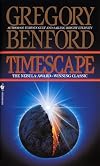
This is a novel of scientific discovery that does not neglect the story of the people who make the science. It is a better novel as much due to both its fusion of detailed character development and interpersonal drama and the science fiction narrative that includes time travel, an alternate reality, and ecological issues.
The story is written from two viewpoints, equidistant from the novel's publication in 1980. One narrative is set in a 1998 ravaged by ecological disasters and is on the show more brink of large scale extinctions. It follows a group of scientists in the United Kingdom connected with the University of Cambridge and their attempts to warn the past of the impending disaster by sending tachyon-induced messages to the astronomical position the Earth occupied in 1962–1963. Given the faster-than-light nature of the tachyon, these messages will effectively reach the past. These efforts are led by John Renfrew, an Englishman, and Gregory Markham, an American most likely modeled on Benford himself.
Another narrative is set in La Jolla, California at the University of California-San Diego in 1962, where a young scientist, Gordon Bernstein, discovers anomalous noise in a physics experiment relating to spontaneous resonance and indium antimonide. He and his student assistant, Albert Cooper (also likely based on the author and his experiences at UCSD), discover that the noise is coming in bursts timed to form Morse code.
The resulting message is made of staccato sentence fragments and jumbled letters, due to the 1998 team's efforts to avoid a grandfather paradox. Their aim is to give the past researchers enough information to start efforts on solving the pending ecological crisis, but not enough that the crisis will be entirely solved (thus making a signal to the past unnecessary and creating a paradox). Due to the biological nature of the message, Professor Bernstein shares the message with a professor of biology, Michael Ramsey. Since the message also gives astronomical coordinates, he also shares it with Saul Shriffer, a fictional scientist who is said to have worked with Frank Drake on Project Ozma. Initially, these characters fail to understand the true meaning of the message. Ramsey believes it to be an intercepted military dispatch hinting at Soviet bioterrorism, while Shriffer thinks the message is of extraterrestrial origin. Shriffer goes public with this theory, mentioning Bernstein in his findings. However, Bernstein's overseer, Isaac Lakin, is skeptical of the messages and wants Bernstein to keep working on his original project and ignore the signal. As a result of this interruption in their experimentation, Bernstein is denied a promotion and Cooper fails a candidacy examination. The signal also exacerbates difficulties in Bernstein's relationship with his girlfriend, Penny.
In 1998, Peterson recovers a safe deposit box in La Jolla containing a piece of paper indicating that the messages were received. Meanwhile, it is clear that the viral nature of the algal bloom is spreading it faster and through more mediums than originally expected. Strange yellow clouds that have been appearing are said to be a result of the viral material being absorbed through the water cycle, and it soon affects the planet's agriculture as well, resulting in widespread cases of food poisoning. Flying to the United States, Markham is killed in a plane crash when the pilots fly too close to one of the clouds and experience seizures.
In the past narrative, now advanced into 1963, Bernstein refuses to give up on the signals. He is rewarded when the signal noise is also observed in a laboratory at Columbia University (a nod "Tachyons were the sort of audacious idea that comes to young minds used to roving over the horizon of conventional thought. Because of Feinberg I later set part of my tachyon novel at Columbia towards the inventor of the tachyon concept, Gerald Feinberg of Columbia). Using hints in the message, Ramsey replicates the conditions of the bloom in a controlled experiment and realizes the danger it represents. Bernstein finds out that the astronomical coordinates given in the message represent where the Earth will be in 1998 due to the solar apex. He also receives a more coherent, despairing message from the future. Having built a solid case, Bernstein goes public and publishes his results.
The remainder of the story involves the possibility of an alternate reality and some surprising consequences. The combination of science, the impact of the scientists' work on their interpersonal relations, and the impact of the science itself on the future made this an excellent work of science fiction. It is no surprise that it won several awards including the Nebula Award in 1980. show less
The story is written from two viewpoints, equidistant from the novel's publication in 1980. One narrative is set in a 1998 ravaged by ecological disasters and is on the show more brink of large scale extinctions. It follows a group of scientists in the United Kingdom connected with the University of Cambridge and their attempts to warn the past of the impending disaster by sending tachyon-induced messages to the astronomical position the Earth occupied in 1962–1963. Given the faster-than-light nature of the tachyon, these messages will effectively reach the past. These efforts are led by John Renfrew, an Englishman, and Gregory Markham, an American most likely modeled on Benford himself.
Another narrative is set in La Jolla, California at the University of California-San Diego in 1962, where a young scientist, Gordon Bernstein, discovers anomalous noise in a physics experiment relating to spontaneous resonance and indium antimonide. He and his student assistant, Albert Cooper (also likely based on the author and his experiences at UCSD), discover that the noise is coming in bursts timed to form Morse code.
The resulting message is made of staccato sentence fragments and jumbled letters, due to the 1998 team's efforts to avoid a grandfather paradox. Their aim is to give the past researchers enough information to start efforts on solving the pending ecological crisis, but not enough that the crisis will be entirely solved (thus making a signal to the past unnecessary and creating a paradox). Due to the biological nature of the message, Professor Bernstein shares the message with a professor of biology, Michael Ramsey. Since the message also gives astronomical coordinates, he also shares it with Saul Shriffer, a fictional scientist who is said to have worked with Frank Drake on Project Ozma. Initially, these characters fail to understand the true meaning of the message. Ramsey believes it to be an intercepted military dispatch hinting at Soviet bioterrorism, while Shriffer thinks the message is of extraterrestrial origin. Shriffer goes public with this theory, mentioning Bernstein in his findings. However, Bernstein's overseer, Isaac Lakin, is skeptical of the messages and wants Bernstein to keep working on his original project and ignore the signal. As a result of this interruption in their experimentation, Bernstein is denied a promotion and Cooper fails a candidacy examination. The signal also exacerbates difficulties in Bernstein's relationship with his girlfriend, Penny.
In 1998, Peterson recovers a safe deposit box in La Jolla containing a piece of paper indicating that the messages were received. Meanwhile, it is clear that the viral nature of the algal bloom is spreading it faster and through more mediums than originally expected. Strange yellow clouds that have been appearing are said to be a result of the viral material being absorbed through the water cycle, and it soon affects the planet's agriculture as well, resulting in widespread cases of food poisoning. Flying to the United States, Markham is killed in a plane crash when the pilots fly too close to one of the clouds and experience seizures.
In the past narrative, now advanced into 1963, Bernstein refuses to give up on the signals. He is rewarded when the signal noise is also observed in a laboratory at Columbia University (a nod "Tachyons were the sort of audacious idea that comes to young minds used to roving over the horizon of conventional thought. Because of Feinberg I later set part of my tachyon novel at Columbia towards the inventor of the tachyon concept, Gerald Feinberg of Columbia). Using hints in the message, Ramsey replicates the conditions of the bloom in a controlled experiment and realizes the danger it represents. Bernstein finds out that the astronomical coordinates given in the message represent where the Earth will be in 1998 due to the solar apex. He also receives a more coherent, despairing message from the future. Having built a solid case, Bernstein goes public and publishes his results.
The remainder of the story involves the possibility of an alternate reality and some surprising consequences. The combination of science, the impact of the scientists' work on their interpersonal relations, and the impact of the science itself on the future made this an excellent work of science fiction. It is no surprise that it won several awards including the Nebula Award in 1980. show less
Lists
Awards


You May Also Like


Associated Authors
Statistics
- Works
- 237
- Also by
- 233
- Members
- 22,274
- Popularity
- #957
- Rating
- 3.6
- Reviews
- 332
- ISBNs
- 465
- Languages
- 13
- Favorited
- 28