
Samantha Harvey (1) (1975–)
Author of Orbital
For other authors named Samantha Harvey, see the disambiguation page.
Works by Samantha Harvey
Tagged
Common Knowledge
- Birthdate
- 1975
- Gender
- female
- Occupations
- novelist
- Nationality
- England
UK - Birthplace
- Kent, England, UK
- Places of residence
- Bath, Somerset, England, UK
- Map Location
- England, UK
- Associated Place (for map)
- England, UK
Members
Discussions
The Wilderness by Samantha Harvey in Orange January/July (July 2011)
Reviews

An unusual book — somewhere between a novella and a prose-poem — describing twenty-four hours in the life of six astronauts in the middle of a nine-month mission on the International Space Station. Nothing very dramatic happens, but Harvey touches on all kinds of big topics, prompted both by the high-level perspective of Earth from 250 miles up and by the human conditions of life on the space station and being isolated from friends and family. It’s slightly disorienting to be in a show more space-story that quite emphatically isn’t science fiction, but draws heavily on the real accounts of life in space by people who have worked in the ISS. Harvey turns the technical reports into beautiful, musical language — a short book, but one to savour slowly. show less
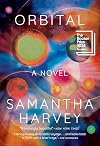
Samantha Harvey’s cooly meditative, Booker-Prize-winning novel, Orbital, chronicles the reflections and observations of the six-person crew of the International Space Station during a single twenty-four-hour period, during which the station orbits Earth sixteen times. The space station crew are truly an international lot, comprising two Russians, and one member each from the US, Japan, the UK and Italy. There is little action and only the rudiments of a story. The narrative is, in a sense, show more anti-dramatic. Narrative momentum derives from prose that has a fluent, placid, calming quality that transports the reader along on elegiac waves of description and reflection punctuated by vivid flashes of insight. One senses that life aboard the ISS might begin as an exciting, life-altering adventure but soon settles into a routine as crew members perform experiments and tend to the mundane chores that must be completed to ensure the station’s complex mechanisms continue to operate. Harvey does not dwell on interactions among the crew, and personal details are sparse. Instead, major portions of Orbital are devoted to interior monologue as crew members, while carrying out their duties, contemplate the vastness of space and their small place in it, think about people and situations they’ve left behind on Earth, and let their minds linger on matters of private concern. After learning that her mother has died, Chie, from Japan, is struggling to hold grief at bay. Nell, the Brit, is having erotic dreams about Shaun, the American. Anton, one of the Russians, has discovered a lump on his neck, which he strives to hide from the others. Two external events occupy the crew as well: a moon-landing mission that has just launched and a rapidly intensifying typhoon in the Pacific Ocean, the progress of which they can follow from their orbital perspective, and which threatens the population of the Philippines with devastation. Samantha Harvey is clearly acknowledging that the ISS represents a significant triumph of human ingenuity. But by repeatedly shifting the focus to space, the objects in it, the incomprehensible vastness and mysterious origins of the universe, she is also suggesting that science can only take you so far. When Pietro, the Italian, while peering out at the Earth, imagines being on the ship carrying the other group of astronauts toward the moon, watching the Earth recede, he succinctly articulates one of the novel’s major themes: “If you could get far enough from the Earth,” he thinks, “you’d finally be able to understand it.” And he goes on: “Not to understand its mystery, but to understand that it is mysterious.” This is Orbital in a nutshell, a novel that fearlessly blends the human and the ineffable into a sobering mix while confronting conundrums that, one suspects, will never be solved. show less
This novella surpasses the standard for books of its kind thanks to its remarkable start and superb writing. However, there are issues that caused me to view the book less favorably overall. These included a lack of narrative coherence and what seemed to be repetition that slowed down the story. Some have called this novel a meditation, but it might be more accurate to read it as a meditation on an experiment in space orbiting the Earth.
"Orbital," the Booker Prize-winning novel by Samantha show more Harvey, is a brilliant and reflective prose poem that forgoes conventional narrative in favor of a deep and personal examination of perspective, humanity, and our delicate planet. The novel, which takes place on the International Space Station (ISS) and spans a single day, follows six astronauts as they make sixteen orbits around the Earth, their memories and thoughts blending with the amazing scene below.
The undisputed star of this celestial show is Harvey's prose. She creates a lyrical and accurate stream-of-consciousness narrative in a style that has been compared to Virginia Woolf. The rich, evocative language perfectly conveys the breathtaking beauty of Earth—the "blue marble" in all its dynamic, swirling splendor—as seen from space. The familiar shapes of continents and oceans acquire a new and profound significance, and sunrises and sunsets become transient, frequent miracles.
The novel focuses more on the inner landscapes of its characters than it does on a compelling plot. Through their fragmented thoughts, we glean insights into their pasts, their families, and their motivations for venturing into the void. An Italian astronaut reflects on a promise made to a fisherman, a Russian cosmonaut carries the weight of a family legacy, and an American astronaut grapples with a recent loss. These individual stories, however, are not the central focus but rather threads in a larger tapestry of human experience, all viewed from the unique and isolating vantage point of orbit.
One point of contention is the purposeful absence of a traditional plot. "Orbital" might be a frustratingly static experience for those who are looking for a story with a clear rising action, climax, and resolution. The characters also experience a sense of transience, with their unique identities occasionally blending into a collective consciousness that speaks for all of humanity.
To criticize "Orbital" for what it is not, however, would be to miss the point of what it so brilliantly accomplishes. It is a philosophical meditation on our place in the cosmos and a novel of ideas. The artificiality of borders, the interconnectedness of all life, and the overwhelming beauty and precarity of our world are some of the profound themes Harvey explores through the astronauts' unique perspective. As the astronauts observe the real-world consequences of climate change from their divine vantage point, the environmental undertones are subtly potent.
"Orbital" is a book that simultaneously rewards and challenges patience. It is an invitation to slow down, to observe, and to contemplate. It is a deeply moving and ultimately hopeful work that reminds us of the extraordinary privilege of our existence on this "pale blue dot." Samantha Harvey's "Orbital" is a genuinely remarkable read for readers who value fine prose and are receptive to a more avant-garde and philosophical style of narrative. show less
"Orbital," the Booker Prize-winning novel by Samantha show more Harvey, is a brilliant and reflective prose poem that forgoes conventional narrative in favor of a deep and personal examination of perspective, humanity, and our delicate planet. The novel, which takes place on the International Space Station (ISS) and spans a single day, follows six astronauts as they make sixteen orbits around the Earth, their memories and thoughts blending with the amazing scene below.
The undisputed star of this celestial show is Harvey's prose. She creates a lyrical and accurate stream-of-consciousness narrative in a style that has been compared to Virginia Woolf. The rich, evocative language perfectly conveys the breathtaking beauty of Earth—the "blue marble" in all its dynamic, swirling splendor—as seen from space. The familiar shapes of continents and oceans acquire a new and profound significance, and sunrises and sunsets become transient, frequent miracles.
The novel focuses more on the inner landscapes of its characters than it does on a compelling plot. Through their fragmented thoughts, we glean insights into their pasts, their families, and their motivations for venturing into the void. An Italian astronaut reflects on a promise made to a fisherman, a Russian cosmonaut carries the weight of a family legacy, and an American astronaut grapples with a recent loss. These individual stories, however, are not the central focus but rather threads in a larger tapestry of human experience, all viewed from the unique and isolating vantage point of orbit.
One point of contention is the purposeful absence of a traditional plot. "Orbital" might be a frustratingly static experience for those who are looking for a story with a clear rising action, climax, and resolution. The characters also experience a sense of transience, with their unique identities occasionally blending into a collective consciousness that speaks for all of humanity.
To criticize "Orbital" for what it is not, however, would be to miss the point of what it so brilliantly accomplishes. It is a philosophical meditation on our place in the cosmos and a novel of ideas. The artificiality of borders, the interconnectedness of all life, and the overwhelming beauty and precarity of our world are some of the profound themes Harvey explores through the astronauts' unique perspective. As the astronauts observe the real-world consequences of climate change from their divine vantage point, the environmental undertones are subtly potent.
"Orbital" is a book that simultaneously rewards and challenges patience. It is an invitation to slow down, to observe, and to contemplate. It is a deeply moving and ultimately hopeful work that reminds us of the extraordinary privilege of our existence on this "pale blue dot." Samantha Harvey's "Orbital" is a genuinely remarkable read for readers who value fine prose and are receptive to a more avant-garde and philosophical style of narrative. show less
I could say that this is a novel about six astronauts/cosmonauts on the International Space Station, orbiting for 24 hours as sixteen sunrises and sunsets pass on the Earth below them, but that description is so inadequate as to feel like a lie. Better, perhaps, to say that it's an extended prose poem, and a 200-page exercise in perspective as we look down at Earth, out towards space, and into ourselves, contemplating and celebrating all the profundity, mundanity, fragility, beauty, and hope show more of space travel, of humanity, of life, and of our home world.
It's gorgeously written, philosophical, meaningful, affecting, and, since Samantha Harvey clearly cares deeply about getting the details right, it also feels true.
As someone who cries at documentaries about the Apollo program and can become positively verklempt thinking about Carl Sagan's description of Earth's "pale blue dot," it feels astonishingly as if this were written with the sole purpose of being the perfect book for me personally. I don't know quite what I did to deserve that, but I am deeply grateful for it. show less
It's gorgeously written, philosophical, meaningful, affecting, and, since Samantha Harvey clearly cares deeply about getting the details right, it also feels true.
As someone who cries at documentaries about the Apollo program and can become positively verklempt thinking about Carl Sagan's description of Earth's "pale blue dot," it feels astonishingly as if this were written with the sole purpose of being the perfect book for me personally. I don't know quite what I did to deserve that, but I am deeply grateful for it. show less
Lists
Booker Prize (1)
Books Read 2026 (1)
Overdue Podcast (1)
2024-25 reading (1)
Obama Reads (1)
Wishlist (1)
WBS - Book Club (1)
Sleeplessness (1)
Female Author (1)
Awards


You May Also Like


Associated Authors
Statistics
- Works
- 8
- Members
- 4,150
- Popularity
- #6,063
- Rating
- 3.6
- Reviews
- 229
- ISBNs
- 117
- Languages
- 13
- Favorited
- 1
