
Andy Lane (1) (1963–)
Author of Death Cloud
For other authors named Andy Lane, see the disambiguation page.
About the Author
Andy Lane is a journalist, novelist and TV writer. The first volume of his guide to Babylon 5 has rapidly become the de facto work of reference on the series, and on the strength of it he is currently consulting on a licensed Babylon 5 project. His book The Band Files (written with Paul Simpson) show more does for Ian Fleming what this book does for J. Michael Straczynski. show less
Series
Works by Andy Lane
Decalog 3: Consequences: Ten Stories, Seven Doctors, One Chain of Events (1996) — Editor — 143 copies, 1 review
Decalog 4: Re:Generations: Ten Stories, A Thousand Years, One Family (1997) — Editor — 74 copies, 1 review
The Bond Files: The Only Complete Guide to James Bond in Books, Films, TV and Comics (1998) 60 copies
Creating "Creature Comforts": The Award-winning Animation Brought to Life from the Creators of "Chicken Run" and "Wallac (2003) 12 copies
Blake's 7: The Liberator Chronicles, Volume 12: Corners of the Mind, Capital and Punishment (2016) 6 copies
River of Time 1 copy
Four Angry Mutants 1 copy
Associated Works
Decalog: Ten Stories, Seven Doctors, One Enigma (1994) — Author "Fallen Angel" — 187 copies, 3 reviews
Decalog 2: Lost Property: Ten Stories, Seven Doctors, No Fixed Abode (1995) — Contributor — 158 copies, 1 review
In●Vision: The Ark in Space (1988) — Contributor "This is a Recorded Message..." and Artist back cover — 2 copies
In●Vision: Warriors' Gate (1994) — Contributor "Mirror Image" and "The Man in the Control Seat" — 2 copies
Tagged
Common Knowledge
- Legal name
- Lane, Andrew
- Birthdate
- 1963
- Gender
- male
- Education
- Warwick University
- Occupations
- journalist
- Nationality
- UK
- Places of residence
- Dorset, England, UK
- Associated Place (for map)
- England, UK
Members
Reviews
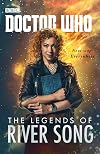
Overall this is a pretty good collection. I think the first story captured River's voice the best; the last couple of stories over-egged it on the parenthetical asides and River's self-assessed greatness.
Minor spoiler for the story "Death in New Venice":
In this story, a ghost stabs someone with what is described as a "crochet needle". Crocheters use *hooks*, not needles, and it would take quite a bit of effort to stab someone with a crochet hook, especially in order to draw blood. The end of show more the hook would be blunt and it would make a messy proposition. I suspect the author meant a knitting needle instead. I love that in a sci-fi story, THIS is the one thing I can't suspend disbelief over. show less
Minor spoiler for the story "Death in New Venice":
In this story, a ghost stabs someone with what is described as a "crochet needle". Crocheters use *hooks*, not needles, and it would take quite a bit of effort to stab someone with a crochet hook, especially in order to draw blood. The end of show more the hook would be blunt and it would make a messy proposition. I suspect the author meant a knitting needle instead. I love that in a sci-fi story, THIS is the one thing I can't suspend disbelief over. show less
Join me in my jump through time and space, will you, Sweetie?
First thing is first. If you know me, then you will know I tend to have a genuine distaste for Professor River Song. I typically find her to be terribly obnoxious. Way too "I'm badass, you and everyone in this universe and the next know it." Really freaking annoying, guys. Occasionally, she grows on me though, more so as of late, but she's still on my "not so fab character list." Same with Missy. I hated her in the beginning, but show more near the end of Capaldi's era, I started to like her a bit more. For this reason, I had put off picking up this book. But, after some time had passed, I came across this in the library stacks and, for shits and giggles, I decided to pick it up.
I was pleasantly surprised. It was kind of funny and made me like River a bit more than I had. The book consisted of five "diary entries," all from different events in River's life. Of which, I believe, two included the Doctor. And one which included a living mannequin of Elvis. But that's a story for you to check out for yourself. As River says, "Spoilers!"
Each of the stories, or diary entries, gave me a new perspective on River's character. Though you'll see with her character on the show, River tends to only care for herself, the Doctor, and her parents, Amy and Rory. In the book, she shows a part of herself we don't normally see. That River is the main heroine. She decides how she will act. She decides whether or not she will intervene in events. We actually get to see some of her adventures, which was fun.
If you're like me and tend to avoid anything Professor River Song (though her diary I would steal in a heartbeat. And the vortex manipulator), you shouldn't skip out on The Legends of River Song.
P.S. There is the occasional spelling error--and no, I'm not talking about the differences between American English and British English, these are legit mistakes (i.e.: closed instead of close) and the occasional missing punctuation mark. But don't worry, they don't interfere with the story, nor do they occur too often. It's just stuff that was missed before publication. show less
First thing is first. If you know me, then you will know I tend to have a genuine distaste for Professor River Song. I typically find her to be terribly obnoxious. Way too "I'm badass, you and everyone in this universe and the next know it." Really freaking annoying, guys. Occasionally, she grows on me though, more so as of late, but she's still on my "not so fab character list." Same with Missy. I hated her in the beginning, but show more near the end of Capaldi's era, I started to like her a bit more. For this reason, I had put off picking up this book. But, after some time had passed, I came across this in the library stacks and, for shits and giggles, I decided to pick it up.
I was pleasantly surprised. It was kind of funny and made me like River a bit more than I had. The book consisted of five "diary entries," all from different events in River's life. Of which, I believe, two included the Doctor. And one which included a living mannequin of Elvis. But that's a story for you to check out for yourself. As River says, "Spoilers!"
Each of the stories, or diary entries, gave me a new perspective on River's character. Though you'll see with her character on the show, River tends to only care for herself, the Doctor, and her parents, Amy and Rory. In the book, she shows a part of herself we don't normally see. That River is the main heroine. She decides how she will act. She decides whether or not she will intervene in events. We actually get to see some of her adventures, which was fun.
If you're like me and tend to avoid anything Professor River Song (though her diary I would steal in a heartbeat. And the vortex manipulator), you shouldn't skip out on The Legends of River Song.
P.S. There is the occasional spelling error--and no, I'm not talking about the differences between American English and British English, these are legit mistakes (i.e.: closed instead of close) and the occasional missing punctuation mark. But don't worry, they don't interfere with the story, nor do they occur too often. It's just stuff that was missed before publication. show less
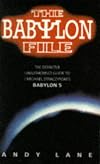
The Babylon File: The Definitive Unauthorised Guide to J. Michael Straczynski's TV Series Babylon 5 by Andy Lane
When I was a child, I had a strange love of television and film guidebooks. The weirdest part was, they were generally for programs I had little or no interest in. (This might not be so weird; I was a child interested in things popular for 1990s young people, whereas guide books tended to be for adults.) I had a mini bookshelf filled with books on The X-Files (which at the time I had never seen), The Brady Bunch (which I had seen to my regret), and notably James Bond, with which I have never show more had any interest - and it turns out that book was written by Andy Lane, the author of the book currently under review! What a small world.
This is the first of two volumes, a smartly designed guide to the first three seasons of Babylon 5, the strikingly original and densely-plotted TV series of the 1990s which was regarded at the time as a significant evolution in both sci-fi television and long-form storytelling. I have only just discovered this program; while it has its flaws 30 years after the premiere of the pilot movie, there's an awful lot to love. Lane gives a vivid overview of plots, characters, goofs, quibbles, questions, plot arcs, and so on. It's exactly what you expect, with a touch of the author's particular verve. Naturally enough a 25-year-old guidebook to a television series is outdated and also, with the advent of the more popular internet, somewhat redundant. But not only is it heartwarming to those of us who remember the 1990s but also perhaps a more useful and easily-searchable tome than some resources online.
There are a few caveats, which fall under the "I would have done things differently" category:
1) Lane's attitude to spoilers is consistent with his original target audience (either people who had watched the show on first viewing and were buying the limited edition expensive VHS tapes, or people who would only catch occasional episodes on repeat in that horrid pre-digital world and thus couldn't be expected to view the thing in order). In short, he doesn't mind them. This gets most annoying with a couple of big revelations that are made early on. But it's even more annoying when he is somewhat vague but not vague enough. Imagine (I'm making this up) if you said "Julie falls off the cliff in episode 7 but we never see her dead body. This sets the groundwork for a major twist in episode 20". Can you guess what that twist might be? Or "Sam mentions that it'd be funny if Joe turned out to be a spy, which is ironic considering a surprise reveal in episode 40". Gosh, I wonder what that reveal might be. There could have been some more finesse there, i.e. discussing the foreshadowing when you reach the episode with the twist, rather than the other way around.
2) Sometimes Lane's élan tips over into pretentiousness. He is prone to seemingly needless jabs at Star Trek, for example. I understand that among some sci-fi fans, especially a contingent of Doctor Who acolytes with whom Lane was acquainted, this was a common target of ire. After all, it was increasingly successful as a franchise while Who languished off air, and there was a feeling that the latter was a wonderful, plot-driven extravaganza while the former was simplistic, plodding American pap. Whether or not this is true, it seems a bit gauche in this volume! In a similar vein he is prone to confusing opinion with instruction. In his introduction, for example, Lane sternly tells us that good writers will ensure that the "A" and "B" plots of an episode are thematically linked, whereas bad writers will not. That's a great opinion and it's certainly orthodoxy in some circles. I still remember a reviewer/blogger when Game of Thrones was on the air, who would search for a thematic or visual link every time an episode transitioned from one of its many subplots to another. The reviewer sometimes became quite snarky when there were no clear links. Thing is, while I see the desire for that, it's only one viewpoint. Mine is quite different: the nature of episodic television is such that there isn't always time to structure a season of plots so that they thematically join together, nor to film a series like Game of Thrones in such a way that you can guarantee the order of certain shots or sequences across different storylines before you reach the editing bay. Additionally, there can be an appeal for dedicated viewers to having a variety of stories in an episode that utilise different characters, settings, tones, and approaches. I agree that it would be lovely if every television episode merited as much analysis as a novel by Joyce, but it's probably not realistic. It doesn't, in my view, make someone a bad writer if they don't have strong resonances between subplots, especially considering that an episode may be the result of much reworking, numerous authors, plot or production necessities, and so on. I would rather judge it based on what it was setting out to do, whether that was achieved, and how that fits into the overall tapestry. Lane is not wrong in his view but he couches it in a didactic tone that is highly reminiscent of these kinds of '90s volumes.
3) Whereas he is sometimes prone to over-analyse, as above, Lane can be frustratingly terse on core production issues. I was startled to see that the departure of a certain major character late in season 2 was represented by one factual paragraph of why the actor chose to leave. I would have enjoyed some speculation on whether this renders the preceding two years of character development moot, a broader understanding of the circumstances (for example whether that reason was felt more broadly by the cast), or a discussion on whether the plot twist used to remove the character figures well into the series' continuity - not to mention its impact on gradual character development of another impacted figure. Very often with more minor elements of the plot, we simply have a reference to the series creator's explanation for why a certain scene happened or a note on some deleted information that would have clarified the situation without much editorialising. I would have liked more insight, even opinion, into whether it's valid to use an unseen deleted moment to endorse a plot that otherwise is a bit shonky, for example. I appreciate that Lane was an up-and-coming jobbing writer who valued these gigs, and didn't want to be seen as an aggressive critic, but there's an in-between.
4) This is a personal bugbear, I'll concede, and it stems from me not having much interest in "genre" fiction, as Lane calls it. Usually when he profiles a guest actor, he will fixate on their appearances in genre programming at the expense of all others. It can be frustrating, for instance, to be told that Guest Star X appeared in an episode of Star Trek: Voyager and two episodes of The X-Files while leaving out series in which they appeared as a regular, movie or theatre roles, and the like. Again I appreciate that there was/is a world of people who exist solely in this space, much as some fans of Bridgerton would overwhelmingly be interested in actors' connections to romance content at the expense of all else. But it renders many of these entries even more useless than they otherwise would be all these years later.
Anyhow, those are minor criticisms. You'll like this book if you have an especial interest in the genre and guidebooks from the 1990s. Otherwise, why the hell are you reading this review? show less
This is the first of two volumes, a smartly designed guide to the first three seasons of Babylon 5, the strikingly original and densely-plotted TV series of the 1990s which was regarded at the time as a significant evolution in both sci-fi television and long-form storytelling. I have only just discovered this program; while it has its flaws 30 years after the premiere of the pilot movie, there's an awful lot to love. Lane gives a vivid overview of plots, characters, goofs, quibbles, questions, plot arcs, and so on. It's exactly what you expect, with a touch of the author's particular verve. Naturally enough a 25-year-old guidebook to a television series is outdated and also, with the advent of the more popular internet, somewhat redundant. But not only is it heartwarming to those of us who remember the 1990s but also perhaps a more useful and easily-searchable tome than some resources online.
There are a few caveats, which fall under the "I would have done things differently" category:
1) Lane's attitude to spoilers is consistent with his original target audience (either people who had watched the show on first viewing and were buying the limited edition expensive VHS tapes, or people who would only catch occasional episodes on repeat in that horrid pre-digital world and thus couldn't be expected to view the thing in order). In short, he doesn't mind them. This gets most annoying with a couple of big revelations that are made early on. But it's even more annoying when he is somewhat vague but not vague enough. Imagine (I'm making this up) if you said "Julie falls off the cliff in episode 7 but we never see her dead body. This sets the groundwork for a major twist in episode 20". Can you guess what that twist might be? Or "Sam mentions that it'd be funny if Joe turned out to be a spy, which is ironic considering a surprise reveal in episode 40". Gosh, I wonder what that reveal might be. There could have been some more finesse there, i.e. discussing the foreshadowing when you reach the episode with the twist, rather than the other way around.
2) Sometimes Lane's élan tips over into pretentiousness. He is prone to seemingly needless jabs at Star Trek, for example. I understand that among some sci-fi fans, especially a contingent of Doctor Who acolytes with whom Lane was acquainted, this was a common target of ire. After all, it was increasingly successful as a franchise while Who languished off air, and there was a feeling that the latter was a wonderful, plot-driven extravaganza while the former was simplistic, plodding American pap. Whether or not this is true, it seems a bit gauche in this volume! In a similar vein he is prone to confusing opinion with instruction. In his introduction, for example, Lane sternly tells us that good writers will ensure that the "A" and "B" plots of an episode are thematically linked, whereas bad writers will not. That's a great opinion and it's certainly orthodoxy in some circles. I still remember a reviewer/blogger when Game of Thrones was on the air, who would search for a thematic or visual link every time an episode transitioned from one of its many subplots to another. The reviewer sometimes became quite snarky when there were no clear links. Thing is, while I see the desire for that, it's only one viewpoint. Mine is quite different: the nature of episodic television is such that there isn't always time to structure a season of plots so that they thematically join together, nor to film a series like Game of Thrones in such a way that you can guarantee the order of certain shots or sequences across different storylines before you reach the editing bay. Additionally, there can be an appeal for dedicated viewers to having a variety of stories in an episode that utilise different characters, settings, tones, and approaches. I agree that it would be lovely if every television episode merited as much analysis as a novel by Joyce, but it's probably not realistic. It doesn't, in my view, make someone a bad writer if they don't have strong resonances between subplots, especially considering that an episode may be the result of much reworking, numerous authors, plot or production necessities, and so on. I would rather judge it based on what it was setting out to do, whether that was achieved, and how that fits into the overall tapestry. Lane is not wrong in his view but he couches it in a didactic tone that is highly reminiscent of these kinds of '90s volumes.
3) Whereas he is sometimes prone to over-analyse, as above, Lane can be frustratingly terse on core production issues. I was startled to see that the departure of a certain major character late in season 2 was represented by one factual paragraph of why the actor chose to leave. I would have enjoyed some speculation on whether this renders the preceding two years of character development moot, a broader understanding of the circumstances (for example whether that reason was felt more broadly by the cast), or a discussion on whether the plot twist used to remove the character figures well into the series' continuity - not to mention its impact on gradual character development of another impacted figure. Very often with more minor elements of the plot, we simply have a reference to the series creator's explanation for why a certain scene happened or a note on some deleted information that would have clarified the situation without much editorialising. I would have liked more insight, even opinion, into whether it's valid to use an unseen deleted moment to endorse a plot that otherwise is a bit shonky, for example. I appreciate that Lane was an up-and-coming jobbing writer who valued these gigs, and didn't want to be seen as an aggressive critic, but there's an in-between.
4) This is a personal bugbear, I'll concede, and it stems from me not having much interest in "genre" fiction, as Lane calls it. Usually when he profiles a guest actor, he will fixate on their appearances in genre programming at the expense of all others. It can be frustrating, for instance, to be told that Guest Star X appeared in an episode of Star Trek: Voyager and two episodes of The X-Files while leaving out series in which they appeared as a regular, movie or theatre roles, and the like. Again I appreciate that there was/is a world of people who exist solely in this space, much as some fans of Bridgerton would overwhelmingly be interested in actors' connections to romance content at the expense of all else. But it renders many of these entries even more useless than they otherwise would be all these years later.
Anyhow, those are minor criticisms. You'll like this book if you have an especial interest in the genre and guidebooks from the 1990s. Otherwise, why the hell are you reading this review? show less
A collection of five Doctor Who stories featuring time-traveling archeologist, sometime wife of the Doctor, and general troublemaker, River Song. I really like River and was a little worried that the collection wouldn't do her justice, but it turned out to be a lot of fun. The stories here range from reasonably entertaining to quite delightful, and River's voice and personality come through very, very well. As do the Doctor's, in the stories where he shows up. The plots are all various kinds show more of ridiculous, but since this is Doctor Who we're talking about, that is, of course, absolutely fine.
Recommended for fans of the good -- well, okay, maybe not entirely good, but always very cool -- Professor Song. show less
Recommended for fans of the good -- well, okay, maybe not entirely good, but always very cool -- Professor Song. show less
Lists
Awards


You May Also Like


Associated Authors
Statistics
- Works
- 61
- Also by
- 29
- Members
- 5,335
- Popularity
- #4,665
- Rating
- 3.6
- Reviews
- 152
- ISBNs
- 291
- Languages
- 9
- Favorited
- 1